by George Yancy | Feb 18, 2026 | Academia, black studies, education, Interview, philosophy, Racial Justice
Given the field of philosophy’s paucity of Black or African American philosophers, it is still something of an oxymoron to be a Black or African American philosopher. It is still possible to get second looks when saying, “Oh, I’m a philosopher.” Being a Black or African American philosopher doesn’t compute within a culture, and within academic settings, where images and discussions of Socrates and…
Source
by Ella Fassler | Feb 17, 2026 | Book Club, culture, Journalism, Media, Movement Building, Mutual Aid, News, Organizing, press freedom, Publishing, Racial Justice, Resistance
For years, PM Press operated out of Ramsey Kanaan’s cozy apartment, and Dan Fedorenko’s ramshackle garden shed. From these humble headquarters in Oakland, California, they packed and shipped books exploring anarchist, Marxist, and abolitionist ideas. Much like anarchist punks who distributed zines at shows throughout the ’90s, the publishers sold many copies through tabling, setting up at book…
Source
by George Yancy | Feb 12, 2026 | Gender Norms, history, Interview, Patriarchy, Racial Justice, Sexual Assault, Slavery
Black knowledge production, Black self-understanding, and the power of Black people to represent ourselves is under attack, which means that Black identity and Black meaning-making practices are being erased. In The Mis-Education of the Negro, published in 1933, Black historian Carter G. Woodson wrote, “The education of the Negroes, then, the most important thing in the uplift of the Negroes…
Source
by Theia Chatelle | Feb 7, 2026 | American Indian Movement, history, ICE, immigration, Indigenous Resistance, Minneapolis, Minnesota, News, Policing, Racial Justice
A cozy cafe in the heart of Minneapolis, Minnesota, has become a staging ground for Indigenous-led patrols working to keep Immigration and Customs Enforcement (ICE) off their streets. Pow Wow Grounds, opened in 2011 by Bob Rice, has been both a gathering place for community members attempting to make sense of the scale of violence they have witnessed over the past few weeks and a place to…
Source

by Mansa Musa | Jan 26, 2026 | Politics and Movements: US, Prison Industrial Complex, prison reform, Prisons and Policing, Racial Justice, Rattling the Bars, video
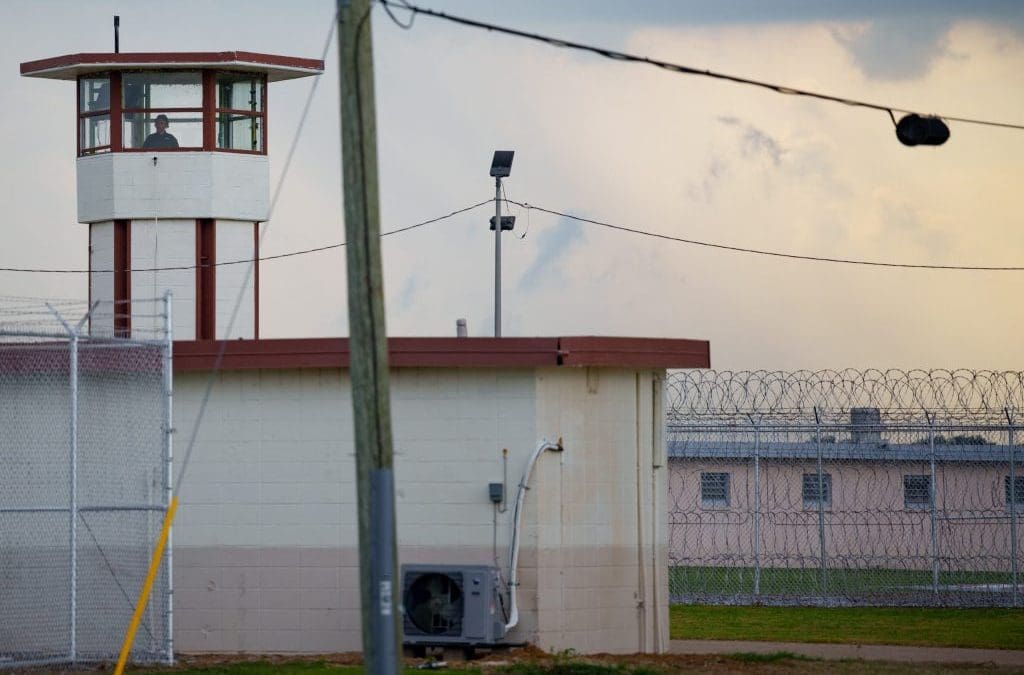
Non-unanimous jury verdicts were a Jim Crow–era policy designed to silence Black jurors and secure convictions even when the state failed to prove its case. In 2026, over 1,000 people remain imprisoned in Louisiana after being convicted by non-unanimous juries. In this episode of Rattling the Bars, Mansa Musa speaks with Erica Navalance, Associate Director of Strategic Criminal Litigation at the Promise of Justice Initiative, about the case of Lloyd Gray and why the state of Louisiana continues to uphold unconstitutional convictions.
Guest:
Erica Navalance has worked with both Capital Appeals Project and Promise of Justice Initiative (PIJ) since 2015, but joined PJI full time in 2021 as a senior staff attorney for the Strategic Defense Litigation project, focusing on combatting excessive sentences, capital punishment, and other injustices in the criminal system.
Additional links/info:
Richard A. Webster, Verite News / ProPublica, What one man’s 45-year-old case tells us about the “Jim Crow juries” haunting Louisiana
Promise of Justice Initiative, Swastika found on DA file introduced into court, judge grants hearing for PJI client incarcerated for 45 Years
Credits:
Producer / Videographer / Post-Production: Cameron Granadino
Transcript
The following is a rushed transcript and may contain errors. A proofread version will be made available as soon as possible.
Mansa Musa:
Welcome to Rattling the Bars. This is the court of public opinion. And when justice fails to show up in America’s courtroom, we bring the truth here before the people convicted in 1980 at the age of 19, Lloyd Gray was sent to prison even though prosecutors failed to meet their burden and two black jurors refused to vote guilty in almost any other state that would have meant a hung jury,