by Stephen Prager | May 21, 2026 | Article, cuba, Politics and Movements: International, Politics and Movements: US, Reprint
This story originally appeared in Common Dreams on May 20, 2026. It is shared here under a Creative Commons (CC BY-NC-ND 3.0) license.
As the US Justice Department indicted former Cuban President Raúl Castro on Wednesday in what could be a prelude to military action, the Cuban government denounced the US for “cruel and ruthless aggression.”
The 94-year-old Castro, who served as Cuba’s leader until 2021 after taking over for his brother Fidel in 2008, was indicted on one count of conspiracy to kill US nationals for his alleged role in the shooting down of planes operated by the anti-Castro Cuban exile group Brothers to the Rescue in 1996, which resulted in the deaths of four Cuban Americans.
“For nearly 30 years, the families of four murdered Americans have waited for justice,” acting Attorney General Todd Blanche said as he announced the charges at Miami’s Freedom Tower. “My message today is clear: The United States and President Trump does not and will not forget its citizens.”
While Blanche described the four men as “unarmed civilians,” the Cuban government said the group had repeatedly violated its sovereign airspace and that it had warned the US government before shooting down the plane.
Declassified documents from a month before the incident show that officials in the Federal Aviation Administration (FAA) viewed the Brothers’ activities as “taunting” and feared the Cuban government might shoot a plane down.
“Is a sovereign state like Cuba obligated to tolerate illegal and continuous incursions into its territory? Under no circumstances,” the Cuban embassy in the US said in a statement published on Wednesday on social media. “International law and global civil aviation conventions protect the sovereignty of nations over their airspace.”
“When formal warnings to the [International Civil
by Brett Wilkins | May 20, 2026 | Article, Gaza, Israel, Palestine, Politics and Movements: International, Politics and Movements: US, Reprint
by Maximillian Alvarez | May 20, 2026 | coal miner, Economy, Economy and Inequality, labor, Podcast, Politics and Movements: US, Trump, Working People
Since the 2016 presidential election, Donald Trump and his acolytes, right-wing media, and coal industry barons and lobbyists have obsessively painted the picture of Trump as a friend to coal miners and the so-called “undisputed champion of beautiful clean coal.” But as labor journalist Kim Kelly reports at In These Times, “the simpering ’Trump digs coal’ image the administration seeks to project is vastly at odds with the actions it’s taken to limit miner protections, endanger their health, and exacerbate the black lung crisis consuming Central Appalachia.” In this episode of Working People, we speak with Kelly about the Trump administration’s latest betrayal of coal miners and their families and its underreported attack on the Federal Mine Safety and Health Review Commission and abrupt, unprecedented firing of FMSHRC Commissioner Moshe Z. Marvit.
Additional links/info:
Kim Kelly website, X/Twitter page, TikTok, Bluesky page, and Instagram
Kim Kelly, In These Times, “Trump’s latest target: Coal miners’ safety”
Jordan Barab, Confined Space, “Friday night massacre at Mine Safety Review Commission”
Kim Kelly, In These Times, “The Trump administration ramps up its war on coal miners”
Kim Kelly, In These Times, “Trump to coal miners: Drop dead”
Featured Music:
Jules Taylor, Working People Theme Song
Credits:
Audio Post-Production: Jules Taylor
Transcript
The following is a rushed transcript and may contain errors. A proofread version will be made available as soon as possible.
Maximillian Alvarez:
Alright. Welcome everyone to Working People, a podcast about the lives, jobs, dreams, and struggles of the working class today. Working People is a proud member of the Labor Radio Podcast Network and is brought to you in partnership with In These Times Magazine and the Real News Network. The show is produced by
by Dean Baker | May 19, 2026 | Article, Economy and Inequality, Iran, Oil, Politics and Movements: International, Politics and Movements: US, Reprint, War
This article originally appeared on Dean Baker’s Patreon. It is reprinted here with permission.
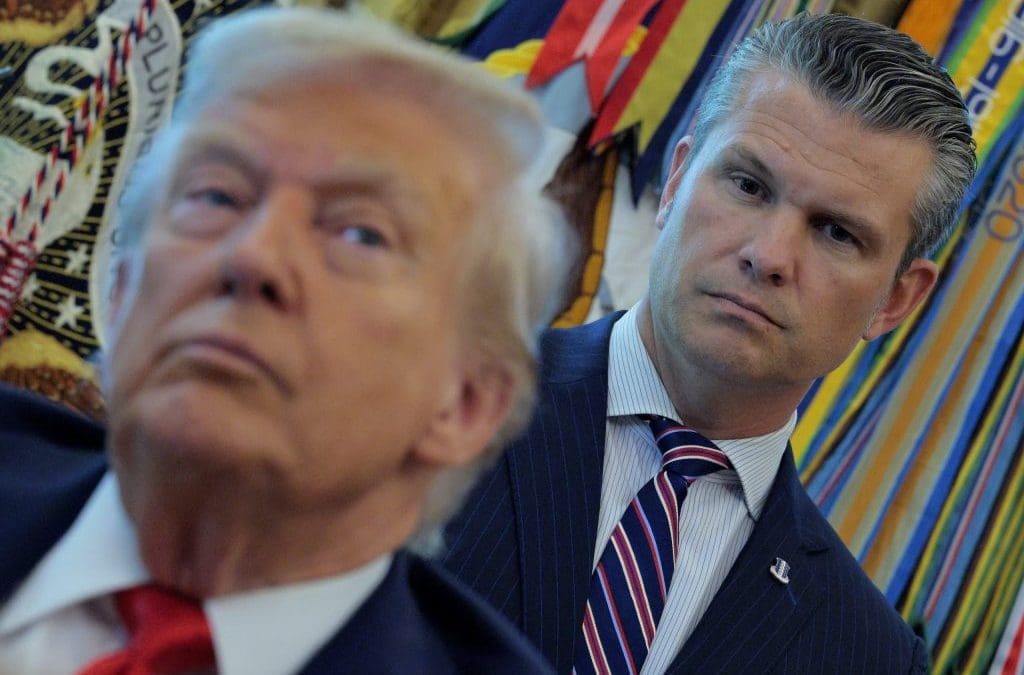
Our Secretary of Defense (or War) Pete Hegseth seems to be having a really great time killing people in Iran, but his live action video games come at a big cost, not just in lives, but in budget dollars. To be clear, the main reason to be opposed to this pointless war is its impact on the people of Iran and elsewhere in the region. But it also has a huge economic cost that is seriously underappreciated.
The short-term cost is the shortage of oil, natural gas, fertilizers, and other items that would ordinarily travel through the Straits of Hormuz. This shortage has already sent prices of many items soaring. The impact is not just on the goods themselves, but there is a large secondary impact due to higher shipping costs, and if fertilizer supplies are not resumed soon, higher food prices, due to lower crop yields. This is a big hit to people in wealthy countries, but it is life-threatening to people living on the edge in Sub-Saharan Africa and South Asia.
But in addition to the short-term cost, there is also a longer-term cost insofar as we are making new enemies and therefore will have higher bills for military spending long into the future. We already got the first taste of this as the Trump administration floated the idea of a $200 billion special appropriation to cover the cost of the war.
The Military is Really Big Bucks
There is remarkably little appreciation of how much money is at stake with wars and the military. This is because the media
by Ben Carroll | May 19, 2026 | AI, Article, Economy and Inequality, labor, Politics and Movements: US, Reprint
This story originally appeared in Jacobin on May 11, 2026. It is shared here with permission.
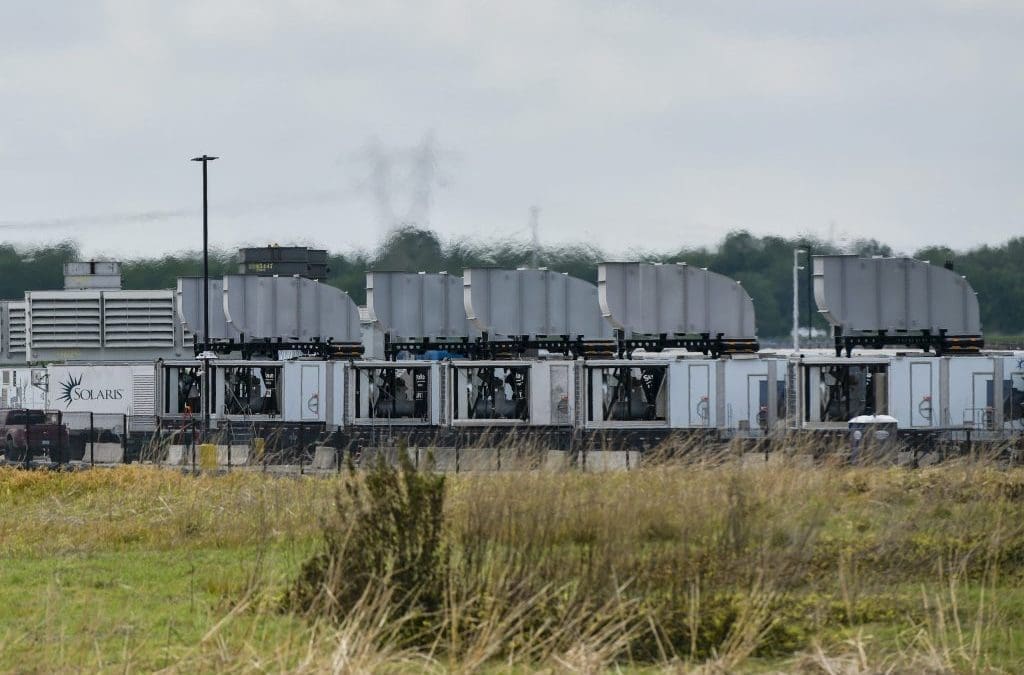
We’re really going into what we believe is the early chapters of an investment supercycle in the US for electricity growth,” Scott Strazik, CEO of GE Vernova, told Barron’s during an interview at the World Economic Forum in Davos earlier this year. “If you take a step back, we probably haven’t seen an analogous period of time like this since 1945.”
The AI build-out being undertaken at lightning speed is big business for companies like GE Vernova, which, along with Siemens Energy and Mitsubishi Heavy Industries, supply over 75 percent of the world’s gas turbines. GE Vernova’s equipment alone supplies 25 percent of the world’s electricity, and a staggering 55 percent in the United States. In the first quarter of this year, the company racked up $2.4 billion in sales related to orders for data centers, more than total sales for the previous year. Orders for gas turbines are booked out into 2030.
In February, Siemens Energy announced it was investing $1 billion to expand its production of grid equipment in response to soaring demand for electrification, including restarting production of gas turbines at a plant in Charlotte, North Carolina, which had stopped producing them in 2020.
Hitachi Energy invested $37 million to expand an existing facility in South Boston, Virginia, that produces large power transformers — another key piece of equipment in meeting the energy demands of the AI build-out. The company has invested over $1.5 billion into its transformer business alone. Like the gas turbine business, more than 50 percent of the large power transformer market is controlled by the same three companies, alongside Hitachi Energy and Toshiba Energy
by Jake Johnson | May 18, 2026 | Article, Economy, Economy and Inequality, IRS, Politics and Movements: US, Reprint, Trump
This story originally appeared in Common Dreams on May 15, 2026. It is shared here under a Creative Commons (CC BY-NC-ND 3.0) license.
The top Democrat on the House Judiciary Committee on Thursday accused US President Donald Trump of “orchestrating a $1,700,000,000 fraud on the American taxpayer to line the pockets of his MAGA political allies” amid new reporting on the terms Trump is seeking in talks to settle his $10 billion lawsuit against the Internal Revenue Service.
ABC News reported late Thursday that Trump is expected to drop his lawsuit in the coming days “in exchange for the creation of a $1.7 billion fund to compensate allies who claim they were wrongfully targeted by the Biden administration.” The money would come from the Treasury Department’s Judgment Fund, which pays out court judgments and settlements against the federal government.
The president is also expected to receive a public apology from the IRS for the leak of his tax returns during his first White House term.
Rep. Jamie Raskin (D-Md.) said in a statement that the reported settlement terms represent “another installment” in Trump’s “ongoing effort to turn the federal government into a personal cash machine for his unpopular extremist movement.”
“This is a massive and unprecedented presidential plunder of the American people,” said Raskin. “Worse still, this is only the beginning—a declaration that the prior payouts were just a down payment, and that he now intends to earmark billions more in taxpayer dollars for his political allies, sycophants, and private militia of unemployed insurrectionists.”
“The president has no authority to conjure up billion-dollar compensation schemes or raid the Judgment Fund, which exists to settle valid lawsuits. Trump is systematically converting neutral government mechanisms into a presidential slush fund to build