
From fascism to AI, our world is breaking. Only rank-and-file workers can save it.
Transcript
The following is a rushed transcript and may contain errors. It will be updated as soon as possible.
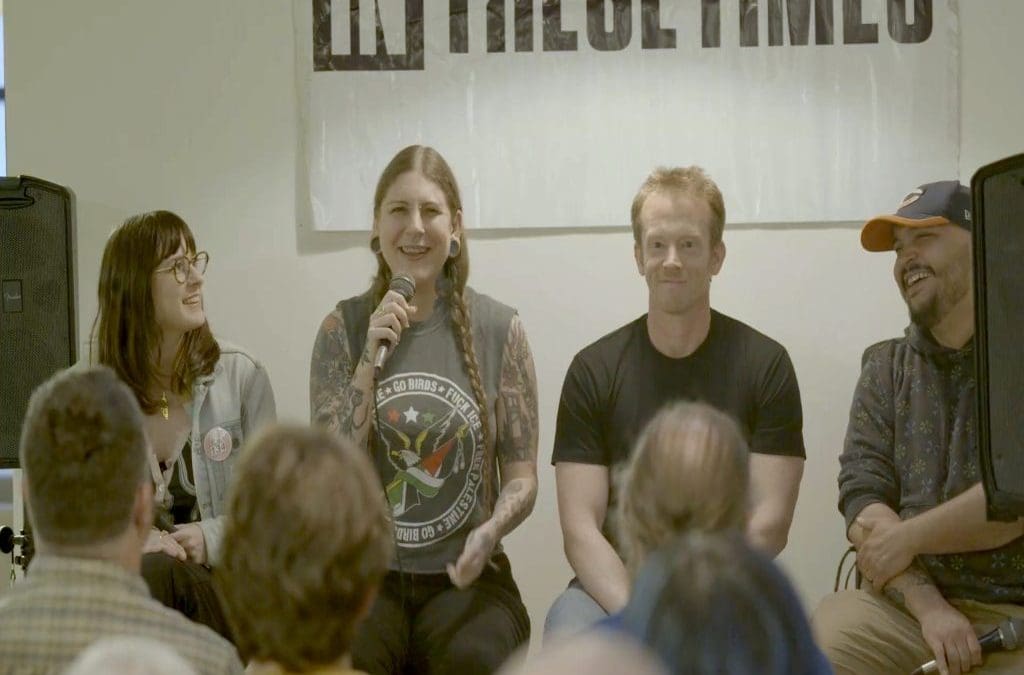
Maximillian Alvarez:All right, well welcome Chicago to this live edition of Working People, a podcast about the lives, jobs, dreams, and struggles of the working class today, brought to you in partnership with the Real News Network and in these Times Magazine, let’s give it up for in these times. And we are of course sitting here in the historic in these times building where so many incredible labor reporters have done so much important work, history shaping work over the decades. And I have the honor of sitting next to people who are doing just that now. And I want to ask everyone to give them a big round of applause as I introduce them because for everyone listening, we got here to my right the OG labor journalist, the guy who yells at all of us when we’re being too soft about how hard it is today. Hamilton Nolan, everybody, give it up for Hamilton.Go get Hamilton’s book, The Hammer. It’s incredible. Speaking of incredible books, Sister Kim Kelly has an incredible book called Fight Like Hell: The Untold History of American Labor. You know her, you love her. You’ve read her in Team Vogue. You’ve seen her on More Perfect Union in the Real News Network. Everyone give it up for Kim Kelly. And here at the end of our incredible panel, we have the one, the only Alex Press of Jacobin and so much more. She’s not only an incredible trailblazing writer, labor reporter, analyst of our political moment,

Big Tech’s assault on free speech: Mergers, social media, AI, and censorship
Transcript
The following rushed transcript may contain errors. It will be updated as soon as possible.
On the day of Donald Trump’s inauguration—January 20, 2025—the heads of many of Silicon Valley’s most powerful tech firms sat in the rows just behind Trump. It was a sign of Trump’s deep ties to the industry and to these powerful individuals who are transforming how we communicate, and not for the better.
In this episode, Michael Fox visits Silicon Valley to try to understand the stranglehold that tech has over our media and our airwaves. Hosts Michael Fox and Marc Steiner dig into the ways media consolidation, social media, and AI are strangling our free speech, even as they claim to be liberating it—and us—with incredible insight from professors Todd Wolfson, Mary Anne Franks, Fara Dabhoiwala, Ramesh Srinivasan, and Jeff Cohen, the founder of the organization Fairness and Accuracy in Reporting, FAIR.
The Battle for Free Speech is a production of The Real News Network.
Hosted by Michael Fox and Marc Steiner. Theme music by Michael Fox, Jordan Klein and Daniel Nuñez. Other music from Blue Dot Sessions and Epidemic Sound. Production and Sound Design by Michael Fox and Stephen Frank. Editorial support by Kayla Rivara and Heather Gies. Research by Ben Schweiger.
Guests
Todd Wolfson
Mary Anne Franks
Fara Dabhoiwala
Jeff Cohen
Ramesh Srinivasan
Resources
Mary Anne Franks’ book, Fearless Speech: Breaking Free from the First Amendment
Fara Dabhoiwala’s book, What Is Free Speech?: The History of a Dangerous Idea
Todd Wolfson’s Digital Rebellion: The Birth of the Cyber Left
Marc Steiner’s Interview with Jeff Cohen, “How Democrats set the stage for Trump’s assault on free speech”
You can hear Ramesh Srinivasan’s Utopias Podcast here, or wherever you get your
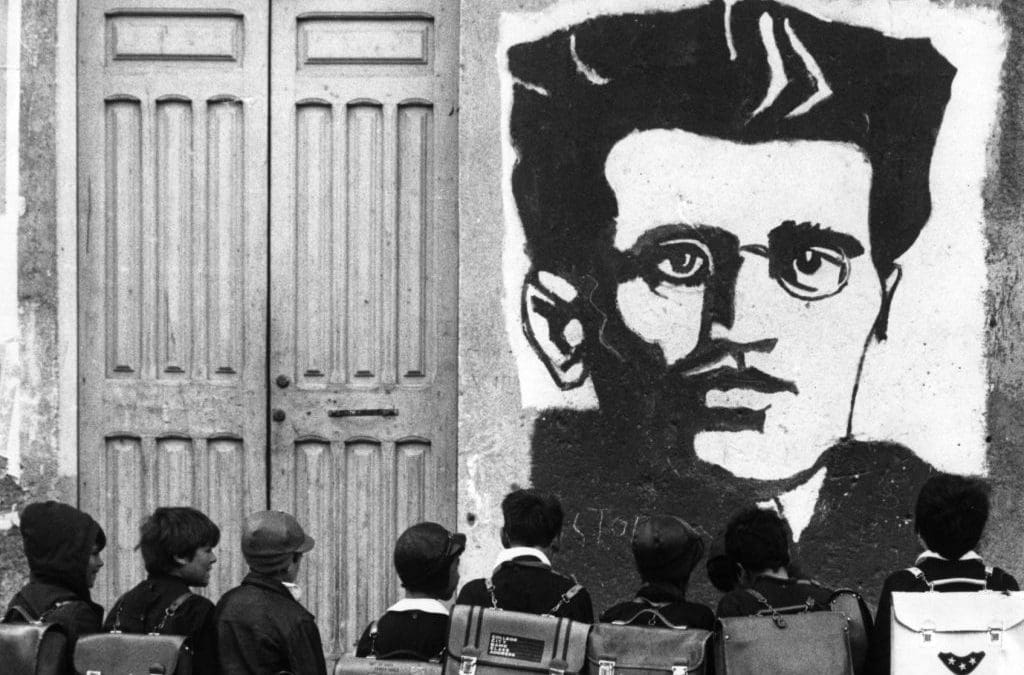
‘Gaining consent by promising force’: Late fascism and Gramsci
In Part 2 of a conversation between Mansa Musa (former political prisoner and Black Panther) and Alberto Toscano (professor of critical theory and author of Late Fascism), the two discuss how consent and coercion operate within US civil society and abroad. They specifically unpack how Donald Trump’s domestic and foreign platforms animate white nationalism—relying on the explicit promise of state violence against targeted populations.
Guests:
Alberto Toscano is a renowned Italian cultural critic, social theorist, philosopher, translator, and adjunct professor at the Simon Fraser University School of Communication. Toscano is a columnist at In These Times and the (co-)author of numerous books, including: Late Fascism: Race, Capitalism and the Politics of Crisis; and Fanaticism: On the Uses of an Idea.
Credits:
Producer / Videographer / Editor: Cameron Granadino
Transcript
The following rushed transcript may contain errors. It will be updated as soon as possible.
Mansa Musa:
Gramsci wrote about consent and coercion. Talk about the difference when it comes to a targeted population of prisons and policing.
Alberto Toscano:
Yeah. So that relationship between consent and coercion or in Gramsci’s terms also hegemony and domination or consent and force is really crucial. Gramsci was enough of a realist about politics. After all, he was also a very brilliant reader of Machiavelli that he never thought that force or coercion could be eliminated from politics altogether, but he was very interested in looking both at the past and the present to think about the mix of force and coercion, hegemony and consent. That’s also why he was so interested in the question of policing and of how to conceive of the police. And on could argue that the expansion of repression and incarceration is always a
Minnesota trade unionists among those targeted in federal indictments of ICE observers
This story originally appeared in Workday Magazine on June 16, 2026. It is shared here with permission.
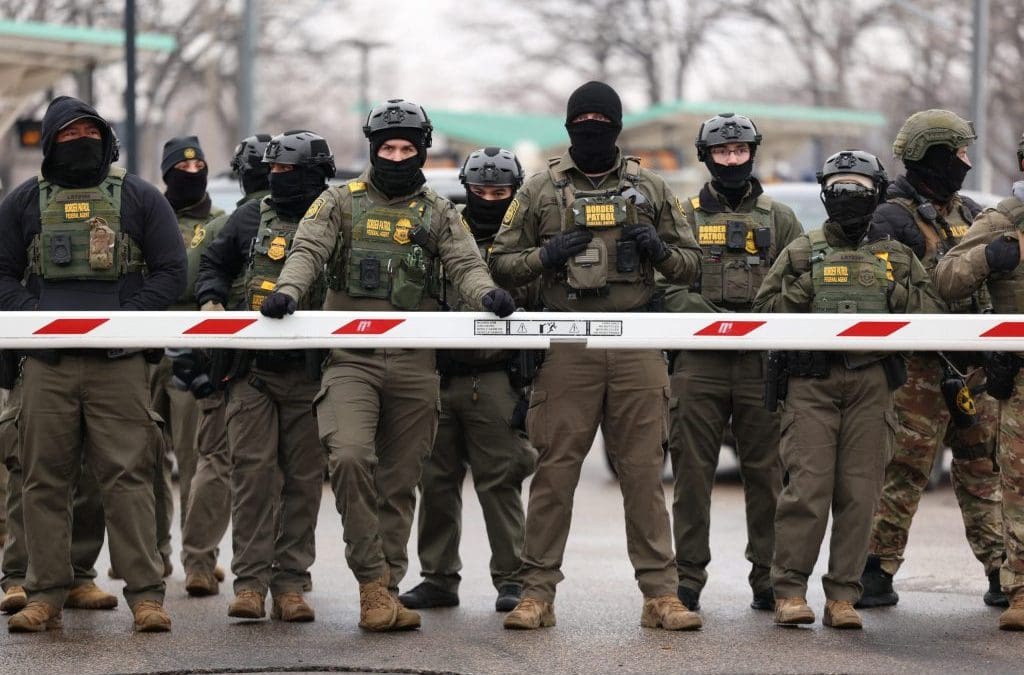
Minnesota trade unionists active in worker assemblies are among the 15 people indicted by the federal government today, as part of a sweeping crackdown on organizing in opposition to the ICE and Border Patrol since December 2025. Among a slew of other allegations, the indictment cited some of the individuals’ participation in assemblies of trade unionists and other workers held at the United Labor Centre in Minneapolis as evidence that the activists participated in a criminal conspiracy.
All 15 of the people indicted are charged with “conspiracy to impede or injure a federal officer,” which activists describe as an effort to use draconian charges to crush Minnesota’s widely celebrated organizing against the armed federal agents who descended on the state this past winter.
“Trade unionists active in worker assemblies are among those who were arrested,” says Kieran Knutson, president of Communications Workers of America Local 7250. “The trade unionists I’ve known for years are stand-up people who believe in solidarity. They believe an injury to one is an injury to all. They are outstanding union activists in their union and workplace, and I’m proud to know all of them.”
Marcia Howard, the president of the teacher chapter of the Minneapolis Federation of Educators (MFE) Local 59, confirmed that trade unionists are among those detained. “I find it telling that they are going after unionists, including educators I know of right now, that they are going after workers. I’m really pissed off,” she said.
Howard is withholding the exact number of trade unionists and their union roles out of concern for
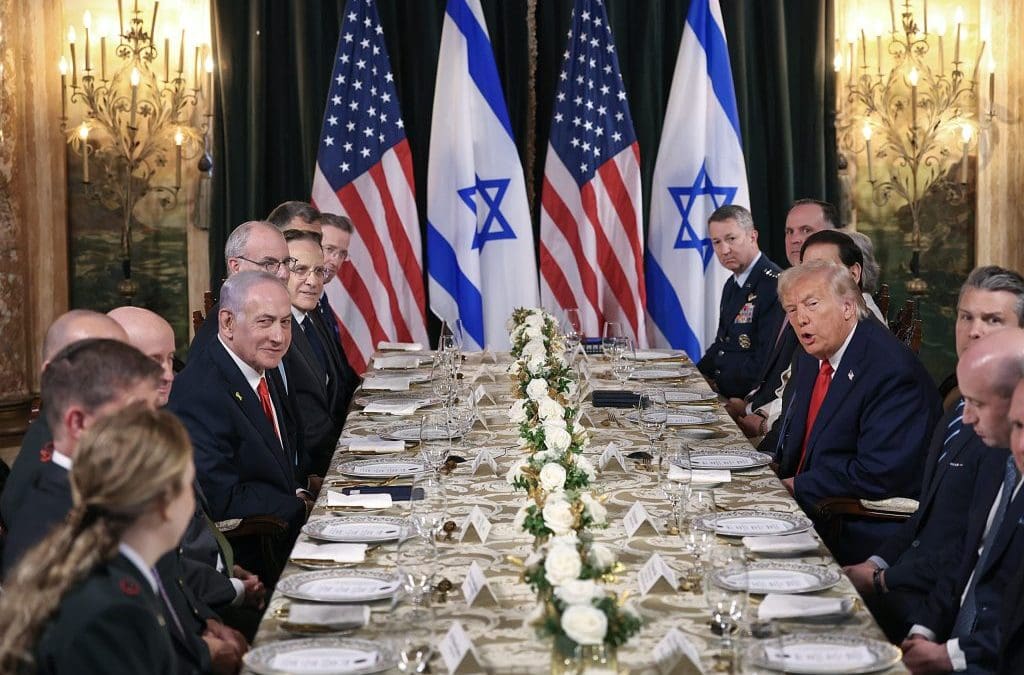
The U.S. and Iran have struck a deal to open the Strait of Hormuz, but Israel may prevent an end to the war
This story originally appeared in Mondoweiss on June 16, 2026. It is shared here with permission.
According to reports, the Memorandum of Understanding (MOU) between the United States and Iran to open the Strait of Hormuz and formally end the fighting between the two countries was signed on Monday.
It is important to clarify that, regardless of White House statements, this is not a peace deal. It is an agreement to end the standoff in the Strait of Hormuz and a commitment to stop fighting for 60 days while an agreement is reached, hopefully. The negotiation period can be extended if both parties agree. Still, it is a important agreement that indicates a end to this disastrous war could be in sight.
But as usual Israel stands to play the role of spoiler. The one thing that is most clear is that Tel Aviv won’t give up on its long-term goal of regime change in Iran. But if this MOU actually takes effect and opens the Strait of Hormuz, that will not be achieved through this war.
What is the agreement?
According to American officials, details of the MOU will be released in the next day or so. But we already have a pretty good idea of what it says and what it does not say.
While none of the terms have been announced, it seems certain that the mutual blockades of the Strait will be lifted and commercial traffic will flow through the whole Persian Gulf again. That might take a bit of time, as mines planted by Iran must be removed, a delicate process. But if all sides cooperate, it will be done in short