


How the United States stole Mexico
Increasingly, Trump has his sights set on Mexico—promising to send in US troops in the name of fighting cartels and advancing a so-called drug war policy. But Trump’s actions hearken back to an era of US empire much, much older.
See, Mexico has withstood a long history of foreign intervention by the Spanish, French, and multiple times by the United States.
In 1848, Mexico lost more than half its territory to the United States. The US states of California, Nevada, Arizona, New Mexico, Utah, and more used to be part of Mexico.
Today, host Michael Fox visits Mexico’s National Museum of Interventions in Mexico City, and we look back at the devastating history of foreign intervention in Mexico amid Trump’s threats against Mexico and elsewhere in the region today.
This is Episode 9 of Under the Shadow, Season 2.
Under the Shadow is an investigative narrative podcast series that walks back in time, telling the story of the past by visiting momentous places in the present. Season 2 responds in real time to the Trump administration’s onslaught on Latin America.
Hosted by Latin America-based journalist Michael Fox.
This podcast is produced in partnership between The Real News Network and NACLA.
Theme music by Michael Fox’s band, Monte Perdido. Monte Perdido’s 2024 album Ofrenda is available on Spotify, Deezer, Apple Music, YouTube or wherever you listen to music.
Other music from Blue Dot Sessions and Epidemic Sound.
Script editing by Heather Gies. Hosted, written, produced, mixed, and edited by Michael Fox.
Guests
Christy Thornton, Associate Professor of History at NYU
Resources
Here is the link to Mexico’s National Museum of Interventions.
You can check out Michael Fox’s Patreon to see exclusive pictures of the museum and the wall out front.
Here is

Fifty years after the coup, Argentina still marches for justice
How a media campaign of lies and innuendo created the myth of ‘Iran’s nuclear weapons’
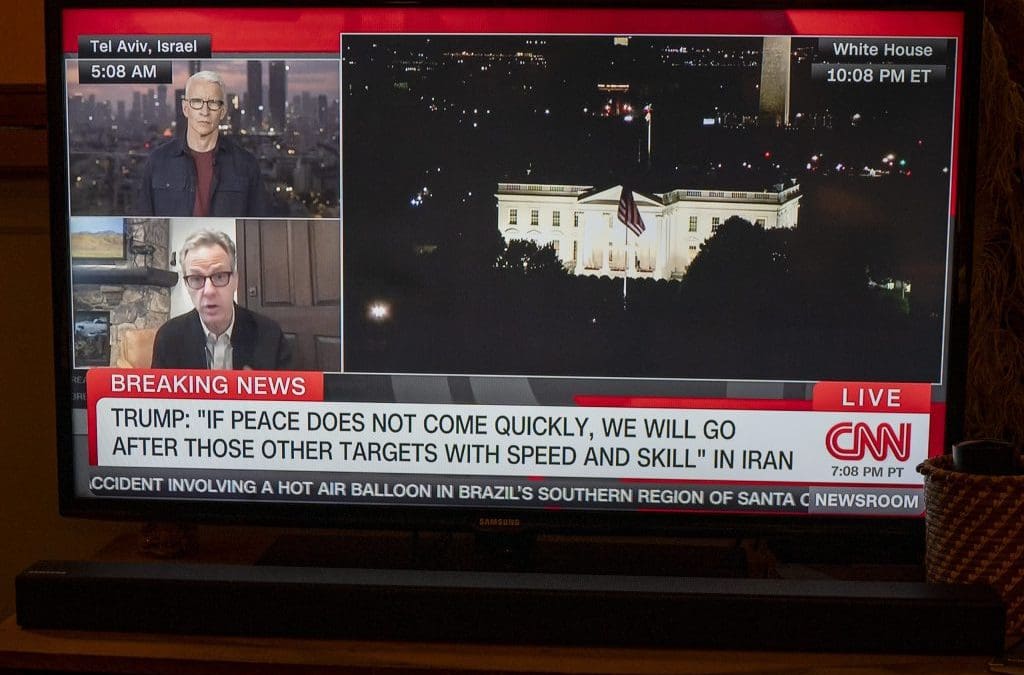
While a war against Iran remains deeply unpopular, the percentage of Americans who support its underlying logic and goals remains relatively high. The premises for wars in US discourse––whether it’s Iraq’s WMDs or Hamas’ mindless jihadist barbarity––are rarely in dispute, only the method to best contain or eliminate these existential enemies. Since Iran has not attacked the US directly (the Iraqi “Shia proxies” line is, for example, mostly a lie), and has killed fewer US civilians in the past 30 years than Israel has, building a casus belli to launch an attack on Iran has been difficult for war promoters. Absent a real threat, what one usually hears is a combination of vague reference to Iran-allied Shia militias attacking US troops in Iraq during the US Iraqi occupation (don’t ask why the US invaded both of Iran’s major neighbors), lines about Iran being the “largest exporter of terrorism in the world” (a braindead cliche that no one bothers to even explain anymore) and—the most popular and frightening—that Iran is perpetually on the brink of developing a nuclear weapon that “could” maybe, sort of, one day reach the United States. Pursuant to this latter talking point, the idea of Iran’s civilian nuclear energy program has effectively been weaponized and rendered menacing to Western audiences through many framing and rhetorical tricks, wearing down a public that has neither the time nor inclination to understand the nuances of nuclear policy.
This dynamic is reflected in a new a YouGov poll fielded by ReThink Media from February 2026 that shows 25% of Americans believe the patently false claim that Iran currently possesses nuclear weapons and

Yanis Varoufakis knows who’s going to lose the war in Iran
This story originally appeared in Professor Glenn Diesen’s Substack on March 14, 2026. This shortened, edited version is shared here with permission.
The war in Iran, besides being dangerous, is also very interesting because it’s an example of asymmetric warfare. The US is obviously much more powerful, which is probably why there has been a significant amount of hubris: it entered this war with a lot of confidence and assumption of escalation dominance. Thus, we see that the Iranians are forced to fight with other means, including the ability to shut down the energy trade. And given that Iran also sees this as an existential threat—not just an effort to “liberate women” or something—they seem to be willing, or prepared, to shut down the global economy in order to avoid defeat.
I recently spoke with Professor Yanis Varoufakis, the former finance minister of Greece and a founder of DiEM25, the Democracy-in-Europe Movement, about where this war is heading and what impacts it is having on the global economy.
[Editor’s Note: The following transcript has been lightly edited for length and readability from the original full conversation, available here]
Glenn Diesen: Where do you see this war heading? Because it seems like everyone is betting everything on it, and I don’t see enough off-ramps for anyone.
Yanis Varoufakis: We must remember that this is not new. The United States has engaged in a series of asymmetric conflicts where it entered with immense confidence and exited, sometimes many many years later, with its wings clipped.
They invaded Afghanistan. It took them 20 years to be defeated, but they were defeated and they left with the Taliban—whom they had
‘Beyond the pale’: general says US military will create a ‘camp’ at Gitmo to ‘deal with’ Cubans fleeing Trump blockade
This story originally appeared in Common Dreams on Mar. 20, 2026. It is shared here under a Creative Commons (CC BY-NC-ND 3.0) license.
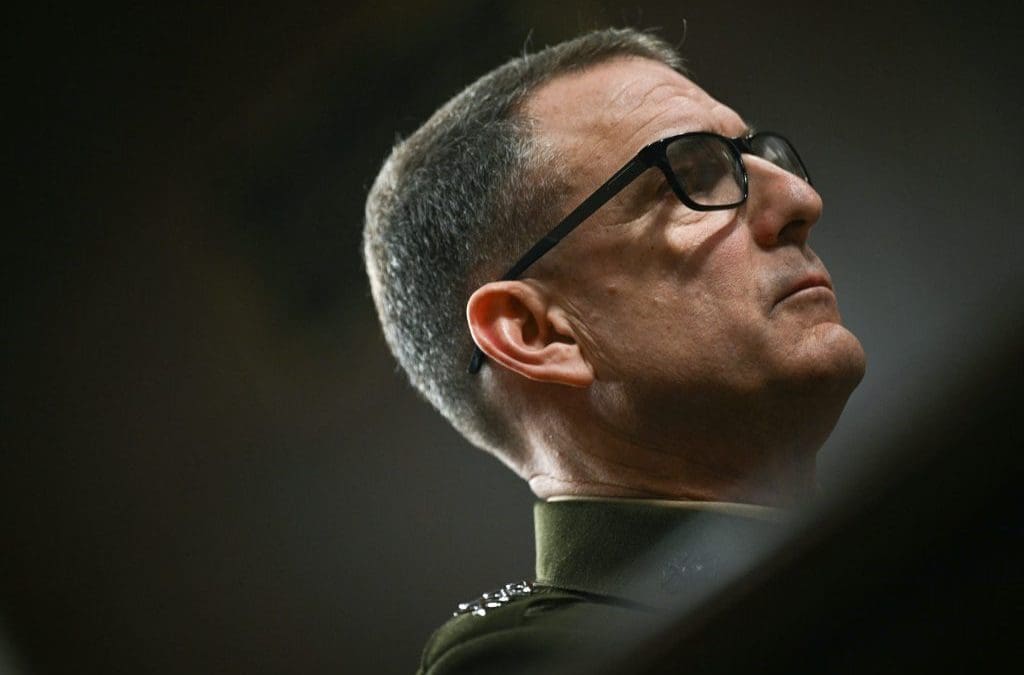
As the Trump administration sows chaos with a crushing fuel blockade of Cuba, a general told Congress that the military will “set up a camp” at Guantánamo Bay to detain those who try to flee the humanitarian crisis inflicted by the United States.
The phrase “humanitarian crisis” was used by Sen. Tom Cotton (R-Ark.) to describe the situation in Cuba during a Senate Armed Services Committee hearing on Thursday, as he questioned US Marine Corps Gen. Francis Donovan, the commander of the US Southern Command (SOUTHCOM).
Donovan, a 37-year Marine veteran, took command of SOUTHCOM in February after being tapped by President Donald Trump. His predecessor, Adm. Alvin Holsey, abruptly resigned in December reportedly after he’d raised concerns about the Trump administration’s bombings of alleged drug trafficking boats in the Caribbean, which have been widely described as illegal under international law.
On Thursday, Cotton asked Donovan, “Are we prepared for any kind of humanitarian crisis in Cuba—the possible flow of refugees, other civil disorder that may threaten our interests, especially if the decrepit, corrupt Castro regime finally falls or flees?”
“Senator, yes we are,” Donovan responded. “SOUTHCOM… We have an [executive] order to be prepared to support [the Department of Homeland Security] (DHS) in a mass migration event. They would take the lead, we would follow.”
Donovan said this would include using the US military base at Guantánamo Bay, “where we would set up a camp to deal with those migrants or any overflow from any situation in Cuba itself.”
As US starves Cuba of energy & food, neocon Cotton wants DOD to be ready for a “humanitarian crisis,” “flow of