by Michael Fox and Marc Steiner | Jun 11, 2026 | First Amendment, free speech, history, Podcast, Politics and Movements: US, The Battle for Free Speech, The Cultural Front
Transcript
The following is a rushed transcript and may contain errors. It will be updated as soon as possible.
Michael Fox: Hi Mark.
Marc Steiner: Hey Mike, how you doing? Good to see you.
Michael Fox: Good to see you.
Marc Steiner: What do you got for us today?
Michael Fox: All right. So late last fall I visited this place that I think you’ll appreciate for this episode. Sprout Plaza at the University of California campus.
Marc Steiner: I know exactly where you were.
Michael Fox: So it’s a beautiful blue sky out. Leaves are changing colors. It’s a crisp autumn afternoon and in front of me is this big long stoic building marble, four big long Roman columns at the top of a row of stairs. This is the administration building here at the University of California Berkeley and this is called Sproul Hall. And that is important because this was literally ground zero for the free speech movement of 1964 here at the University of California Berkeley. Like the Plaza where I’m at right now, which is Sprout Plaza, was where you just had daily marches, protests, speeches just constantly happening.
I think it is really poignant that on the ground in front of Sprout Hall, someone has written in chalk, Trump must go now, refuse fascism. And it’s chalked up in two different locations here. People still staking out their territory, demanding their right to speak their voice. I was there to get a sense of the feeling being there and kind of the legacy today. And of course this was ground zero for the free speech movement. And Mark, that’s something you know
by Kelly Hayes | Jun 11, 2026 | Climate Crisis, COVID, disaster planning, Heat Deaths, Interview, Organizing, Pandemic, Podcast, Wildfires
As climate disasters intensify and authoritarian threats escalate, most of us are underprepared for moments when systems fail or are weaponized against us. In this episode of Movement Memos, Kelly talks with Chris Begley and Amy Edelman, authors of The Emergency Playbook: A Bunker-Free Guide to Disaster Preparation, about how preparedness can move us away from fear, isolation and bunker fantasies…
Source
by Maximillian Alvarez | Jun 8, 2026 | Economy and Inequality, ICE, Israel, labor, Palestine, Podcast, Politics and Movements: US, Unions, Working People
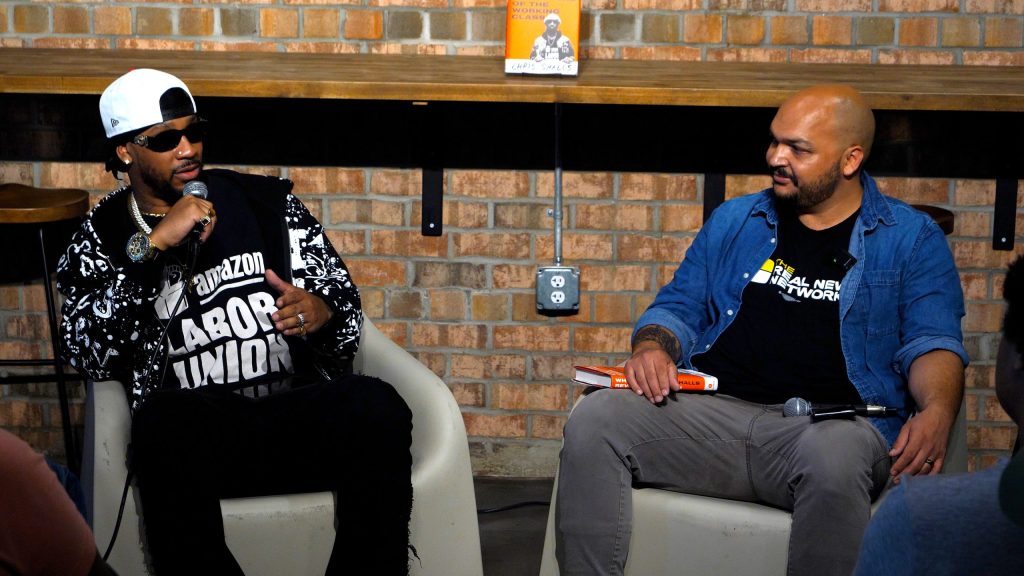
At a live event hosted at Red Emma’s Cooperative Bookstore and Coffeehouse in Baltimore, Maryland, TRNN Editor-in-Chief Maximillian Alvarez got to sit down for a deep and wide-ranging conversation with Chris Smalls, co-founder and former president of the Amazon Labor Union. Alvarez and Smalls discuss Smalls’ new book, When the Revolution Comes: A Fight for the Future of the Working Class; they recount the incredible story of the formation of the Amazon Labor Union and the unionization of the first Amazon warehouse in the US; and they talk about Smalls’ journey from warehouse worker and labor organizer to becoming an internationally recognized public figure and a human rights activist who has sailed with humanitarian flotilla missions to Gaza and Cuba.
Additional links/info:
Chris Smalls X page and Instagram
Chris Smalls, Penguin Random House, When the Revolution Comes: A Fight for the Future of the Working Class
Maximillian Alvarez, TRNN, “Chris Smalls: Sabotage attempts and death threats won’t stop Gaza Freedom Flotilla”
Featured Music:
Jules Taylor, Working People Theme Song
Credits:
Audio Post-Production: Jules Taylor
Transcript
The following rushed transcript may contain errors. It will be updated as soon as possible.
Maximillian Alvarez:
All right Welcome everyone to Working People, a podcast about the lives, jobs, dreams, and struggles of the working class today. Working People is a proud member of the Labor Radio Podcast Network and is brought to you in partnership with In These Times Magazine and the Real News Network. This show is produced by Jules Taylor and made possible by the support of listeners like you. My name is Maximillian Alvarez and we’ve got a really special episode for y’all today, which is a recording of a live event
by Michael Fox | Jun 4, 2026 | free speech, Podcast, Politics and Movements: US, The Battle for Free Speech, Trump
by Michael Fox | May 28, 2026 | Honduras, Latin America, Podcast, Politics and Movements: International, Under the Shadow
On the morning of April 30, the Spanish website Diario Red and the television channel Canal Red began to release a series of leaked audio recordings between powerful right-wing figures in the Americas. They called it HondurasGate.
By May 6, the outlets had released a total of 37 WhatsApp, Signal, and Telegram messages. What they reveal is a shocking network pushing to undermine leftist leaders in the region. It’s one of the biggest political scandals in the Americas in years, and it implicates the Trump administration, Israel, Argentina’s libertarian president, and a load of right-wing Honduran officials in underhanded activities to take down political opponents, with thousands of dollars funneled into a right-wing propaganda outlet allegedly located in the United States.
The messages have been independently verified twice, confirming that they are not AI-generated. And you have likely heard little, if anything, about them.
Today, host Michael Fox walks you through the leaks—what they are, what they mean, and the repercussions for the region.
This is Episode 11 of Under the Shadow, Season 2.
Under the Shadow is an investigative narrative podcast series that walks back in time, telling the story of the past by visiting momentous places in the present. Season 2 responds in real time to the Trump administration’s onslaught on Latin America.
Hosted by Latin America-based journalist Michael Fox.
This podcast is produced in partnership between The Real News Network and NACLA.
It is supported, in part, by Global Exchange.
Theme music by Michael Fox’s band, Monte Perdido. Monte Perdido’s 2024 album Ofrenda is available on Spotify, Deezer, Apple Music, YouTube or wherever you listen to music.
Other music from Blue Dot Sessions and Epidemic Sound.
Script editing by Heather Gies. Hosted, written, produced,
by Kelly Hayes | May 28, 2026 | CoreCivic, Donald Trump, Fascism, ICE, immigration, immigration jails, Interview, Organizing, Podcast
“The immigration camp, it really depends on a lot of local infrastructure. It is not this untouchable federal abstraction. It is up to us, neighbors, community members, and we have the actual power to shut them down,” says journalist John Washington. In this episode of Movement Memos, Washington joins host Kelly Hayes to discuss his book How to Close a Camp: Dispatches from the Fight Against…
Source