by Maximillian Alvarez, Dave Zirin, and Jules Boykoff | Jul 22, 2026 | edge of sports, Edge of Sports TV, Fascism, Opinion, Podcast, Politics and Movements: International, Politics and Movements: US, Sports, The Cultural Front
For many around the US and around the world, the World Cup was a welcome distraction from the dismal state of the world and the daily overwhelm of relentless war, corruption, fascism, and disaster. But the games were also an uncomfortable reminder that, no matter how much we love sports and want them to be an escape from politics and the pain of living in a broken society, there is no way to truly escape those things, and the manufactured illusion that sports are an escape from political reality is just that: an illusion.
At a live event hosted on July 16, 2026, at Chilo’s bar in New York City, TRNN Editor-in-Chief Maximillian Alvarez spoke with legendary sportswriters Dave Zirin and Jules Boykoff about what it means to love sports in an age of authoritarians.
Additional links/info:
Chilo’s bar website and Instagram
Jules Boykoff, OR Books, Red Card: The 2026 World Cup, Sportswashing, and the FIFA Greed Machine
Dave Zirin, Penguin Randomhouse, The People’s Historian: The Outsized Life of Howard Zinn
Credits:
Audio Post-Production: Alina Nehlich
Transcript
The following is a rushed transcript and may contain errors. It will be updated.
Maximillian Alvarez:
Welcome back to the Real News Network. I’m Maximillian Alvarez. The 2026 World Cup is now officially over after Spain defeated Argentina in the final match on Sunday. And for many of us around the US and around the world, the World Cup was a very welcome distraction from the ambient awfulness and doom and the daily delugion overwhelm of relentless war, corruption, fascism and disaster. But the games were also an uncomfortable reminder that no matter how much we love sports and the global spectacle of the
by Nada Elia and Noura Erakat | Jul 22, 2026 | Article, Gaza, Israel, Opinion, Palestine, Politics and Movements: International, Prisons and Policing, Reprint
by Zeeshan Aleem | Jul 22, 2026 | Opinion, White House, World
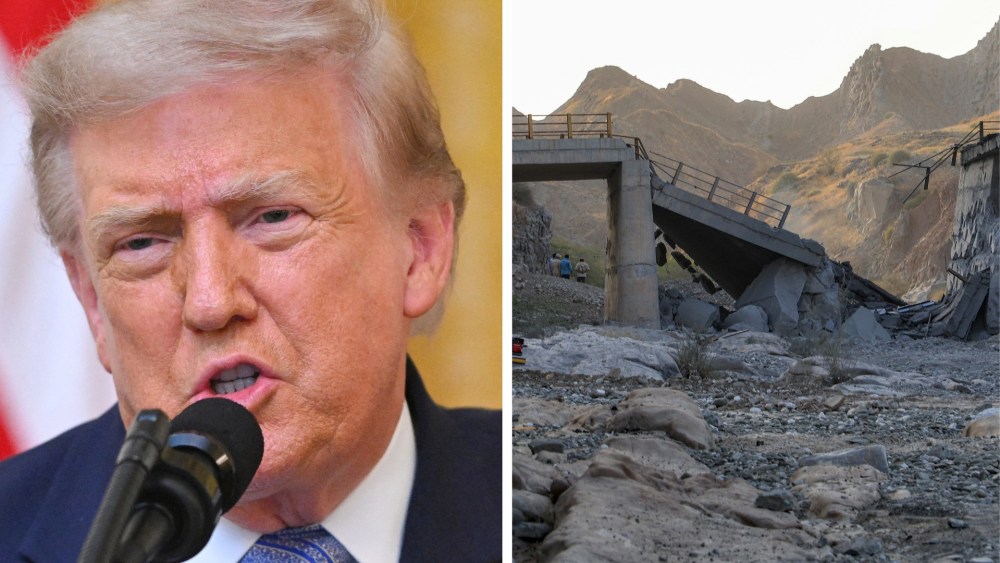
The resumption of hostilities between the United States and Iran has caused an uptick in U.S. casualties. Last week, CENTCOM confirmed the deaths of three more U.S. service members killed in action, and the total number of troops killed during the war currently stands at 18. Meanwhile nearly 100 troops have been injured over the past two weeks as Iran escalates attacks on U.S. bases across the Middle East.
President Donald Trump continues to try to cast the war as an operation of total U.S. domination against a defanged regime, but Iran is striking back, with American lives at stake, making justifications for continuing the unpopular war even harder for Trump. And with the president signaling an openness to escalating the conflict even further in the coming weeks, the human toll is likely to increase. (Iranian casualties are far worse, with at least 1,700 Iranian civilians killed, according to estimates from the U.S.-based Human Rights Activists News Agency.)
It will be nearly impossible for the Trump administration to ward off the reality that casualties make wars less popular.
Already lacking in meaningful transparency, the Trump administration appears to be growing more cagey about releasing information about casualties. But efforts to delay or obscure the information are unlikely to prevent the inevitable — the war will become even more widely despised as more people die.
CNN reported on Monday that the Pentagon has been “slow to disclose injuries to U.S. troops during the ongoing war with Iran, avoiding publicly confirming the fallout from Iranian attacks and mostly reserving totals to a military website that lags events by several days or even weeks.” And its mode
by Lt. Col. Rachel E. VanLandingham (ret.) | Jul 22, 2026 | Opinion, Politics, White House
In its recent strikes in Iran, the United States widened its targeting aperture to bomb sites directly serving the Iranian population, such as electrical power plants, bridges, railway stations and roads. By doing so, the U.S. deliberately chose to inflict greater suffering on Iranian civilians. Over 500 Iranians have reportedly been injured this month, and more than 50 people, including children, have been killed. And those numbers don’t capture the full harm, such as sheer terror, caused by the destruction of items and resources vital to daily civilian life.
Attacking facilities and places that contribute to Iranian military action or are expected to do so in the future, and whose destruction provides the attacker military advantage, can be lawful — even if on a day-to-day basis such facilities and places serve ordinary civilians. That is, strikes are lawful if U.S. commanders reasonably assess that such targeted infrastructure meet the law of war’s “effective contribution to military action” test and that expected harm to civilians isn’t excessive.
Regardless of legality, the U.S. targeting Iranian infrastructure used by civilians is likely to cause far more civilian deaths than those caused by targeting purely military objects.
According to the law of war, “military action” is quite broad and can be indirect, such as a war-supporting activities and, for the U.S, even so-called war-sustaining activities. Power plants can be considered lawful military objectives even if they don’t directly serve a military base, because, according to the Department of Defense’s Law of War manual, they “are generally recognized to be of sufficient importance to a State’s capacity to meet its wartime needs of communication, transport, and industry so
by John Pfaff | Jul 21, 2026 | Civil Rights, Opinion
Last week, an Immigration and Customs Enforcement officer shot and killed a Colombian national, Joan Sebastián Durán Guerrero, during a traffic stop in Biddeford, Maine. While ICE has refused to name the officer who killed Guerrero, The Associated Press has identified him as David Brouillette. And in a telling departure from its usual practices, ICE did not even try to argue that Guerrero “weaponized his vehicle” (although Homeland Security Secretary Markwayne Mullin did try to use this line at first).
The Department of Homeland Security’s official explanation is only that Guerrero tried to flee and that Brouillette shot him out of a “fear for public safety,” not his own personal safety. Guerrero is at least the 11th person shot and killed by federal immigration officials since the start of President Donald Trump’s second term. The violence at car stops has become so bad that ICE, rarely one to back down from a fight, last week ordered its agents to suspend almost all car stops, although Trump personally reversed that order the next day.
But as more details have been revealed, the core issue of the outrageous lack of vetting and proper training for ICE agents has come into greater focus.
One major cost of ICE’s attempted hiring surge has been an apparent breakdown in vetting.
Shortly after the shooting, one of Brouillette’s ex-wives, Ashley Brouillette, came forward to talk about his history of mental illness and domestic violence, after he called her following the shooting to ask her to vouch for his character. The story that emerged is terrifying. Ashley told reporters that he had abused her (Brouillette did not respond to efforts by
by Hayes Brown | Jul 21, 2026 | Congress, Opinion, White House
President Donald Trump knows that if Democrats manage to win back control of the House in November, his third impeachment likely will not be far behind. And yet, despite racking up a laundry list of potentially impeachable offenses primed for investigation, the president might not be the most vulnerable person in his administration. Democrats would be wise instead to set their sights not on the White House itself, but next door in the Eisenhower Executive Office Building, where Russell Vought has spent the last year and a half willfully breaking the law.
As head of the White House Office of Management and Budget, Vought has a hand in how practically every tiny bud on the executive branch operates. With the possible exception of deputy chief of staff Stephen Miller, Vought arguably has the firmest grip on the levers of power in Washington. While Trump’s focus is trained on a handful of obsessions, Vought has the knowledge and skill set to turn his Christian nationalist ideology into policy — and transform those policies into reality.
As head of the White House Office of Management and Budget, Vought has a hand in how practically every tiny bud on the executive branch operates
For years, Vought has advocated for massive, draconian cuts to federal spending, during both his previous stint atop the OMB in the waning days of the first Trump administration and as part of a pro-MAGA think tank in the interregnum period. The OMB acted as overseer for the Department of Government Efficiency project last year, providing an aegis for the quasilegal agency to initiate mass firings and unilateral spending cuts. While that effort