by Adam Johnson | Nov 2, 2026 | Article, Democratic Party, Media Criticism, midterms, Opinion, Politics and Movements: US
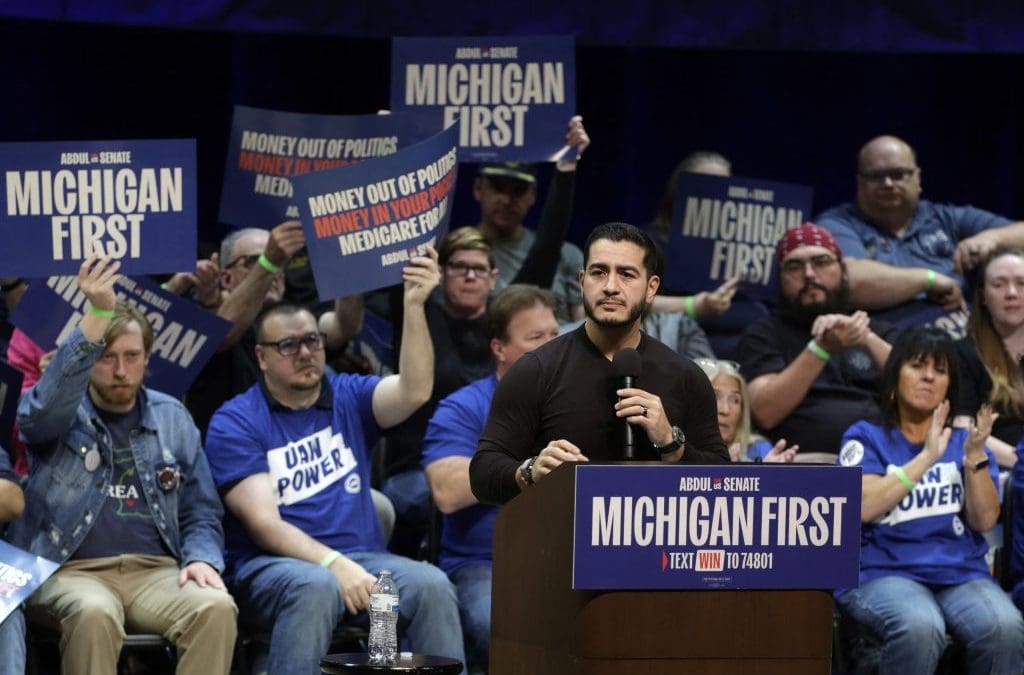
You may have heard that Michigan Democratic Senate nominee Abdul El-Sayed is “having a lot of trouble putting [the Democratic] coalition back together,” or that “Democrats [are] struggling to unite behind El-Sayed,” or that “Democrats are still struggling to unite behind El-Sayed,” or that “El-Sayed faces resistance from some voters who would ordinarily be inclined to support a Democrat,” or that “Democratic divisions could hurt El-Sayed.” It’s a prominent narrative that is driving political discourse in the closing weeks of the tight Michigan Senate race.
There’s only one problem with this narrative: It has zero empirical basis. It’s a total confection of US media and the pro-Israel lobby that isn’t supported by any data whatsoever. Two recent polls, one from Marist and one from RedBox Research, make it clear that El-Sayed’s support among Democratic voters in Michigan is both extremely high (95%) and the exact same percentage as Republican candidate Mike Rogers’ support with Republicans. And a new poll from Mitchell Research CBS complicates the narrative even further, finding that support for El-Sayed among Democrats is, in fact, 3 points higher than Rogers is among Republicans, at 94% versus 91%, respectively.
If El-Sayed and Rogers have the exact same percent of party dissent—or, as is the case in the CBS Detroit poll, Rogers has more—then why are there countless stories highlighting, handwringing, and scandalizing the trivially small dissent for only one of the candidates? Where are the breathless profiles of Republicans refusing to vote for Rogers? Where are the NPR and CNN segments focusing on “Republican divisions”?
There, of course, aren’t any, because this narrative wouldn’t advance an ideological agenda.
The “Michigan Democrats are
by Sam Rosenthal | Oct 2, 2026 | 2026 midterms, Democratic Party, DNC, elections, News
This summer, attendees who were punctual enough to make it into the 9:00 am Democratic National Committee’s (DNC) resolutions meeting at its August convening in Texas were treated to an unusual display: In a humdrum corner of the Austin Marriott Downtown, the DNC resolutions committee voted to abolish Immigration and Customs Enforcement (ICE). And, in a move that went against the DNC’s habit of…
Source
by Adam Johnson | Oct 1, 2026 | Article, Democratic Party, Democrats, Israel, Politics and Movements: International, Politics and Movements: US
Are top Democrats actually “shifting” on Israel, or is the PR simply getting more sophisticated?
After the midterms wrap up and the race for the Democratic 2028 nominition for president kicks off in earnest, this will be a central question those concerned with the US role in the genocide in Gaza must grapple with clearly, honestly, and with—it turns out—a high degree of skepticism and media literacy. That’s because the forces committed to keeping the weapons flowing to Israel quickly adjusted their tactics to meet the mood of the public, and the mood of Democrats in particular.
Last year for TRNN, I detailed the three main ways AIPAC Democrats will seek to look critical of Israel while assuring that the pro-Israel status quo remains fundamentally unchanged. Since I wrote that breakdown, a fourth talking point—and one that seems inevitable in retrospect—has emerged as a favorite of liberals who want to seem “tough on Israel,” but don’t want to upset the Israel Lobby. This line, which I documented last April, commits to “ending US aid to Israel” which, despite seeming like a meaningful break or a move left, is a policy that first emerged from Israeli Prime Minister Benjamin Netanyahu and the late US Sen. Lindsey Graham. And, as I noted, it was planned out by far-right think tanks Foundation for Defence of Democracies and Heritage Foundation—specifically designed to blunt the primary argument against support for Israel. Last January, Netanyahu told the Economist that he wants to “taper off” formal US military funding. Pro-Israel lobbying organization J-Street then took this right-wing idea and proceeded to sell the “cut off aid to Israel” line
by Taya Graham and Stephen Janis | Sep 15, 2026 | Democratic Party, Democrats, Inequality, Inequality Watch, midterms, Politics and Movements: US, video
David Sirota explains how consultants profit from massive television-ad purchases, how billionaire-funded super PACs influence the candidates and policies voters are offered, and how the language of “moderation” and “electability” is used to undermine progressive and populist challengers.We examine the consequences of legalized political corruption: Washington’s silence on America’s healthcare crisis, the widening gulf between voters and their representatives, and the 50-year campaign to transform elections into auctions while concentrating power in the presidency.David Sirota is the founder of the investigative news organization The Lever, a former speechwriter for Bernie Sanders, an Oscar-nominated co-creator of the story for the movie Don’t Look Up, and the producer of the podcast series Master Plan.
Additional links/info:
David Sirota and Jared Jacang Maher’s co-authored book, Master Plan: The Hidden Plot to Legalize Corruption in America
The Lever’s website, Instagram, and podcast series, Master plan
Credits:
Production: Stephen Janis, Taya Graham
Written by: Stephen Janis
Studio Production: Cameron Granadino
Post-Production: Stephen Janis, David Hebden
Transcript
The following is a rushed transcript and may contain errors. It will be updated as soon as possible.
Taya Graham:
Hello, my name is Taya Graham and welcome to the Inequality Watch Report, a show that examines government policy and action through the lens of extreme economic inequality, the existential issue of our time. Today, we’re going to discuss a topic that defines who holds power in America and how they keep it despite growing voter dissatisfaction amid a historic wealth imbalance. It’s a story of money, access, and self-enrichment that is at the root of the bad policies and broken institutions we all struggle with daily. And it’s an issue that transcends the nominal state of play in this country
by Brett Wilkins | Sep 15, 2026 | Article, Democratic Party, Democrats, Israel, midterms, Palestine, Politics and Movements: US, Reprint
This story originally appeared in Common Dreams on Aug. 26, 2026. It is shared here under a Creative Commons (CC BY-NC-ND 3.0) license.
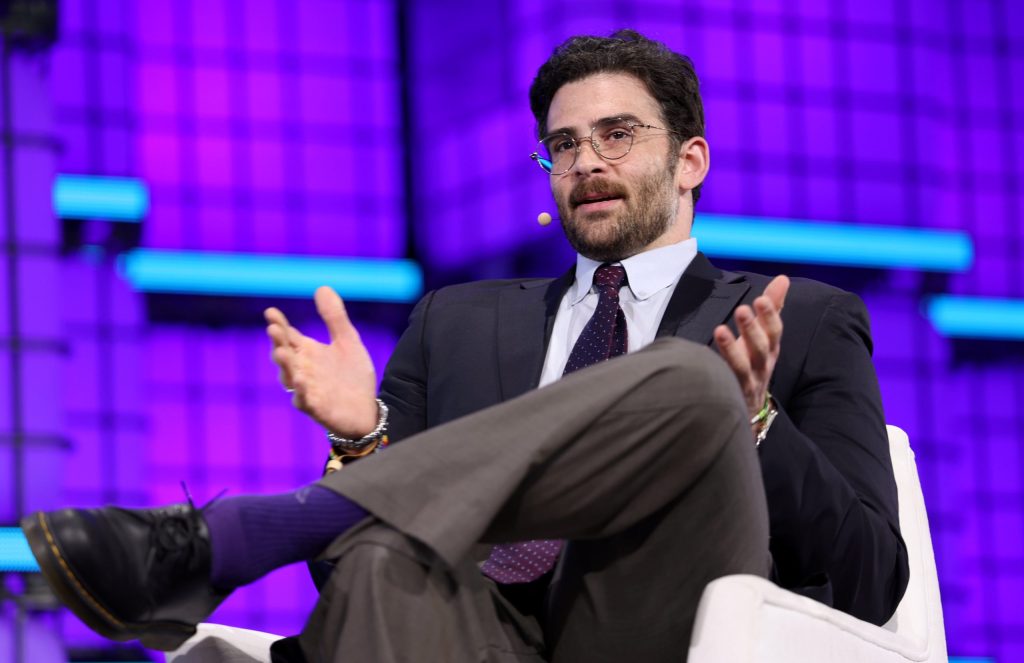
A growing number of establishment Democrats are facing backlash from progressives for their escalating attacks on leftist streamer Hasan Piker, with critics accusing the party’s corporatist wing of obsessing over an online influencer while ignoring the economic and foreign policy grievances driving millions of voters away on the eve of the critical midterm elections.
The latest controversy erupted after Piker argued during an online broadcast that Jewish Americans’ public support for Israel could contribute to antisemitism. Piker’s comments drew swift condemnation from prominent Democrats, including House Minority Leader Hakeem Jeffries (NY), who, without naming Piker, called them “dangerous and antisemitic.”
Other Democrats piled on, prompting rebuke from progressives, who accused the centrists of caring more about an online personality than winning back control of Congress in November.
Former progressive Michigan congressional candidate Kyle Blomquist called it an “absolute mass psychosis event.”
Wild to see establishment Dems fighting a Twitch streamer harder than they’re fighting Trump. Putting out statements attacking @hasanthehun while meeting with Jared Kushner. It’s so obviously playing into the right’s midterm strategy of distracting people from rising costs. pic.twitter.com/vhxHN9pTpB— Aaron Regunberg (@AaronRegunberg) August 25, 2026
“Too many demotivated Democrats stayed home in 2016 and 2024. We can’t repeat past mistakes,” Rep. Ro Khanna (D-Calif.) said on social media.
Khanna implored Democrats to stop calling Sen. Bernie Sanders (I-Vt.)—who is Jewish—an antisemite and “stop wasting time attacking Hasan Piker instead of [President Donald] Trump’s robber-baron corruption.”
“Don’t put Israel hawks out of touch with our voters in charge of our Middle East policy,” he added. “It is time for a reckoning: Are we a party that represents corporate interests and super PACs, or will we
by Adam Johnson | Aug 12, 2026 | Article, Democratic Party, elections, Media Criticism, midterms, Opinion, Politics and Movements: US
As progressive, DSA, and DSA-adjacent candidates win primaries throughout the US, corporate media is rushing to prop up their favorite “centrist” and “moderate” critics—who, ostensibly, are just looking out for the wellbeing of the Democratic Party—to explain why these candidates people are voting for are actually dangerous and “unelectable.” What the media is refusing to do, on an institutional level, is disclose the glaring conflicts of interests these groups—backed by billionaires, health insurance giants, pro-Israel lobbying firms, and massive corporations —would have in attacking candidates who undermine their sponsors’ bottom lines and ideological agendas.
As progressive, DSA, and DSA-adjacent candidates win primaries throughout the US, corporate media is rushing to prop up their favorite “centrist” and “moderate” critics—who, ostensibly, are just looking out for the wellbeing of the Democratic Party—to explain why these candidates people are voting for are actually dangerous and “unelectable.”
As I noted in TRNN in June, certain personalities and parties with blatant conflicts of interest are being boosted by US media—presented as mere neutral observers who are Deeply Concerned About Electability—to dump on insurgent candidates such as Claire Valdez, Darializa Avila-Chevalier, Melat Kiro and, most recently, Michigan Democratic Senate nominee Abdul El-Sayed. El-Sayed’s primary victory in Michigan signaled serious upward momentum for the latest progressive insurgency within the Democratic Party—and triggered a PR crisis for the Democratic establishment. That momentum was stemmed this week, if only for now, as DSA-endorsed candidate for Wisconsin Governor Francesca Hong was narrowly defeated—a defeat that was reportedly due, in part, to voter concerns over “electability.”
But who shapes “electability” perceptions in our media?
Let’s examine a recent article in The New York Times,