by Brett Wilkins | Feb 20, 2026 | AI, Article, big tech, Economy and Inequality, Politics and Movements: US, Reprint
This story originally appeared in Common Dreams on Feb. 19, 2026. It is shared here under a Creative Commons (CC BY-NC-ND 3.0) license.
The New Brunswick, New Jersey City Council voted Wednesday to cancel plans to construct an artificial intelligence data center and instead build a new public park where the 27,000-square foot facility would have gone.
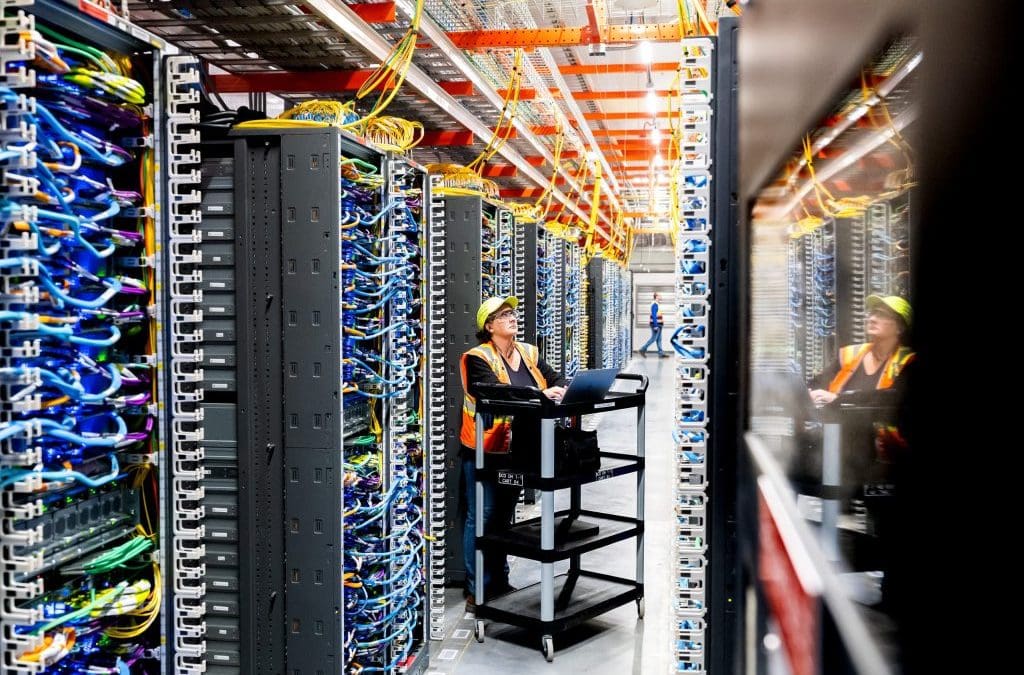
Artificial intelligence data centers—which house the servers and other infrastructure needed to train and power AI models—have major environmental and climate impacts, as they consume massive amounts of electricity and water, as well as rare earth metals and other resources.
According to New Brunswick Patch, hundreds of people packed into Wednesday evening’s city hall meeting to voice concerns that the proposed data center would send their electricity and water bills skyrocketing, and that the facility would harm the environment.
“Many people did not want this in their neighborhood,” New Brunswick NAACP president Bruce Morgan said during the council meeting. “We don’t want these kinds of centers that’s going to take resources from the community.”
The site of the nixed data center, 100 Jersey Avenue, is already slated for development including 600 new apartments—10% of which will be affordable housing units—and warehouses for startups and other small businesses. Now, thanks to Wednesday’s vote, a park is on the agenda too.
“This is great news, no data center,” New Brunswick resident Anne Norris told Patch.
“My kids went through the public school system; we didn’t pay for lunch because we have so many families under the poverty line,” Norris said before taking aim at what she said was the dearth of affordable housing approved for the site.
“Given the economic status of the people who live in New Brunswick, I don’t think 10% is really sufficient,” she contended.
A
by Taya Graham and Stephen Janis | Feb 18, 2026 | AI, big tech, Inequality Watch, The Cultural Front, video
ChatGPT4o parent company Anthropic AI already has multiple lawsuits filed against it due to multiple grieving families alleging their loved ones committed suicide or even murder due the chat bots affirmation of delusions, paranoia and even isolating them from friends families and outside help. But there is another problematic aspect to AI which is underreported and underestimated the impact of AI Sycophancy on the overall emotional and mental health and well being of human beings and their relationships– and perhaps the very future of humanity.
Credits:
Studio/Post-Production: David Hebden
Written by: Stephen Janis, Taya Graham, Amanda Scherker
Transcript
The following is a rushed transcript and may contain errors. A proofread version will be made available as soon as possible.Taya Graham:
If someone told a teenager whose parents were trying to limit his screen time, that he should consider murdering them. You’d probably think they weren’t a great source of relational advice. If someone told a man who had come to believe he lived inside a matrix to stop taking his prescribed medications and increase his ketamine use all while cutting off contact with family and friends, you probably consider them pretty manipulative. If someone started calling you a divine messenger from God after just one hour of conversation, you might wonder if they weren’t just a little bit sycophantic. What I mean is that AI acts like your best friend even when you’re trying to figure out how to harm yourself. And that’s a big problem that the AI industry is simply brushing off and for good reason. I’ll provide some links to videos below as well as a lawsuit by the families who lost their
by Edith Romero | Feb 18, 2026 | Article, big tech, Honduras, Politics and Movements: International, Politics and Movements: US, Reprint
This story was originally published on Truthout on Feb. 16, 2026. It is shared here under a Creative Commons (CC BY-NC-ND 4.0) license.
In April 2025, Peter Thiel’s Palantir made headlines after documents were released detailing its partnership with Immigration and Customs Enforcement (ICE) to create ImmigrationOS, a massive database of information gathered from a variety of sources including the IRS, in order to surveil, detain, and deport immigrants. Thiel is not new to spearheading endeavors that aim to dehumanize and attack people of color. In fact, the tech mogul is one of the billionaires leading our modern-day version of tech neocolonialism, the new-yet-old imperial monster that colonizes land, extracts resources, exploits natives, and is happy to profit off of their suffering.
As a Honduran immigrant myself, I would know.
In 2009, Honduras found itself in turmoil after a military coup destabilized the country leading to unprecedented levels of violence and repression. Taking a page out of the “shock doctrine” playbook, the elite political actors behind the coup (including narco-dictator Juan Orlando Hernández, now pardoned by Donald Trump after being sentenced to 45 years in prison for drug trafficking and weapons charges) watered down environmental protections on Honduran land and approved illegal contracts to sell Indigenous and protected land to the highest bidder.
Among other corrupt dealings and land grabs, the government approved a law that enabled the creation of Peter Thiel’s Zones for Employment and Economic Development (ZEDEs). ZEDEs derive from the idea of “charter cities.” Proposed by former World Bank executive and economist Paul Romer, these proposed cities are enclaves within lower-income nations that “promote economic growth” through privatization and the disposal of national regulations, while gifting major tax
by Derek Seidman | Feb 14, 2026 | AI, big tech, BlackRock, blackstone, Climate Crisis, data centers, Economy, Environment, Fossil Fuels, News Analysis, Organizing, Private Equity, Wisconsin
Data centers are big business. Around 3,000 new data centers — huge buildings that house the computing power that props up the growing use of artificial intelligence (AI) — are currently being built or planned across the U.S. Some speculate that global spending on data centers could hit $3 trillion by 2029. Corporate interests — from energy firms and construction companies…
Source
by Olivia Rosane | Feb 14, 2026 | AI, Amazon, big tech, CBP, Flock Safety, ICE, immigration, News, Seattle, Super Bowl, Surveillance, Target
As backlash against Big Tech’s complicity with President Donald Trump’s authoritarian agenda grows, 200 to 250 people gathered on a rainy Seattle afternoon outside Amazon’s headquarters on Friday to demand that the company “dump” its support for Immigration and Customs Enforcement and Customs and Border Protection, which they illustrated by dumping ice onto the grass. The protest came one day…
Source
by Sharon Zhang | Feb 9, 2026 | AI, Amazon, big tech, News, Policing, Super Bowl, Surveillance
In an ad during the Super Bowl on Sunday night, Amazon’s Ring touted the establishment of an AI-powered surveillance network through their camera systems, which the company whitewashed under a feel-good narrative about finding lost dogs. The ad for Ring’s free “Search Party” program urges users to “be a hero” by using their surveillance cameras to help identify lost dogs in their neighborhood.
Source