by Glenn Diesen | Mar 22, 2026 | Article, Iran, Israel, Politics and Movements: International, Reprint, Third Party Content, Trump
This story originally appeared in Professor Glenn Diesen’s Substack on March 14, 2026. This shortened, edited version is shared here with permission.
The war in Iran, besides being dangerous, is also very interesting because it’s an example of asymmetric warfare. The US is obviously much more powerful, which is probably why there has been a significant amount of hubris: it entered this war with a lot of confidence and assumption of escalation dominance. Thus, we see that the Iranians are forced to fight with other means, including the ability to shut down the energy trade. And given that Iran also sees this as an existential threat—not just an effort to “liberate women” or something—they seem to be willing, or prepared, to shut down the global economy in order to avoid defeat.
I recently spoke with Professor Yanis Varoufakis, the former finance minister of Greece and a founder of DiEM25, the Democracy-in-Europe Movement, about where this war is heading and what impacts it is having on the global economy.
[Editor’s Note: The following transcript has been lightly edited for length and readability from the original full conversation, available here]
Glenn Diesen: Where do you see this war heading? Because it seems like everyone is betting everything on it, and I don’t see enough off-ramps for anyone.
Yanis Varoufakis: We must remember that this is not new. The United States has engaged in a series of asymmetric conflicts where it entered with immense confidence and exited, sometimes many many years later, with its wings clipped.
They invaded Afghanistan. It took them 20 years to be defeated, but they were defeated and they left with the Taliban—whom they had
by Stephen Prager | Mar 20, 2026 | Article, cuba, Politics and Movements: International, Politics and Movements: US, Reprint
This story originally appeared in Common Dreams on Mar. 20, 2026. It is shared here under a Creative Commons (CC BY-NC-ND 3.0) license.
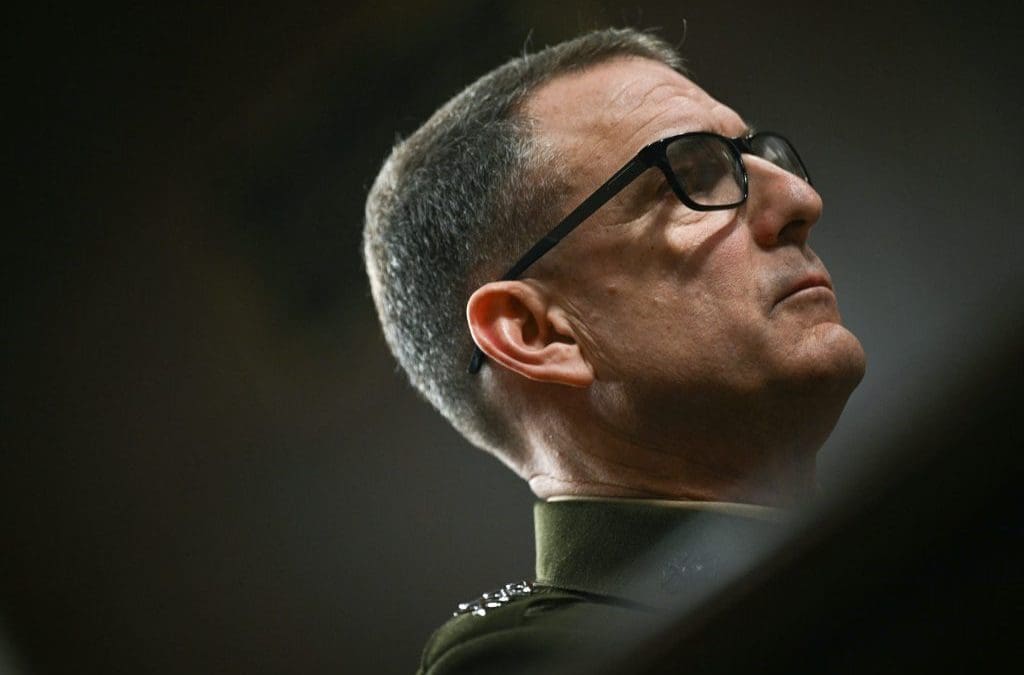
As the Trump administration sows chaos with a crushing fuel blockade of Cuba, a general told Congress that the military will “set up a camp” at Guantánamo Bay to detain those who try to flee the humanitarian crisis inflicted by the United States.
The phrase “humanitarian crisis” was used by Sen. Tom Cotton (R-Ark.) to describe the situation in Cuba during a Senate Armed Services Committee hearing on Thursday, as he questioned US Marine Corps Gen. Francis Donovan, the commander of the US Southern Command (SOUTHCOM).
Donovan, a 37-year Marine veteran, took command of SOUTHCOM in February after being tapped by President Donald Trump. His predecessor, Adm. Alvin Holsey, abruptly resigned in December reportedly after he’d raised concerns about the Trump administration’s bombings of alleged drug trafficking boats in the Caribbean, which have been widely described as illegal under international law.
On Thursday, Cotton asked Donovan, “Are we prepared for any kind of humanitarian crisis in Cuba—the possible flow of refugees, other civil disorder that may threaten our interests, especially if the decrepit, corrupt Castro regime finally falls or flees?”
“Senator, yes we are,” Donovan responded. “SOUTHCOM… We have an [executive] order to be prepared to support [the Department of Homeland Security] (DHS) in a mass migration event. They would take the lead, we would follow.”
Donovan said this would include using the US military base at Guantánamo Bay, “where we would set up a camp to deal with those migrants or any overflow from any situation in Cuba itself.”
As US starves Cuba of energy & food, neocon Cotton wants DOD to be ready for a “humanitarian crisis,” “flow of
by Julia Conley | Mar 19, 2026 | Article, ICE, immigration, Politics and Movements: US, Prisons and Policing, Reprint
This story originally appeared in Common Dreams on Mar. 19, 2026. It is shared here under a Creative Commons (CC BY-NC-ND 3.0) license.
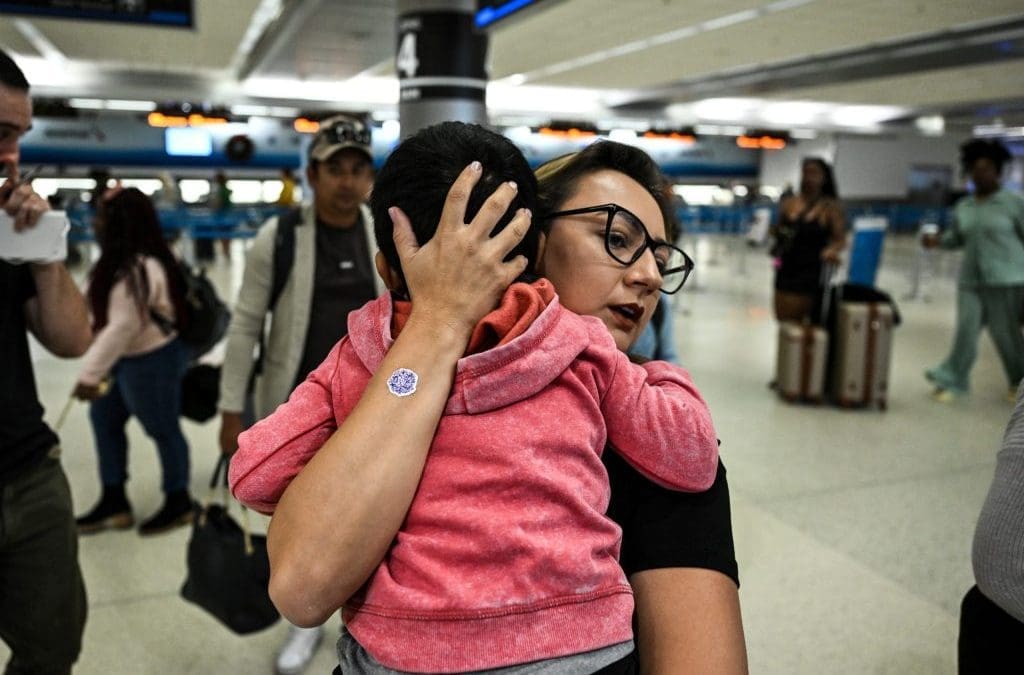
The Trump administration’s directive to federal immigration agents on the detention and deportation of parents of minor children is clear: US Immigration and Customs Enforcement agents must accommodate a parent’s “efforts to make alternative care arrangements for their minor child(ren) prior to detention.”
But a report released Wednesday by the Women’s Refugee Commission (WRC) and Physicians for Human Rights (PHR) reveals that many parents, including dozens whom the groups interviewed at deportee reception centers in Honduras, have been forced to quickly leave their children in the “informal care” of friends, relatives, or even babysitters—many of whom are also vulnerable to deportation under the Trump administration—leaving them in precarious situations while traumatizing both parents and children.
According to the recently deported parents the group’s researchers interviewed—many of whom reported symptoms associated with psychological trauma, such as an inability to eat or sleep, physical pain, and “acute emotional distress” with “uncontrollable crying and visible panic”—ICE agents frequently did not follow the agency’s own guidelines to ask anyone they arrest whether they have children and to give parents an opportunity to take their children with them.
“They didn’t ask me anything,” said one 22-year-old mother of a two-year-old. “They didn’t talk to me, only to yell at me, to humiliate. They never said: ‘You have a daughter, you can bring her,’ because I would have brought [my daughter], she is very attached to me.”
Some parents told the researchers they had been ignored when they told arresting officers that they had children. One mother had three of her children with her when she was detained outside a hospital
by Sharon Zhang | Mar 18, 2026 | Article, Iran, Israel, Politics and Movements: International, Politics and Movements: US, Reprint, War
This article was originally published by Truthout on Mar. 17, 2026. It is shared here under a Creative Commons (CC BY-NC-ND 4.0) license.
Israeli officials are reportedly urging the U.S. to join them in their public urging of Iranians to stage an uprising against their government, even as the Israeli government internally assesses that protesters would be “slaughtered” if they did so, demonstrating Israel’s blasé attitude toward Iranian lives amid its bombardments of the country.
According to reporting by The Washington Post published Tuesday, top Israeli officials relayed the message to U.S. diplomats in a cable that circulated in the U.S. embassy in Jerusalem on Friday. The cable said that Israeli officials assess that the Iranian government is “not cracking” and will “fight to the end” — despite hopes by U.S. and Israeli officials that they could “decapitate” the government and achieve collapse.
The cable further said that if Iranians were to stage more protests against their government, as they did in demonstrations earlier this year, “the people will get slaughtered,” Israeli officials said. According to UN Special Rapporteur on Iran Mai Sato, around 5,000 people were killed in the government crackdown on protests as of January, though it has been difficult to assess the precise number of deaths due to biases on all sides.
The cable, which summarized recent meetings by top Israeli officials and U.S. officials, said that nonetheless, Israeli officials are hoping for a revolt and that the U.S. should support such an uprising as well.
Critics have said that the cable demonstrates Israeli officials’ indifference toward whether civilians live or die, after years of Israel wantonly slaughtering civilians in Palestine and countries across the Middle East.
“This should not surprise anyone,” said Trita
by Stephen Prager | Mar 18, 2026 | AI, Article, big tech, Economy and Inequality, Politics and Movements: US, Prisons and Policing, Reprint
by Dean Baker | Mar 17, 2026 | AI, Article, big tech, China, Economy, Economy and Inequality, Reprint
This article originally appeared on Dean Baker’s Patreon. It is reprinted here with permission.
A bit less than 20 years ago, a nationwide housing bubble collapsed, giving us the Great Recession. Millions of homeowners had their houses foreclosed. We had high unemployment for the better part of a decade. And the subsequent falloff in construction created the basis for another extraordinary run-up in house prices during the pandemic. In other words, it was pretty bad news.
The current bubble in AI is laying the groundwork for another bad story. As was the case both before and after the collapse of the housing bubble, there is a tremendous premium in intellectual circles on making the problem more complicated than it is.
My latest poster child for this point is a column in the New York Times by Richard Bookstaber, a hedge fund manager who had predicted the financial crisis that followed the collapse of the housing bubble. His column notes the AI bubble, but then argues that the big problem is that we are also facing risks from the private credit market, as well as geopolitical risks, like the fact that China could cut off the supply of chips from Taiwan and also the price shock associated with the cutoff of the oil flow through the straits of Hormuz.
The collapse of the stock prices of the companies that are big factors in AI will then have huge spillover effects, devastating people’s 401(k)s, as well as whacking pension funds. This will lead to a huge fall in consumption, which would likely lead to a recession.
The warnings are well-taken, but the story is actually not complicated.