by Dean Baker | May 19, 2026 | Article, Economy and Inequality, Iran, Oil, Politics and Movements: International, Politics and Movements: US, Reprint, War
This article originally appeared on Dean Baker’s Patreon. It is reprinted here with permission.
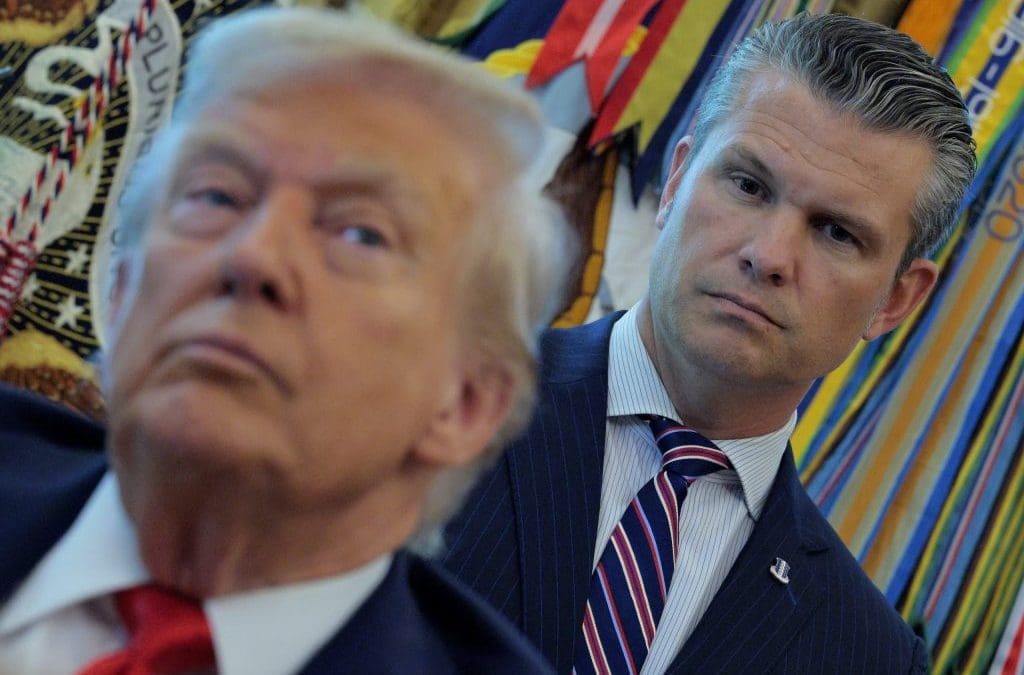
Our Secretary of Defense (or War) Pete Hegseth seems to be having a really great time killing people in Iran, but his live action video games come at a big cost, not just in lives, but in budget dollars. To be clear, the main reason to be opposed to this pointless war is its impact on the people of Iran and elsewhere in the region. But it also has a huge economic cost that is seriously underappreciated.
The short-term cost is the shortage of oil, natural gas, fertilizers, and other items that would ordinarily travel through the Straits of Hormuz. This shortage has already sent prices of many items soaring. The impact is not just on the goods themselves, but there is a large secondary impact due to higher shipping costs, and if fertilizer supplies are not resumed soon, higher food prices, due to lower crop yields. This is a big hit to people in wealthy countries, but it is life-threatening to people living on the edge in Sub-Saharan Africa and South Asia.
But in addition to the short-term cost, there is also a longer-term cost insofar as we are making new enemies and therefore will have higher bills for military spending long into the future. We already got the first taste of this as the Trump administration floated the idea of a $200 billion special appropriation to cover the cost of the war.
The Military is Really Big Bucks
There is remarkably little appreciation of how much money is at stake with wars and the military. This is because the media
by Ben Carroll | May 19, 2026 | AI, Article, Economy and Inequality, labor, Politics and Movements: US, Reprint
This story originally appeared in Jacobin on May 11, 2026. It is shared here with permission.
We’re really going into what we believe is the early chapters of an investment supercycle in the US for electricity growth,” Scott Strazik, CEO of GE Vernova, told Barron’s during an interview at the World Economic Forum in Davos earlier this year. “If you take a step back, we probably haven’t seen an analogous period of time like this since 1945.”
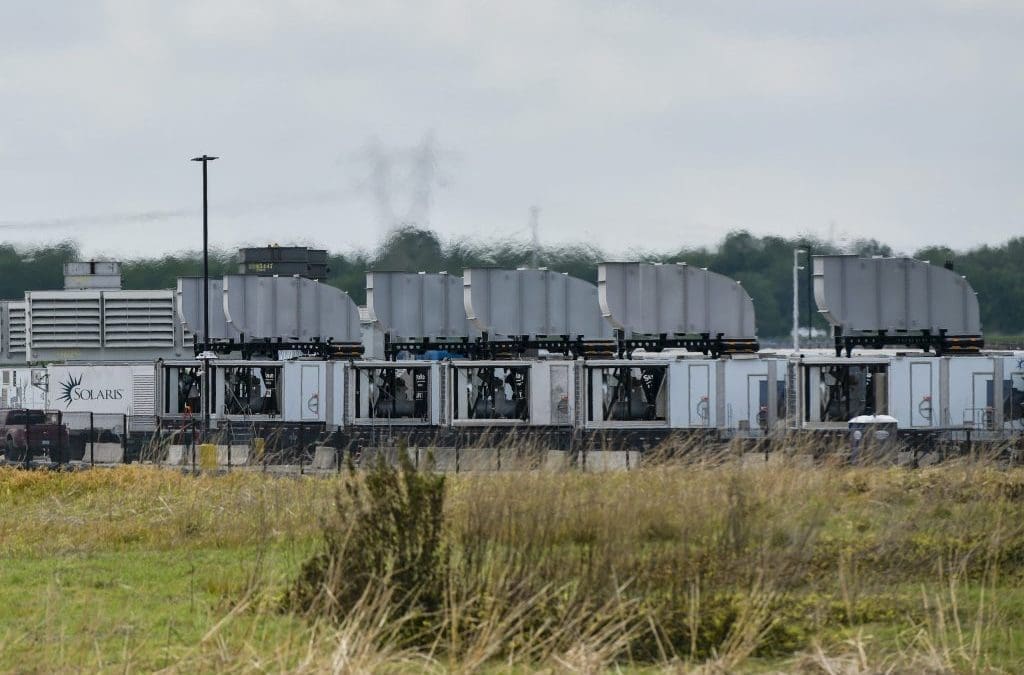
The AI build-out being undertaken at lightning speed is big business for companies like GE Vernova, which, along with Siemens Energy and Mitsubishi Heavy Industries, supply over 75 percent of the world’s gas turbines. GE Vernova’s equipment alone supplies 25 percent of the world’s electricity, and a staggering 55 percent in the United States. In the first quarter of this year, the company racked up $2.4 billion in sales related to orders for data centers, more than total sales for the previous year. Orders for gas turbines are booked out into 2030.
In February, Siemens Energy announced it was investing $1 billion to expand its production of grid equipment in response to soaring demand for electrification, including restarting production of gas turbines at a plant in Charlotte, North Carolina, which had stopped producing them in 2020.
Hitachi Energy invested $37 million to expand an existing facility in South Boston, Virginia, that produces large power transformers — another key piece of equipment in meeting the energy demands of the AI build-out. The company has invested over $1.5 billion into its transformer business alone. Like the gas turbine business, more than 50 percent of the large power transformer market is controlled by the same three companies, alongside Hitachi Energy and Toshiba Energy
by Jake Johnson | May 18, 2026 | Article, Economy, Economy and Inequality, IRS, Politics and Movements: US, Reprint, Trump
This story originally appeared in Common Dreams on May 15, 2026. It is shared here under a Creative Commons (CC BY-NC-ND 3.0) license.
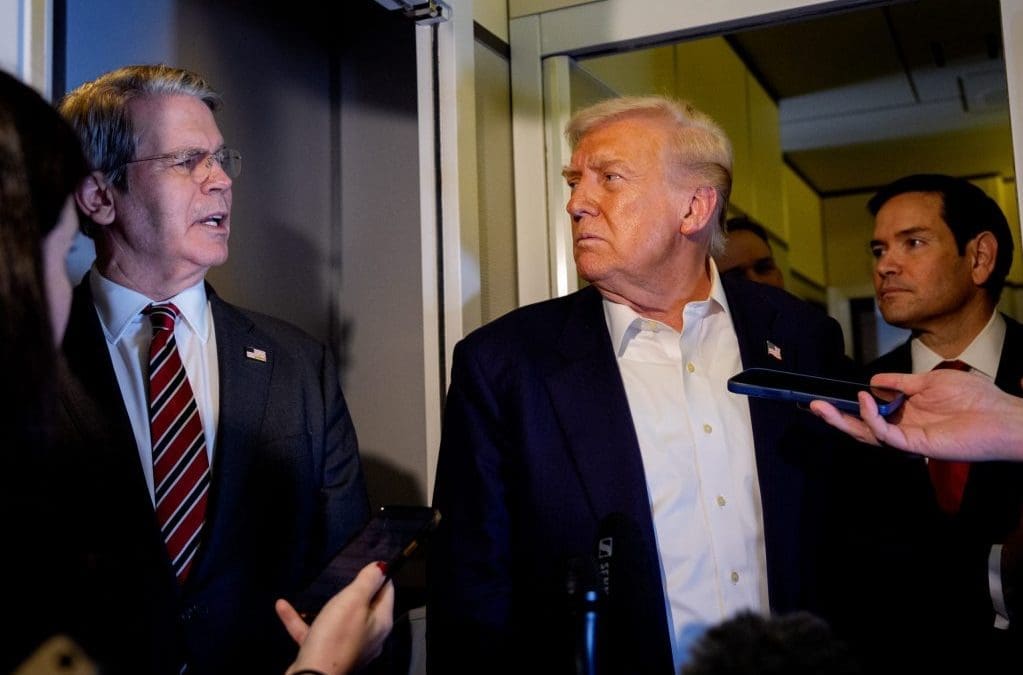
The top Democrat on the House Judiciary Committee on Thursday accused US President Donald Trump of “orchestrating a $1,700,000,000 fraud on the American taxpayer to line the pockets of his MAGA political allies” amid new reporting on the terms Trump is seeking in talks to settle his $10 billion lawsuit against the Internal Revenue Service.
ABC News reported late Thursday that Trump is expected to drop his lawsuit in the coming days “in exchange for the creation of a $1.7 billion fund to compensate allies who claim they were wrongfully targeted by the Biden administration.” The money would come from the Treasury Department’s Judgment Fund, which pays out court judgments and settlements against the federal government.
The president is also expected to receive a public apology from the IRS for the leak of his tax returns during his first White House term.
Rep. Jamie Raskin (D-Md.) said in a statement that the reported settlement terms represent “another installment” in Trump’s “ongoing effort to turn the federal government into a personal cash machine for his unpopular extremist movement.”
“This is a massive and unprecedented presidential plunder of the American people,” said Raskin. “Worse still, this is only the beginning—a declaration that the prior payouts were just a down payment, and that he now intends to earmark billions more in taxpayer dollars for his political allies, sycophants, and private militia of unemployed insurrectionists.”
“The president has no authority to conjure up billion-dollar compensation schemes or raid the Judgment Fund, which exists to settle valid lawsuits. Trump is systematically converting neutral government mechanisms into a presidential slush fund to build
by Shireen Al-Adeimi | May 18, 2026 | Article, cuba, Economy and Inequality, Oil, Politics and Movements: International, Politics and Movements: US, Reprint
This article was originally published by Truthout on May 15, 2026. It is shared here under a Creative Commons (CC BY-NC-ND 4.0) license.
Cuba’s government has announced that it has run out of oil.
On Wednesday night, Cuba’s energy minister Vicente de La O Levy said that the country has completely run out of diesel and fuel oil, and that the national grid is in a “critical” state. He further described how in the capital city of Havana, “the blackouts today exceed 20 or 22 hours.”
“The situation is very tense, it’s becoming hotter,” he added, referring to the start of summer that brings a need for more energy.
At the start of January, Trump halted Venezuelan oil exports to Cuba, following the U.S.’s kidnapping of Venezuelan President Nicolás Maduro and de facto takeover of Venezuela’s oil industry. Later that month, Trump imposed a total oil blockade on Cuba, imposing tariffs on countries that supply oil to the country, pressuring Mexico to stop its oil shipments to Cuba, and seizing oil shipments traveling to the island country.
At the end of March, a Russian tanker arrived in Cuba carrying an estimated 730,000 barrels of crude oil, breaking the U.S. blockade and temporarily easing the crisis. The crude was refined in April and provided relief for a few weeks. But this fuel has run out, Cuban officials explained. This was the sole shipment of fuel allowed to enter Cuba in more than four months.
.Cuba began suffering from power cuts in 2019, after the first Trump administration imposed “maximum-pressure sanctions.” But since January, these have become more frequent and severe, at times lasting several days.
Trump’s blockade has decimated Cuba’s universal health care system, causing deaths and
by Jessica Corbett | May 14, 2026 | Article, elections, midterms, Politics and Movements: US, Reprint, Voting Rights
This story originally appeared in Common Dreams on May 13, 2026. It is shared here under a Creative Commons (CC BY-NC-ND 3.0) license.
Republican state leaders are forging ahead with President Donald Trump’s campaign to rig congressional districts for the GOP, with Georgia Gov. Brian Kemp on Wednesday signing a proclamation for a special legislative session and South Carolina Gov. Henry McMaster expected to make a similar announcement soon.
While GOP policymakers facing pressure from Trump have pursued mid-decade redistricting in several states ahead of the November midterm elections—in which Democrats aim to reclaim majorities in both chambers of Congress—Kemp’s proclamation explicitly states that any changes in Georgia would be for 2028, which is the next presidential cycle.
Kemp’s proclamation cites the US Supreme Court’s decision last month that a Louisiana map predating Trump’s redistricting push was “an unconstitutional racial gerrymander,” which gutted the remnants of Section 2 of the Voting Rights Act (VRA) of 1965.
In a statement condemning the proclamation, Common Cause Georgia director Rosario Palacios pointed to the late Rev. Martin Luther King Jr., a key figure in the movement that led to the VRA as well as the Civil Rights Act the previous year.
“We will not sit back and watch while Gov. Kemp takes orders from a felon-in-chief to turn Dr. King’s dream into a nightmare. Too many civil rights leaders have done work in our state for us [to] take this sitting down,” Palacios declared. “Common Cause is mobilizing thousands of people to stop state lawmakers from passing any new maps before 2030 that destroy Black voters’ power for political gain. Voters should not have to rely on lawsuits to protect their right to fair representation. Congress must end this abuse once and
by Maximillian Alvarez | May 13, 2026 | Article, Economy, Economy and Inequality, Media, Opinion, Politics and Movements: US
An earlier version of this speech was delivered at the 2026 Izzy Awards ceremony at the Park Center for Independent Media in Ithaca, NY, on April 21, 2026.
Friends, colleagues, fellow human beings,
You don’t need to read Project Censored’s latest State of the Free Press report to know that the state of the free press in America is not good (but, obviously, you should still read the report).
And it’s not just President Trump, his administration, and the MAGA faithful repeatedly, publicly expressing their hatred and verbalizing threats towards journalists and media organizations that don’t tow the Supreme Leader’s line. It’s not just Trump and his cabinet bullying and berating journalists at press briefings, restricting their access, and trying to make them sign loyalty pledges.
It’s also Trump’s absurd and gangsterish lawsuits targeted at ABC News, which is owned by Disney, and CBS News, which is owned by Paramount, and the morally spineless, financially self-serving capitulation of these corporate cowards to Trump by settling, rather than fighting, those lawsuits—setting the precedent for more shakedowns.
It’s the multi-pronged attempt by the Trump administration and the ruling-class-serving authors and executors of Project 2025 to destroy the Corporation for Public Broadcasting, which they succeeded in doing, and to defund and destroy PBS and NPR, which they are still trying to do now.
It’s the federal harassment, capture, imprisonment, and even deportation of journalists like Estefany Rodríguez, Mario Guevara, Sami Hamdi, and Georgia Fort. Even Don Lemon. Even Tufts grad student Rümeysa Öztürk, who was snatched off the street last year by plainclothes federal thugs for co-authoring an op-ed in her campus newspaper.
It’s the professional journalists, student journalists,