by Robert Reich | Nov 4, 2026 | Article, Democrats, Economy, Economy and Inequality, elections, midterms, Opinion, Politics and Movements: US, Reprint, Trump
This story originally appeared in Common Dreams on Nov. 04, 2026. It is shared here under a Creative Commons (CC BY-NC-ND 3.0) license.
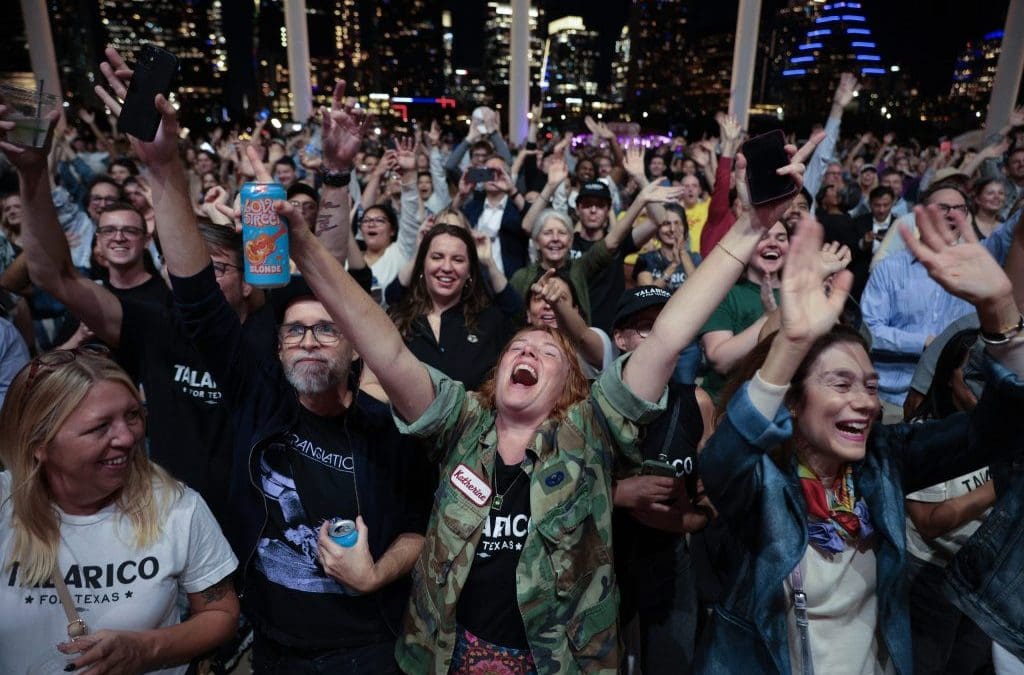
The great sleeping giant of America has awakened, taken a hard look at what’s become of the nation, and roared a thunderous “NO!”
What occurred yesterday was not—as some are saying—the inevitable mid-term swing of the pendulum against the party in power. Texas hasn’t elected a Democratic senator since 1988. The last time Kansas elected a Democratic senator was 1932.
Nor was it just the economy. Americans are unhappy with inflation, but the country is not in a depression or recession. Unemployment remains quite low.
Nor, finally, was it all due to Trump. Despite Trump’s repeated efforts to get voters to “pretend” he was on the ballot, he was not. Most Republican candidates barely mentioned him and many Democratic candidates stressed local or statewide issues rather than fixate on him.
Something much larger is responsible for what occurred: anti-establishment populism. It’s burst forth against the mammoth corporations that have scored record profits while most Americans have had to pay more. Against the mega donors and super PACs that have flooded American politics with more campaign money—legalized bribes—than ever before. And against the Big Tech billionaires who have become the most powerful force in the American economy and society—as well as Trump’s and the Republican Party’s most visible backers.
The irony is that anti-establishment anger propelled Trump into the presidency in 2016 and again in 2024. Many Americans had found his politically-incorrect rants and “America first” nativism to reflect their own anger at being disrespected or left behind. “I am your warrior,” he told supporters when
by Shefali Luthra | Nov 4, 2026 | 2026 election, 2026 Elections, 2026 midterms, Abortion, Amendment 3, elections, Gender-Affirming Care, gender-affirming care for youth, midterms, Missouri, News
Missouri voters rejected an effort to overturn their state’s abortion protections, according to a projection by Decision Desk HQ, ensuring that the procedure will remain legal and enshrined in the state constitution despite dedicated efforts by Republican leadership. Amendment 3 would have reversed the results of a 2024 vote that enshrined abortion protections into the state constitution and…
Source
by Florestan Fernandes Jr. | Nov 4, 2026 | Article, bolsonaro, brazil, elections, midterms, Opinion, Politics and Movements: International, Politics and Movements: US, Reprint, Trump
This story originally appeared in Panamerican Dispatch on Nov. 04, 2026, and is shared here with permission.
President Donald Trump’s crushing defeat in the U.S. midterm elections and President Luiz Inácio Lula da Silva’s historic victory in Brazil mean much more than two election results. They send an enormous political message to the world. In the two largest and most important countries in the Americas, voters are saying they do not accept a unipolar world order. They reject the ideology of white supremacy. They say no to political projects that turn immigrants into enemies by persecuting them, criminalizing them and denying them fundamental rights.
But the message is broader. People want peace. They want an end to wars, military threats and unilateral sanctions that undermine free trade and relations among nations. They want a world where dialogue and diplomacy prevail over force, intimidation and one power imposing its interests on all others.
The results are also excellent news for the United Nations, which Trump’s foreign policy has treated with contempt. The UN now has a chance to regain a leading role. It can advance the reforms needed to play a truly central part in building a new international order. That order would be more democratic, multipolar and committed to peace, the sovereignty of peoples and cooperation among nations.
Another phenomenon is even more significant. A wave of popular mobilization is growing in Brazil, the United States and several European countries. It brings together young people, workers and broad sectors of society. Street demonstrations have outpaced traditional parties and political leaders, and often their ability to respond. The rise of autocratic governments and projects, threats
by Steve Benen | Nov 4, 2026 | 2026 election, Congress, elections, Maddowblog
It’s easy to forget that after a group of House Republicans successfully ousted then-Speaker Kevin McCarthy three years ago, his successor, Louisiana’s Mike Johnson, was not the GOP’s first choice.
Or the party’s second choice. Or its third. Or its fourth.
Rather, Johnson was the Republicans’ fifth choice when he was elected, stumbling into a job for which he was not fully prepared. He nevertheless managed to hang on to his gavel, largely by becoming a rather pitiful lapdog to Donald Trump.
But as the midterm elections approached, and it appeared all but certain that the GOP would lose its House majority, Johnson faced awkward questions about whether (and how) he would maintain his Republican leadership post in the aftermath of failure.
As recently as three weeks ago, the House speaker told CBS News, “In the unlikely scenario where we lost the majority, I would expect my colleagues would ask me to continue leading this conference, even if we have divided government.”
The morning after a historic voter smackdown, his colleagues did not ask Johnson to continue leading the conference. On the contrary, as MS NOW confirmed with two House GOP leadership sources, the outgoing House speaker told his staff on Tuesday morning that he wouldn’t run for House minority leader, ending his tenure as a congressional leader.
Whether Johnson intends to abandon his congressional seat altogether is not yet clear, but for now, the Louisianan is paying a real price for failure.
There will be plenty to say about his hapless time with the speaker’s gavel, but in the short term, there’s a more immediate question to consider: Who will lead the House Republican minority in
by Erin Reed | Nov 4, 2026 | 2026 Elections, 2026 midterms, Abdul El-Sayed, Alabama, Anti-trans, campaign ads, Democrats, elections, Elon Musk, Gender-Affirming Care, James Talarico, LGBTQ Rights, Michigan, midterms, Montana, Op-Ed, Republicans, Texas, Trans Rights, trans youth
By now, you have likely seen the results of the 2026 midterms: a wave election for Democrats the likes of which we have not seen in years. Republicans and their allies spent nearly $200 million on anti-transgender ads alone, bankrolled in part by billionaires like Elon Musk. Virtually every Democrat in a highly contested race was the target of these kinds of ads. And what did it buy the Republican…
Source