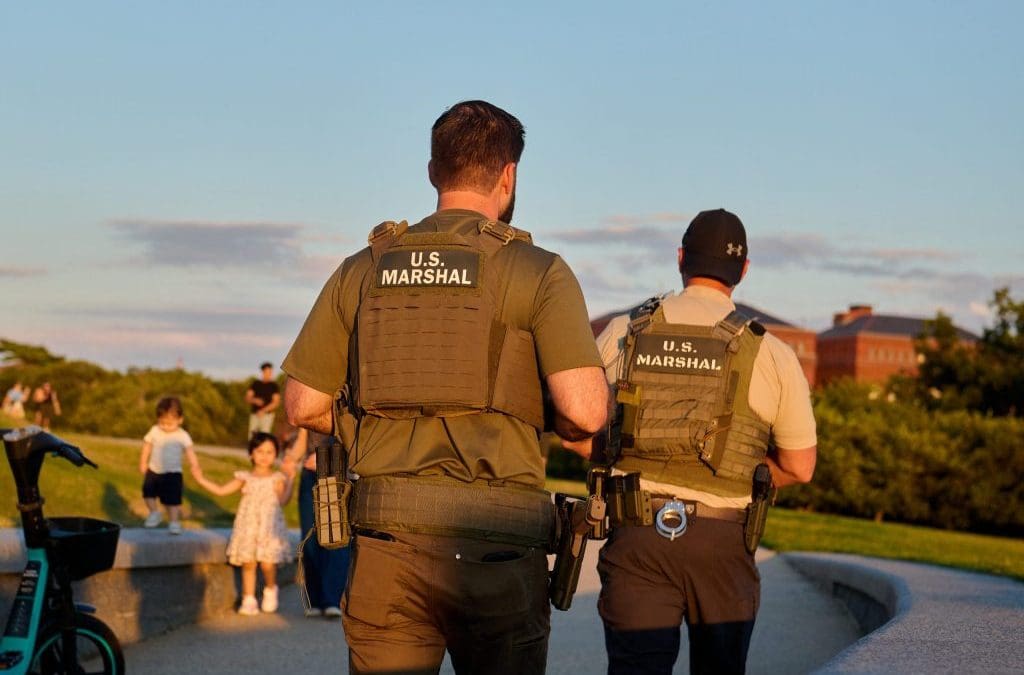
There are two primary federal agencies tasked with immigration detention: ICE, which is well known, and the US Marshal Service. Under the Trump administration, the US Marshals have dramatically increased their role in detaining and incarcerating undocumented immigrants, using their federal power to override restrictions on immigrant detention in local jails around the country. In this episode of Rattling the Bars, host Mansa Musa speaks with Wanda Bertram, communications strategist for the Prison Policy Initiative, about how the Trump administration is weaponizing legal loopholes and the US Marshal Service to execute the mass incarceration of immigrants.
The following is a rushed transcript and may contain errors. A proofread version will be made available as soon as possible.
Mansa Musa:
Welcome to the edition of Rattling the Bars. I’m your host, Mansa Musa. We’ve been hearing terms like deportation, immigration, arrest, ice, the federal marshals. When we hear these terms, we hear ’em relative to people. People that’s undocumented in this country under the pretense that they’re committed a crime in this country, that they’re being arrested. But the reality is they’re being rounded up. They’re being rounded up like slaves was rounded up. They’re being rounded up like the Japanese was being rounded up and placed in tournament camps. Joining me today is Wanda Bertram, communication strategist with the Prison Policy Initiative at one of the most reliable research hubs for Data on Incarceration. A recent report by the Prison Policy Initiative titled Hiding in Plain Sight Revealed how local jails are central to Trump’s deportation. Wanda, welcome to Rallying the Bars.
Wanda Bertram:
I’m happy to be here. Thanks for having me.
Mansa Musa:
And so let’s start here. Explain to our audience the loophole that the Trump administration is using to bypass city and county sanctuary policies. Unpack that for our audience.
Wanda Bertram:
So I think the place to start is that there are two main federal agencies that are tasked with immigration detention, and one of them is ice, which most people have heard of Immigration and Customs Enforcement. And then the other one, which is a little bit less well known is called the US Marshall Service. And the Marshall Service does things that are not immigration too. They’re generally speaking, the federal agency that handles pretrial detention. And in our report, one of the things we did was we gave an estimate of how many people are in ICE detention and US Marshals detention because a lot of people don’t think about the US Marshals. Right. And then one of the other things we did was we pointed out this loophole that you mentioned and what we call the loophole is just the fact that lots of local jails, including many that have said, we are not going to cooperate with ice,
Have contracts with the US Marshals to house, to detain immigrants who are under the jurisdiction of that agency. And actually, ICE can also piggyback off those US marshals contracts. So whether someone is under the jurisdiction of the US Marshals, and I can explain the difference between that and ice, whether someone is under the jurisdiction of the US Marshals or with ice, hundreds of local jails across the country are making room for those detainees to be held. So there are thousands and thousands of detainees who are being held in local jails that are run by sheriffs that the people left.
Mansa Musa:
Right. Okay. So in terms of the difference between ICE and the Federal marshals, because I think we was talking off camera, when you think of a person being detained by the Federal Marshals, we’re thinking about actually a crime has actually been committed a crime in form of like a gun violation of a federal statute violate of federal criminal code, violate of federal law. I’m in possession of large quantities of drugs. I’m doing counterfeit, I’m in possession of weapons. I think they had in Baltimore City, they had passed this law saying that anyone court, in order to get control over what they dubbed as a serious possession of guns in the city, they created this law where they say that anyone arrested with a gun in Baltimore, they federalized it. So they called it, I’m trying to think if they had a term that they was using. But everybody that got caught with federal guns got caught with guns during that time was arrested and put under Federal Marshall jurisdiction. At that time, I was in Supermax in Baltimore City and they took a whole section and specifically design it for that. So talk about that. Talk about the difference between the two and why it’s important that people understand that.
Wanda Bertram:
Yeah, I’m really glad you brought that up. The US Marshals, like you’re saying, when I think of the US Marshals, I think about people being charged with gun related crimes, with drug related crimes. Sometimes with federal violent offenses, the federal government has a wide latitude to choose to prosecute certain cases. And once they bring someone under their jurisdiction, or if they arrest someone, obviously they can also bring people who are under state or local jurisdiction into their jurisdiction through these state and local agreements. So the long and short of it is if you are charged with a federal crime, you are under the US Marshal’s jurisdiction. The rub here is that there, there’s been an increase in several thousand people since Trump took office in January who were under US Marshals, who were booked into US Marshalls jurisdiction for immigration related crimes. And what is an immigration crime? Come on. That can be as simple as just being undocumented illegal entry or illegal reentry. I think most people think, okay, if you’re under US Marshalls’ jurisdiction, you must have committed some horrible crime. But there’s a lot of people there who are just undocumented and their cases are becoming criminalized.
Mansa Musa:
And I was talking to one of the staff members here and I was telling that, and this is my thinking, right, the criminal element that will be under the Federal Marshals, they be like, in their mind they like, hurry up, hurry up and get me out. Send me to wherever you want to send me at so I can hurry up and get back in the country. A person that’s a person that’s committed immigration crime or whatever these terms they’re using, these people know the threat that they represent is, I’m a threat because I’m working hard, I’m paying taxes. But talk about how local jails specifically playing Trumps mass deportation program, both in terms of scale and conservation and immigration arrest, and you spoke on it earlier about how many people being arrested and being detained, but talk about how it’s planned out.
Wanda Bertram:
We know. So we estimate that on any given day, currently there’s about 83,000 people, immigrants being held for ice. And the US Marshals, I can break down how we got to that number, but of those, we know that about 10,000, a little over 10,000 people are being held in local jails for ice. We unfortunately can’t tell how many people are being held in local jails for the Marshall who just don’t have that granular data. But we actually, I will say one more thing. I’ll throw out one more statistic, which is that between January and May of this year, the number of people held for immigration reasons grew more in local jails than it did in privately run detention centers. I’m throwing this out there just to say that jails play an essential role in housing immigrants for these agencies.
I think a lot of people think about ICE as having tons of detention centers, its own detention centers around the country. And it’s true, there are several, but these agencies depend on local facilities that can hold people temporarily or for a longer time after they’re arrested. In fact, in 26 states, jails provide the sole detention capacity to ice US marshals. So a lot of people think, okay, sure. This is going on in Texas, it’s going on in Florida with alligator Alcatraz. It’s not happening where I live. You might be wrong. It might be happening where you live. A lot of jails caught up in this.
Mansa Musa:
Right? And that right there, the impact, talk about the impact that have on the population because I know if I’m a state and I’m outsourcing or I’m contracting with the federal government, I’m contracting with ICE to provide so many bids for immigration or a section for immigration, then how does that play out in terms of the way that particular detention center function overall? Because now I have to allocate staff, I have to allocate extra money, I have to allocate. And in terms of what they’re entitled to versus what people that’s is entitled to have Y, is it a problem with that or from your investigation and your study, have you seen this being problematic?
Wanda Bertram:
Well, I think we need to start talking about the money. That’s the reason that ICE and the Marshals, or excuse me, that’s the reason that local jails have these agreements in the first place. Jails are keen to bring in money from the federal government that they get in exchange for housing people, and they get somewhere anywhere between 50 and a hundred dollars per person. So it’s thousands of dollars that come in just every month for a local jail. And importantly, we have very little transparency into what that money is used
Mansa Musa:
For.
Wanda Bertram:
But some jails have been open about saying, we are using this to pay our staff. We’re using it to cover costs of the jail.
It ties into a very toxic pattern that we’ve seen over the last couple of decades, which is that counties will build, actually, they will build bigger jails anticipating that they’ll be able to allocate some of their new jail space to renting to the federal government or to their state prison system. And where there’s two ways that this all goes wrong, one is that oftentimes these jails are already understaffed. They don’t have the staff to care for their own populations, much less an additional influx of immigrants or people held by the US Marshal for any reason. And then the second thing, the second way this goes haywire is that these populations, these populations that come in from the feds, they flux, right? They come and go. And when those populations, when that source of revenue dries up for the jail,
Mansa Musa:
They’re
Wanda Bertram:
Going to need to justify the existence of such a large facility in other ways, and that’s going to lead to more local incarceration. We like to say that if you build it, they will fill it. And when counties build bigger jails anticipating renting beds to ICE or the Feds in some other capacity, they find a way to fill those beds, whether it’s with federal detainees or their own community members.
Mansa Musa:
And then in some states like California, Massachusetts, New York and Illinois have laws that restrict local law enforcement from collaborating with ice. But that’s like when you do a comparison versus the amount of money that y’all talked about how this past great, beautiful nightmare of a bill that they passed, they allocated a lot of money to ICE and a lot of money to the federal government. So how do you see the pushback, or what can states do to eliminate this nightmare? Because as you said, at the end game, the end game, the state going to be holding the bag and the end game, they’re going to have to come with some way to fill themselves, and that’s going to be at the expense of the citizens of their particular state or county. Talk about that.
Wanda Bertram:
Yeah. One thing in the report that we really hammer on is that communities have, in so far as communities are providing some of the backbone of detention. They also have the power to be a real thorn in the side of the Trump administration by resisting that. Like you pointed out, some states and several counties have instituted sanctuary city policies, and often that means, or sanctuary state policies, and that limits the jail’s. Collaborations of ICE communities also need to cancel their contracts at the US Marshals, because as I said, at the top, ICE can piggyback off of the US marshals. They can put people in jails through a US Marshals contract, and those often go overlooked. Again, the marshals are not an agency most people think about. So that’s a step that counties have been able to take to several years. They can do it now and they should do it now.
I think the other thing is on a longer timeframe, being critical of your local government, when they talk about building a new and bigger jail, just to throw something out there, this is not related to immigration at all, but about 80% of people in local jails are their pretrial. Now, this is another thing that Trump has been trying to attack is bail reform. But when counties are facing overcrowded or understaffed jails and they have these large pretrial populations, one thing that most places most counties have not tried is decarceration, right? Pursuing bail reform, pursuing cashless bail as a way of decreasing their jail populations. Instead, what many counties will do is they will try to build a bigger jail thinking it’s going to solve the problem.
And sometimes that’s what gets counties into this pickle with the federal government is they build this big new jail, and then they have a big tab to cover. And it’s very helpful if the federal government comes in and says, well, we can offset some of your costs. You just have to house some people for us. So I mean, definitely to anyone listening who’s wondering, what can I do in my community? I definitely would say being critical, being skeptical of any plans to expand your county jail and show up to city council meetings about that. Be a sticky wheel, because that’s how this happens. That’s how it starts.
Mansa Musa:
Okay. And thank you wa tell our audience how they can stay in touch with you or stay aware of some of the work that you’re doing with Prison Policy Initiative as we close out.
Wanda Bertram:
Well, no. I mean, first, thank you so much for having me. I think it’s great to be able to come on and talk about this stuff. Our website is www prison policy.org. We have a newsletter. If you sign up for that, you’ll get everything that we publish. It’s about a once a week newsletter. We also have social media. If you go to basically whatever social media you’re on, we’re at slash prison policy.
Mansa Musa:
Thank you. And as we close out, we thank you and appreciate all the work that y’all are doing at Prison Policy Initiative. And we want to tell our audience, remind our audiences that we deal with evidence, and it’s based on the statistics that the Prison Policy Initiative has offered us, that you can fact check ’em to get a clear understanding. But what we do know is this here, we know that people are being rounded up. We know that agencies that supposed to protect, serve and protect people’s rights are being used to help aid and assist in rounding people up. We know that people are being housed in astronomical numbers, in inhumane environments for one reason and one reason only. All because they’re undocumented in this country. They haven’t committed no crimes. To the extent that’s being perpetuated by the Trump administration, they’re here, they’re undocumented, and the most crime that they committed is driving without license or picking tomatoes. We ask that you continue to support real news and rallying bars. We ask that you continue to evaluate this information. We ask that you weigh in on what you think about this information, but more importantly, we ask that you make a decision on what you think should be done and do that. Thank you.
This story originally appeared in Jacobin
on Sept. 09, 2025. It is shared here with permission.
On June 17, 2025, New York City comptroller Brad Lander, at that time a mayoral candidate, was arrested
by Immigration and Customs Enforcement (ICE). Lander was engaged in the process of immigrant accompaniment, which is when humanitarian supporters accompany immigrants to their court proceedings. Their presence can throw sand in the system’s gears and slow down deportations. Donald Trump’s second administration is criminalizing this practice precisely because they know it works.
In researching my book The Politics of Sanctuary
, I spent years during Trump’s first term observing activists who practice immigrant accompaniment, trying to understand its mechanics and effectiveness. “We can stop or slow down the deportation process,” said one volunteer with the New Sanctuary Coalition (NSC), an organization dedicated to assisting migrants and asylum seekers. The Trump administration has moved to punish
nonprofits and faith-based groups that engage in sanctuary practices like accompaniment, alleging that they promote and facilitate immigration law violations.
“The judges know us, ICE knows us. They fear us,” the NSC volunteer continued. “They have blocked us [from accompaniments], but we will keep going. We show up to doctors’ appointments, to family court, to lawyers’ appointments, [and] to Varick Street,” where New York City’s immigration court is located.
The volunteer was not bluffing about the effectiveness of the accompaniment strategy. I observed numerous cases where NSC volunteers accompanying immigrants slowed down the deportation process. The volunteers I observed were mostly native-born, white, female New Yorkers, ranging from middle-aged to senior citizens. Their presence was critical for the success of migrants’ cases. At times they were a silent presence at ICE check-ins and case hearings, while at other times they were vocal in their advocacy. “We are literally standing at that line and making sure that we hold that line and enforce rights,” one volunteer told me.
During Trump’s first term, migrant advocates sought to counter the administration’s anti-immigrant rhetoric with evidence that immigrants commit crimes at lower rates
than native-born Americans. These efforts did not completely reverse public opinion
, which carried Trump to a second victory on an even more anti-immigrant platform in 2024. However, activism during the first Trump term did bring citizens and noncitizens together at demonstrations and protests, strengthening the movement for migrant rights. Many citizens developed political consciousness during this period and dedicated themselves to sanctuary practices like accompaniment — practices that continue to this day, often led by faith-based organizations.
These citizen activists didn’t just sympathize with immigrants but felt they had a duty to defend them. This sense of responsibility led many to 26 Federal Plaza in Manhattan to support migrants attending ICE appointments. Living near immigrant neighborhoods, having immigrant friends, and believing that New York City’s institutions could be pushed to protect migrants all contributed to their support. The immigrants involved in these networks, meanwhile, saw themselves not as criminals but as tentative residents whose rights were being violated — a perspective that grew stronger through their participation in sanctuary practices. Their own activism challenged the idea that migrants are simply victims of an exploitative economic system.
Cities as Battlegrounds for Citizenship
Sanctuary practices in cities create space for undocumented people, asylum seekers, and refugees to engage in political struggle. But they can’t do it alone: their effectiveness depends on building alliances with citizens and permanent residents who join these struggles with practices like accompaniment and acts of civil disobedience
. It is precisely this solidarity that the Trump administration is seeking to criminalize.
Nor can migrants claim rights without the dedicated assistance of sympathetic political leaders. Many of them lack the right to vote; the New York Court of Appeals ruled six to one
in March 2025 that the state constitution requires citizenship for voting. Systematically barred from the formal representational political process, they must rely instead on voluntary action from political figures — actions like Lander’s arrest as a mayoral candidate during an accompaniment action.
Trump has made outright threats
to defund sanctuary cities (though only small percentages of budgets would actually be affected). He has also threatened to expand
the criminalization of immigrants, which city administrations have resisted by refusing police cooperation
with ICE. These words have turned into violent acts against protesters and political representatives
seen as obstructing ICE enforcement.
Trump’s threats against grassroots sanctuary efforts serve to heighten racial hostilities, scapegoat immigrants, manufacture emergencies, and instill fear in immigrants to keep them from using social and health services. Meanwhile, urban disinvestment and austerity programs
are creating a false sense of scarcity for which immigrants are held responsible. Amid urban inequality, blaming immigrants can mask the lack of real solutions for urban problems like affordable housing, high-functioning social services, accessible transit, and so on.
Trump’s executive orders
earlier this year intensified threats to sanctuary jurisdictions by calling to cut federal funding, penalize the granting of public benefits, and target local officials for prosecution. Federal courts largely blocked these measures as unconstitutional, and cities continue to fight the policy in court. They must continue to put up a fight, as sanctuary practices represent an essential part of the struggle for migrant rights and indeed all human rights.
The sanctuary movement offers migrants more than simply hope that they won’t be deported. It provides concrete assistance toward the goal of avoiding deportation. Of course, getting migrants to participate in sanctuary practices becomes difficult in a climate of heightened fear amid stepped-up deportations. This makes the participation of native-born activists all the more necessary to create conditions of safety and solidarity. Only when migrants and nonmigrants stand together can they thwart Trump’s anti-migrant agenda.
The 11th Circuit Court of Appeals has halted the imminent closure of the infamous “Alligator Alcatraz” detention camp in Florida; now, the future of the facility, and the people incarcerated within it, remains in limbo. “But no matter the future of Alligator Alcatraz, the Trump administration is turning it into a model for expanding detention capacity across the country,” Shannon Heffernan and Beth Schwartzapfel report at The Marshall Project. “Similar large-scale facilities, opened in collaboration with state governments, are already in the works. These projects mark the first time that states have gotten this involved in large-scale immigration detention.” In this episode of Rattling the Bars, host Mansa Musa speaks with Heffernan about how the Trump administration, in collaboration with state governments, is expanding the US system of mass incarceration to unprecedented levels.
Guest:
Shannon Heffernan
is a staff writer at The Marshall Project whose work focuses on prisons and jails across the US, as well as sexual and gender-based violence, immigration and mental health, and how arts and culture shape (and are shaped by) crime and punishment.
The following is a rushed transcript and may contain errors. A proofread version will be made available as soon as possible.
Mansa Musa:
Welcome to this edition of Rattling the Bars. I’m your host, Mansa Musa. Today we’re talking about detention centers, zombie prisons, and alligator Alcatraz. Joining me today is Shannon Heffernan, an award-winning reporter and fiction writer whose works focused on prisons and jails across the United States. Her recent reporting include two major pieces. The next alligator Alcatraz could be in your state, which looks at the controversial ICE Detention Project in Florida and zombie prisons about how ICE is bringing shuttered facilities back to life. Shannon, welcome to Rallying the Bars.
Shannon Heffernan:
Thank you so much for having me. I’m happy to be here.
Mansa Musa:
Let’s start with the next alligator. Alcatraz could be in your state. Okay. So construction on Alligator Alcatraz was stopped because a lawsuit was filed saying it had a environmental detriment, and so it was stopped. Based on that, walk us through how that came about and what’s going on with that now.
Shannon Heffernan:
Sure. So a couple of groups, some environmental groups as well as some indigenous tribes. Our a indigenous tribe bought a lawsuit against Alligator Alcatraz because of environmental concerns. They essentially said, this is a federal facility, it should follow federal laws, and it’s not done the proper environmental review. Originally, a court did halt that. However, very recently an appeals court has lifted the halt on alligator Alcatraz, so it moves forward. All of this is going to continue to play out in courts. We don’t know where it will land for alligator Alcatraz, but I do believe that this all has implications beyond what’s happening in Florida for states across the country. And no matter what happens at Alligator Alcatraz, I think it gives us some insight into the strategies that the federal government wants to use to increase immigration detention across the United States.
Mansa Musa:
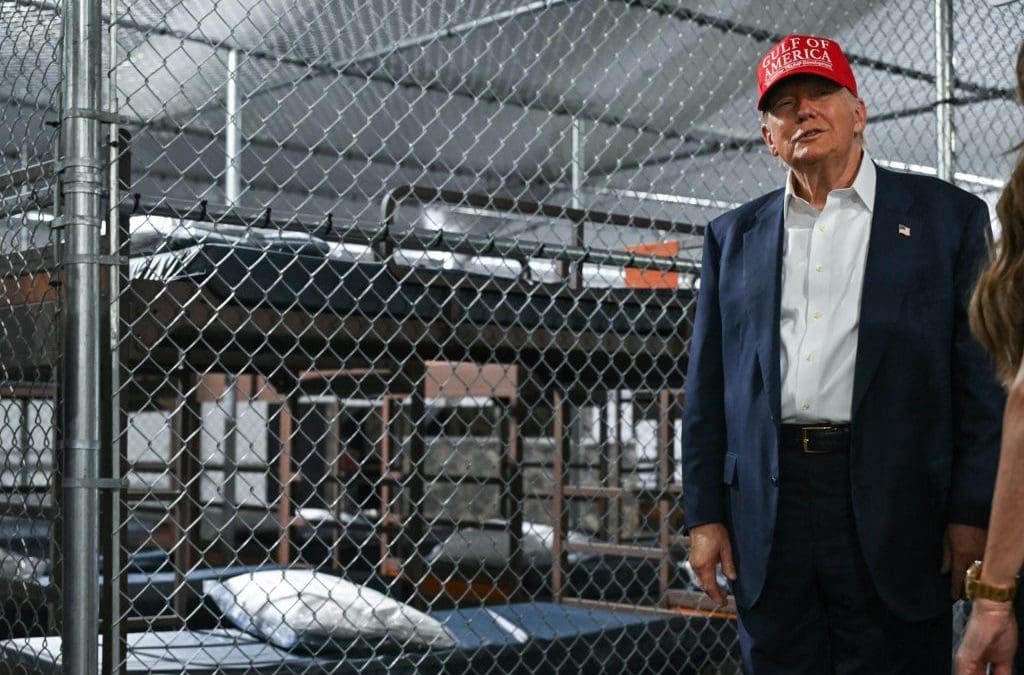
In terms of the conditions in alligator Alcaraz, I recall reading some things where one is beyond the environmental aspect of it, the impact it has on environment, but the impact it has on human, human beings, people that’s being detained in there. And I seen a picture of how it’s designed and the way it’s designed is designed like with multiple bunks and cages and tents. In your report and in your gathering your information, what can you say about the conditions of alligator ture?
Shannon Heffernan:
Yeah, there’s been some pretty big complaints about the human conditions there. You’ve had people complaining about food not being edible. You’ve had people complain about their access to legal representation. You’ve also had people complaining about how difficult it is to even find if somebody is incarcerated at alligator Alcatraz. They weren’t showing up in the federal system. They also weren’t showing up in the state system. So it was hard to locate folks. It became this kind of black hole. The federal government has denied some of those claims in terms of how bad the living conditions are, but there have been multiple reports from people who are incarcerated there as well as civil rights lawyers representing their case,
Mansa Musa:
Talk about the law that gives them the right to detain people, and if you can juxtapose that against what is actually taking place now.
Shannon Heffernan:
Yeah, so I think this is a really important point that I heard from legal scholars I’ve been speaking to about immigration detention. Technically, immigration detention is not supposed to be punishment. It is different in that way from what you see in the criminal system, at least in terms of the law. That said, you see these places not only having troubling conditions like you’ve mentioned, but being given these names that raise the specter of them being frightening places. Alligator Alcatraz, you now see that they want to send people to Angola, a place that has a long history of problems and lots of associations with abusive treatment or the so-called speedway slammer in Indiana. So I think that it seems to be clear that officials are really raising the spectra of these places, being places you don’t want to go, that would be punitive. So I do think there’s that gap between what you hear legal scholars saying immigration detention should be, and then actually how it plays out and what it does.
Mansa Musa:
And you mentioned speedway slammer, and then the fact that AIN going is known for its plantation style facilities, but more importantly, we had the opportunity to talk to some people relative to crop dusting and when they come around and crop dust, whether or not it has an effect on going into the cell blocks. And so in terms of your investigation, how do you see that playing out? Because you mentioned earlier that this what we see now taking place in alligator Alcatraz is ominous a whisk to come down the pipe in terms. Talk about that.
Shannon Heffernan:
So I mean, I think that there’s a couple of things to consider. I mean, I think generally there’s the issue of detention increasing across the United States and what that means for conditions. But specifically what I meant when I talked about that is there’s a strategy that the federal government is now using to specifically get state governments involved in alligator Alcatraz. As I said, this is a state run facility. You see what’s happening in Indiana, in Nebraska with the so-called corn husker clink with Angola and Louisiana, that there are these collaborations with states to do that. And so why would that matter? Why would that matter? Right. Well, when it’s fuzzy who’s in control, a lot of the experts I spoke to about this says that makes accountability much harder. It sets up conditions that are really ripe for abuse, and we already know that there have been problems with conditions and immigration detentions for a long time, and I think what folks are arguing is this just creates a really fertile ground for that to happen even more and an even more extreme way. The collaboration with states, I think also could potentially free up resources for the federal government to do this even more other places. You’ve had the DHS secretary, Christie Noam saying that this strategy of working with states is actually becoming her preferred method instead of working with private prisons. And why is that? Because she says she thinks it’s cheaper, she thinks it’s more efficient. Instead of having to sign long-term contracts, she can sign these shorter term contracts.
She didn’t say this now, but this is me, at least she hasn’t said it that I’m aware of. It also would give her access to a workforce that might not otherwise be available because it comes from the state or buildings that might not otherwise be available because their own bar state. So if the United States government really wants to up the number of people who they’re detaining and then eventually deporting, which they’ve said that is their goal, collaborating with states on this level is something that can help them do that. I think it’s really important to note that this is unprecedented. Local governments have played a role and immigration detention in the past. For example, local jails rent out their beds to ice, but you haven’t really seen it on this scale. We’re talking about massive, massive facilities that are supposedly under the state’s control, although I think that there’s some complications and nuance there about how much they’re under the state versus the federal control.
So this is something we’ve not really seen at this scale before in the United States and is definitely worth paying attention to. I also think it speaks to a larger idea that I think we really need to be wrestling with and thinking about, which is how our country’s history of mass incarceration is actually deeply tied to what you see happening with immigration right now. These facilities are available and built because the United States has a long history of incarcerating large numbers of people. When you saw criminal justice reforms in the last decade, some of those facilities began to be shut down, either because places were shrinking, their prison population changes to parole or sentencing, or because the facilities were simply deemed too terrible, too harsh of places to put humans into. But after those facilities closed, the buildings weren’t destroyed and now you’re seeing them reanimate it for use by immigration detention.
And I think that’s really important to notice because in the same way that they’re being moved from the criminal system to the immigration system right now, once this system is built, once the system is fortified, you can see it being deployed against other populations. Once the infrastructure is there, there are financial incentives to keep them going. So when we see immigration detention getting bigger and bigger, I think there’s a question of like, well, what does that mean for the next decade in the United States? I think it’s something, it’s going to be a legacy that is likely to continue beyond just this present moment.
Mansa Musa:
Do immigrants people that’s locked up under the Immigration Nationalization Act, do they have constitutional rights? Do they have the protection under the eighth amendment, the cruel, unused upon the 14th due process, 14th amendment due process? Do they have these rights of once they’re locked up, do they have the same rights that United States citizen had or are they just put detained and then when they determine where they’re going to send ’em, they pack ’em up and fly ’em to wherever state or country they want to take ’em to?
Shannon Heffernan:
So there are standards that are supposed to be met in these detention centers. I think the question is, regardless of what the standards are, if you don’t have oversight, then it doesn’t matter. If you don’t have enforcement, then it doesn’t matter. And we’ve seen a real decimation of the systems that have historically provided oversight in these facilities. If you can’t prove what’s happening inside, it becomes really difficult to hold those systems accountable. And in addition to some of the groups that were supposed to watch dog detention centers shrinking or ending, you also have lawyers less able to access their clients in these facilities, which means the word is getting out less about what’s happening there. So I think it’s a real challenge and it’ll become an increasing challenge to make sure that what’s happening inside these detention centers is meeting basic humanitarian standards.
Mansa Musa:
And I think that based on everything that’s being done, and I did 48 years in prison before I got out, and I did, and I served time in some antiquated elaborated involvements, but I’m looking at what’s going on here. These ain’t no detention. These are basically concentration camps. They’re holding them, pinning, sending them somewhere else, but they’re holding them under the most inhumane conditions known to man at this time. But let’s talk about how the next article you wrote was Zombie Prison. I want to shift there, and you made very astute observation on this. What we’re seeing now is how their practice is in terms of how they establish this prison industrial complex, the infrastructure, how they mapping it out in terms of finding places, putting people, finding places, putting people, finding places, putting people, talk about the zombie prison, how ice detention is raising troubled facilities from the dead.
Shannon Heffernan:
Yeah, so we’ve seen a number of facilities that used to be prisons and got closed down reopening now as ice detention centers. And I think that’s important because in some cases these facilities closed for a reason. Either the infrastructure is in poor shape or the staff there were treating people poorly, for example. And now I think the real question is how are they going to ensure that’s not repeated for immigrants? I also think that that really illustrates the question of detention’s not supposed to be punishment.
Then why are places that were prisons able to handle these populations? Why are they equipped? Why are the places that we’re going to send these folks? As you know from your understanding of prisons, a lot of these facilities are in fairly remote locations. They’re hard to get medical care too. They’re hard to get translators to, they’re hard to get legal help to. So just by the geographic location, you’re already setting up a real challenge in terms of people getting what they need. I want to go back to something you said before, which is you were talking about the poor conditions in these places before they deport people. I think there’s a real connection between the conditions and deportations themselves. We’ve spoken to immigrants who are inside some of these facilities who want to stay in the United States and who may even have credible legal paths to staying in the United States, but they’re choosing to leave.
They’re choosing deportation over those legal battles because they are so disturbed by the conditions that they’re experiencing that they want to leave and they want to get out. So the conditions have, in the same way that you have people talk about people confessing to crimes that they maybe do not commit because they want to get out of jail, right? Because bail’s not available to them. The conditions are so terrible. I would say this is sort of analogous to that. People who may have credible claims to stay in the United States choosing to leave anyways because the conditions are so abysmal that they don’t feel like they can stay there safely.
Mansa Musa:
Talk about where we stand in terms of advocacy, what we have to do or what people need to do, what people need to understand about fighting back. Because I think Angela Davis say, if they come for me in the morning, they’ll come for you night. So the coming is coming. It’s just a matter of how they change the narrative on how they identify why a person or class of people fit up under the statute to say that you are a danger to the security of the United States, therefore you can be detained as an illegal immigrant even though you are a United States. Talk about the pushback, how we fight back or how to fight back.
Shannon Heffernan:
As you alluded to the so-called big, beautiful Bill gave a huge infusion of cash into immigration detention and deportation. So I suspect we’re going to continue to see efforts to grow this machinery from the federal government. I think one big challenge that advocates and activists are up against is historically under other administrations, immigration, detention and deportation was also a problem. This has gone across both parties. It’s not just unique to the Trump administration, but one thing that I think was really different is some other administrations would be shamed into action when there were reports of bad humanitarian treatment. They didn’t want that to be what it appeared to be on the outside. They wanted to appear friendly and nice. So if activists or advocates or the media showed bad conditions, there would be some thought that that would result in an action because they didn’t want to be perceived that way. But I think we’re under an administration now where that specter of it being terrible, that specter of it being cruel is something that they’re less afraid of. I mean, you have them naming these facilities, things like alligator, Raz,
Which have a connotation of the conditions themselves being poor. So if you’ve relied on a strategy in the past that if you expose harm, if you expose things being terrible, that’s going to result in action, I think that’s a strategy that you’re going to see work a little differently now under the current administration, and it’s going to require different ways of operating for activists and advocates. I think another challenge is just moving at a really, really quick speed. How quickly the administration has been able to get these places up and running is really quite astounding. Now, I say all that with those challenges. I do think it’s also important to note that this has gotten a lot of attention. You have seen a lot of activists and advocates being motivated towards action. So people are in motion across the United States resisting this and showing
Mansa Musa:
Up. And I think another problem that we are confronted with as we moved in opposition, you hit on it the speed at which they’re doing it, but in every regard in terms of the amount of money they put into it and the countries that they looking at putting money into these countries, telling them like El Salvador was the test case and say, I’m going to give you money to house these prisons. I’m going to give you money. And came out and said, yeah, I’m with this. Whatever you want to send, however you want to send. Now they talking about going to different African countries or other third world countries to pay them to take people. Talk about going forward, how do we look at it from the legal landscape? Because right now, as it stands right now, it seems, and I raised this earlier, it seems like the courts don’t have jurisdiction over the treatment aspect of it that’s being litigated. It is cruel and unusual punishment. It’s inhumane. So is it a United Nation thing or is what? Talk about that. This is mind boggling. I know our audience would probably saying the same thing if this was done to United States prisoners, at some point in time the court going to intervene because we got constitutional rights to be treated a certain way. But when it comes to a person that’s they done dub illegal immigrant, a non-citizen to that non citizenship mean I can treat you like inhuman and with impunity.
Shannon Heffernan:
So there are legal challenges that have been brought and will play out in the courts, and I suspect that will continue. I think one of the things you really have to think about when you’re talking about these legal challenges is the law is created by humans and the law is enforced by people in power. And what the law means is decided by courts, and as you’ve seen some of these cases work their way up, you will see the courts siding with where their political affiliations are. I mean, courts aren’t supposed to do that, but there’s a range in what judges can decide. So we know what the Supreme Court looks like right now as these cases reached that the question is regardless of how the law has been interpreted in the past, what is the law itself capable of doing right now? In the same way that I talked about the specter of cruelty being a little bit differently, I also think the specter of what the law will and won’t do is something that’s really in flux right now under the current administration. So I think that’s something that definitely is worth paying attention to.
Mansa Musa:
And as we close out, tell our audience how they can stay on top of your reporting because it’s definitely impactful in terms of really focusing on the issues and informing people about what is the real news versus fake news. So talk, how can our audience stay intact?
Shannon Heffernan:
Sure. So you can read my work@themarshallproject.org. I’m also on Blue Sky, and we would love to hear from all of you about what you’re seeing on the ground and what kinds of recording you think we need to continue to do. We are especially interested in looking at ways that the criminal justice system overlaps with the immigration system because we think that’s going to be really key going forward.
Mansa Musa:
Alright, thank you. And as you said earlier, I just want to close on this point. So we ask that as you look at this information that Shannon put out, we ask that you follow her lead in terms of letting them know some of the things that are going on with your views on these things, what you witnessing.
But more importantly, we ask that you take a critical look at what’s going on in this country because it’s not a matter of what I like someone or don’t like someone, it’s a matter of whether or not a person should be treated as a human being. This is about treating people as human beings. It’s not about treating people as animals because they’re not United States citizens. This is about treating people as human beings, what the Statue of Liberty says, the Statue of Liberty right now would be taking the mass off and running down the water. As you see what’s going on in this country, we ask that you continue to support the real news and rally the bar. We ask that you look at this information, give your views on it, critique it, and let us know what you think. And we’ll definitely echo your voice because we don’t give you a voice. We just turn the volume up on your voice.
This story originally appeared in Common Dreams on Sept. 15, 2025
.It is shared here under a Creative Commons (CC BY-NC-ND 3.0) license.
Senior Trump administration officials on Monday made fresh threats to crack down on a nonexistent left-wing “domestic terror movement” following last week’s assassination of Charlie Kirk—a move that critics called an attempt to exploit the far-right firebrand’s murder to advance an authoritarian agenda targeting nonviolent opposition.
Even as investigators work to determine the motive of Kirk’s killer, members of Trump’s inner circle and supporters have amplified an unfounded narrative of a coordinated leftist movement targeting conservatives.
On Monday, two senior administration officials, who spoke anonymously to describe the internal planning, said that Cabinet secretaries and federal department heads were working to identify organizations that funded or supported violence against conservatives. The goal, they said, was to categorize left-wing activity that led to violence as domestic terrorism, an escalation that critics said could lay the groundwork for crushing anti-conservative dissent more broadly.
Appearing on the latest episode of “The Charlie Kirk
Show” podcast—which was guest hosted
by US Vice President JD Vance—White House Deputy Chief of Staff Stephen Miller said that “we are going to use every resource we have at the Department of Justice, Homeland Security, and throughout this government to identify, disrupt, dismantle, and destroy these networks and make America safe again for the American people.”
“It will happen, and we will do it in Charlie’s name,” Miller vowed.
Vance said during the podcast that he wanted to explore “all of the ways that we’re trying to figure out how to prevent this festering violence that you see on the far left from becoming even more and more mainstream.”
“You have the crazies on the far left who are saying, ‘Oh, Stephen Miller and JD Vance, they’re going to go after constitutionally protected speech,‘” the vice president said. “We’re going to go after the network that foments, facilitates, and engages in violence.”
Vance, who like Trump and numerous supporters claim to champion free speech, also took aim at “people who are celebrating” Kirk’s killing.
If we want to stop political violence like what happened to Charlie Kirk, we have to be honest about the people who are celebrating it and the people who are financing it.
Another unnamed administration official told
the Times Monday that government agencies would be investigating people, including those accused of vandalizing Tesla electric vehicles and dealerships and allegedly assaulting federal immigration agents, in an effort to implicate US leftists in political violence.
Vance and Miller’s threats ignored right-wing violence—which statistically outpaces
left-wing attacks—including the recent assassinations of Democratic Minnesota House Speaker Melissa Hortman and her husband Mark Hortman, who were murdered
in June by a right-wing masked gunman disguised as a police officer.
Investigative reporter Jason Paladino reported
last week that the US Department of Justice apparently removed an academic study previously published
on the National Institute for Justice’s online library showing that “since 1990, far-right extremists have committed far more ideologically motivated homicides than far-left or radical Islamist extremists, including 227 events that took more than 520 lives” versus “42 ideologically motivated attacks that took 78 lives” committed by “far-left extremists.”
“Militant, nationalistic, white supremacist violent extremism has increased in the United States. In fact, the number of far-right attacks continues to outpace all other types of terrorism and domestic violent extremism.”The Trump DOJ scrubbed this study from their website.
Responding to Miller’s remarks, New Republic staff writer Greg Sargent noted
on social media that “Stephen Miller was directly involved in one of the largest acts of organized domestic political violence the United States has seen in modern times, the January 6 [2021] insurrection.”
Congresswoman Diana DeGette (D-Colo.) weighed in Monday on Miller’s attempt to exploit Kirk’s murder, writing
on the social media site Bluesky that “it’s never acceptable to kill someone for their political beliefs. But the Trump [administration] exploiting the shooting of Charlie Kirk to follow their authoritarian instincts and crack down on the left is incredibly disturbing.”
“We must end any form of political violence—and reject those who try to exploit it,” she added.
Democratic California Gov. Gavin Newsom noted
Monday on social media that Miller “has already publicly labeled the Democratic Party as a terrorist organization.”
“This isn’t about crime and safety,” Newsom added. “It’s about dismantling our democratic institutions. We cannot allow acts of political violence to be weaponized and used to threaten tens of millions of Americans.”
The progressive Working Families Party (WFP) said
Monday on social media that “JD Vance and Stephen Miller want to use the horrifying murder of Charlie Kirk to target and dismantle pro-democracy groups.”
“Their comments call to mind some of the darkest periods in US history,” WFP continued. “They’re dividing people based on what box we ticked on our voter registration.”
Vance and Miller “want to stoke fear and resentment to justify their un-American crackdowns on free speech, mass abductions of working people, and military takeovers of our cities,” WFP added. “This isn’t going to fly. We’ve survived crises like this before as a country, and we can choose to live in a place where our political freedoms are protected, where we settle disagreements with words not weapons, and where no one has to fear losing a loved one to gun violence.”
On June 25, Tom Mwadime Mzungu took to the streets of Nairobi for the first time, joining thousands of protesters to mark the one-year anniversary of Kenya’s historic Gen Z protests—when the country’s youth shocked the world by rising with hope for a better future.
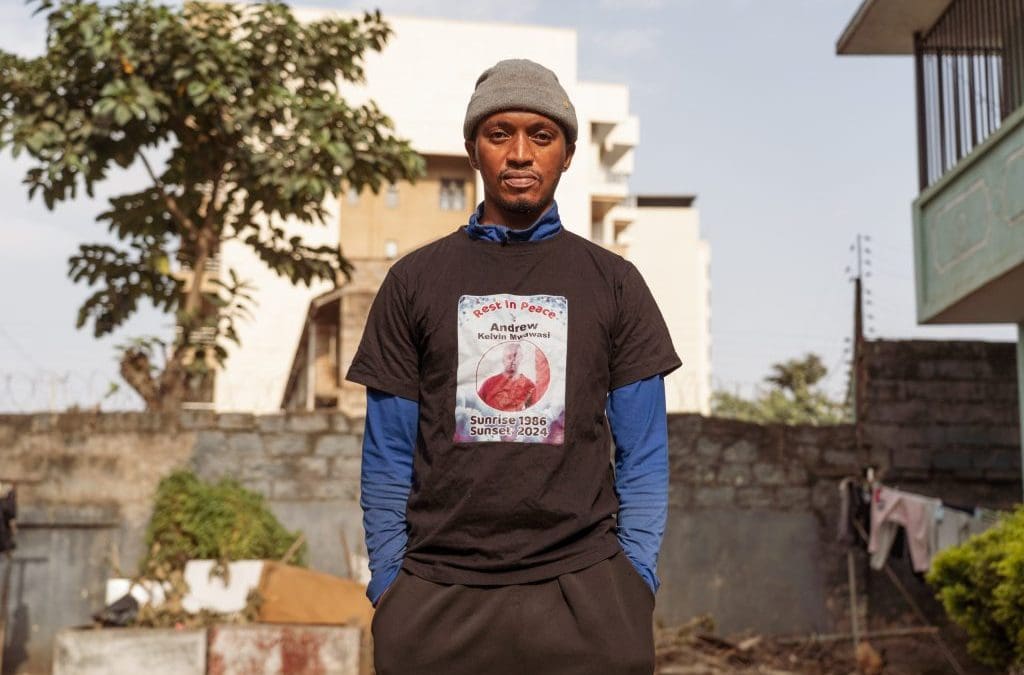
The day also marked one year since his 36-year-old brother Andrew Kelvin Mwawasi was killed during these protests The brutal crackdown
left at least 60 dead.
“I just went alone,” 32-year-old Mwadime recalls, sitting beside his grieving mother at her home in Juja, a town north of Nairobi. “I was carrying so much pain and anger, and I needed to let it out.”
As Mwadime marched forward, the harsh sting of tear gas filled his lungs for the first time, and the looming presence of armed riot police bore down on him. “I just asked God to protect me and walked without fear,” he says, his voice determined.
“I needed to fight for my brother. When the government ignores you, going to the streets is the only way to hold on. Being there that day meant I was finally standing up for him.”
“I needed to fight for my brother. When the government ignores you, going to the streets is the only way to hold on. Being there that day meant I was finally standing up for him.”
Since last year’s protests against a controversial finance bill that would have sharply raised taxes, over 100 demonstrators have been killed and thousands arbitrarily detained or abducted, intensifying public anger at President William Ruto and his administration over state violence, soaring living costs, and corruption. Observers warn the government’s escalating crackdown on protesters, activists, and human rights defenders is unprecedented.
For the families who lost loved ones during the Gen Z uprising more than a year ago, the pain remains raw and justice elusive.
“In Kenya, there’s no justice,” says Mwadime, his eyes red and clouded with tears. “The government wants the world to believe the protesters are criminals and terrorists to justify their murders.”
“The government wants the world to believe the protesters are criminals and terrorists to justify their murders.”
“I’m sick of this system, sick of this government,” he adds, his voice tightening. “Ruto needs to step down. We’ve had enough.”
‘Stop killing kids’
Missing Voices, a coalition of Kenyan human rights groups, documented
104 cases of police killings and 55 enforced disappearances last year—a 450% increase from 2023 and the highest number of disappearances recorded in a single year.
During the one-year anniversary protests, at least 16 people were killed
and hundreds injured. On July 7, security forces killed
at least 38 people during the annual Saba Saba demonstrations, marking the country’s historic pro-democracy movement. Most of those killed were under 25, including two children. Nearly 1,500 people have been arrested
, with hundreds charged with arson or terrorism—a move rights groups warn sets a dangerous precedent under Ruto.
“They need to just stop killing the kids,” whispers 55-year-old Patience Kishaga Gertrude, Mwadime’s mother, through sobs. It has taken her over a year to find the strength to speak publicly about her son, Kelvin, and she struggles to get a single word out. “The government needs to just sit down and talk to them and stop all this killing.”
Patience Kishaga Gertrude holds a photo of her son Kelvin, who was killed in last year’s protests. It has taken her more than a year to find the strength to speak about him. Photo by Jaclynn Ashly.Kelvin’s younger brother places a memorial poster on a sofa at their mother’s apartment in Juja, north of Nairobi. Photo by Jaclynn Ashly.
Kelvin was killed on the night of June 25 during what became known as the “Githurai massacre,” when security forces opened fire on protesters in Githurai, a neighborhood north of Nairobi. Estimates of the death toll vary, but witnesses claim
around a dozen people were killed, while a BBC investigation found no evidence
of mass killings.
Kelvin was not part of the protests, his family says, but was heading home from his job when police forces began shooting, causing people to flee. His body was found on the street with a gunshot wound to his head.
By the time the family was informed, police had already moved his body to Nairobi’s city mortuary, where Mwadime was forced to identify the disfigured, swollen body of his eldest brother. Mwadime immediately went to a police station to report the killing, but says he was met with abuse.
“It was so infuriating,” he says. “The officers just shrugged everything off and said my brother was a thug, and it wasn’t the police who shot him.”
“They just kept turning us around, playing with us, and not giving us any clear information,” he continues. “This is what they do until you just give up. They just add more trauma and pain on top of what you’re already feeling.”
The post-mortem concluded Kelvin was killed by a bullet wound to the head, but the bullet exited the back of his head and was not recovered. The family believes Kelvin was severely beaten before being shot close-range. In a morgue photo, his head appears shattered, his eyes and nose bruised and swollen, and dried blood collected under his nostrils.
Families often distrust preliminary investigative processes, since officers themselves secure crime scenes and collect evidence. Activists note that bullets, crucial links between killings and the shooter, are rarely recovered, and cover-ups are common.
“We have to rely on the police to cooperate and provide evidence, yet they are the ones who are doing the killings,” Mwadime says, his voice heavy with frustration.
“We have to rely on the police to cooperate and provide evidence, yet they are the ones who are doing the killings.”
The family reported Kelvin’s murder to the Independent Policing Oversight Authority (IPOA), created to provide civilian oversight of Kenya’s police. But despite repeated follow-ups, the case has made no progress.
“IPOA is just useless,” Mwadime laments. “Unless you attract media attention, no one cares.”
High-profile cases highlight this disparity. Rex Kanyike Masai, one of the first killed in last year’s protests, drew widespread coverage and public outrage, prompting IPOA to launch a detailed investigation
. The agency identified Police Constable Isaiah Murangiri Ndumba as the shooter, leading to an ongoing inquest
.
Gillian Munyao, mother of Rex Kanyike Masai — among the first killed in last year’s protests — sits with her other son during a court hearing in the ongoing inquest into his murder. Masai is one of the few victims of police killings whose case has led to a detailed investigation. Photo by Jaclynn Ashly.
Similarly, 22-year-old mask vendor Boniface Kariuki was shot point-blank
in June during demonstrations sparked by the killing
of teacher and blogger Albert Ojwang. Video evidence led to a murder charge
against the officer involved, while three officers were also charged
in the death of Ojwang.
But such prosecutions are rare. More than a decade after its creation, IPOA has secured only a handful of convictions despite thousands of complaints.
Ernest Cornel, spokesperson for the Kenya Human Rights Commission (KHRC), tells TRNN that IPOA is staffed largely by former police officers, with commissioners appointed by the President and approved by parliament, meaning it “cannot purport to be independent.”
Investigations often advance only when public pressure or media attention is high, not just based on evidence. “Even with overwhelming evidence, IPOA can still fail to act,” Cornel explains. “What matters is how much pressure the public applies.”
Most families who have lost loved ones to police bullets never step into a courtroom. They are left alone to navigate their sorrow, which stretches on without relief.
“We feel lost,” Gertrude says, her words stuttering through weeps. “We feel abandoned and ignored. Even if the government just acknowledged my son’s death, it would help my heart. He didn’t deserve to be killed.”
“Now I’m feeling so much pain and it never gets better,” she continues. “If I see someone who looks like Kelvin, I just start screaming and crying. I’m always breaking down.”
Mwadime says the sight of a police officer sends a jolt through him. “I have this anger in me when I see them,” he says. “I feel like attacking them because any one of them could be the officer who killed my brother.”
From Messiah to Anti-Christ
In 2022, Ruto won Kenya’s presidency by casting himself as the champion of the “hustler nation,” embodied in his United Democratic Alliance (UDA) party’s slogan Kazi ni Kazi (“Work is Work” in Swahili), promoting the dignity of work in the informal economy. A self-described hustler from humble beginnings, he ran on a “bottom-up” platform promising jobs for the youth, small-business loans, and lower living costs.
“I was a big supporter of Ruto,” 49-year-old Caroline Mutisya tells TRNN from her home in Machakos in eastern Kenya. On the wall hangs a memorial poster of her 25-year-old son Ericsson, killed in last year’s protests.
“When he won, I was so excited. I thought he would lift up the mama mbogas [informal female vegetable vendors] and the boda boda [motorcycle taxi] drivers. I truly believed he was going to change Kenya.”
“But now here we are,” Mutisya says with a sigh, her eyes glassy as she scrolls through photos on her phone from June 25. In one image, Ericsson’s bloodied body lies on the street; in another, it has been placed before the gates of parliament, where protesters carried him and laid him down as lawmakers looked on.
Caroline Mutisya shows a photo on her phone of her son Ericsson’s body, laid by protesters at parliament’s gates. Photo by Jaclynn Ashly.Caroline Mutisya sits in her Machakos home beneath a memorial poster of her son, Ericsson, who she says was killed in “cold blood.” Photo by Jaclynn Ashly.
Once in office, Ruto quickly abandoned his promises. He scrapped
subsidies on fuel and maize flour, driving up living costs for low-income earners he had pledged to support. He also pushed
for new taxes while indulging
in extravagant government spending—earning the derisive nickname “Zakayo,” after the biblical tax collector Zacchaeus
. To many, his approach bore the mark of dictatorship.
“The problem with Ruto is that he gave Kenyans so much hope,” says 29-year-old activist Sophie Mugure Njehia. “He convinced us he was our Messiah. But once in office, he revealed himself as the anti-Christ—doing the exact opposite of what he had promised.”
“He convinced us he was our Messiah. But once in office, he revealed himself as the anti-Christ—doing the exact opposite of what he had promised.”
“Ruto talked about how he would make sure that ordinary Kenyans will have more money in their pockets,” she says. “But then all he is doing is taking money from our pockets.”
Despite his young age, Ericsson had worked tirelessly to open his own butcher shop in Nairobi, eventually hiring four employees. But as the rising cost of living drove customers away, he was forced to let two employees go.
“My son was not one to complain,” Mutisya recalls. “But I could see the frustration building. He felt he was working hard, doing everything right—yet the government was punishing him.”
By the time the 2024 Finance Bill was introduced, young Kenyans were already seething. The bill proposed
a 16% VAT on essentials like bread and mobile money transactions, which would disproportionately hit low- and middle-income households. It also targeted
the digital economy—taxing content creation and online sales—striking at a vital income source for many youths.
The government framed the proposals as a way to raise
revenue to service debt. But even as it pushed taxes that would hit struggling youths and slashed social services, Ruto’s administration set aside large sums to refurbish
state buildings—spending seen as lavish and at odds with its austerity pledges.
On June 18, 2024—the day parliament was to debate the bill—months of online outrage spilled into the streets. The historic demonstrations united
a generation from all walks of life: from residents of informal settlements to content creators, business owners, and NGO workers.
But this hope gave way to grief when police responded with brutal force. Within days, at least two protesters were killed and hundreds injured. On June 25, outrage erupted after lawmakers passed the bill: protesters broke through police barricades, tore down parliament fences, and briefly entered the grounds before security forces cleared them out.
In the BBC Africa Eye documentary Blood Parliament, which investigated the June 25 killings at parliament, footage shows a plainclothes officer—identified as being from the Central Nairobi police station—advancing toward protesters and shouting “uaa!”—Swahili for “kill.” An officer with a concealed face kneels; gunfire erupts, and seven protesters—including Ericsson—collapse. The same officer can be heard continuing to urge his colleagues to “kill.”
The violence only galvanized the protesters. Hundreds breached parliament grounds with arms raised, moving slowly and squatting to show they posed no threat. Overwhelmed guards were unable to stop them as some entered the building. Chaos followed
—windows were smashed, part of the building set ablaze, and lawmakers fled, some escaping
in ambulances. Two lawmakers who had supported the bill, unable to flee due to disabilities, were shielded
by protesters they later described as “very kind.”
The mayhem lasted only minutes before protesters began retreating. As they fled, a Kenya Defence Force (KDF) officer opened fire, killing
27-year-old university student Eric Shieni.
By the end of the day, the country’s streets were strewn with the bloodied bodies of young protesters, leaving the nation in shock.
That night, Ruto claimed
the protests had been infiltrated by “organized criminals” and announced the army’s deployment. Yet none of the three young men killed at parliament that day were armed or connected to criminal networks. The following day, he announced
the withdrawal of the bill.
But for many, the damage was already irreparable, prompting
widespread calls for his resignation.
“My son was murdered in cold blood,” Mutisya says, tears overtaking her. “He was only carrying his phone—no weapons. What threat could he have posed to the police?”
She speaks with rising indignation. “The same man I had put all my hope in was now on television calling my son a criminal. That broke my heart. My son was humble and hard-working. He was our family’s angel.”
“These were young people who wanted a better country, and they were killed for that.”
‘Sheer brazenness’
Police violence is not new
in Kenya, but under Ruto, rights groups warn that state repression is reaching alarming new heights.
Weeks after the protests, plainclothes security forces continued
abducting and targeting perceived protest leaders. Abductors used unmarked cars with constantly changing plates. Those taken were held without due process in unlawful facilities, including forests and abandoned buildings, and denied contact with families or lawyers.
Bodies of missing people surfaced in quarries, forests, and mortuaries, some showing signs of torture. More than a year on, over a dozen abductees remain
unaccounted for.
As police violence escalated, many young Kenyans moved their activism online—but authorities quickly extended
their crackdown to the digital sphere. Officials have disrupted internet access, imposed
restrictive rules on social media companies, and advanced legislation to allow real-time monitoring of users that would grant
the government expansive surveillance powers.
Officials have disrupted internet access, imposed
restrictive rules on social media companies, and advanced legislation to allow real-time monitoring of users that would grant
the government expansive surveillance powers.
Young Kenyans have been abducted
, beaten, and tortured for posting satirical images of Ruto online.Police have also targeted prominent online activists, including developer Rose Njeri, who was detained
after launching a platform for the public to email parliament about the new finance bill, and political commentator Ojwang, who was abducted, tortured, and killed after accusing a high-ranking police official of corruption on social media.
Civic and artistic spaces have not been spared. Authorities pressured the BBC to cancel
a screening of Blood Parliament and detained
filmmakers. Ruto’s office also attempted to ban a high school play examining Gen Z’s frustrations with Kenya’s leadership. The ban was overturned by a court, but police responded to its staging with violence
, assaulting
journalists and firing teargas.
According to KHRC’s Cornel, Ruto’s administration has shown “sheer brazenness” in police excesses, with top officials openly endorsing deadly force. While Ruto apologized
and introduced
a compensation plan for protest victims, he also ordered
police to shoot protesters in the legs so “they can go to hospital on their way to court.”
While Ruto apologized
and introduced
a compensation plan for protest victims, he also ordered
police to shoot protesters in the legs so “they can go to hospital on their way to court.”
“In our analysis, ordering police to shoot protesters in the legs is effectively a shoot-to-kill directive,” Cornel says. “Regardless of the body part, gunshot victims can die from bleeding without immediate care—and in Kenya’s failing
healthcare system, those shot are likely to die.” Masai, killed in last year’s protests, bled to death
from a gunshot wound to his upper thigh.
Kenya’s Interior Cabinet Secretary has also instructed
police to kill anyone who “attempts to attack” them—a directive rights groups say grants officers a license to kill with impunity.
Human rights groups have additionally condemned the authorities’ use of informal vigilante groups—dubbed “state-hired goons”—to suppress protests. Armed with clubs, whips, and other crude weapons, these militias are accused
of beating and robbing demonstrators and committing sexual assault.
The Global Initiative against Transnational Organized Crime (GI-TOC) describes
them as “criminal gangs and hired militia,” whose deployment on June 25 anniversary protests coincided with a state ban
on live broadcast coverage. According to GI-TOC, they are funded by senior politicians to depict peaceful protesters as violent actors.
“The state hires vigilantes to sow chaos and discredit protesters,” Cornel tells TRNN. “It’s also a way for the state and police to dodge blame.”
This is not a new tactic in Kenya; past governments used informal militias to suppress voter turnout or opposition. “But under Ruto, we are witnessing an unabashed audacity in committing these crimes—escalating them in broad daylight, without even trying to hide,” Cornel says.
On July 6, a day before the Saba Saba protests, a press conference at the offices of KHRC by Kenyan mothers whose children were killed or forcibly disappeared during demonstrations was violently broken up
by a group of about 50 men, with some wielding sticks and pickaxes. They forced their way past locked gates, sending activists and journalists fleeing.
“We can say without a doubt that this militia was hired and operated under the protection of the state to silence dissent,” Cornel says.
While Ruto has intensified long-employed tactics, he has also reached for a sharper weapon: the country’s anti-terror laws.
Of the hundreds arrested over the last two months, at least 221—most under 25 years old—have been charged
with terrorism and other serious offenses, with high
bail conditions. At least 75 of these cases are being pursued under the Prevention of Terrorism Act, a law designed for insurgent groups like Al Shabaab.
Previous administrations in Kenya have misused anti-terrorism laws to intimidate
critics. This, however, is the first time a government has applied them so broadly and publicly against protesters—an approach meant to deter protests and civic participation altogether, Cornel says.
These developments are also intended to sap the youth movement’s resources, activists say. Organizers are forced to spend time and resources locating detained protesters, providing legal aid, and fundraising for bail.
Mwanase Ahmed, a 33-year-old prominent activist, says these grassroots efforts have secured the release of at least 200 people. “But, now we’re spending so much of our time and resources defending ourselves, tracking down the missing, and covering legal fees and bail, instead of strategizing on how to change our country for the better.”
Betrayed hope
For Jacinta Onyango, her 12-year-old son Kennedy embodied all her hopes. Two of her other children have sickle cell anemia, leaving them often bedridden. But Kennedy’s sharp mind and gift for art lit a path she thought might lead her family to a better life.
“He had really big dreams,” the 35-year-old says, clutching a wad of tissues, her face wet with tears. “He wanted to be an artist—a really big one. He was already talking about getting a scholarship to study art in the United States.”
She spreads out some of Kennedy’s drawings on a table in her two-room home in Ongata Rongai, a Nairobi satellite town, including his last piece of the Dome of the Rock and Al Aqsa Mosque in occupied East Jerusalem.
“He promised me that this one would pay our rent,” Onyango murmurs. Her husband, 36-year-old Michael Odero, sits quietly beside her, his jaw tight and eyes brimming with tears he won’t let fall.
At her home in Ongata Rongai, Jacinta Onyango shows a photo of her late son Kennedy. Photo by Jaclynn Ashly.Michael Odaro and Jacinta Onyango sit in their two-room home in Ongata Rongai, with drawings by their 12-year-old son Kennedy spread across the table. Kennedy was shot and killed by police while on his way to collect a schoolbook from a classmate during protests. Photo by Jaclynn Ashly.At the family’s home in Ongata Rongai, Kennedy’s youngest brother sorts through his late brother’s drawings. Photo by Jaclynn Ashly.
“A big part of his heart belonged to the Palestinian people,” she says, a faint smile slipping through the grief as she recalls her son’s compassion. “He felt their pain as if it were his own.”
On June 28 last year, amid still simmering protests, Kennedy set out to a classmate’s house to borrow a book he needed for homework. He never made it. A police bullet
tore into his back. “It looked like he had been mauled by a lion,” Onyango says, her voice breaking as she remembers identifying his body.
A week later, Onyango’s phone rang. On the other end was President Ruto.
“He told me he was very sorry for what happened to my son,” Onyango recounts. “He said not to worry—that he would personally make sure my son got justice, that someone would be held accountable. He promised to call me soon and that we would sit down and talk.”
“He gave me so much comfort,” she continues. “It eased some of the pain, because I believed the president was with me—and surely we would get justice for Kennedy. I felt like he was a father to me.”
But more than a year later, the call the family had placed all their trust in still hasn’t come. They tried calling the number back and sent message after message—but received only silence.
“That man is a liar,” Onyango snaps, her voice rising. “He fooled us, pretending to be a good person, and then abandoned us. He dangled hope in front of us, then used it to torture us. It would have been better if he’d never called at all. He made our grief so much worse.”
Onyango’s anger is not hers alone. It’s shared by many Kenyans who feel the sting of betrayed hope.
“My son’s soul can’t rest in peace until we get justice,” Onyango says, her lips trembling. “And if his soul is not at peace, then we can never be at peace.”
“But I don’t know what I’m supposed to do. I don’t know who to speak to or which direction to go. It feels like we will be stuck like this forever.”
Onyango’s grief swallows her words, and she falls silent. Her husband, Odero, sitting beside her, picks up where her voice falters.
“Go tell the world what’s happening here,” he orders this reporter. “Tell them this government is rotten—that they kill human beings like chickens.”
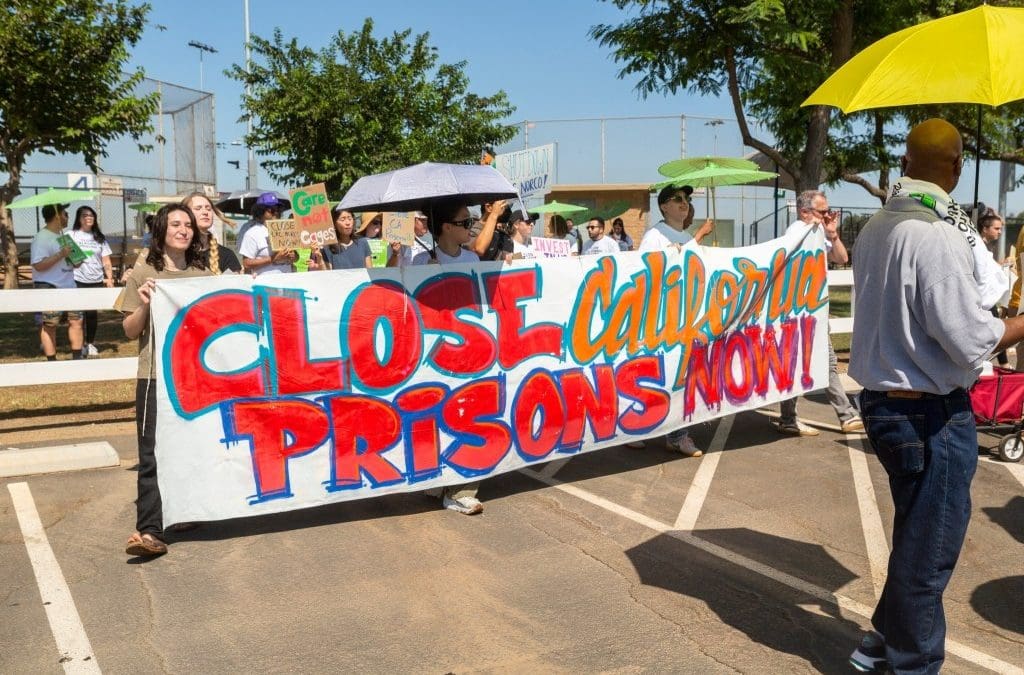
After years of pressure from community members and a coalition of over 80 organizations, the California Department of Corrections and Rehabilitation has announced plans to close the infamous California Rehabilitation Center in Norco, CA, by the fall of 2026. But organizers say this is just the beginning—they are fighting to close more prisons in California and prevent the government from re-opening shuttered facilities for immigrant detention. In this episode of Rattling the Bars, host Mansa Musa speaks with Woods Ervin of the grassroots organization Critical Resistance about California’s prison system and the growing abolitionist movement working to dismantle it.
Guest:
Woods Ervin is the National Co-Director of Campaigns and Projects at Critical Resistance, a national grassroots organization seeking to build an international movement to end the prison-industrial complex.
The following is a rushed transcript and may contain errors. A proofread version will be made available as soon as possible.
Mansa Musa:
Welcome to this edition of Rattling the Bars. I’m your host, Mansa Musa. Today we are discussing California’s prison system and the abolition movement working to dismantle it. Joining me today is Woods Ervin. She’s the National Co-Director for Campaigns and Projects at Critical Resistance, an organization founded in the mid 1990s with the mission of ending the use of prisons and police. Woods, thank you so much for joining me today.
Woods Ervin:
Thank you so much for having me today, Mansa. I appreciate it.
Mansa Musa:
Recently the California Department of Correction and Rehabilitation announced that the California Rehabilitation Center or CRC in Norco will close in the fall of 2026. Now, CIC is known for the most inhumane conditions as it relate to road infested unsafe drinking water, severe overcrowding, stifling heat and violence at the hands of the staff. Can you walk us through how this came about and were there any unlikely alliances that emerged in the fight to close prisons that people might learn from when building coalitions?
Woods Ervin:
Thank you so much. So that’s a really great question. So just to take us back a little bit to 2020, Critical Resistance joined a campaign, a coalition that was leading a campaign to close 10 prisons by 2025, feeling ambitious, it was 20. And the coalition is actually in an alliance. The California is United for Responsible Budget.
And at the time around 2020, we heard from the legislative analyst office, which is a bipartisan research office within the California state infrastructure that at the very least five prisons could close without impacting the imprison population. Just with all of the work that we’ve been doing to get people out of prison over the last decade, the population had gotten to that point. So we launched this campaign and had moved a few prisons towards closure, but we were focusing on the person who had the decision making power ultimately, which was Governor Newsom. And he was just making choices around whatever prison he saw fit to close, I think in relationship to or talking to CDCR, but not necessarily to us. And so even though we knew that Gut Newsom does have the final say in whether or not our prison closes, we also thought that everyday people should also get a say in how dollars are spent.
So we decided to engage in a site fight just to sort of test our power, our ability to be able to name a prison and then have that prison get shut down. So when we first started the campaign, it was based in what we called the People’s Plan for Prison Closure, which was a research project that Curb did back in 2019 or 2028 where they interviewed hundreds of imprison people across the state. What were the prisons that were most toxic? And given everything you listed initially, clearly CRC Norco was one of the prisons at the top of that list. So we pulled 10 prisons and we were just like between people inside wanting the prison to close. And we had heard that there were pushes from the city council and the mayor to close the prison as well. And we thought that might be good conditions for trying out focusing on CRC Norco to get it to close.
So we did the sort of, I think some of the usual things around grassroots organizing where we, and agitated our base of supporters to send the governor letters for closure or advocating for closure. We did also engage in mobilizations to CRC Norco as direct action and also we organized with interfaith movements. So a bunch of churches from across the state that would mobilize to Norco, they did a pilgrimage of the direct action as well to show their opposition to Norco support for people inside and the desire for it to close. But we didn’t want to stop there. We did some organizing outside of the prison, which looked like what we call parking lot outreach days. So with the goal of organizing the families of people
Mansa Musa:
And not to cut you off and that was onsite at the institutions. When you say pa, alright, go ahead. That’s
Woods Ervin:
Every weekend when folks would visit their family members inside we would have a table with food and water and iceman outside. And so the goal was to one, just generally support family members of people who were in CRC Norco and then also to let them know about the campaign to encourage them to join if they were interested in doing so. And we were hoping to also then set the groundwork so that if we did win the closure of CRC Norco, then we would be prepared to mobilize with family members on that. Right,
Mansa Musa:
Right. And you just described organizing 1 0 1 in terms of going where the people are because as you said, y’all got this strategy to close it. But now we looking at conditions that shifted in this country in the interim of what you just said, the mentality has shifted. Now we have the raise on people, rounding people up, ice rate rounding people up because they’re now United States citizens. So we see that. How are y’all looking at alright, the close of these prisons and not allowing them to become a repurposed for federal detention and ice? Is that a part of y’all plan? Because Governor Gavin Newsome signed AB 1 37 to prevent ICE from acquiring closed facilities. Has this legislation been effective in stopping the federal government from taking over sites like FCI, Dublin and Chaco Walla Valley State Prison?
Woods Ervin:
Right on. So we’re definitely excited to have been able to push for AB 1 37 to get passed and that to include some of the language that would allow for prisons that we get closed to not be able to be sold to the federal government. Just like you were saying, 2020 when we started the campaign, it was a different moment when we knew in the fall of last year when Trump got elected and was spouting all the anti-immigrant rhetoric that we needed to get ahead of the issue with prisons being converted to detention centers. So the legislation AB 1 37 currently says that the state has to name a building as excess to fall into the status of not being sold. And while that is one step forward, that does then bring about a lot of challenges in terms of it’s implemented, right? So what the prisons you were speaking to Chuck Wall Valley State Prison is not currently named as excess. So we’re organizing our base to send letters to the governor to move it into that category. But we’re also thinking about this next legislative cycle. How do we figure out ways to either strengthen the legislation via amendment or if there are ways administratively to figure out some supporting the interpretation of the legislation to a little bit one more automatic, it shouldn’t be that we have to fight for every prison that we get closed to then get named as excess so that we don’t have to worry about it getting sold.
And two, so that it’s just broader. So it covers as many of the facilities that get closed as possible. Unfortunately with a case of something like FCI Dublin, which was a federal facility, so it was already federally owned. So AB 1 37 doesn’t cover it, right? Federal property. So there’s no need to exchange hands in terms of ownership,
Mansa Musa:
But there’s always the question, when a prison closed, does it actually mean the conservation, are people being released or are they simply being transferred to another jail or prison? And in that regard, we are looking at the impact of the closure. Talk about the impact of closure when y’all made y’all analysis, how y’all tracking that?
Woods Ervin:
Yes, I can definitely speak to that. So how we’re approaching this is rooted in the answer to your first question because some of our grassroots organizing was not just with people on the outside, it was also on people with people on the inside,
Mansa Musa:
Right?
Woods Ervin:
Okay. We organized with people on the inside about if we were successful in getting Norco name for closure, what would they want to see? How would they want us to approach it? And so really at the top of their desire was for us to move for releases and not transfers. So already a lot of us just wanted to get clarity on we want what’s the highest bar, but then if we don’t have the juice or the capacity to get CR to get our prison system to release everybody what then? And so even though we’ve been continuing to push for releases, not transfers, we’re also realistic about where is there some room beyond that? So what we’ve been trying to do is then also to have, if they are going to be transferring people to try and mitigate the harm as much as possible. So what we’ve looked at is we’ve been trying to push for our process for our prison system to assess eligibility for release and create reentry plans, push for autonomy and choice in the transfer process.
So we know that especially when thinking about programs like programming for folks inside, we’re trying to, there’s a penal code 2030 3.7 in California that should allow for people in prison to choose to be able to continue programming at their next facility. But that will require that the facility that they move to have that program program, right? So we’re pushing for in accordance with law people should be moved to a prison, continue to program and also other things like people should have adequate prep time and in planning and advance the transfer and clearly everything else maintain adequate levels of medical assistant food stocks and space to avoid overcrowding. And so those are some of the things that we are pushing for as part of our ultimate goals release is not
Mansa Musa:
Transferred.
Woods Ervin:
If they’re not going to fully comply with that, we have other demands in addition to that.
Mansa Musa:
I like the strategy because it’s interconnected. You close the prison and you create a transitory environment, then that means that okay, I go from maximum security to medium security to minimum security to pre-release if that’s a system that exists in California. But ultimately I don’t stay in one secure environment. My behavior is now allow me to be able to progress through the system. Whereas though before I’m just, I need a plantation, I need numbers. One of the numbers that need to be on the plantation versus ain’t no more plantations. So we close them. That mean we got to do something with the people and I like that strategy. So that’s all power to the people in that regard. Another factor here is that we had did a story on North Carolina and we found in our study, in our investigation that a lot of prisons in environments where if you got fires, floods when it rains and they don’t have a contingency plan for preparation to move people into a safer environment or close the prison and then have the people move to a more secure environment or process them out. Can you speak to that?
Woods Ervin:
That’s exactly right. I think we saw this back in I think 20 21, 20 22 during the fires, the fire, right? Exactly. In Susanville and we were pushing a closed California correctional center at the time. And at the time, just like CIC Norco, California Correctional Center did not have an emergency plan even though the fire was heading directly towards them. And so we literally had to intervene because family members were calling us and they didn’t know what was going to happen to their loved ones. So because the prison system didn’t have an emergency plan, a contingency plan for that, we were like not only do we need to manage the outside advocates, we have managed this situation when CDCI has all this money to do that, but then also this prison needs to close immediately. Right? Right,
Mansa Musa:
Exactly.
Woods Ervin:
That was a blatant and clear example of the inability for them to keep people inside safe.
Mansa Musa:
It’s only because of the advocacy of families and people much like y’all cells that bring this to national attention. That makes it an issue that has to be dealt with in a more humane manner. Fine. Let’s touch on the broad economic picture. California is basically facing a deficit now. I was looking at how much money in the 20 24, 20 25 fiscal year. They estimated 18.1 billion for that fiscal year. Alright. Talk about perhaps repurposing the facilities. Will it help strengthen the state economy, especially given the outgoing hostility from the Trump administration? So we find ourselves in a situation where you close in prison. Okay. How was this closing and repurposing those facility help strengthen the state’s economy? What’s the economic impact?
Woods Ervin:
I love that question. I let you ask the question. So essentially there are a couple of things. So there is the fact that there’ll be less wasteful spending. So prior to the closure of CRC Norco, California spent 250 million on repairs as we said earlier is in terrible condition. So 250 million on repairing CRC Norco that in a way that wasn’t effective given the state of the prison,
Mansa Musa:
Right? Right, exactly.
Woods Ervin:
We want to stop our prison system, our state from pouring the state’s resources into these dilapidated prisons that need to be closed and have our folks released. So that’s like baseline, right? So also as a result of this continuing trend downward of the population, so the population reductions that have been happening inside of prison, the legislative analyst office shows that California is in a position to close five more prisons and that would save 1.5 billion annual, yeah,
Mansa Musa:
1.5 billion
Woods Ervin:
Foreseeable future. And that can be put towards the deficit, but if as it currently stands, but it can also support some of the gaps in Medi-Cal food services
And other programs, housing exactly. That are being slashed in this moment. There’s also this really interesting opportunity. So as I was saying earlier, the prison system CDCI has no plan whether it be for emergencies or for the prison closure. So what did we do? We came up with a plan and we were like, here’s an example of what we could be doing with as part of prison closures. So we are pushing for the state to not only close prisons permanently and not reopen or sell them, but then to try and transform the conditions of the prison. So that could be tear it down, use it for something else
Like detoxify the land, give it back to the local communities, right? Give it back to put it into a program for reparations or back to this communities we’ve been working with. So that’s one example of what we could do. We’ve been working with an organization called Designing Justice, designing Spaces that does redesigns for prison facilities that could be turned into lots of other things that are generative for the local economy. And clearly from the funds that gets saved from the prison being closed that would’ve gone to that prison, could go back into the general fund at the state level, but then be set aside for the county to make decisions about their local economy and youth. Norco is a particular case. That county is relatively wealthy and conservative, so they actually don’t need the money to do what they want to do with the prison after it shuts down. So what we’re advocating for in that instance is, or instances like these and in general is that the money that would go to that, there’s money that could go to counties, but there’s also the money that should go to the counties. So there’s the counties that the prison is located in, but then there’s counties where the majority of imprison people come from like LA County and there should be more resources going to where the people who are locked up the most come from,
Mansa Musa:
You can divide that like you say, it is equity, economic equity because you can divide that money up in two places where it can be served the most in terms of advancement of humanity. And that’s a good strategy to counter what the Trump administration is doing. They throwing a lot of money to the states and it’s not being regulated. I’ll give you 1.9 billion or I’ll give you like 1.5 million and you just do this right here for me. And whatever happens in terms of being regulated, if you knock somebody’s brains out, if you put people in thumb locks, it don’t really matter to me as long as you contain that population that I wanted to put in that space for closing first, we want to thank you for coming to the real news and rallying the bars. Tell us about going forward, what you want our listeners and our viewers to be on the lookout for coming out with the critical resistance space.
Woods Ervin:
Yeah, I mean, thanks again so much for having me. And the fight continues. We’ve got four public prisons and one private prison closed. As I said earlier, we’re still going to keep trying to make sure that those prisons that we close don’t get turned into something we don’t want them to get turned into that the money goes where it needs to go. And then we still have five to six additional prisons that we want to get named for closure. And according to legislative analyst office, even though there’s been, as you were saying, the landscape has shifted and there’s more of a sort of tough on crime approach that is gaining popularity in moment, there is still room to close many more prisons in California and just given the amount of people that we’ve been able to get out and that we could potentially still get out and so we’re going to, are going to keep fighting. It would be amazing if we got the 10 prisons, the rest of the name this year. But I definitely think that even if they don’t get named this year, we’re going to fight until we reach our goal.
Mansa Musa:
And I want to close with the immortal words of Bob Marley, get up, stand up. Stand up for your rights. Get up. Stand up. Don’t give up the fight. And I see from what I’m seeing in California, George Jackson say, when the doors open, the real dragon will come out. Well the real dragon is out in the form of critical resistance in the form of curb. The real dragon has come out and make no mistake about y’all are actually showing the nation, when we say abolition, what that look like in terms of the full colony of it. Not just shutting the prison doors but ensuring that the people that’s in prison have a transition. The states and the counties. Well, the counties where the prisons, I have an opportunity to transition from relying on slave labor to looking at expanding your imagination, imagining some other than making money off of people’s sweat and browe.
Woods Ervin:
Thank you so much Mansa for having me. Thank you for being those very big kind words.