by Mansa Musa | Jun 17, 2026 | Fascism, history, Politics and Movements: International, Politics and Movements: US, Rattling the Bars, Trump, video
In Part 2 of a conversation between Mansa Musa (former political prisoner and Black Panther) and Alberto Toscano (professor of critical theory and author of Late Fascism), the two discuss how consent and coercion operate within US civil society and abroad. They specifically unpack how Donald Trump’s domestic and foreign platforms animate white nationalism—relying on the explicit promise of state violence against targeted populations.
Guests:
Alberto Toscano is a renowned Italian cultural critic, social theorist, philosopher, translator, and adjunct professor at the Simon Fraser University School of Communication. Toscano is a columnist at In These Times and the (co-)author of numerous books, including: Late Fascism: Race, Capitalism and the Politics of Crisis; and Fanaticism: On the Uses of an Idea.
Credits:
Producer / Videographer / Editor: Cameron Granadino
Transcript
The following rushed transcript may contain errors. It will be updated as soon as possible.
Mansa Musa:
Gramsci wrote about consent and coercion. Talk about the difference when it comes to a targeted population of prisons and policing.
Alberto Toscano:
Yeah. So that relationship between consent and coercion or in Gramsci’s terms also hegemony and domination or consent and force is really crucial. Gramsci was enough of a realist about politics. After all, he was also a very brilliant reader of Machiavelli that he never thought that force or coercion could be eliminated from politics altogether, but he was very interested in looking both at the past and the present to think about the mix of force and coercion, hegemony and consent. That’s also why he was so interested in the question of policing and of how to conceive of the police. And on could argue that the expansion of repression and incarceration is always a
by Michael Fox and Marc Steiner | Jun 11, 2026 | First Amendment, free speech, history, Podcast, Politics and Movements: US, The Battle for Free Speech, The Cultural Front
Transcript
The following is a rushed transcript and may contain errors. It will be updated as soon as possible.
Michael Fox: Hi Mark.
Marc Steiner: Hey Mike, how you doing? Good to see you.
Michael Fox: Good to see you.
Marc Steiner: What do you got for us today?
Michael Fox: All right. So late last fall I visited this place that I think you’ll appreciate for this episode. Sprout Plaza at the University of California campus.
Marc Steiner: I know exactly where you were.
Michael Fox: So it’s a beautiful blue sky out. Leaves are changing colors. It’s a crisp autumn afternoon and in front of me is this big long stoic building marble, four big long Roman columns at the top of a row of stairs. This is the administration building here at the University of California Berkeley and this is called Sproul Hall. And that is important because this was literally ground zero for the free speech movement of 1964 here at the University of California Berkeley. Like the Plaza where I’m at right now, which is Sprout Plaza, was where you just had daily marches, protests, speeches just constantly happening.
I think it is really poignant that on the ground in front of Sprout Hall, someone has written in chalk, Trump must go now, refuse fascism. And it’s chalked up in two different locations here. People still staking out their territory, demanding their right to speak their voice. I was there to get a sense of the feeling being there and kind of the legacy today. And of course this was ground zero for the free speech movement. And Mark, that’s something you know
by Mansa Musa | Jun 9, 2026 | history, Political Prisoners, Politics and Movements: International, Prison Industrial Complex, Rattling the Bars, video
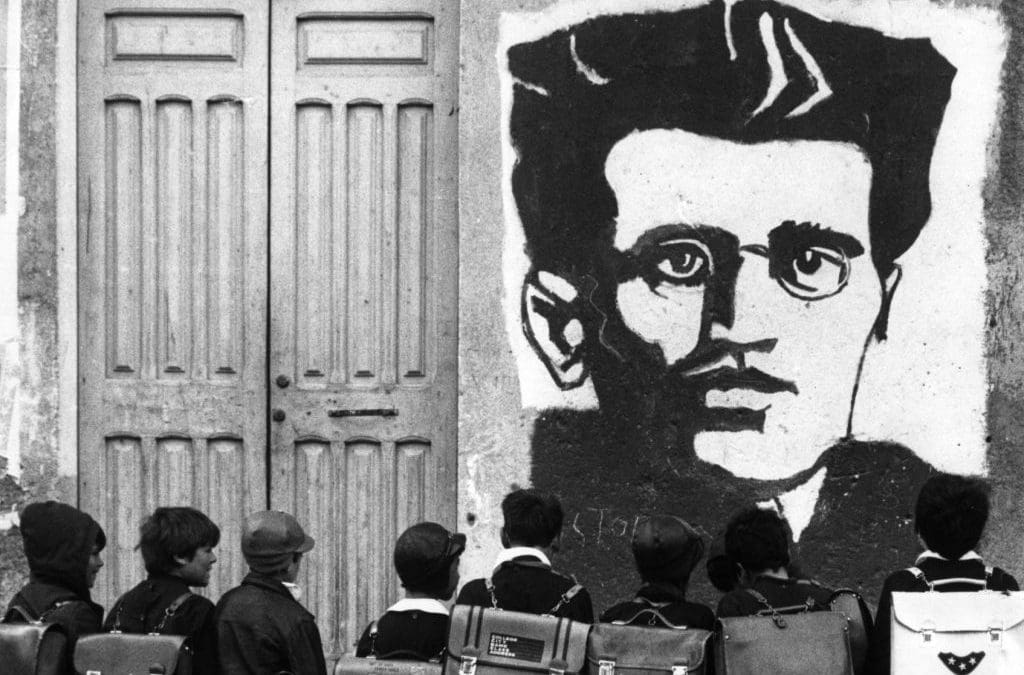
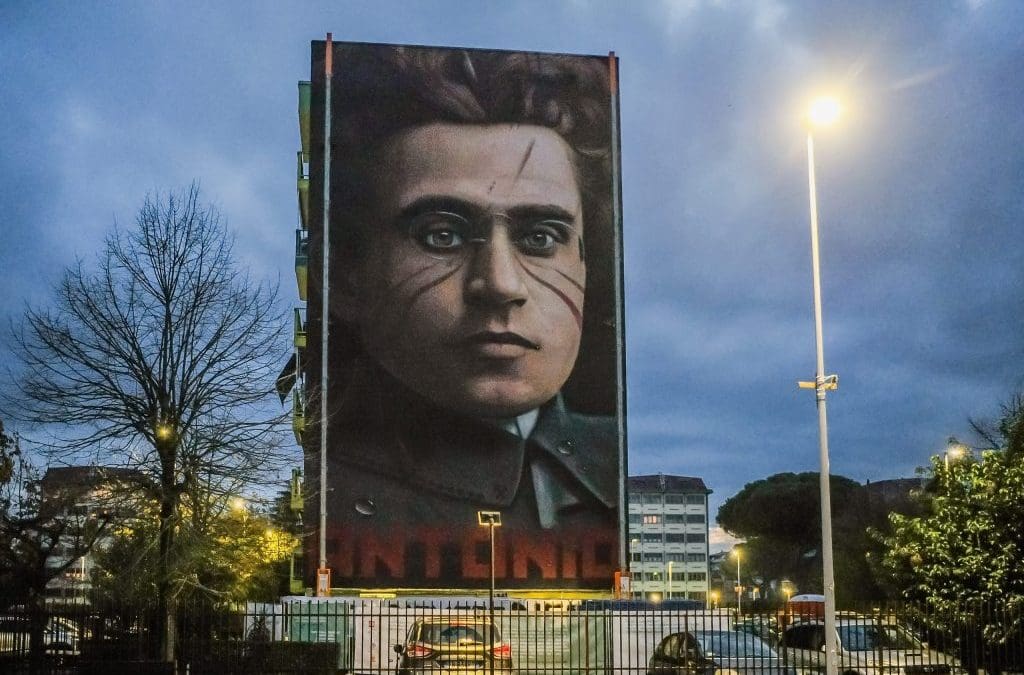
Imprisoned by fascist dictator Benito Mussolini in 1926, the prison writings of Italian Marxist theorist Antonio Gramsci remain essential 100 years later for understanding how fascism, policing, and incarceration function to suppress political dissent and preserve unequal systems of power. In this episode of Rattling the Bars, former Black Panther and political prisoner Mansa Musa speaks with renowned scholar Alberto Toscano about the importance and terrifying relevance of Gramsci today.
Guests:
Alberto Toscano is a renowned Italian cultural critic, social theorist, philosopher, translator, and adjunct professor at the Simon Fraser University School of Communication. Toscano is a columnist at In These Times and the (co-)author of numerous books, including: Late Fascism: Race, Capitalism and the Politics of Crisis; and Fanaticism: On the Uses of an Idea.
Credits:
Producer / Videographer / Editor: Cameron Granadino
Transcript
The following rushed transcript may contain errors. It will be updated as soon as possible.
Mansa Musa:
Welcome to this edition of Rattling the Bars. I’m your host, Mansa Musa. Today, this is just a political conversation that we’ll be having about fascism, but more importantly, talking about the works of Antonio Gramsci. Joining me today is Alberto Toscano. Welcome to Rattling the Bars Alberto.
Alberto Toscano:
Thanks for having me.
Mansa Musa:
First, explain to our audience who Antonio Gramsci was.
Alberto Toscano:
So Gramsci is best known as former secretary of the Italian Communist Party and one of the most significant Marxist and communist theorists of the 20th century. And most of his theorizing, such as we know today, was done in prison in a series of no books, his prison notebooks that were published after his death and after the end of World War II. It’s
by Eram Alam | May 16, 2026 | Book Excerpt, Colonialism, COVID-19, Excerpt, health care, Health Care Workers, history, Immigrants, immigration, medical workers, physicians
Soon after Medicare, Medicaid, and the Hart-Celler Act, also known as the Immigration and Nationality Act of 1965, became law, the federal government began to label certain geographic areas as Health Professional Shortage Areas (HPSAs), which designated an inadequate number of physicians in relation to the population. HPSAs were generally populated with people who were low-income, elderly…
Source
by Austin C. McCoy | May 8, 2026 | Black History, civil war, DEI, Discrimination, Disenfranchisement, Donald Trump, elections, Gerrymandering, history, ICE, Jim Crow, Op-Ed, Protests, Racial Justice, Racism, Republicans, Supreme Court, Voting Rights, Voting Rights Act
The Supreme Court’s decision to invalidate Louisiana’s congressional map creating two Black-majority districts continues to remind us of how much the U.S. has backpedaled away from the so-called racial “reckoning” of the summer of 2020. The Supreme Court ruling in Louisiana v. Callais undermines another key plank of the 1965 Voting Rights Act, passed more than 60 years ago with the intent of…
Source
by Jesse Hagopian | May 2, 2026 | America 250, Black Liberation, Declaration of Independence, Donald Trump, history, Op-Ed, Rebellion, Slavery
“With a single sheet of parchment and 56 signatures, America began the greatest political journey in human history,” declared Donald Trump, announcing the nation’s upcoming 250th anniversary. Under Trump’s direction, a sweeping federal initiative — branded as both America 250 and the “Freedom 250” campaign — has launched a full year of patriotic programming. The Salute to America 250 Task…
Source