by Taya Graham and Stephen Janis | Jun 23, 2026 | Article, Fascism, ICE, Policing, Politics and Movements: US, Prisons and Policing
Republicans are quietly constructing a punishment regime to prepare for post-democratic governance. They just don’t want you to know about it yet.
That was our takeaway from a recent exchange with Republican Congressman Mike Lawler on the steps of Capitol Hill. We asked him why Republicans were proposing an additional $70 billion for Immigration and Customs Enforcement and Customs and Border Patrol—funding that the party eventually passed through a process called reconciliation, a maneuver that allowed them to bypass the filibuster in the Senate without Democratic support.
The funding, now approved, was proposed without any details. A perplexing omission, given that the Big Beautiful Bill had already bestowed an eye-popping $140 billion on the controversial immigration agencies, at least $100 billion of which remains unspent, according to a report by the Senate Budget Committee Democratic staff.
So, we asked him, “What was all this money for?”
“Are you for abolishing ICE?” Lawler shot back. We ignored his question and tried to push for specifics. He offered none.
But his non-answer was revealing. The lack of details could be written off as politics as usual, but our recent reporting suggests something more insidious.
That’s because the plan to provide nearly unlimited funding to ICE and CBP without explicit justification is just one part of a broader project that we have watched unfold on Capitol Hill. All together, it’s a push to construct the most expansive punishment regime in recent American history. And it’s a necessary component of the authoritarian overhaul pursued by the Trump administration.
The funding for ICE is just a down payment on critical infrastructure necessary to make it work.
Punishment, as we’ve observed, is currently at
by Brett Wilkins | Jun 23, 2026 | Article, Economy, Economy and Inequality, Politics and Movements: US, Reprint
This story originally appeared in Common Dreams on June 22, 2026. It is shared here under a Creative Commons (CC BY-NC-ND 3.0) license.
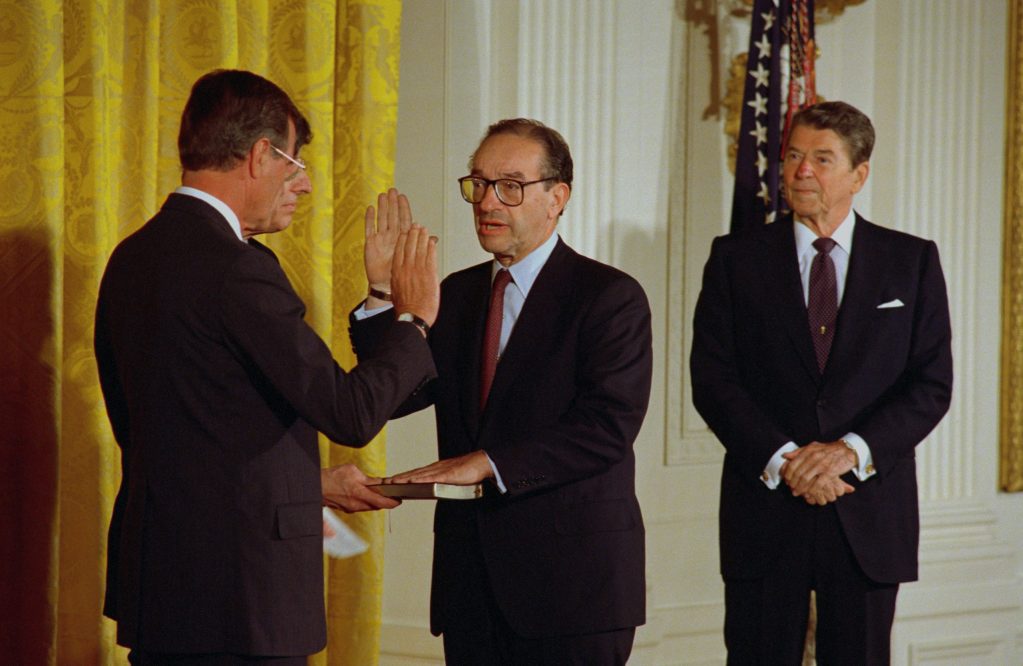
Alan Greenspan, whose policies during nearly 20 years as US Federal Reserve chair fueled soaring economic inequality and helped create the conditions for multiple economic crashes, died Monday at age 100 after a long battle with Parkinson’s disease.
While many corporate media outlets published hagiographic obituaries lionizing the “Maestro” who presided over nearly two decades of low inflation, rising stock prices, and American economic confidence, critics focused on Greenspan’s role in promoting dangerous deregulation and “easy money” policies that inflated financial bubbles, with sometimes disastrous results.
Robert Reich—who served as US labor secretary under President Bill Clinton during all of Greenspan’s tenure—called him “in many ways the most powerful person in America” during that era.
“If any single person was responsible for the financial crisis of 2008, it was Greenspan.”
“He maintained an iron grip over the Fed, and almost single-handedly decided on interest rates,” Reich wrote. “He essentially fired George H. W. Bush by raising interest rates so high (ostensibly to ward off the inflation then threatening the economy) that the economy took a dive, and voters blamed Bush. This was enough to convince my boss, Bill Clinton, to do exactly what Greenspan wanted—which was to reduce the federal budget deficit and thereby destroy much of the agenda Clinton ran on (and I helped create).”
“I don’t want to speak ill of anyone who has passed. Greenspan was an extremely charming, intelligent, and thoughtful man,” Reich added. “But the truth must be told: If any single person was responsible for the financial crisis of 2008, it was Greenspan. That crisis—the worst collapse since 1929,
by Jake Johnson | Jun 22, 2026 | Article, Colombia, elections, Politics and Movements: International, Politics and Movements: US, Reprint
by Glenn Diesen and Jeffrey Sachs | Jun 17, 2026 | Article, Europe, Germany, Politics and Movements: International, Reprint, War
by Sarah Lazare and Amy Livingston | Jun 17, 2026 | Article, ICE, labor, Minneapolis, Politics and Movements: US, Prisons and Policing, Reprint
This story originally appeared in Workday Magazine on June 16, 2026. It is shared here with permission.
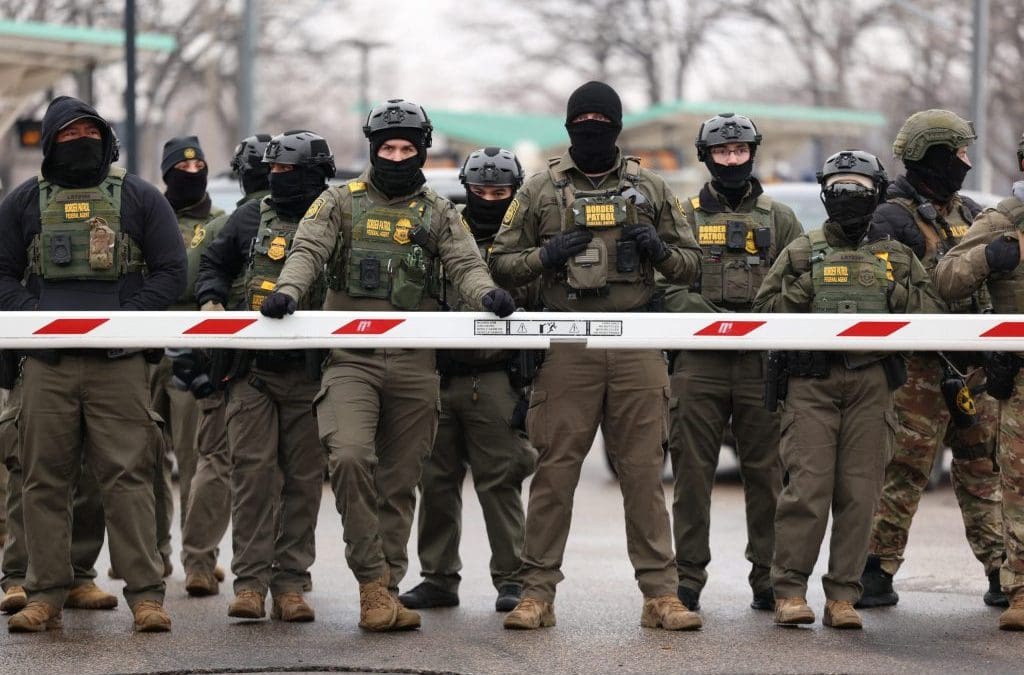
Minnesota trade unionists active in worker assemblies are among the 15 people indicted by the federal government today, as part of a sweeping crackdown on organizing in opposition to the ICE and Border Patrol since December 2025. Among a slew of other allegations, the indictment cited some of the individuals’ participation in assemblies of trade unionists and other workers held at the United Labor Centre in Minneapolis as evidence that the activists participated in a criminal conspiracy.
All 15 of the people indicted are charged with “conspiracy to impede or injure a federal officer,” which activists describe as an effort to use draconian charges to crush Minnesota’s widely celebrated organizing against the armed federal agents who descended on the state this past winter.
“Trade unionists active in worker assemblies are among those who were arrested,” says Kieran Knutson, president of Communications Workers of America Local 7250. “The trade unionists I’ve known for years are stand-up people who believe in solidarity. They believe an injury to one is an injury to all. They are outstanding union activists in their union and workplace, and I’m proud to know all of them.”
Marcia Howard, the president of the teacher chapter of the Minneapolis Federation of Educators (MFE) Local 59, confirmed that trade unionists are among those detained. “I find it telling that they are going after unionists, including educators I know of right now, that they are going after workers. I’m really pissed off,” she said.
Howard is withholding the exact number of trade unionists and their union roles out of concern for
by Mitchell Plitnick | Jun 16, 2026 | Article, Iran, Israel, Lebanon, Politics and Movements: International, Politics and Movements: US, Reprint, War
This story originally appeared in Mondoweiss on June 16, 2026. It is shared here with permission.
According to reports, the Memorandum of Understanding (MOU) between the United States and Iran to open the Strait of Hormuz and formally end the fighting between the two countries was signed on Monday.
It is important to clarify that, regardless of White House statements, this is not a peace deal. It is an agreement to end the standoff in the Strait of Hormuz and a commitment to stop fighting for 60 days while an agreement is reached, hopefully. The negotiation period can be extended if both parties agree. Still, it is a important agreement that indicates a end to this disastrous war could be in sight.
But as usual Israel stands to play the role of spoiler. The one thing that is most clear is that Tel Aviv won’t give up on its long-term goal of regime change in Iran. But if this MOU actually takes effect and opens the Strait of Hormuz, that will not be achieved through this war.
What is the agreement?
According to American officials, details of the MOU will be released in the next day or so. But we already have a pretty good idea of what it says and what it does not say.
While none of the terms have been announced, it seems certain that the mutual blockades of the Strait will be lifted and commercial traffic will flow through the whole Persian Gulf again. That might take a bit of time, as mines planted by Iran must be removed, a delicate process. But if all sides cooperate, it will be done in short