by Ross Domoney | Feb 5, 2026 | documentary, Politics and Movements: International, Rojava, Syria, video
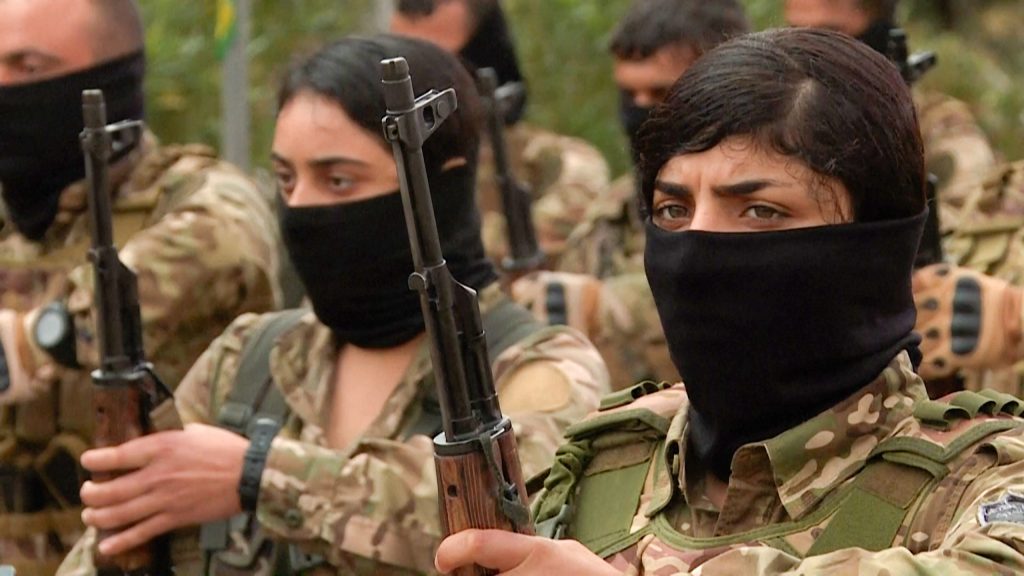
In the chaos of Syria’s war, in a region called Rojava, a revolution took shape. Women some of whom were within the SDF (Syria Defense Forces) built a radically different political system based on gender equality and collective decision-making, and formed all-female armed units known as the YPJ (Yekîneyên Parastina Jin) that helped defeat ISIS. But after the fall of Bashar al-Assad’s regime, Syria’s new governing forces moved to unify the country under a single national army and centralized rule. That push placed Rojava’s women-led project in direct ideological conflict with the state, as pressure mounted and the region faced the growing prospect of war.
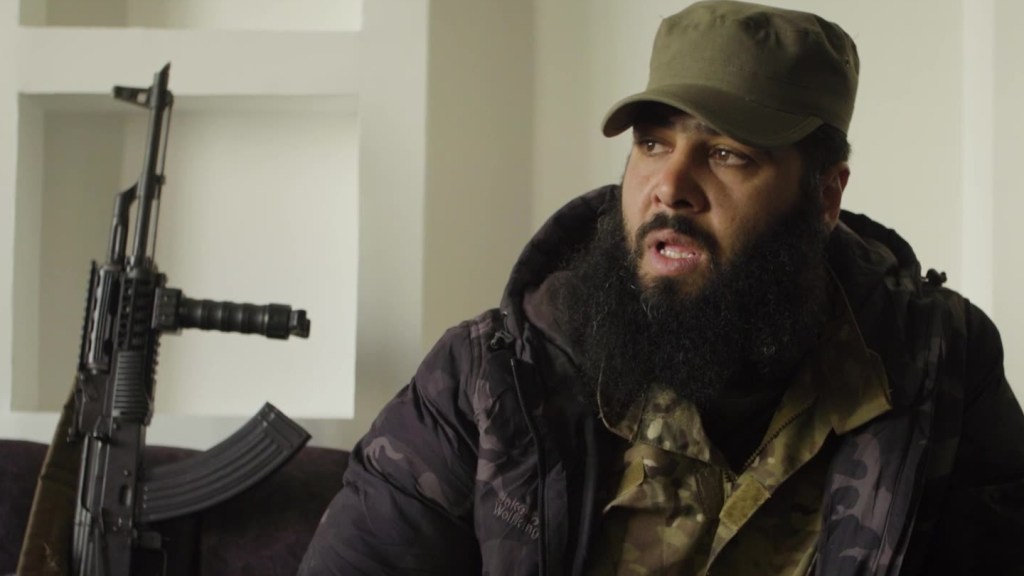
TRNN was granted rare access to a YPJ commander at a hidden base in northeast Syria, offering a ground-level view of a women’s revolution as Rojava was preparing for war. Since filming, an agreement between the government in Damascus and Rojava’s governing authorities has brought the entire region under central government control. It is unclear if conflict will erupt between the two sides.
Credits:Produced by The Real News Network and Shadowgraph Media Filming, editing, and script writing by Ross Domoney Voice over by Nadia Péridot Local producer: Ossama Mohammad Translations by Sherin Yusif Special thanks to the Rojava Film Commune
Transcript
The following is a rushed transcript and may contain errors. A proofread version will be made available as soon as possible.
Narration:
After the fall of the regime of Bashar Al-Assad, Syria’s people are forming the foundations of a new state.
Through years of war, every person has made sacrifices in this ancient, multi-ethnic land.
But as rebuilding begins, control becomes the next battle.
From the capital, Damascus, Syria is now governed by
by Ross Domoney, Nadia Péridot, Yussif Mohammed Sharqawi, Siham Shamalakh and Bassel Akkawi | Dec 9, 2025 | Politics and Movements: International, Syria, video
Yarmouk, Syria, was originally a temporary refugee camp for thousands of Palestinians displaced by the 1948 Nakba; however, the camp eventually grew to a lively metropolis with a vibrant community of artists, intellectuals, and families. Home to an estimated one million residents, Palestinians and Syrians lived together in Yarmouk under the authoritarian regime of the notorious Assad family. During the protracted civil war in Syria, Yarmouk became the site of repeated bombardment by heavy artillery and intense sieges. Fleeing war, illness, and starvation, hundreds of thousands left Yarmouk; yet, a handful of residents remained, determined to fight against tyranny.
In December 2024, the Assad regime finally fell. Now, residents of war-torn Yarmouk are returning to rebuild their homes and their lives once again. For this on-the-ground documentary report, TRNN was granted access to the camp and spoke to residents about what life was like in Yarmouk during the many violent years before the fall of Assad’s regime—and about what life in Yarmouk can be now.
Credits:
Produced, directed, filmed and edited by Ross Domoney
Script and Voice-over by Nadia Péridot
Translations by Siham Shamalakh
Local Producers: Yussif Mohammed Sharqawi, Bassel Akkawi
Transcript
VO:
This is not Gaza.
This is Yarmouk, a refugee camp in Damascus in Syria.
First established in 1957 to house those forced out of Palestine during the Nakba, when Zionist militia violently expelled and murdered Palestinians and occupied their homes.
Yarmouk began as a temporary refugee camp and evolved into a vibrant community of exiled families.
It became the capital of the Palestinian diaspora.
Khaldoun Abdel Rahman Al Malah:
In Yarmouk, every street, school, clinic, and bakery in the camp carries the name “Palestine”.
VO:
When the Syrian civil war erupted in 2011, residents
by Anagha Subhash Nair | Nov 29, 2025 | Bashar Al-Assad, Forced Disappearance, Human Rights, News, Prisons, Syria
Maryam Hassan sits on a couch in her home in Jdeidet Artouz, a suburb of Syria’s capital Damascus, her voice soft but steady as she speaks. She raises her eyes to look upon a photograph of Younes and Mohammed al-Muqbil, her husband and teenage son, whom she last saw on September 26, 2013. Mohammed was 14 years old when he was detained at a regime checkpoint outside Yarmouk camp…
Source
by Amy Goodman | Nov 13, 2025 | Bashar Al-Assad, Donald Trump, Ehud Barak, Epstein files, Interview, Israel, Jeffrey Epstein, Larry Ellison, Mongolia, Russia, Syria, Vladimir Putin
A new series by Drop Site News looks at Jeffrey Epstein’s ties to Israeli intelligence and how he secretly brokered numerous deals for Israeli intelligence. Drop Site revealed that Epstein had played a role in brokering a security agreement between Israel and Mongolia and setting up a backchannel between Israel and Russia during the Syrian civil war. Epstein had an “extensive relationship…
Source