Ecuador’s Indigenous movement launches ‘indefinite national strike’

Ecuador’s Indigenous movement launches ‘indefinite national strike’

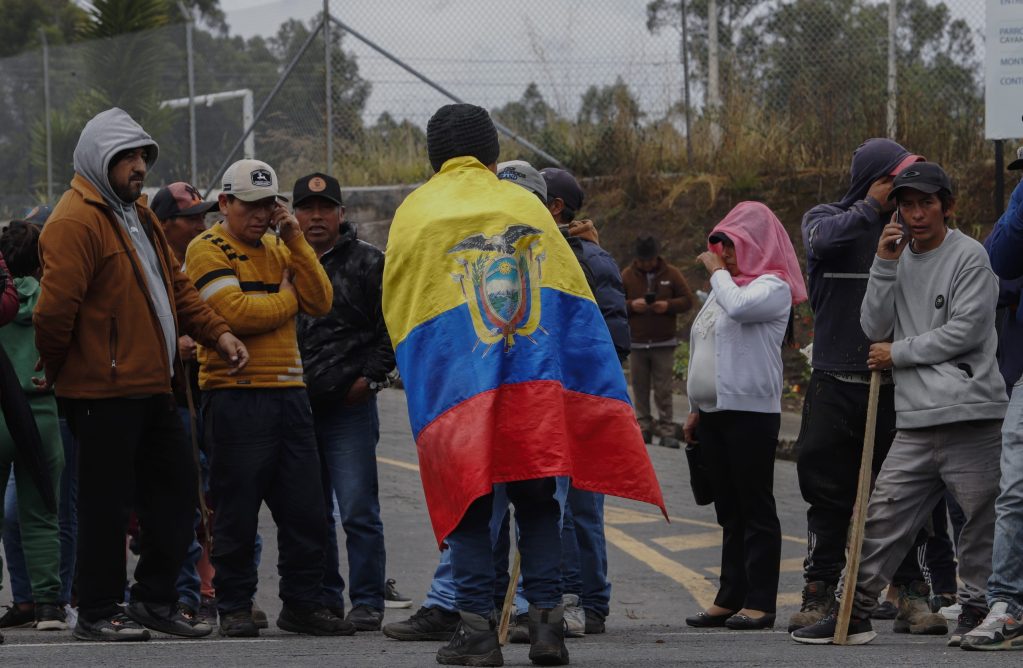
In Ecuador, the country’s largest Indigenous movement has been leading mass protests in the streets for nearly two weeks against President Daniel Noboa’s lifting of diesel subsidies. Gas prices have spiked. They say it will impact the price of food.

They’re calling their protests an “indefinite national strike.” The country is now on fire. They have faced repression. But they have vowed to continue in the streets, demanding justice. Demanding their rights. Standing in defense of their communities, their lives, and their future.

This is Stories of Resistance—a podcast produced by The Real News. Each week, we’ll bring you stories of resistance like this. Inspiration for dark times.

Please keep an eye out for Michael’s latest article about the Ecuador protests. It’ll be online with Truthout. You can visit www.Truthout.org for more.

BIG NEWS! This podcast is a finalist for this year’s Signal Awards for best history podcast. It’s a huge honor just to get this far. 

And you can help us win. Your vote can make a difference. Anyone can vote.

Here’s the link: https://vote.signalaward.com/PublicVoting#/2025/shows/genre/history

All you have to do is click on the link. That will take you to a page where you can click on the Stories of Resistance icon. Register your email and you’re all set. 

While you’re there, please also vote for The Real News’s Marc Steiner. He’s in the running for best episode host. You can vote for him here: https://vote.signalaward.com/PublicVoting#/2025/individual-episodes/craft/best-host

Please consider supporting this podcast and Michael Fox’s reporting on his Patreon account: patreon.com/mfox. There you can also see exclusive pictures, video, and interviews. 

If you like what you hear, please subscribe, like, share, comment, or leave a review. 

And please consider signing up

Original

Harriet Tubman showed how to act bravely in dark times

Harriet Tubman showed how to act bravely in dark times

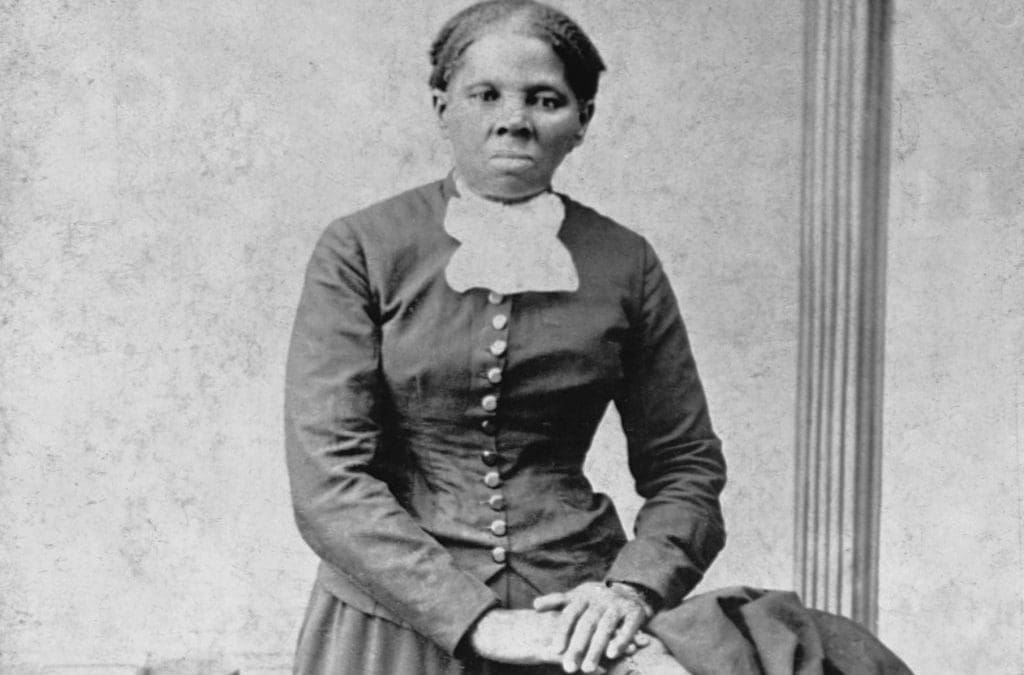
A portrait of Harriet Tubman (ca. 1820-1913). Tubman, herself an escaped slave, helped hundreds of slaves escape the South by means of the Underground Railroad. She nursed Union troops during the Civil War and took on spying missions at great personal risk. She is known as the

Harriet Tubman is an icon for freedom. She first fled slavery with two brothers on September 17, 1849. By the following year, she was returning to save others. She traveled by night, from safe house to safe house, supported by a network of abolitionists known as the Underground Railroad. Walking north to Pennsylvania—a free state. She would make 13 trips back and forth throughout the 1850s and early 1860s. She rescued roughly 70 people from enslavement. But she didn’t stop there.

This is episode 69 of Stories of Resistance—a podcast produced by The Real News . Each week, we’ll bring you stories of resistance like this. Inspiration for dark times.

BIG NEWS! This podcast is a finalist for this year’s Signal Awards for best history podcast. It’s a huge honor just to get this far. 

And you can help us win. Your vote can make a difference. Anyone can vote.

Here’s the link: vote.signalaward.com/PublicVoting#/2025/shows/genre/history

All you have to do is click on the link. That will take you to a page where you can click on the Stories of Resistance icon. Register your email and you’re all set. 

While you’re there, please also vote for The Real News’s Marc Steiner. He’s in the running for best episode host. You can vote for him here: vote.signalaward.com/PublicVoting#/2025/individual-episodes/craft/best-host

Please consider supporting this podcast and Michael Fox’s reporting on his Patreon account : patreon.com/mfox . There you can also see exclusive pictures, video, and interviews. 

If you like what you hear, please subscribe, like, share, comment, or leave a review. 

And please consider signing up for the Stories of Resistance podcast feed, either in Spotify , Apple Podcasts , Spreaker , or wherever you listen.

Written and produced by Michael Fox .

Transcript

Harriet Tubman. There are few more iconic women in the history of the United States. A woman who not only freed herself from slavery, but who returned again, and again, and again to dangerous lands to help free others. 

So many others. 

Her resistance is legendary, and she is remembered until today. 

Harriet Tubman was born in March 1822 on Maryland’s Eastern Shore. Born into slavery. Her grandmother had been stolen from her home in Africa, and sailed on a terror slave ship across the Atlantic to be sold. 

Harriet Tubman was born with the name Araminta Ross. She was forced to work as a little girl. She was beaten and whipped, and even suffered a traumatic head injury that would affect her throughout her life. Many brothers and sisters were ripped from her mother’s arms and sold to other families. But she also saw her mother’s resistance when they came for her younger brother. Her mother hid him for a month and promised to fight to keep him from them.

In her early 20s, Araminta Ross married. She changed her name to Harriet Tubman. 

In 1849, the patriarch of the estate that owned her died. The descendants planned to sell her and others. To break apart their remaining family. She would not have it. 

She fled slavery with two brothers on September 17, 1849. Her brothers changed their minds and convinced her to turn back. But she had soon fled again. This time there was no going back. 

She boarded the Underground Railroad, a network of people who helped slaves flee the South. Harriet Tubman traveled by night. She fled from safe house to safe house. Walking north to Pennsylvania, a free state. 

The trip was only 90 miles, but on foot., under the darkness of night, it would have taken days or weeks. And she had to be on the lookout for slave catchers who tracked down fugitive slaves and brought them back for ransom.

Finally, Harriet Tubman crossed into Pennsylvania. 

“When I found I had crossed that line,” she later said, “I looked at my hands to see if I was the same person. There was such a glory over everything; the sun came like gold through the trees, and over the fields, and I felt like I was in Heaven.”

But her freedom was not enough. Her loved ones were still enslaved. “I was free,” she would say. “and they should be free.”

And they would be.

Harriet Tubman saved money working odd jobs in Philadelphia and New Jersey, and in late 1850 she traveled back into Maryland, to Baltimore, where she helped her niece and her family flee to Philadelphia.

The next year, Harriet returned to Maryland again. This time she saved her younger brother Moses and two other men. In December 1851, she returned again, helping 11 people escape. And again, and again, and again, she returned with the help of so many others and brought out dozens on the road to freedom. 

Harriet Tubman was devout, and she found in the Bible inspiration and faith in her struggle to free those who were enslaved.

“I have wrought in the day – you in the night,” abolitionist Frederick Douglass would write of her. “The midnight sky and the silent stars have been the witnesses of your devotion to freedom and of your heroism.” 

She would make 13 trips back and forth throughout the 1850s and early 1860s. She rescued roughly 70 people from enslavement. They called her Moses, like the prophet who led the Hebrews from Egypt. 

Harriet Tubman would help people flee to Pennsylvania and then to Canada after the Fugitive Slave Act forced law enforcement in the North to help return runaway slaves to the South. But her resistance didn’t stop there. During the Civil War, she worked with the Union army as a cook, a nurse, a scout, and a spy. She helped the North to free hundreds of enslaved people. She was an icon who even later in life would fight for women’s suffrage — the women’s right to vote. 

Harriet Tubman died in March 1913. Her life and legacy continue to inspire. Resistance against all odds. Resistance in the face of so much injustice. Carrying people to freedom along the footpaths of the Underground Railroad. 

September is Underground Railroad Month in Maryland and other U.S. states. This is the month when both Harriet Tubman and the great abolitionist Frederick Douglass freed themselves from slavery. Their stories and their struggles are as important as ever. 

Hi folks, thanks for listening. I’m your host Michael Fox. Two things before I go. First, I’m adding links to some more background information on Harriet Tubman. You can find those in the show notes. 

Second, I have incredible news. This podcast, Stories of Resistance, is a finalist for this year’s Signal Awards for best history podcast. It’s a huge honor just to get this far. And you can help us win. Your vote can make a difference.

Anyone can vote. It’s fast and easy. The link is in the show notes. All you have to do is click on the link. That will take you to a page where you can click on the Stories of Resistance icon. Register your email and you’re all set. While you’re there, please also vote for The Real News’s Marc Steiner. He’s in the running for best episode host. I’ll add a link to that as well in the show notes. And if you like what we do, please spread the word and tell a friend.

As always, if you enjoy this podcast, I hope you’ll consider becoming a subscriber on my Patreon. It’s only a few dollars a month. I have a ton of exclusive content there, only available to my supporters. And every supporter really makes a difference.

This is the latest episode of Stories of Resistance, a podcast series produced by The Real News. Each week, I bring you stories of resistance and hope like this. Inspiration for dark times. If you like what you hear, please subscribe, like, share, comment, or leave a review.

Thanks for listening. See you next time.

Resources:

Original

We’re finalists for the prestigious Signal Awards. Help us win!

We’re finalists for the prestigious Signal Awards. Help us win!

We know things are extremely dark and heavy right now, but we wanted to share a little light with you—and to ask for your help. We were officially notified this morning that two of our premiere podcasts, The Marc Steiner Show and Stories of Resistance , are finalists for the prestigious Signal Awards! 

Our brilliant colleague and Baltimore radio legend Marc Steiner is a finalist for Best Host of an Individual Episode for this masterful, powerful, perspective-changing interview he conducted with three Canadian doctors returning from a medical mission in Gaza . 

Latin-America-based journalist and longtime TRNN contributor and collaborator Michael Fox is also a finalist in the History Podcast category for his truly unique, rich, and inspirational weekly series Stories of Resistance . 

The Signal Award Judging Academy is a large, esteemed body made up of media professionals, scholars, and practitioners across the industry. To get this recognition from our peers is humbling and motivating validation of the importance and quality of the work we do, and of the impact our unique brand of grassroots storytelling has on those who hear it. It is also a reminder that, with your help and support, our scrappy team of former prisoners, organizers, and low-wage workers turned journalists can go toe-to-toe with the best and biggest media organizations out there. (Move over, Jon Stewart. The Real News is here…)

But we don’t just want to be nominated—we want to win this thing! We need you to go to the Signal Award voting portals and vote for Marc and Mike to win in their respective categories!  With your help, we can make that happen—please take a minute to register and vote for Marc and Mike! 

How to vote for Marc: Click on this link to see the finalists for Best Host of an Individual Episode, then click on The Marc Steiner Show logo. You will be asked to register with an email and password (this is to ensure spam voting does not occur). Once you register, your vote will be logged!

How to vote for Stories of Resistance: Click on this link to see the finalists for Best Show – History, then click on the Stories of Resistance logo. You will be asked to register with an email and password (this is to ensure spam voting does not occur). Once you register, your vote will be logged! 

And lastly, if you’re not already a regular listener to our unique slate of podcasts, be sure to subscribe to The Marc Steiner Show , Stories of Resistance , and The Real News Network feeds wherever you listen to your podcasts. Take a moment to leave positive reviews of our shows on Apple Podcasts and Spotify, send us your feedback, and recommend our shows to your friends, family members, and coworkers. We will continue to put in the painstaking work of finding the stories and lifting up the essential voices from the front lines of struggle across the US and around the world, but we need your help to amplify these stories! 

Solidarity,

Maximillian Alavarez
Editor-in-Chief
The Real News Network

Original

September 11: Remembering the resistance to Pinochet’s Chile

September 11: Remembering the resistance to Pinochet’s Chile

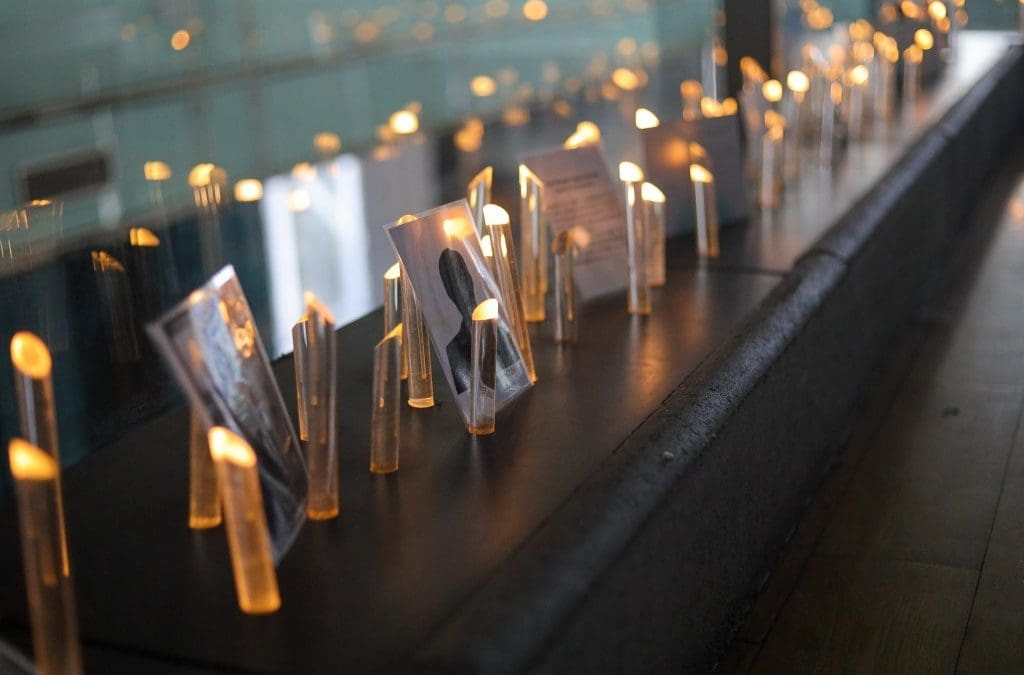
Pictures and lights are displayed as tiny candles in an art installation in the Museum of Memory and Human Rights in Santiago, Chile, in late 2024. Photo by Michael Fox.

On September 11, 1973, tanks rumbled over the streets of Santiago, Chile. Planes bombed La Moneda, the presidential palace, as US-backed General Augusto Pinochet overthrew the democratically elected President Salvador Allende.

It was a dark, dark moment in Chile’s history. Pinochet would unleash a bloody regime that would grip power until 1990. During his rule, thousands were rounded up, detained, tortured, and executed.

But there was resistance.

In this special bonus episode of Stories of Resistance, we showcase four different vignettes of people standing up to the evil in which Pinochet enveloped the country in the early 1970s, and the fight for truth, justice, and memory that continues until today.

These stories have been published at different times in this podcast series over the last year. Here are links to the individual stories. They were all researched and reported by journalist and host Michael Fox.

Episode 1 – The Last Words of Victor Jara
Episode 33 – Liquor Store Resistance
Episode 38 – The Women of Calama
Episode 62 – Chile’s Bulnes Bridge

This is the latest episode of Stories of Resistance —a podcast produced by The Real News . Each week, we’ll bring you stories of resistance like this. Inspiration for dark times.

You can check out exclusive pictures of Bulnes Bridge and the mural painting session there late last year here on Michael Fox’s Patreon .

Please consider supporting this podcast and Michael Fox’s reporting on his Patreon account : patreon.com/ mfox . There you can also see exclusive pictures, video, and interviews. 

If you like what you hear, please subscribe, like, share, comment, or leave a review. 

And please consider signing up for the Stories of Resistance podcast feed, either in Spotify , Apple Podcasts , Spreaker , or wherever you listen.

Written and produced by Michael Fox .

Transcript

Michael Fox, Narrator: September 11th is a hard anniversary, but an important one. Not just of planes flying into towers, and devastation, destruction, lives lost in New York, but also of September 11, 1973. Santiago, Chile. Tanks on the streets. Planes bombing La Moneda, the presidential palace. The overthrow of President Salvador Allende by US-backed General Augusto Pinochet.

Pinochet would unleash a bloody regime that would grip power until 1990, 17 years later. During his rule, thousands were rounded up, detained, tortured, and executed. But there was resistance.

If you are a fan of this show, you have heard stories of people standing up to the US-backed Pinochet regime. Today, in this special episode marking the September 11th coup, I’m bringing them all back in one place. Four vignettes of people standing up to the evil that Pinochet enveloped the country with in the early 1970s, and the fight for truth, justice, and memory that continues until today.

I’ll play these stories back to back. Thanks for listening.

[Episode 1 – The Last Words of Victor Jara]

Hope does not die. 

But it can fade until it’s transformed and reborn.

This is what happened that overcast winter day, when it was trampled by the soldiers in uniform. Run over by the tanks. Gunned down by the machine guns. Overcome by the whining turbines of the planes that descended on the city.

Chile’s democratically elected president Salvador Allende promised to fight. 

“I will not resign,” he told the country in his final address, as bombs fell.

Allende was one of thousands of victims killed or rounded up.

Sports stadiums converted into detention, torture, and execution centers.

This is where Victor Jara was taken.

His songs were the soundtrack of Allende’s revolution. His… the voice of hope.

He was crammed alongside thousands others into the Estadio Chile.

There he was beaten. Starved. Tortured. 

But amid the suffering and chaos, Victor Jara found a paper and pencil. 

He wrote his last words. A poem titled “Estadio Chile.””

He writes words of truth. Of pain and suffering. But also the resolve to live and relive.

The blood of the companion President

Is stronger than bombs and the shrapnel.

And our fist will fight again.

How badly I sing

when I have to sing in terror.

Terror like the one I live, terror like the one I die.

To see myself among so, so many moments of infinity

in which silence and the screams are the goals of this song.

What I have never seen, what I have felt and what I feel

will birth another moment.

Victor Jara was killed hours later. 

His poem was found, copied, and smuggled out. Its lines have far outlived the tragedy that was the US-backed September 11, 1973, Chilean coup.

Today, the Chile Stadium is renamed Victor Jara Stadium. 

Colorful murals of Victor Jara adorn the walls out front. Inside, near the rafters, is a small museum in honor of the iconic singer.

Down in the seats, a single printed copy of Victor Jara’s last poem is taped to the front of a row of worn green wooden bleachers.

One simple black and white page, reminding visitors of the horrors that happened here…

The resolve to fight and live on. 

And the hope that would not die.

[Episode 33 – Liquor Store Resistance]

The year is 1973.

Santiago, Chile.

Ana Maria’s father runs a liquor store just down the street from their house. Every night when he goes to lock up, pairs of feet follow him. Feet in tired shoes. Nervous feet. Wanted feet. Feet on the run. 

He guides them into the basement of his shop and maybe rolls out a blanket or two. They lie, alongside cases of the Chilean beer Escudo, or Shield, and hope that it will protect them. Sometimes they even try a bottle. They whisper to each other in the darkness. They develop plans. They talk of fighting. Or fleeing the country. Or they reminisce of better times. Times only just past. 

They sleep beside the Escudo… under the watchful eye of rows of Chilean Pisco, Cabernet Sauvignon, or Syrah.

They have restless, agitated dreams. Dreams they cannot run from. Dark dreams that descended on Chile in September, 1973, and enveloped the country in a thick grey fog. A fog that will not go away. A fog that plucked people from off the street and removed them, never to be seen again. 

But these feet are survivors.

In the morning, Ana Maria’s father comes to open the shop. He brings food. A large bowl of cazuela. Bread. Sandwiches. His wife cooks.

“I’m famished,” he tells her every morning. “So hungry.” It’s hard to tell if she knows why.

The feet eat quickly and quietly. Then they lace their shoes, grab their bag and slide out the back door into the empty street.

Thrushes and sparrows dart from tree to tree, singing their early morning song. The sun hasn’t yet crested the Andes. 

The feet walk quickly. Determined. They have no other choice. They have to… before the fog descends again. Sometimes, in 1973 Chile, it’s hard to tell which is worse, the bad dreams or the reality.

[Episode 38 – The Women of Calama]

For nearly 20 years, the women of Calama traveled into the desert each day to search for their loved ones.

Monday through Sunday, sun-up to sundown, they scoured the harsh desert earth with strainers and rakes.

Searching and hoping. 

The crunch of the ground beneath their feet. The harsh wind whipping at their clothes. The hot sun on their faces.

“For us there was no wind, there was no cold, there was no heat, there was no hunger,” Violeta Berríos says.

Her partner, Mario Argüelles Toro, was a taxi driver and a local leader in the Socialist Party. It was his death sentence. 

Mario Argüelles Toro was detained and tortured just weeks after the September 1973 coup d’état by Chilean General Augusto Pinochet.

On October 19, 1973, Mario was taken from prison, executed, and disappeared alongside 25 others for their support for the former democratically elected President Salvador Allende.

Executed during what they called the Chilean army’s “Caravan of Death.”

The men’s partners and mothers responded, transforming their sadness into action. 

They founded the Group of Family Members of the Politically Executed and Disappeared Detainees of Calama.

They took to the desert, scratching at it each day, demanding that it reveal its secrets.

And after years, finally, it did.

In 1990, in a place called Quebrada del Buitre, or Vultures Gorge, on the edge of a hillside overlooking the expansive Atacama desert, the women found fragments of bones and pieces of teeth.

This was the location their loved ones had laid buried for 17 years. But most of their bodies were no longer there. 

Just as the women were getting closer, General Augusto Pinochet had ordered their remains dug up, removed and buried someplace else. An evil scavenger hunt, in which the rules are rigged and the dice are staked.

Between 1990 and 2003, the women would find the partial remains of 21 of the victims.

Today, a memorial lives on a hillside just off highway 23, heading east out of Calama. 

This was once barren desert for miles, but it now lies beneath a sea of wind turbines. The sun burns overhead. The wind threatens to knock you over.

The memorial is in the shape of a circle. Almost like a small amphitheater, with stairs leading down. In the middle is a patch of dry Atacama earth. Rocks and small marble stones are laid there in the shape of a cross. Pink and red flowers have been placed throughout. Pink concrete columns rise into the air. Each of them bears a name inscribed on a little plaque. The name of each of those who was detained, tortured, executed and disappeared here in the Atacama desert.

This is the location of the mass grave, where the women of Calama finally found the fragments of bones that proved their loved ones had been here.

Behind the memorial is a crater in the ground, where the grave was opened, and where they exhumed what they could. Rocks, in piles or in tiny circles, mark the locations where parts of their loved ones were found.

The memorial is a sentinel in the desert. A beacon of memory. Memory of lives lost. Of the horror and the pain of the past. But also the memory of the women’s determination. Their hope and struggle. Their resistance in the desert…

The women are still searching for and demanding justice.

[Episode 62 – Chile’s Bulnes Bridge] 

Aquiles Cordova adopted a bridge. 

It is not a pretty bridge. Four lanes of busy traffic rush across Puente Bulnes during most hours. To the North, it buttresses against two overpasses that lead to a bustling highway. Below it, run the milky grey waters of the Mapocho River, after passing through downtown Santiago. Chile. 

Trash and discarded clothes catch against the rocky shoreline or the concrete legs of the bridge. They flap in the current. It reminds Aquiles of a past that no one wants to remember, but which everyone must. 

On special days, Aquiles Cordova holds memorials. 

Once a month, he leads cleanup brigades. 

Every so often, he invites muralists to come. They paint the walls. Huge life-sized pictures of faces and figures. Names and phrases like “Never Again”.

50 years ago. In another time, this bridge was a favorite execution site for the military and police of Chilean dictator Augusto Pinochet. 

Hundreds were shot and pushed over the bridge into the rushing waters below, in the early months of the Pinochet dictatorship.

Today, Aquiles Cordova will not let it be forgotten — ever. 

For him, it’s personal. The day after the September 11th coup, 1973, a young Aquiles Cordova found himself on the edge of Puente Bulnes, staring down the barrel of a gun. A young soldier on the other side, shouting orders. 

Aquiles’s life flashed before his eyes. He saw it all: birth to present. Like a movie real on high speed.

And then… he was allowed to go. He was one of the lucky ones.

Aquiles Cordova has grey hair now. 

He will never forget. 

He won’t let anyone else forget, either.

###

Hi folks, thanks for listening. I’m your host Michael Fox.

Today’s episode was a little different. I hope you enjoyed it.

If you like what you heard, I hope you’ll stay on the lookout for my upcoming second season of Under the Shadow. I dive deep into Plan Condor, the South American dictatorships of the 1970s and the role of the United States. I’ve been working on it for the last year. Of course, Pinochet’s Chile is front and center. You can watch for it in the first half of 2026.

As always, if you like what you hear and enjoy this podcast, please consider becoming a subscriber on my Patreon. It’s only a few dollars a month. I have a ton of exclusive content there, only available to my supporters. And every supporter really makes a difference.

This is the latest episode of Stories of Resistance, a podcast series produced by The Real News. Each week, I bring you stories of resistance and hope like this. Inspiration for dark times. If you like what you hear, please subscribe, like, share, comment, or leave a review.

Thanks for listening. See you next time.
Original

Argentine students continue to march against the crimes and disappearances of the past

Argentine students continue to march against the crimes and disappearances of the past

Students carrying the number “30,000” lead a march honoring the victims of Argentina's military dictatorship on September 16, 2024, the Night of the Pencils. The regime disappeared 30,000 people between 1976 and 1983, including many students.

High school students are still marching in Argentina to remember the disappeared—kids like them who were kidnapped, detained, tortured and disappeared nearly a half century ago during the country’s military dictatorship. Kidnapped during an operation known as the Night of the Pencils—carried out on September 16, 1976. 

This is episode 66 of Stories of Resistance—a podcast produced by The Real News . Each week, we’ll bring you stories of resistance like this. Inspiration for dark times.

You can check out Michael’s exclusive pictures of this student march here, on his Patreon .

Michael’s Panamerican Dispatch podcast episode and pictures on the voices of resistance in Washington, DC, are here: https://www.patreon.com/posts/voices-of-in-dc-138421404

Please consider supporting this podcast and Michael Fox’s reporting on his Patreon account : patreon.com/mfox . There you can also see exclusive pictures, video, and interviews. 

If you like what you hear, please subscribe, like, share, comment, or leave a review. 

And please consider signing up for the Stories of Resistance podcast feed, either in Spotify , Apple Podcasts , Spreaker , or wherever you listen.
Written and produced by Michael Fox .

Transcript

It’s September 16, 1976. The city of La Plata. Buenos Aires, Argentina. Six months into the country’s brutal military regime that would last for seven years. The regime is looking to eliminate opposition to the dictatorship and wipe out so-called subversives. It does not matter the person’s age. 

In La Plata, the previous year, high school students had fought for and won discounted student base fares. The regime now identifies the leaders of this movement and goes after them.

On this evening, at the orders of Battalion 601 and the Argentine State Intelligence Service, members of the Provincial Buenos Aires police force climb into Ford Falcones and drive into the night to find and capture. They drive to sow terror.

It’s known as the Noche de los Lapices — The Night of the Pencils. The police are masked and unidentified. They raid homes in the darkness. They kidnap 10 high school students this evening, the next day, and throughout the week.

The kids are all between the ages of 16 and 18. They’re taken to clandestine detention centers. 

They’re tortured for days. They’re detained for months. Six of them are killed. Their bodies disappeared. Four survive. Living to suffer from the nightmare of their experience and to recount the tale of one of the most heinous crimes of the Argentine dictatorship. One of so many.

But even today… people will not let it be forgotten. They will not be silenced. Not then, not now.

Nearly 50 years later, students march to remember this night. To honor the victims and to continue to demand justice and memory. On September 16, students hold huge rallies at universities and schools around the country, like this one on the streets of Cordoba, Argentina. Hundreds. Thousands marching.

The energy in the crowd is contagious. People hold blue and green smoke flares. The smoke blowing across the crowd of students. Rising into the sky with their voices and their chants. They carry signs, like “30,000″ written in big block letters—the number of people disappeared during Argentina’s military dictatorship. 

Another reads “The Pencils Will Continue to Write”—because this terrible moment of history was known as the Night of the Pencils. They say it’s more important now than ever, as the government of Javier Milei tries to gut funding for schools and higher education and student rights.

Many of the teenagers here are the same age as the kids who were kidnapped half a century before, and they will not let this night be forgotten.

In 2024, Argentine courts handed down 10 life sentences against former police and army officers for their role in human rights abuses and crimes against humanity under the dictatorship. This included the kidnapping and disappearance of the students on the Night of the Pencils.

In Buenos Aires, September 16 today is recognized as the “Day for the Rights of High School Students” in honor of the victims of the Night of the Pencils. 

Hi folks, thanks for listening. I’m your host Michael Fox.

I attended this student march honoring the victims of the Night of the Pencils last year in Cordoba, Argentina. I’m so happy to be able to share this story with you today. I have posted pictures of this protest on my Patreon. You can check those out at Patreon.com/mfox. 

As always, if you like what you hear and enjoy this podcast, please consider becoming a subscriber on my Patreon. It’s only a few dollars a month. I have a ton of exclusive content there, only available to my supporters. And every supporter really makes a difference.

Also… you might be interested to know that there was a 1986 movie made about this horrendous moment in Argentine history. It’s called The Night of the Pencils. I’ll add a link in the show notes to a version in Spanish with English subtitles.

This is the latest episode of Stories of Resistance, a podcast series produced by The Real News. Each week, I bring you stories of resistance and hope like this. Inspiration for dark times. If you like what you hear, please subscribe, like, share, comment, or leave a review.

Thanks for listening. See you next time.
Resources:

The Night of the Pencils movie:  

Short teleSUR video – The Night of the Pencils: When Argentine Hunted Its Youth:

Ten life sentences handed down in emblematic dictatorship trial: https://buenosairesherald.com/human-rights/ten-life-sentences-handed-down-in-emblematic-dictatorship-trial

Original

Paulo Freire and education for freedom

Paulo Freire and education for freedom

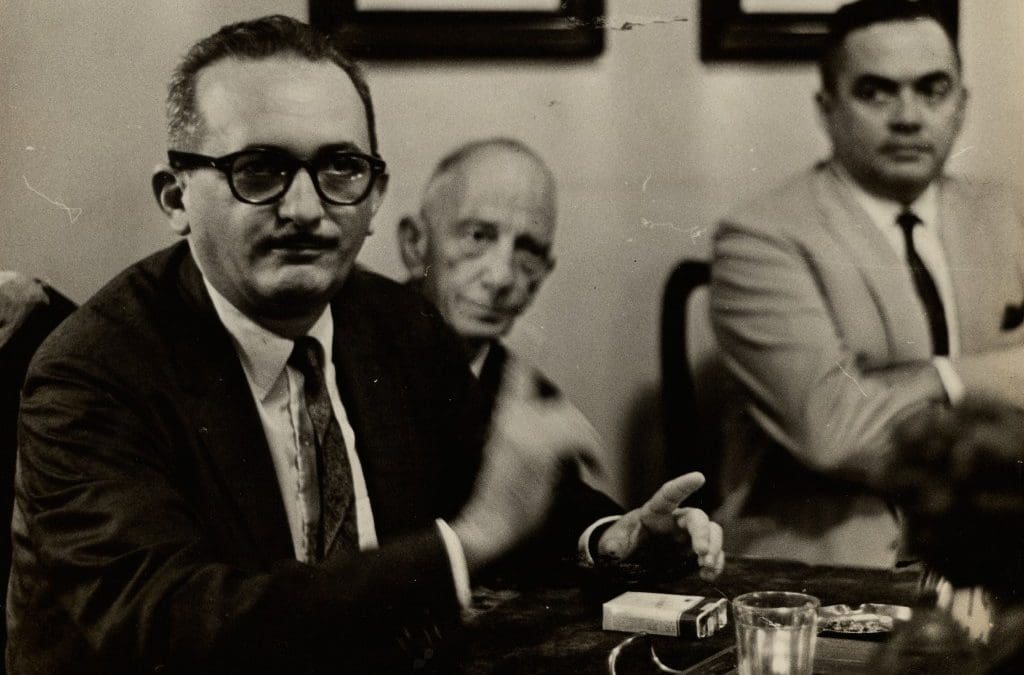
Paulo Friere, 1963. Public domain/Arquivo Nacional Collection.

Brazilian educator Paulo Freire inspired and he resisted. He was imprisoned and exiled during the Brazilian dictatorship and he carried his teachings around the world. He believed literacy and learning could be tools to empower. He helped people learn to read and write, but also understand their place of oppression and rise above it.

He wrote, “Education doesn’t transform the world. Education changes people. People transform the world.”

This is episode 67 of Stories of Resistance—a podcast produced by The Real News . Each week, we’ll bring you stories of resistance like this. Inspiration for dark times.

You can check out Michael’s exclusive pictures of this student march here, on his Patreon .

Michael’s Panamerican Dispatch podcast episode and pictures on the voices of resistance in Washington, DC, are here: https://www.patreon.com/posts/voices-of-in-dc

Please consider supporting this podcast and Michael Fox’s reporting on his Patreon account : patreon.com/mfox . There you can also see exclusive pictures, video, and interviews. 

If you like what you hear, please subscribe, like, share, comment, or leave a review. 

And please consider signing up for the Stories of Resistance podcast feed, either in Spotify , Apple Podcasts , Spreaker , or wherever you listen.

Written and produced by Michael Fox .

Resources

Transcript

He was a man who inspired; who left a left a legacy long beyond his 75 years. A man who empowered, and continues to empower others, even though he passed nearly three decades ago. A man of hope. Of belief in the power of every individual. Every human being. And that we could learn through each other—with each other—together.

This man was Paulo Freire.

His life was dedicated to helping others to unlock their every potential, to help others break the chains that tie them down. His words and his teachings, his pedagogy, has been taught the world over, and changed lives. It still does.

Paulo Freire was born in Recife, Brazil, on September 19, 1921. He faced poverty and hunger early. It would impact him throughout his life. 

“I didn’t understand anything because of my hunger,” he said. “I wasn’t dumb. It wasn’t lack of interest. My social condition didn’t allow me to have an education. Experience showed me once again the relationship between social class and knowledge.”

He studied law and philosophy. He worked as a Portuguese teacher. Above all, he was an educator. See, he believed that true learning, transformative learning, didn’t come through rote memorization and repetition. It came through creative critical thinking. Through personalizing lessons.

He believed that education could truly be a means of liberation. Of empowerment. And he put this into practice in Northeastern Brazil.

In the early 1960s, working through the University of Recife, he and a team of youth educators helped to teach 300 farmworkers in the town of Angicos, Rio Grande do Norte, to read and write in just 40 hours. 

It was a huge success and it had profound significance. It meant they could now vote. See, at the time, only people who could read or write could vote in Brazil. The Brazilian government brought Freire on to replicate the program around the country. 

But plans were cut short by the 1964 military coup. Paulo Freire was imprisoned and then exiled to Bolivia and then Chile. 

“The right to ask questions,” he would say later, “is the reason I was jailed and the reason I was exiled.”

He published books: “Education as a Practice of Freedom,” and then, in 1968, his infamous “Pedagogy of the Oppressed.”

The book is so profound it is still used and taught around the world today. And it was banned in Brazil under the dictatorship.

In it, he attacks what he calls the “Banking Model” of education, where students are empty cups to be filled up by their teachers. This, he writes, is an instrument for oppression, while a “problem-posing concept of education is an instrument for liberation.”

“Education,” he writes, should be “a mutual process” where teachers work with the students, not teach at them.

Freire writes in the Pedagogy of the Oppressed that “In their political activity, the dominant elites utilize the banking concept to encourage passivity in the oppressed… and take advantage of that passivity to ‘fill’ that consciousness with slogans which create even more fear of freedom. This practice is incompatible with a truly liberating course of action, which, by presenting the oppressors slogans as a problem, helps the oppressed to ‘eject’ those slogans from within themselves.”

Simple words, yet so profound. And so, so different from most of the teaching and education around us. Paulo Freire was truly ahead of his time. 

He inspired. And he resisted. Literacy and learning can be a tool to empower. It can be a tool to change the world. But, as he wrote, “Education doesn’t transform the world. Education changes people. People transform the world.”

Paulo Freire would teach at Harvard University and work as an education advisor with the World Council of Churches. He would act as an advisor on education reform in numerous former Portuguese colonies in Africa. He finally returned home to Brazil in 1980, after 16 years in exile.

His message is still carried across the country and the globe. From land occupations by Brazil’s Landless Workers’ Movement to university classrooms. His pedagogy and praxis continues to be a roadmap for liberation and freedom. A roadmap for lifting us all up. A roadmap for democracy 

He writes in the Pedagogy of the Oppressed: “For the truly humanist educator and the authentic revolutionary, the object of action is the reality to be transformed by them together with other people—not other men and women themselves. The oppressors are the ones who act upon the people to indoctrinate them and adjust them to a reality which must remain untouched.

“But the more I think of what I did, what I proposed, the more I understand myself much more as a thinker and a kind of epistemologist, proposing a critical way of thinking and a critical way of teaching, of knowing to the teachers in order for them to work differently with the students.”

Paulo Freire died on May 2, 1997, at the age of 75. His words and his teachings are just as important today as ever. And, in fact, in Brazil, while in office then-President Jair Bolsonaro pushed to ban his work and his books from university classrooms.

Creative and critical discussions in classrooms and in the public are prohibited for only one reason—to control the message on behalf of the powerful and the elite, and ensure that long-standing systems of oppression continue unchallenged and untouched. Something, sadly, that we are seeing more and more of, today, in the United States and elsewhere around the world.

Hi folks, thanks for listening. I’m your host Michael Fox. Paulo Freire was born today, More than a century ago. 

My dear friend Catherine Murphy has just finished a documentary on Paulo Freire’s life and in particular his work in Angicos, Rio Grande do Norte. It’s called “Reading the World.” You must check it out. It debuted in Brazil recently. It’s still making the rounds on the festival circuit. I’ll add a link in the show notes to the trailer and the website.

The clip I used of Paulo Freire speaking in English comes from an interview he did with the International Literacy Institute in 1996. It’s on YouTube. I’ll add a link to that too in the show notes. 

As always, if you like what you hear and enjoy this podcast, please consider becoming a subscriber on my Patreon. It’s only a few dollars a month. I have a ton of exclusive content there, only available to my supporters. And every supporter really makes a difference.

This is the latest episode of Stories of Resistance, a podcast series produced by The Real News. Each week, I bring you stories of resistance and hope like this. Inspiration for dark times. If you like what you hear, please subscribe, like, share, comment, or leave a review.

Thanks for listening. See you next time.

“My philosophical conviction is that we did not come to keep the world as it is. We came to the world in order to remake the world. We have to change reality.”

Original