by Jake Johnson | Apr 10, 2026 | Article, Economy, Economy and Inequality, Politics and Movements: International, Politics and Movements: US, Reprint, War
This story originally appeared in Common Dreams on April 09, 2026. It is shared here under a Creative Commons (CC BY-NC-ND 3.0) license.
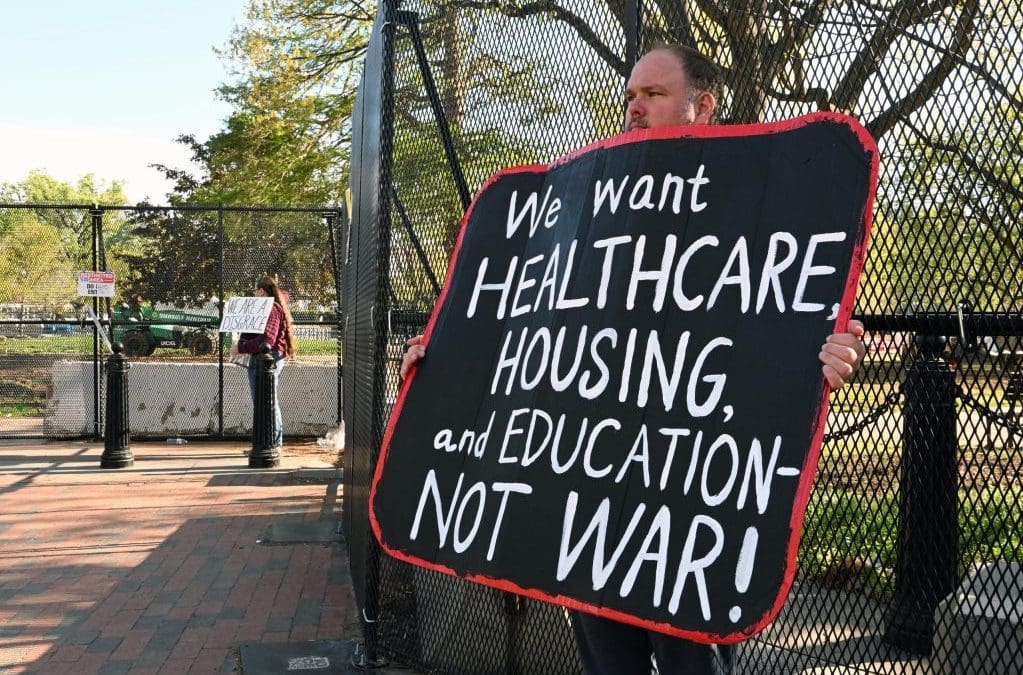
A new analysis released Thursday estimates that the average American taxpayer shelled out over $4,000 to the federal government last year “for militarism and its support systems” such as the Pentagon, whose already-massive annual budget is poised to surge to $1.5 trillion if President Donald Trump gets his way.
The National Priorities Project (NPP) at the Institute for Policy Studies found in its latest annual Tax Receipt report that, through their federal taxes, the average US taxpayer contributed $4,049.35 to Pentagon contractors, military personnel, nuclear weapons, aid to foreign militaries, and last year’s bombing of Iran’s nuclear energy facilities. That’s significantly more than the average US taxpayer contributed to healthcare for low-income Americans through Medicaid—$2,492.
NPP’s estimated militarism sum for last year does not include costs related to the current, massively unpopular US-Israeli war on Iran, which began on February 28, 2026 and has already cost Americans billions at the pump.
“But if we place the 2026 Iran war costs in the context of our 2025 tax receipt and put the cost at $35 billion—a line the US is likely on the verge of crossing—the average taxpayer will have paid $130 for the war on Iran, eight times more than the $16 the average taxpayer paid for a full year of home heating and energy assistance in 2025,” NPP said.
The $1,870 that the average US taxpayer paid toward Pentagon contractors in 2025 was “fifteen times as much as the $124 the average taxpayer paid for school lunches and other nutrition programs,” the analysis found.
“It’s shameful that our tax dollars are doing more to bomb children in Iran and other countries than to feed
by Stephen Prager | Apr 10, 2026 | Article, Economy and Inequality, health care, mexico, Politics and Movements: International, Politics and Movements: US, Reprint
This story originally appeared in Common Dreams on April 10, 2026. It is shared here under a Creative Commons (CC BY-NC-ND 3.0) license.
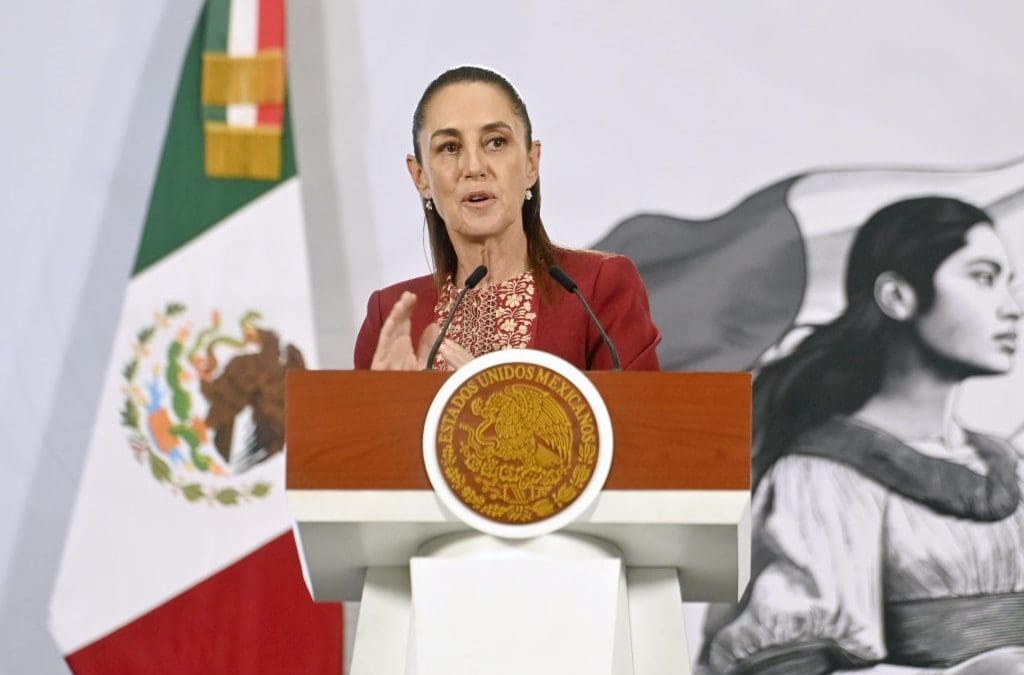
As Mexican President Claudia Sheinbaum moves forward with a plan to enact universal healthcare for her country’s more than 130 million people, a longtime advocate for Medicare for All in the US called the development “both inspiring and frustrating.”
“Inspiring because it shows what is possible,” Wendell Potter, a former insurance company communications director who has become a leading critic of the industry, told Common Dreams. “Frustrating because here in the US we are going in the opposite direction.”
Earlier this week, Sheinbaum announced a decree that she called “a historic step” for Mexico.
Beginning in 2027, her government plans to unify Mexico’s public health institutions into a single Universal Health Service, allowing patients across the country to receive care from the Mexican Social Security Institute (IMSS), the Social Security Institute and Social Services of Workers of the State (ISSSTE), and the IMSS‑Bienestar program, which provides free services to those without employer-provided insurance.
According to TeleSur, universal access would be rolled out gradually, with universal emergency care and continuity of treatment, free of financial constraints, beginning in January. Specialized services such as radiotherapy, laboratory tests, and imaging studies would be phased in later that year, and universal prescription fulfillment and hospitalization would also be added to the program in 2028.
“The goal is that when we leave the government [in 2030], any Mexican man or woman can go to any health institution for treatment for any ailment and be received,” Sheinbaum said.
🇲🇽🏥 SHEINBAUM TO DECREE UNIVERSAL HEALTH SYSTEMBy presidential decree, any Mexican will be able to receive healthcare at any public institution, regardless of enrollment. 120M
by Ashley Smith | Apr 10, 2026 | Article, Economy, Economy and Inequality, Iran, Politics and Movements: International, Politics and Movements: US, Reprint, War
This article was originally published by Truthout on April 09, 2026. It is shared here under a Creative Commons (CC BY-NC-ND 4.0) license.
On February 28, the U.S. and Israel expanded their joint genocidal war on Gaza onto Iran as well as Lebanon. After weeks of assassinations and bombing, President Donald Trump agreed to a ceasefire on April 7. This war of aggression by the U.S. and Israel is part of a continued attempt to wipe out any and all opposition to their dominance over the Middle East and its strategic energy reserves.
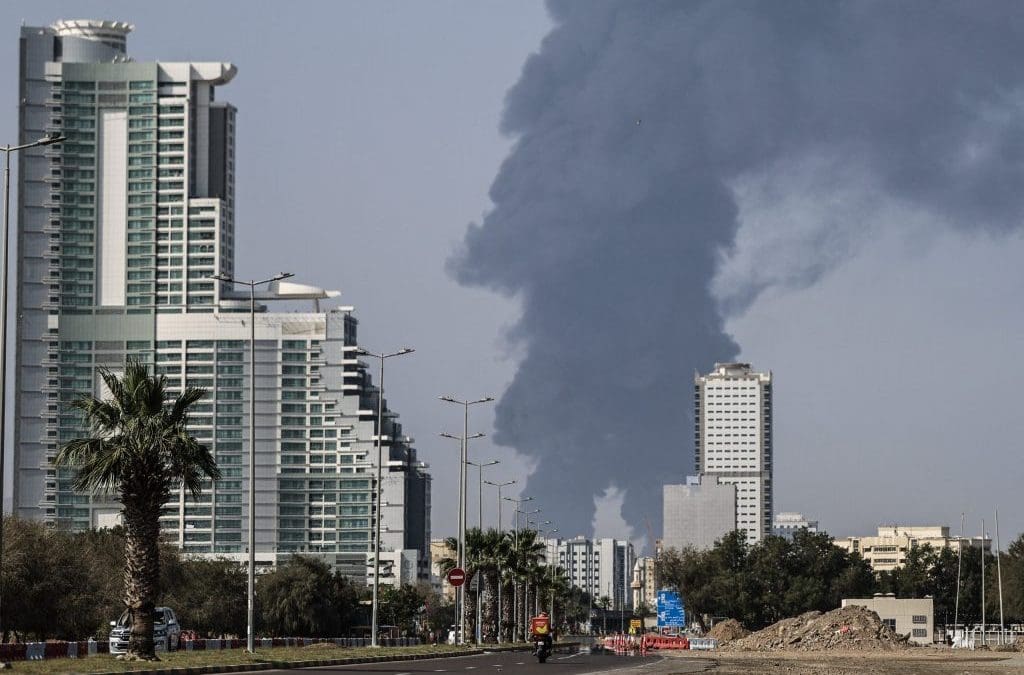
But they underestimated the capacity of the Iranian state. In addition to launching missile and drone attacks throughout the region, Iran blockaded the Strait of Hormuz, disrupting the production and shipment not only of fossil fuels but also an array of other commodities vital to global capitalism. With fossil fuel prices spiking and stocks crashing, Trump called off his threat to wipe out Iranian civilization and agreed to a ceasefire with Iran.
But Israel has already violated it, Iran has re-closed the Strait of Hormuz, and the ceasefire seems in jeopardy on the eve of negotiations for a settlement of the conflict in Pakistan. As a result, the world stands at the precipice of a multidimensional economic crisis.
In this interview for Truthout, Adam Hanieh discusses the U.S. and Israel’s imperialist goals, the war’s impact on the economies of the Global North and Global South, and its consequences for the geopolitical order as well as class and social struggles in the region and around the world. Hanieh is a professor in development studies and director of the SOAS Middle East Institute, University of London.
by Michael Fox | Apr 9, 2026 | Latin America, Podcast, Politics and Movements: International, Politics and Movements: US, Under the Shadow, war on drugs
The US has funneled billions into its allies in Latin America under the guise of fighting the drug traffickers. It has ripped apart countries. And the violence has only gotten worse. Decades of fighting, with little to show for it except human rights abuses, displacement, and tens of thousands of dead and disappeared.
In the last episode, host Michael Fox took you to Mexico City to walk through Mexico’s Museum of Interventions to witness firsthand the long history of foreign and, in particular, US intervention in the country.
Today, he brings listeners up to the present, diving head-first into the US-backed drug war in Mexico, which has overtaken the country in recent decades and fueled an epidemic of violence that has disappeared more than 100,000 people over the last 20 years. We’ll look at Trump’s threats and the repercussions they are having in the country, and we’ll also hear the voices of Mexicans who are standing up.
This is Episode 10 of Under the Shadow, Season 2.
Under the Shadow is an investigative narrative podcast series that walks back in time, telling the story of the past by visiting momentous places in the present. Season 2 responds in real time to the Trump administration’s onslaught on Latin America.
Hosted by Latin America-based journalist Michael Fox.
This podcast is produced in partnership between The Real News Network and NACLA.
Theme music by Michael Fox’s band, Monte Perdido. Monte Perdido’s 2024 album Ofrenda is available on Spotify, Deezer, Apple Music, YouTube or wherever you listen to music.
Other music from Blue Dot Sessions and Epidemic Sound.
Script editing by Heather Gies. Hosted, written, produced, mixed, and edited by Michael Fox.
Many thanks to the Mexico-based journalists
by Qassam Muaddi | Apr 8, 2026 | Article, Iran, Israel, Lebanon, Politics and Movements: International, Politics and Movements: US, Reprint, War
This story originally appeared in Mondoweiss on April 08, 2026. It is shared here with permission.
The U.S.-Israeli war on Iran has temporarily halted, but Israel’s onslaught in Lebanon grinds on. Late on Tuesday, two hours before U.S. President Donald Trump’s ultimatum to Iran that the U.S. would obliterate the country’s “entire civilization,” a temporary two-week ceasefire was announced by Pakistan’s Prime Minister, Shehbaz Sharif, who mediated the deal. Sharif stated that the terms of the ceasefire would also include Israel’s war on Lebanon, but on Wednesday morning, Israel launched a massive bombing campaign across Lebanon, killing over 300 people, according to local sources. The Israeli escalation leaves the state of the ceasefire uncertain, with Iran reportedly threatening to withdraw from the agreement if Israel does not halt its attacks, according to Tasnim News Agency.
The Israeli bombing campaign, targeting multiple towns in the Baalbek region as well as the capital, Beirut, continued through the height of the midday rush hour. Lebanon’s Health Minister told Reuters that Lebanese hospitals are “crowded with victims,” and hospitals have called upon citizens to donate blood, while a state of emergency was declared across multiple parts of the country. The escalation on the Lebanese front is central to understanding the stakes of each side in the ceasefire, and it is already putting the prospects of a permanent agreement at risk.
Both Iran and the U.S. announced the deal with notably different narratives, each claiming victory. Although Israel is a main party to the conflict, it was not mentioned by either side, which makes its part in the ceasefire uncertain. What is also uncertain is whether the war will permanently
by Jake Johnson | Apr 7, 2026 | Article, Iran, Politics and Movements: International, Politics and Movements: US, Reprint, War