


Cuba denounces ‘cruel and ruthless aggression’ of US as White House indicts Raúl Castro
This story originally appeared in Common Dreams on May 20, 2026. It is shared here under a Creative Commons (CC BY-NC-ND 3.0) license.
As the US Justice Department indicted former Cuban President Raúl Castro on Wednesday in what could be a prelude to military action, the Cuban government denounced the US for “cruel and ruthless aggression.”
The 94-year-old Castro, who served as Cuba’s leader until 2021 after taking over for his brother Fidel in 2008, was indicted on one count of conspiracy to kill US nationals for his alleged role in the shooting down of planes operated by the anti-Castro Cuban exile group Brothers to the Rescue in 1996, which resulted in the deaths of four Cuban Americans.
“For nearly 30 years, the families of four murdered Americans have waited for justice,” acting Attorney General Todd Blanche said as he announced the charges at Miami’s Freedom Tower. “My message today is clear: The United States and President Trump does not and will not forget its citizens.”
While Blanche described the four men as “unarmed civilians,” the Cuban government said the group had repeatedly violated its sovereign airspace and that it had warned the US government before shooting down the plane.
Declassified documents from a month before the incident show that officials in the Federal Aviation Administration (FAA) viewed the Brothers’ activities as “taunting” and feared the Cuban government might shoot a plane down.
“Is a sovereign state like Cuba obligated to tolerate illegal and continuous incursions into its territory? Under no circumstances,” the Cuban embassy in the US said in a statement published on Wednesday on social media. “International law and global civil aviation conventions protect the sovereignty of nations over their airspace.”
“When formal warnings to the [International Civil

‘Aiding and abetting genocide’: US sanctions peaceful Gaza Flotilla organizers

Bolivian government charges labor leader with terrorism as police crack down on protests
This story originally appeared in Common Dreams on May 19, 2026. It is shared here under a Creative Commons (CC BY-NC-ND 3.0) license.
A leader of Bolivia’s main labor federation, the Bolivian Workers’ Union, said late Monday that the country’s public prosecutor is “trying to silence” mass protests that have included Indigenous communities, miners, peasants, and teachers in recent days, as the government issued arrest warrants for labor and grassroots organizers.
TeleSUR reported that State Attorney General Roger Mariaca confirmed his office was charging Mario Argollo, executive secretary of the union, known in Spanish as Central Obrera Boliviana (COB), with public instigation to commit crimes and terrorism.
“They will not subdue us in the struggle we have undertaken,” Argollo said in a statement. “They are trying to silence us as leaders with popular actions and criminal charges.”
Drop Site News also reported that the public prosecutor issued an arrest order targeting Justino Apaza Callisaya, a leader of the Federation of Neighborhood Councils of La Paz (FEJUVE), “an influential grassroots organization tied to urban protest movements and labor mobilizations.”
BREAKING: New documents purport to show arrest and detention orders issued by Bolivia’s Public Prosecutor’s Office in La Paz against protest leaders and labor organizers connected to recent nationwide strikes and road blockades.It says prosecutors are investigating several… https://t.co/9lVZV3IL1R— Drop Site (@DropSiteNews) May 19, 2026
The office is also reportedly investigating “several individuals” following COB’s declaration of a general strike on May 1.
“The accused are being investigated for extremely serious offenses including: public incitement to commit crimes, criminal association, terrorism, financing terrorism, attacks on transportation security, [and] attacks on public services,” reported Drop Site.
The mass mobilization has included dozens of road blockades across the country as the union and other groups have demanded
Lesson from the Iran War #42,765: Making enemies makes us poorer
This article originally appeared on Dean Baker’s Patreon. It is reprinted here with permission.
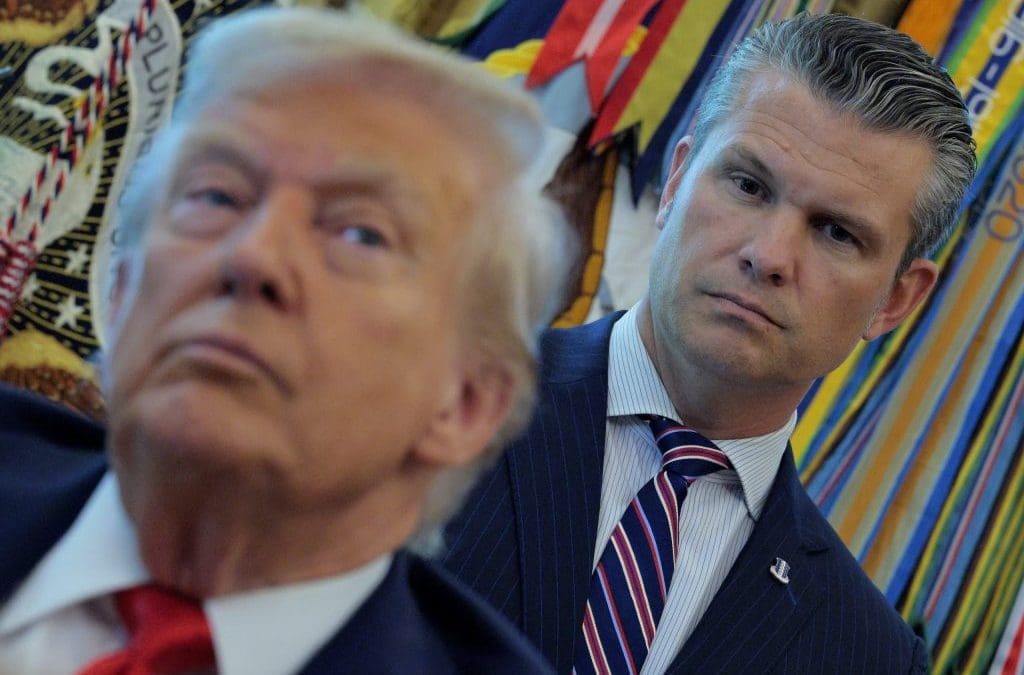
Our Secretary of Defense (or War) Pete Hegseth seems to be having a really great time killing people in Iran, but his live action video games come at a big cost, not just in lives, but in budget dollars. To be clear, the main reason to be opposed to this pointless war is its impact on the people of Iran and elsewhere in the region. But it also has a huge economic cost that is seriously underappreciated.
The short-term cost is the shortage of oil, natural gas, fertilizers, and other items that would ordinarily travel through the Straits of Hormuz. This shortage has already sent prices of many items soaring. The impact is not just on the goods themselves, but there is a large secondary impact due to higher shipping costs, and if fertilizer supplies are not resumed soon, higher food prices, due to lower crop yields. This is a big hit to people in wealthy countries, but it is life-threatening to people living on the edge in Sub-Saharan Africa and South Asia.
But in addition to the short-term cost, there is also a longer-term cost insofar as we are making new enemies and therefore will have higher bills for military spending long into the future. We already got the first taste of this as the Trump administration floated the idea of a $200 billion special appropriation to cover the cost of the war.
The Military is Really Big Bucks
There is remarkably little appreciation of how much money is at stake with wars and the military. This is because the media
Cuba runs out of oil amidst suffocating US blockade
This article was originally published by Truthout on May 15, 2026. It is shared here under a Creative Commons (CC BY-NC-ND 4.0) license.
Cuba’s government has announced that it has run out of oil.
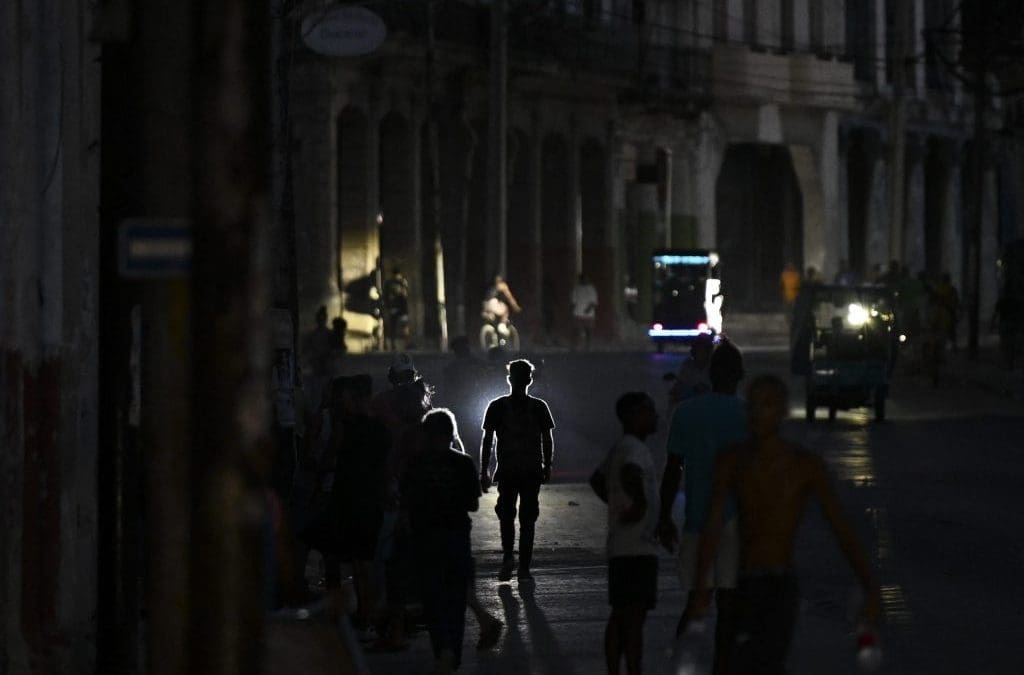
On Wednesday night, Cuba’s energy minister Vicente de La O Levy said that the country has completely run out of diesel and fuel oil, and that the national grid is in a “critical” state. He further described how in the capital city of Havana, “the blackouts today exceed 20 or 22 hours.”
“The situation is very tense, it’s becoming hotter,” he added, referring to the start of summer that brings a need for more energy.
At the start of January, Trump halted Venezuelan oil exports to Cuba, following the U.S.’s kidnapping of Venezuelan President Nicolás Maduro and de facto takeover of Venezuela’s oil industry. Later that month, Trump imposed a total oil blockade on Cuba, imposing tariffs on countries that supply oil to the country, pressuring Mexico to stop its oil shipments to Cuba, and seizing oil shipments traveling to the island country.
At the end of March, a Russian tanker arrived in Cuba carrying an estimated 730,000 barrels of crude oil, breaking the U.S. blockade and temporarily easing the crisis. The crude was refined in April and provided relief for a few weeks. But this fuel has run out, Cuban officials explained. This was the sole shipment of fuel allowed to enter Cuba in more than four months.
.Cuba began suffering from power cuts in 2019, after the first Trump administration imposed “maximum-pressure sanctions.” But since January, these have become more frequent and severe, at times lasting several days.
Trump’s blockade has decimated Cuba’s universal health care system, causing deaths and