How can anyone still deny Israel is committing genocide in Gaza?

How can anyone still deny Israel is committing genocide in Gaza?

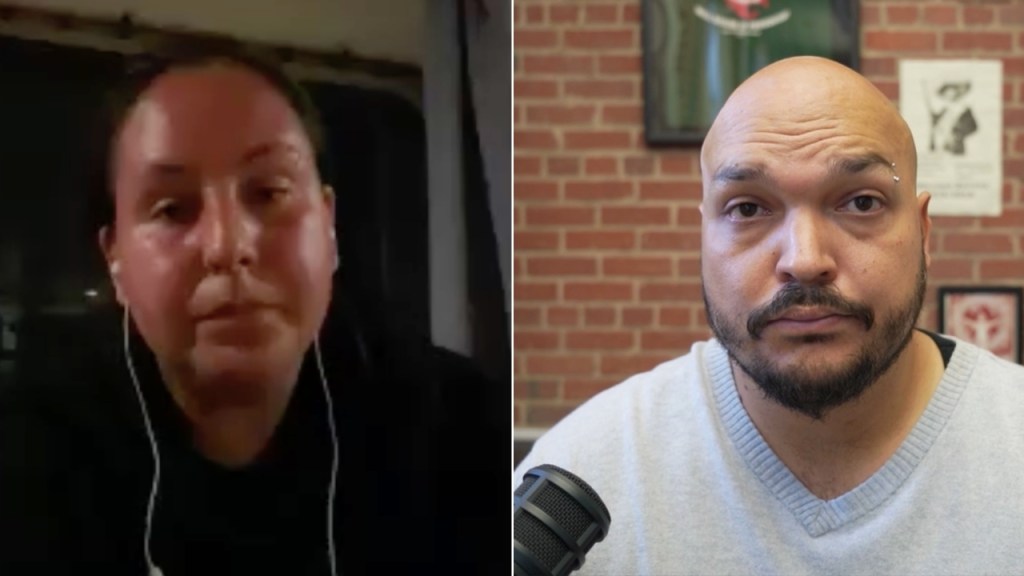
Intent to destroy all or part of a group is required to meet the criteria of genocide, and Israeli officials have made their intentions towards the people of Gaza explicitly clear, says Phyllis Bennis. In this discussion of her new book, Understanding Palestine & Israel, she explains how other recognized genocides have been defined, the influence of the Holocaust and its aftermath on Zionism and Jewish identity, and why the ceasefire movement indicates a change in the movement for Palestinian rights.

Guests:

Phyllis Bennis is a fellow at the Institute for Policy Studies in Washington, DC, where she also serves as co-director of the New Internationalism Project. She is a founding member of the US Campaign to End Israeli Occupation and served for six years on the national board of Jewish Voice for Peace. She is the author of numerous books, including Understanding Palestine & Israel.

Credits:

Studio Production: Cameron Granadino

Post-Production: Stephen Frank

Transcript
The following is a rushed transcript and may contain errors. A proofread version will be made available as soon as possible.

Marc Steiner:

Welcome to the Marc Steiner Show here in the World News. I’m Marc Steiner. It’s good to have you all with this as we open our program today. Somewhere between 66,000 and 80,000 people have been buried under the rubble and Gaza and killed the majority of women and children. Most of the infrastructure has been destroyed. Over 1.2 million people face starvation and seemingly nothing is being done to end this massacre. Many of the most profound voices and leaders of the fight against the war in Gaza are members of the Jewish community who say not in our name. And today we’re

Original

Defying Israel, more ships sail to Gaza after Global Sumud Flotilla captured

Defying Israel, more ships sail to Gaza after Global Sumud Flotilla captured

Sparking global outrage and condemnation, Israel has illegally intercepted every vessel and captured every volunteer sailing to Gaza with the Global Sumud Flotilla. Protests over the flotilla’s capture have erupted around the world, from Buenos Aires to Barcelona, and hundreds of thousands took to the streets of Italy in a one-day general strike called by Italian unions in solidarity with the Global Sumud Flotilla. And another, smaller fleet of ships with the Freedom Flotilla Coalition is currently sailing to Gaza. Recorded on Saturday, Oct. 4, TRNN Editor-in-Chief Maximillian Alvarez speaks with Mskwaasin Agnew, a Cree & Dene healthcare worker from the Salt River First Nation, who is sailing with the flotilla on board the Conscience.

Guest:

Mskwaasin Agnew is Cree and Dene from Salt River First Nation, born and raised in Toronto. She is a first responder to people who use drugs and an Indigenous harm reduction practitioner. She is an organizer, land defender, abolitionist, and is well versed in Palestinian and First Nation solidarity.

Additional links/info:

Freedom Flotilla Colation linktree and Instagram

Marc Steiner, The Real News Network, “US veterans’ final message from the Global Sumud Flotilla before being intercepted by Israel”

Maximillian Alvarez, The Real News Network, “‘If I’m killed on this mission…’: Global Sumud Flotilla sets sail for Gaza despite Israel’s threats”

Maximillian Alvarez, The Real News Network, “Why US veterans are sailing to Gaza with the Global Sumud Flotilla”

Credits:

Studio Production / Post Production: Maximillian Alvarez, David Hebden

Transcript
The following is a rushed transcript and may contain errors. A proofread version will be made available as soon as possible.

Maximillian Alvarez:

Sparking global outrage in condemnation. Israel has illegally intercepted every single vessel and captured every volunteer sailing to Gaza with

Original

US veterans’ final message from the Global Sumud Flotilla before being intercepted by Israel

US veterans’ final message from the Global Sumud Flotilla before being intercepted by Israel

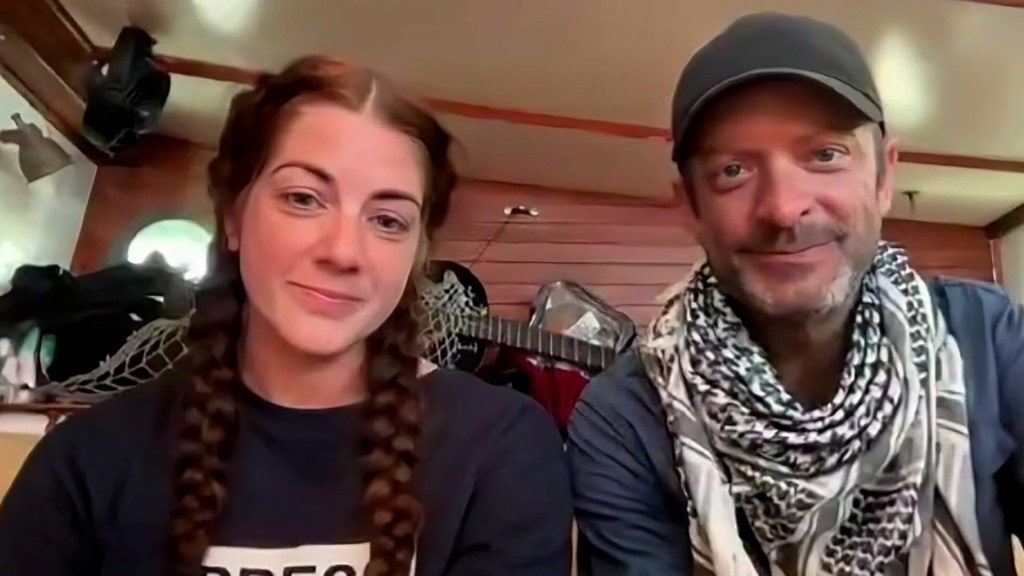
Peace activists sailing to Gaza with the Global Sumud Flotilla reported Wednesday evening that Israeli naval ships had begun intercepting vessels in their fleet and arresting flotilla members. On Tuesday, just hours before the flotilla entered the “high-risk zone” near the shores of Gaza, Marc Steiner spoke with Phillip Tottenham and Jessica Coltfelter, two US Marine Corps veterans sailing with the flotilla. In this episode of The Marc Steiner Show, Tottenham and Coltfelter discuss why they, as veterans, felt compelled to join this humanitarian mission, and what message they wanted to share with the world in the event of their capture—or worse—by Israel.

Guests:

Philip Tottenham is a US Marine Corps veteran, a member of Veterans For Peace, and a peace and human rights activist.

Jessica Coltfelter, is a US Marine Corps veteran (2008-2012) who served as security detail for Presidential Helicopter Squadron Marine One and, upon End of Active Service, worked as a defense contractor for Triple Canopy. Refusing to perpetuate imperialism, Coltfelter became an activist, educator, and an anti-fascist librarian serving rural and marginalized communities in pursuit of mindful liberation.

Additional resources:

Global Sumud Flotilla website, TikTok, and Instagram

Ephrat Livni and Liam Stack, The New York Times, “Israel intercepts boats headed to Gaza with humanitarian aid”

Maximillian Alvarez, The Real News Network,”‘If I’m killed on this mission…’: Global Sumud Flotilla sets sail for Gaza despite Israel’s threats”

Maximillian Alvarez, The Real News Network, “Why US veterans are sailing to Gaza with the Global Sumud Flotilla”

Credits:

Producer: Rosette Sewali

Studio Production: Cameron Granadino

Audio Post-Production: Stephen Frank

Transcript
The following is a rushed transcript and may contain errors. A proofread version will be made available as soon as possible.

Marc Steiner:

Welcome to the Marc Steiner Show here on

Original

‘If I’m killed on this mission…’: Global Sumud Flotilla sets sail for Gaza despite Israel’s threats

‘If I’m killed on this mission…’: Global Sumud Flotilla sets sail for Gaza despite Israel’s threats

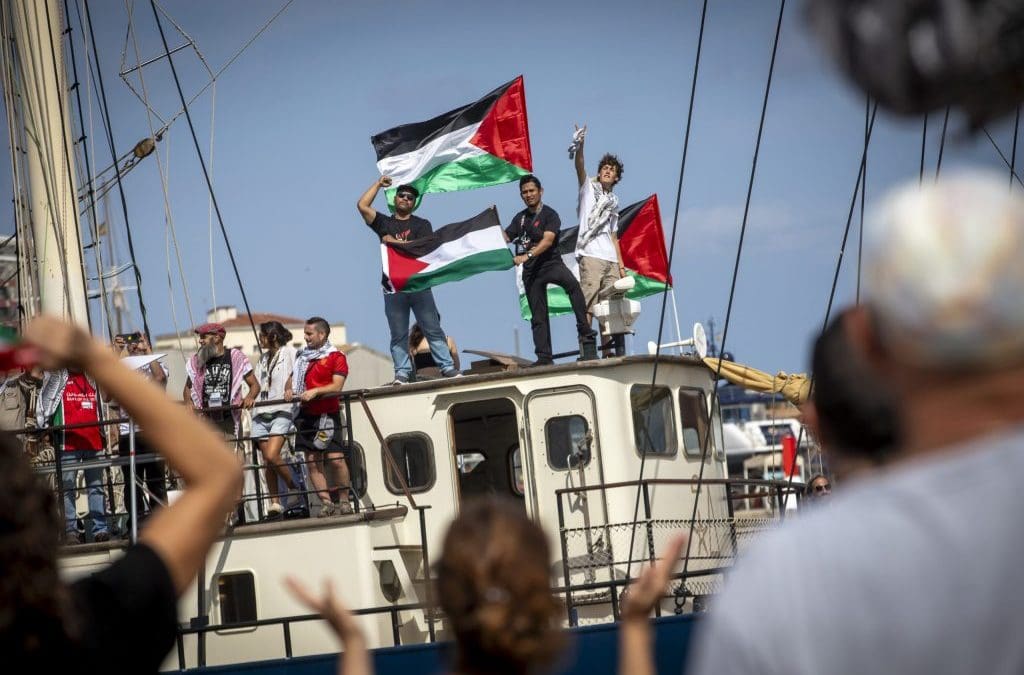
The Global Sumud Flotilla sets sail from Barcelona towards Gaza, in Barcelona, Spain, on August 31, 2025. Hundreds gather at Moll de la Fusta to bid farewell to the flotilla, with dozens of boats and thousands of supporters wearing kufiyas (Palestinian scarves) and waving flags. Photo by Albert Llop/NurPhoto via Getty Images

The Global Sumud Flotilla has embarked on the most dangerous leg of its mission to break Israel’s blockade of the Gaza Strip and deliver life-saving aid to Palestinians in the midst of genocide. As of Monday morning, over 40 vessels with delegations of peace activists from around the world are just over 300 nautical miles from Gaza, and will be entering the “high risk” zone within the next 24-48 hours. Naval ships from three countries—Spain, Italy, and Turkey—are now accompanying the humanitarian fleet as a security escort. Calling in from the Mediterranean Sea, flotilla members Iara Modarelli and Leila Hegazy speak with TRNN Editor-in-Chief Maximillian Alvarez about the current status of the Global Sumud Flotilla and the critical days ahead.

Guests:

  • Iara Modarelli  is a broadcast journalist and humanitarian from Spain who is sailing with the Global Sumud Flotilla
  • Leila Hegazy  is a musician and social media creator from the United States who is sailing with the Global Sumud Flotilla.  

Additional Links/Info:

Credits:

  • Studio Production: Maximillian Alvarez
  • Post-Production: Cameron Granadino
  • Audio Post-Production: Stephen Frank
Transcript

The following is a rushed transcript and may contain errors. A proofread version will be made available as soon as possible.

Original

‘We have experienced every kind of oppression’: Gaza’s children speak

‘We have experienced every kind of oppression’: Gaza’s children speak

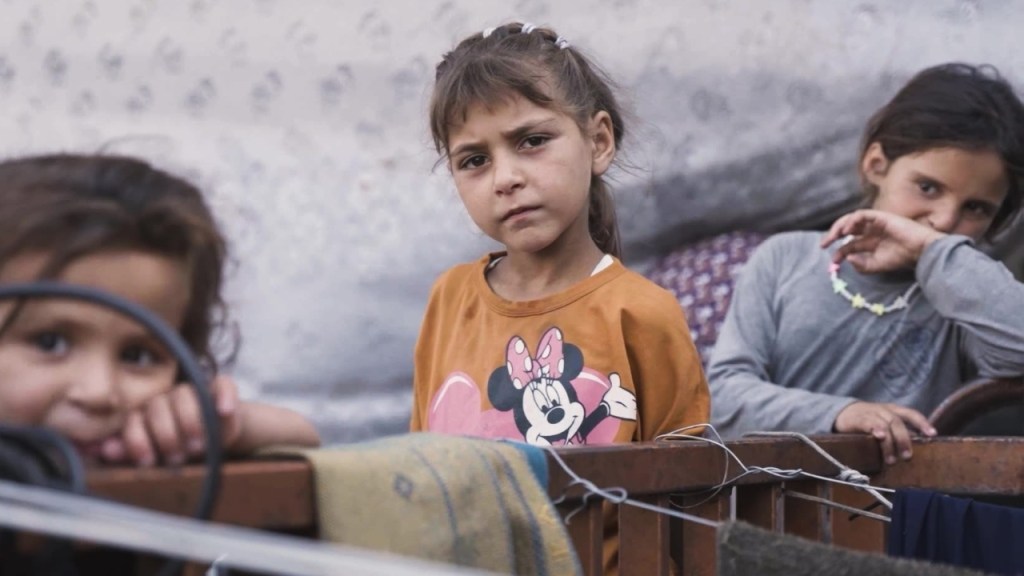
A group of three children in war-torn Gaza look directly at the camera. Still image from TRNN documentary report ‘We have experienced every kind of oppression’: Gaza’s children speak (September, 2025)

For the last two years, Israel’s US-backed genocide has destroyed every facet of normal life in the Gaza Strip. While Palestinians cling to hope that they will live to see the end of the war, the incalculable trauma inflicted on Gaza’s children will leave permanent scars. “In these two years, we have experienced every kind of oppression,” 13-year-old Abdelrahman Bashir Jundia tells TRNN. “From living in tents, to refugee centers that are not fit for living in at all… We have suffered torture, torture, and more torture.” In this on-the-ground report, TRNN speaks with children in Gaza about how the war has forever changed their lives.

Producers: Belal Awad, Leo Erhardt
Videographers: Ruwaida Amer, Mahmoud Al Mashharawi
Video Editor: Leo Erhardt

Transcript

ABDELRAHMAN BASHIR JUNDIA – 13 YEARS OLD: 

In these two years, we have experienced every kind of oppression: From displacement, to living in tents, to refugee centers that are not fit for living in at all. We have endured every form of oppression, from relying on soup kitchens, and depending on water stations, and the water trucks that arrive. We have suffered torture, torture and more torture. I’m Abderahman Bashir Jundiya, I’m 13 years old, in the 8th grade. During the war, I took on the role of an electrical engineer. I started working with electrical appliances that I didn’t know much about before. The war taught me these things. Electrical equipment: we opened a charging station. Electrical equipment, inverters, chargers, [inaudible], fans, batteries, electrical panels, things like that. Before the war, I used to be bigger, but since the war, I’ve lost a lot of weight due to hunger and lack of nutrition. Before the war, my blood was healthy. Now, I have anemia, because of a lack of vitamins and iron. Before the war, we had healthy food, we had buildings and electricity, we had schools—my right to health and education was guaranteed. Now, we’ve been deprived of all of that. 

UM ALAA JUNDIYA – ABDELRAHMAN’S MOTHER: 

They used to be calm—very calm. Honestly, after the war started, it felt like all the children became aggressive. All of them, including my son, Abderahman. He’s become really aggressive, and it’s the same with all the children. Every time I speak to other moms, they say: “My child wasn’t like this before the war.” “I don’t know what’s happened to my child since the war.” “My child used to be calm and relaxed.” And it’s true—I knew these kids. They were calm kids. Now, they say, “My child is very aggressive.” They cause trouble; if anyone speaks to them outside, they immediately start fighting. What should I do? Even when I try to tell him to come meditate or recite the Quran, he refuses. 

ABDELRAHMAN BASHIR JUNDIA – 13 YEARS OLD: 

Before, water and food were always in our homes. Water used to come to our doorstep or be stored in tanks above our houses. Now, we have to collect water and go from soup kitchen to soup kitchen. When the water truck arrives, we run to get drinking water. All of this was available before the war, but now it’s gone. This exhausts us physically, and all the kids are suffering the same way I am. Nowadays, when I feel hungry, I try to distract myself sleeping or playing. I feel like I want to escape how I feel, through sleep or play. 

UM ALAA JUNDIYA – ABDELRAHMAN’S MOTHER: 

Every mom I meet says the same thing about her child: Why? Because all their dreams have been destroyed. Their neighborhoods are in ruins, and they live in tents. Their lives now revolve around soup kitchen—water—soup kitchen—water. It’s either, “I need to get water,” or, “The soup kitchen is here!” Even when we were in the south, there were some tent schools. The kids would go there, but as soon as the soup kitchen arrived, they’d run out of class while the teacher was talking to get food. The teacher would turn around and find the classroom empty. This has become their entire life. They’ll receive a qualification in chasing after water and soup kitchens.

ABDELRAHMAN BASHIR JUNDIA – 13 YEARS OLD: 

Before the war, my friends and I used to meet up at the mosque, in our homes, at the playground, at school—but now, all of that has been cut off. We only see each other occasionally while evacuating, getting water, or at the soup kitchens. Some have been killed, and others have survived, but we can’t reach them. I miss them more and more, because I was really attached to them before the war. Now, we’ve lost them suddenly. Some were martyred—may God rest their souls—and for the others, we pray for their safety. My dream is to live in safety—me and the children. To have a home, to live securely. My right to health, my right to education. To live like any other child in the world: and be able to go to school. To have all the rights that every child deserves. 

UM ALAA JUNDIYA – ABDELRAHMAN’S MOTHER: 

I want to provide everything for my children, but I can’t—I’m out of options, as they say. The grief in my heart—my heart is being torn apart, and my tears never stop falling. My tears say it all. Once, my child Abderahman and I were looking at the phone, and we saw a video of a chef cooking a feast—delicious food, meats, and other dishes. He turned to me and said, “Oh my God, if I die and go to heaven, will I get to eat food like this?” I said, “No, you’ll find even better than this!” Because the wonders of heaven are beyond our imagination. He put his head down and went to sleep. The next day, he woke up and said: “Mom, seriously, will I get food like this in heaven?” We just have to be patient, and we’ll find this in this world and the next, God willing. My heart is breaking—I despair for my child and all the children. You hear all of them saying, “I’m hungry, give me food! I’m hungry, give me food!” But there’s nothing we can do.

Original