by Michael Arria | Nov 6, 2026 | 2026 election, 2026 Elections, 2026 midterms, Abdul El-Sayed, AIPAC, Corporate Media, Democrats, elections, Israel, Mainstream Media, Media, Michigan, midterms, Mike Rogers, News Analysis
In the final televised debate for Michigan’s Senate race, GOP candidate Mike Rogers used his closing remarks to claim that Jewish Democrats were supporting him because they view his Democratic opponent, Dr. Abdul El-Sayed, as “too extreme” on the subject of Israel. “Jewish Democrats who are afraid for their children when their daughters can’t wear their Star of David walking across Michigan’s…
Source
by Elizabeth Weill-Greenberg | Nov 6, 2026 | 2026 Elections, 2026 midterms, Abdul El-Sayed, Angie Nixon, Ashley Moody, CoreCivic, Damon Hininger, elections, FEC, GEO Group, ICE, Immigrants, immigration jails, Ken Paxton, Marsha Blackburn, midterms, Mike Rogers, News, PACs, private prison, Private Prison Companies, private prison industry, Private Prisons, Super PACs, Trump Administration
PACs and executives from three of the leading private prison companies have donated close to $1.2 million to candidates, fundraising committees, and political party committees during this year’s midterm election cycle, according to Federal Election Commission (FEC) records. A GEO Group subsidiary, GEO Reentry Services LLC, donated an additional $4.4 million to MAGA Inc.
Source

by Adam Johnson | Nov 5, 2026 | Article, Democratic Party, elections, Israel, midterms, Politics and Movements: International, Politics and Movements: US
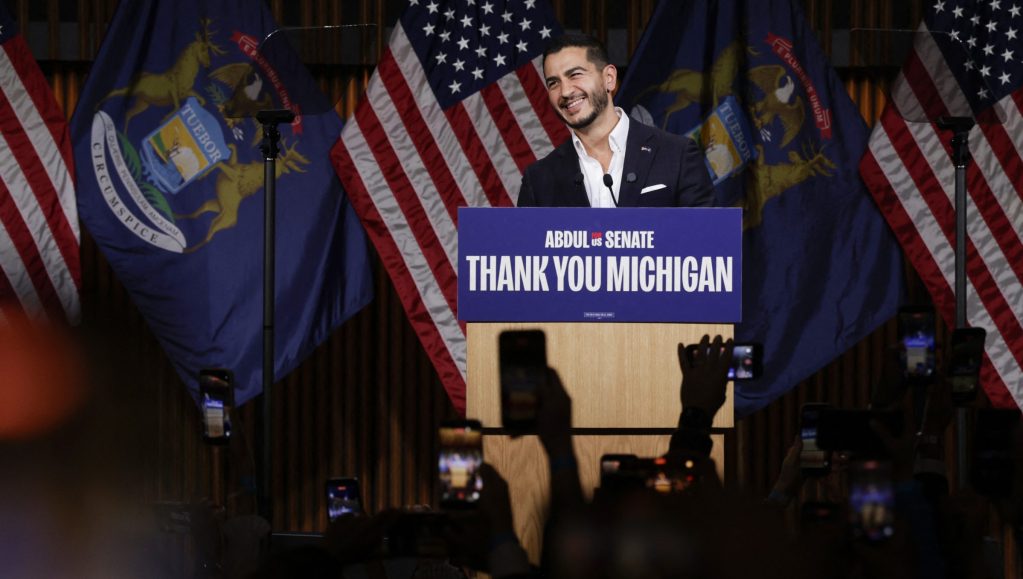
As the tide recedes on the Democrats’ “Blue tsunami” this past Tuesday, before the votes were even tallied, the internecine fight over The Narrative among the US center-left began in earnest. Centrist ideological curators, as is their function, came out strongly to paint the historic drubbing of Republicans as evidence that centrists are more electable than progressives. And progressives, likewise, have made the opposite argument, buoyed by the 7-point swing state victory of progressive and strong Israel critic Abdul El-Sayed in Michigan.
This piece won’t litigate the empirical question as such (though pollster G. Elliot Morris does an excellent job debunking the “centrists overperformed” conventional wisdom), but will highlight instead how many of the “El-Sayed is toxic and can’t win middle America” narratives completely evaporated Tuesday night, and how those pushing them will, of course, never be held to account nor asked to explain why so many outright lies were advanced about the Democratic nominee. El-Sayed won by roughly 340,000 votes despite being subject to nonstop intra-party, intra-liberal attacks emanating from everyone from the president of the most influential liberal think tank in the US, to key Democrats in Congress such as House Speaker Emerita Nancy Pelosi, Jim Clyburn, and Debbie Wasserman Schultz, to influential liberal media outlets The Atlantic magazine and The New York Times, to his largely Republican-funded primary opponent Hayley Stevens, who––unlike the others––at least had the courtesy to break kayfabe and come out in support of Republican Mike Rogers explicitly. Unlike genetic white media darlings Roy Cooper and James Talarico who, the centrist wonk expects insists, Covered The Spread, El-Sayed was subject to one of the most
by Julia Conley | Nov 5, 2026 | 2026 election, 2026 Elections, 2026 midterms, Abortion, Anti-Abortion, elections, FEC, Fetal Personhood, Michigan, midterms, Mike Rogers, News
Michigan voters were clear in 2022 when they voted by a 13-point margin to codify the right to abortion care in the state constitution, and the state’s Republican US Senate candidate, former Rep. Mike Rogers, claimed two years ago that he had no interest in “going back to Washington, DC to undo what the people of Michigan decided to do.” But a recent campaign contribution from the National…
Source
by Chris Walker | Nov 5, 2026 | Article, Democratic Party, elections, midterms, Politics and Movements: US, Reprint, Voting Rights
This article was originally published by Truthout on Nov. 04, 2026. It is shared here under a Creative Commons (CC BY-NC-ND 4.0) license.
Several statewide and state legislative contests in this week’s midterm elections have resulted in new Democratic Party “trifecta” governments — places where the party is now in control of both houses of the state legislature as well as the governor’s office.
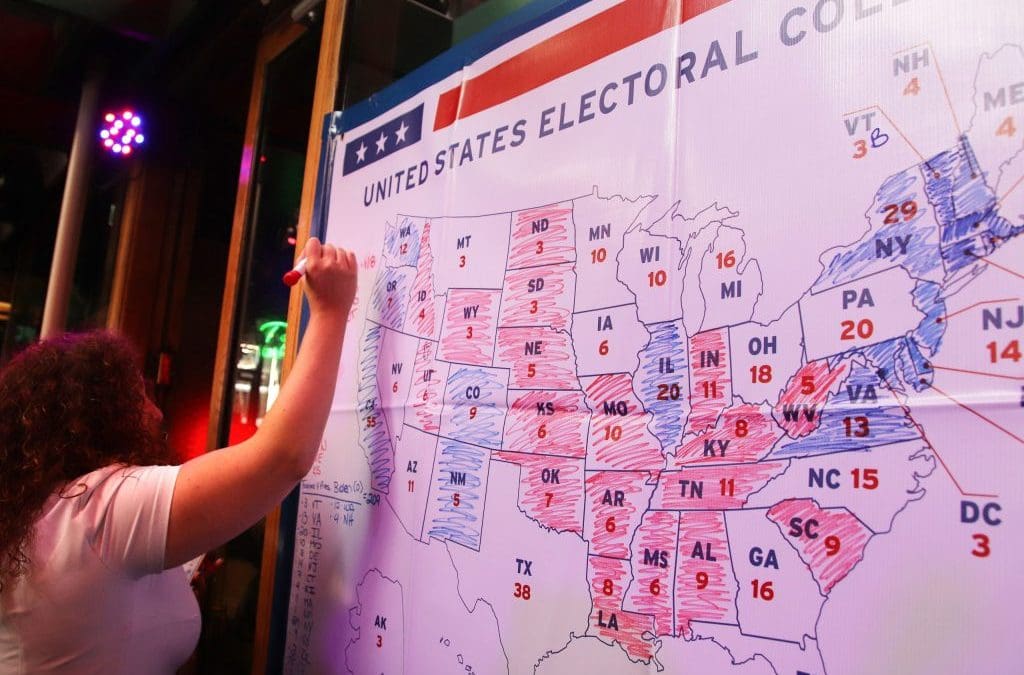
With these new wins, Democrats have the opportunity to do something once considered nearly impossible: implement a popular vote model for electing future presidents of the United States, to replace the archaic and unpopular Electoral College.
Due to the mechanics of the Electoral College, five presidential “winners” in U.S. history have taken office who did not win the approval of most voters, including twice over the past three decades. While a constitutional amendment would be needed to formally abolish the Electoral College — which is unlikely to happen anytime soon, even after this week’s “blue wave” — there is a workaround called the National Popular Vote Interstate Compact, which doesn’t require such an amendment.
Per Article II of the U.S. Constitution, each state is mandated to appoint, “in such manner as the Legislature thereof may direct, a number of electors, equal to the whole number of Senators and Representatives to which the State may be entitled in the Congress.” These electors end up voting for president and vice president.
All states today direct their electors to vote based on their own results in presidential races. If a Democratic candidate wins in California, for example, all 54 of its electors are people chosen to support that candidate in the Electoral College.
But under
by Chris Walker | Nov 5, 2026 | 2026 Elections, Donald Trump, election integrity, elections, midterms, News, Trump election fraud claims
On Tuesday, President Donald Trump told reporters that he would only accept the results of the 2026 midterm elections if he felt they were “honest” — echoing statements he’s made in the past while peddling baseless claims of widespread voter fraud. When asked by journalists if he would “respect” the results of the midterms, Trump indicated his response may depend on the elections’ outcome.
Source