by Taya Graham and Stephen Janis | Jun 8, 2026 | elections, ICE, Inequality Watch, midterms, Politics and Movements: US, video, Voting Rights
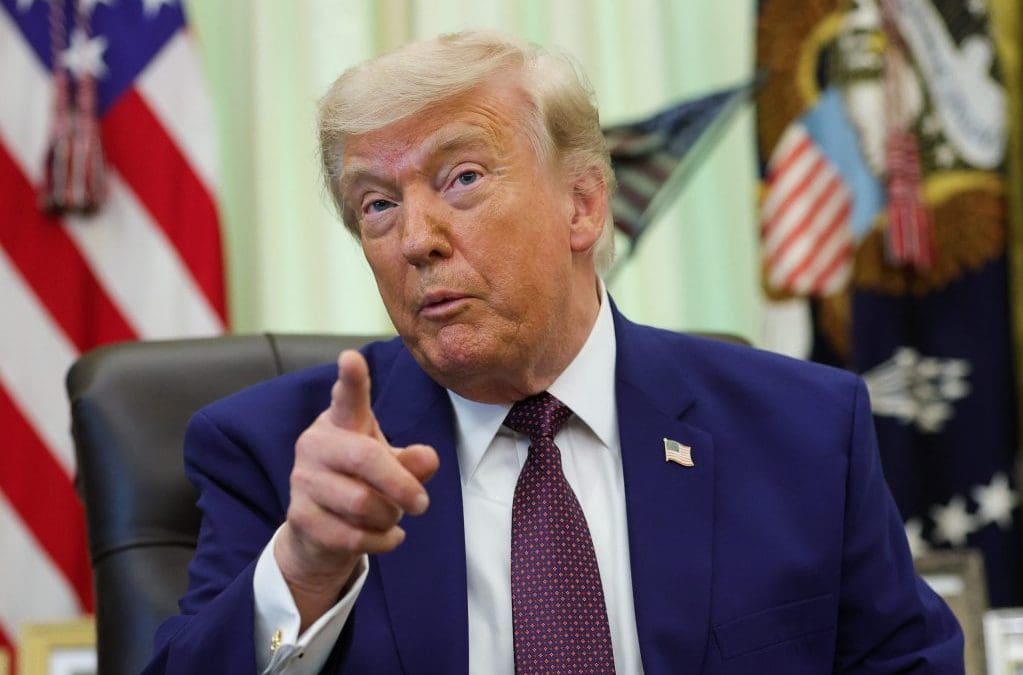
Are President Donald Trump and MAGA Republicans publicly signaling that they plan to interfere in—and potentially rig—the 2026 midterm elections? If so, why is the media not taking the threat seriously? In this episode of Inequality Watch, Taya Graham and Stephen Janis investigate the connections between wealth inequality, political power, ICE funding, the influence of Super PACs on elections, and growing concerns about democratic accountability in Trump’s America.
Credits:
Pre-Production: Taya Graham, Stephen Janis
Studio Production / Post-Production: Cameron Granadino, Stephen Janis
Transcript
The following rushed transcript may contain errors. It will be updated as soon as possible.
Taya Graham:
Could President Trump and his MAGA Congress be planning to interfere with the upcoming midterm elections? Well, we have some evidence that might surprise you, which we will unpack on this episode of the Capitol Hill React Report. Hello, this is Taya Graham, myself, along with my reporting partner, Steven Janice, our Capitol Hill correspondence for the Real News Network. We report regularly on what’s happening in the nation’s Capitol, but with a twist. We examine the process of governance through the prism of the most powerful force in today’s politics, economic inequality. Now, before you say, tell you that seems sort of limited. Just let me explain a little bit before we get to the first video. Economic inequality is at its highest point in recent history. Just take a look at the latest report that showed American workers’ share of the economy has fallen to its lowest level since 1947.
That’s right. In 2025, the share of the economy that went to the people who actually make it run was 54% a historic low. Okay. So
by Marianne Dhenin | May 24, 2026 | 2026 election, 2026 midterms, Ableism, Accessibility, Americans with Disabilities Act, Department of Justice, Disabilities, Disability, Disability Justice, disability rights, doj, elections, Midterm election, midterm elections, midterms, News
A last-minute change from the Department of Justice (DOJ) has outraged disabled people and disability rights groups and could affect access to the ballot box come the midterm elections this November. The agency issued an interim final rule on April 20, pushing back a planned April 24, 2026, deadline for large municipalities to ensure their apps and online offerings are accessible in accordance…
Source
by Jessica Corbett | May 14, 2026 | Article, elections, midterms, Politics and Movements: US, Reprint, Voting Rights
This story originally appeared in Common Dreams on May 13, 2026. It is shared here under a Creative Commons (CC BY-NC-ND 3.0) license.
Republican state leaders are forging ahead with President Donald Trump’s campaign to rig congressional districts for the GOP, with Georgia Gov. Brian Kemp on Wednesday signing a proclamation for a special legislative session and South Carolina Gov. Henry McMaster expected to make a similar announcement soon.
While GOP policymakers facing pressure from Trump have pursued mid-decade redistricting in several states ahead of the November midterm elections—in which Democrats aim to reclaim majorities in both chambers of Congress—Kemp’s proclamation explicitly states that any changes in Georgia would be for 2028, which is the next presidential cycle.
Kemp’s proclamation cites the US Supreme Court’s decision last month that a Louisiana map predating Trump’s redistricting push was “an unconstitutional racial gerrymander,” which gutted the remnants of Section 2 of the Voting Rights Act (VRA) of 1965.
In a statement condemning the proclamation, Common Cause Georgia director Rosario Palacios pointed to the late Rev. Martin Luther King Jr., a key figure in the movement that led to the VRA as well as the Civil Rights Act the previous year.
“We will not sit back and watch while Gov. Kemp takes orders from a felon-in-chief to turn Dr. King’s dream into a nightmare. Too many civil rights leaders have done work in our state for us [to] take this sitting down,” Palacios declared. “Common Cause is mobilizing thousands of people to stop state lawmakers from passing any new maps before 2030 that destroy Black voters’ power for political gain. Voters should not have to rely on lawsuits to protect their right to fair representation. Congress must end this abuse once and
by Mansa Musa | May 13, 2026 | elections, midterms, Politics and Movements: US, Racial Justice, Rattling the Bars, video, Voting Rights
Alabama US Senate candidate Dakarai Larriett joins Mansa Musa on Rattling the Bars to expose the rising tide of voter suppression and the battle for the Democratic ticket. Ahead of the May 19, 2026, primary, Larriett takes aim at opponent Kyle Sweetser—a former three-time Trump voter—calling his sudden party shift disingenuous while vowing to ‘fight like hell’ against racist redistricting in the South.
Credits:
Producer / Videographer / Editor: Cameron Granadino
Editor’s Note: This interview was recorded on May 11, 2026. Following the recording, a US Supreme Court ruling cleared the way for Alabama to implement a new congressional map that effectively dismantles one of the state’s two majority-Black districts.
Transcript
The following is a rushed transcript and may contain errors. A proofread version will be made available as soon as possible.
Mansa Musa:
Welcome to this edition of Rattling the Bars. I’m your host, Mansa Musa. Since the Supreme Court decision in Louisiana versus Cowan, significantly weakening protection under the Voting Rights Act. Several Southern states have redrawn district lines leading to concerns over the delusion of Black political representation. From the Supreme Court decision in Virginia, striking down Democrat drawing maps to Texas Governor Greg Abbott redistricting plans, receiving formal approval, the national landscape is shifting. Today we are following up with the Dakarai Larriett, a candidate for the United States Senate of Alabama to discuss these nationwide shifts and their impact on the midterm and the balance of power in Congress. Dakarai, welcome to Rattling the Bar.
Dakarai Larriett:
Oh, good to be back, man, sir.
Mansa Musa:
So let’s dive into how you see this latest decision coming out of the Supreme Court and how you assessing
by Jake Johnson | May 8, 2026 | Article, elections, midterms, Politics and Movements: US, Racial Justice, Reprint, Voting Rights
This story originally appeared in Common Dreams on May 07, 2026. It is shared here under a Creative Commons (CC BY-NC-ND 3.0) license.
Republicans in the Tennessee House of Representatives voted during a special session on Thursday to adopt a new congressional map that would carve up the state’s lone majority-Black district, a move that came amid raucous protests from angry residents and Democratic lawmakers.
The special session was called by GOP Gov. Bill Lee at the behest of President Donald Trump, whose aggressive gerrymandering push across the country was supercharged by the US Supreme Court’s decision last week gutting the 1965 Voting Rights Act’s protections against racial discrimination. One Tennessee Republican—state Rep. Todd Warner (R-92)—walked into the House chamber for Thursday’s vote wearing a Trump 2024 flag as a cape.
The Tennessee House approved the new congressional map, which would likely draw the only Democrat in Tennessee’s US congressional delegation out of his seat, by a party-line vote of 64 to 25. Following the vote, The Tennessean reported that “Democrats linked arms and walked out of the room. Seconds later, the chamber adjourned.”
Shouts of rage flooded the Tennessee House chamber after the map passed, and protesters booed and jeered Republican lawmakers as they exited.
⚡️ WATCH — JUST NOW — 99% white Tennessee House Republicans pass a racist 9-0 map stripping majority Black Memphis of congressional representation pic.twitter.com/OYwTWZK2i1— The Tennessee Holler (@TheTNHoller) May 7, 2026
House passage of the map came after lawmakers voted to repeal a 1972 ban on mid-decade redistricting after limited debate, clearing the way for approval of the new district lines, which are expected to draw US Rep. Steve Cohen (D-Tenn.)—the only Democrat in Tennessee’s congressional delegation—out of his seat.
The Tennessee Senate is expected to approve
by Julia Conley | May 5, 2026 | Article, elections, midterms, Politics and Movements: US, Racial Justice, Reprint, Voting Rights
This story originally appeared in Common Dreams on May 05, 2026. It is shared here under a Creative Commons (CC BY-NC-ND 3.0) license.
Warning that the US Supreme Court’s right-wing majority was appearing to give its approval of Louisiana’s decision to suspend federal primary elections in the state following the court’s ruling on the state’s congressional map last week, Justice Ketanji Brown Jackson on Monday evening was the lone dissenter as the court agreed to immediately finalize the ruling instead of waiting the customary 32 days.
By expediting the ruling, suggested Jackson, the court was taking an obviously political stance in support of efforts to ensure Louisiana Republicans can quickly redraw the state’s congressional map to yield more electoral wins for the GOP.
“The court’s decision to buck our usual practice,” wrote Jackson, “is tantamount to an approval of Louisiana’s rush to pause the ongoing election in order to pass a new map.”
Ordinarily, the court would wait 32 days to transmit an opinion to the lower courts, giving the losing party time to request that the justices reconsider the case.
In a brief, unsigned opinion Monday evening, the court said that the Black voters who had defended the state’s 2024 congressional map at the center of Louisiana v. Callais had “not expressed any intent to ask this court to reconsider its judgment.”
In Louisiana v. Callais last week, the court ruled along ideological lines that the 2024 map—which was drawn to better represent the population of Louisiana, where one-third of residents are Black—was an unconstitutional racial gerrymander. The ruling effectively struck down the last remaining provision of Section 2 of the Voting Rights Act, which held that voters of color can challenge racially discriminatory electoral maps.
The map that was struck down ensured there were two majority-minority districts in