by Hayes Brown | Jul 13, 2026 | Congress, elections, Opinion
The House returns to session Monday two weeks after a hasty retreat from Washington. Speaker Mike Johnson, R-La., sent his members home early ahead of the Fourth of July weekend when a revolt from his caucus’ right flank left the chamber paralyzed. Time hasn’t changed the situation since then — and time is what Johnson lacks now.
Chances aren’t looking good for either of the two broad clusters of action items on the House GOP’s agenda.
Lawmakers are in town for eight working days before their annual August recess. When they return in early September, it will likely be too late for anything ambitious to make its way through the legislative process. Most of Congress’ focus will be on simply keeping the lights on, not cramming a grab bag of conservative priorities into yet another GOP-only spending bill. But that is exactly what Johnson keeps insisting is in the works, even as every sign and portent says otherwise.
Chances aren’t looking good for either of the two broad clusters of action items on the House GOP’s agenda.
The first group includes the annual spending bills, which fund the federal government, and the National Defense Authorization Act, which sets policy for the Pentagon and instructions for its many projects. Before the most recent break, Johnson hoped to at least move forward on the NDAA and an initial package of appropriation bills for fiscal 2027, which begins Oct. 1.
Those plans were derailed by a group of hard-line Republicans who voted down the procedural rule that would move those bills to the floor. Rep. Anna Paulina Luna, R-Fla., said she would refuse to vote for any procedural rule
by Joedy McCreary | Jul 12, 2026 | Campaign Finance, elections, News, SCOTUS, Supreme Court
On a single day last year, one of President Donald Trump’s joint fundraising committees sent nearly $1.5 million to 46 Republican Party committees in states and territories. Each of them, in turn, immediately routed those exact same amounts to the Republican National Committee. Routine transfers like those are a hallmark of how joint fundraising committees move money through the party system.
Source
by Aastha Uprety | Jul 11, 2026 | AIPAC, Claire Valdez, Darializa Avila Chevalier, Democratic Socialists of America, DSA, elections, Israel, labor, Labor Unions, New York, New York City, Op-Ed, Palestine, UAW, Unions, Zohran Mamdani
While the rest of the U.S. left celebrated two major wins in New York’s congressional primaries in June, much of the organized labor movement was left licking its wounds. The combined heft of New York City’s largest labor unions was not enough to best the candidates backed by the Democratic Socialists of America (DSA) and the star power of Mayor Zohran Mamdani. Darializa Avila Chevalier won…
Source
by Jake Johnson | Jul 10, 2026 | Article, elections, midterms, Politics and Movements: US, Reprint, Voting Rights
This story originally appeared in Common Dreams on July 10, 2026. It is shared here under a Creative Commons (CC BY-NC-ND 3.0) license.
US President Donald Trump late Thursday forced out the remaining three members of an independent, bipartisan commission that assists state election officials across the country, a move that critics condemned as a “pathetic power grab” ahead of the 2026 midterms.
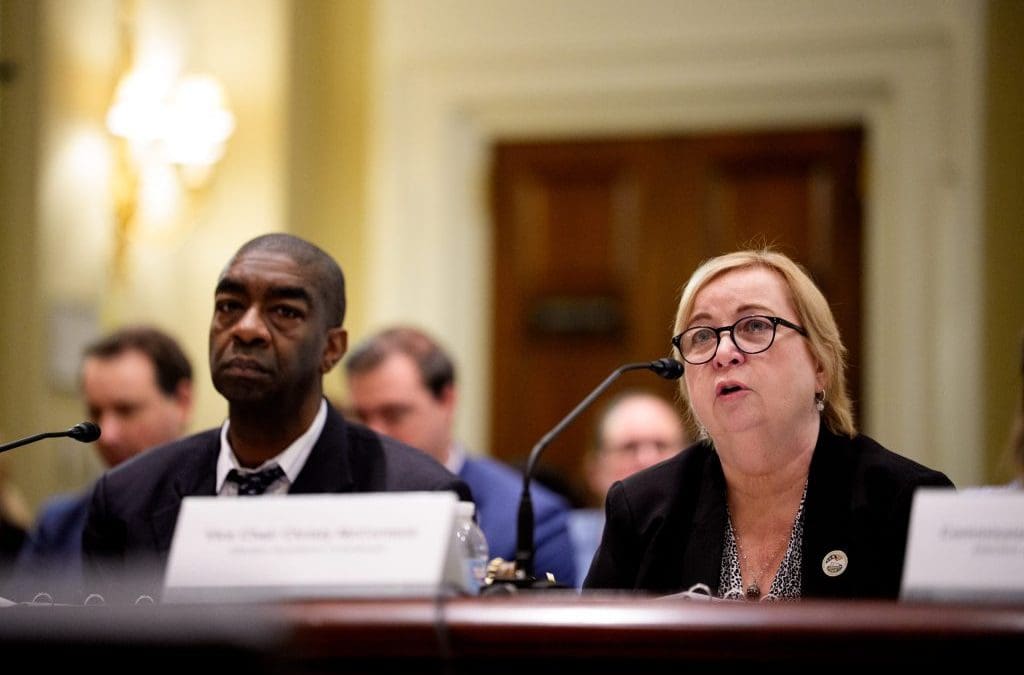
The two Democratic members of the Election Assistance Commission (EAC), Benjamin Hovland and Thomas Hicks, were fired, and Republican Commissioner Christy McCormick resigned at the White House’s request, according to ProPublica. The agency, established by Congress more than two decades ago, now lacks leadership and any ability to make decisions, just months before the 2026 elections.
The EAC, as its website states, is “an independent, bipartisan commission whose mission is to help election officials improve the administration of elections and help Americans participate in the voting process.” In an executive order last year, Trump ordered the EAC to implement proof-of-citizenship requirements in the federal voter registration process, along with other changes. The president’s effort to impose his policy demands on the EAC was mostly blocked in federal court.
Trump, who has said he wants his administration to “take over” voting nationwide ahead of the 2026 midterms, has since taken other steps that watchdogs and Democratic lawmakers say amount to an attempt to preemptively subvert the coming elections, including a sweeping assault on mail-in voting—which is also facing legal challenges. Legislatively, Trump is pushing Republicans to pass the SAVE America Act, a bill that experts say would prevent millions of Americans from voting.
Michael Waldman, president and CEO of the Brennan Center for Justice, said Thursday’s EAC firings “are deeply concerning in light of President Trump’s
by Jessica Huseman | Jul 10, 2026 | 2026 election, 2026 Elections, 2026 midterms, Donald Trump, Election Assistance Commission, elections, Help America Vote Act, midterms, News, Supreme Court, Voting, Voting Rights
President Donald Trump fired all three remaining members of the U.S. Election Assistance Commission on Thursday, abruptly disabling the only federal agency devoted solely to election administration at a moment when Trump has sought to reshape federal voting rules. The two Democratic commissioners, Thomas Hicks and Benjamin Hovland, were notified by email. “On behalf of President Donald J.
Source
by Steve Benen | Jul 10, 2026 | 2026 election, elections, Maddowblog, News, Politics
In the wake of the 2000 elections, there was one thing Democrats and Republicans could agree on: The entire election cycle was a mess that exposed structural and institutional flaws that required reforms.
It wasn’t easy, but Congress ultimately passed the Help America Vote Act (better known as HAVA) in 2002, which included a variety of constructive changes and created a new entity called the Election Assistance Commission.
In the 24 years that followed, the EAC wasn’t particularly controversial. The point of the commission, as its name implies, is to assist state and local election administrators with training, security grants, voluntary election management guidelines and detailed information on best practices, including specifications for testing and certifying election equipment.
There was no reason to gut the commission. Donald Trump did it anyway. MS NOW reported:
President Donald Trump fired the remaining members of the Election Assistance Commission on Thursday, a White House official confirmed to MS NOW.
The move effectively leaves the bipartisan agency without any commissioners and unable to carry out its official duties just months before the 2026 midterm elections.
For all of the Republicans’ overwrought rhetoric about “election security” and “election integrity,” the gutting of the EAC moves the nation in the opposite direction.
Until very recently, such a move wouldn’t have just been seen as a power grab, it also would have been recognized as legally dubious. Commission members are Senate-confirmed officials serving on an independent agency. The idea that a president could just send them an email and push them into unemployment was unrealistic.
But after Republican-appointed justices on the Supreme Court issued their ruling in Trump v. Slaughter early last week, the executive