

The AI bubble, like the housing bubble, is a big problem and it’s not complicated
This article originally appeared on Dean Baker’s Patreon. It is reprinted here with permission.
A bit less than 20 years ago, a nationwide housing bubble collapsed, giving us the Great Recession. Millions of homeowners had their houses foreclosed. We had high unemployment for the better part of a decade. And the subsequent falloff in construction created the basis for another extraordinary run-up in house prices during the pandemic. In other words, it was pretty bad news.
The current bubble in AI is laying the groundwork for another bad story. As was the case both before and after the collapse of the housing bubble, there is a tremendous premium in intellectual circles on making the problem more complicated than it is.
My latest poster child for this point is a column in the New York Times by Richard Bookstaber, a hedge fund manager who had predicted the financial crisis that followed the collapse of the housing bubble. His column notes the AI bubble, but then argues that the big problem is that we are also facing risks from the private credit market, as well as geopolitical risks, like the fact that China could cut off the supply of chips from Taiwan and also the price shock associated with the cutoff of the oil flow through the straits of Hormuz.
The collapse of the stock prices of the companies that are big factors in AI will then have huge spillover effects, devastating people’s 401(k)s, as well as whacking pension funds. This will lead to a huge fall in consumption, which would likely lead to a recession.
The warnings are well-taken, but the story is actually not complicated.

Thousands of Colorado meatpacking workers are on strike
While spending billions on Iran war, Trump quietly moves to boot millions more off food aid
This story originally appeared in Common Dreams on Mar. 10, 2026. It is shared here under a Creative Commons (CC BY-NC-ND 3.0) license.
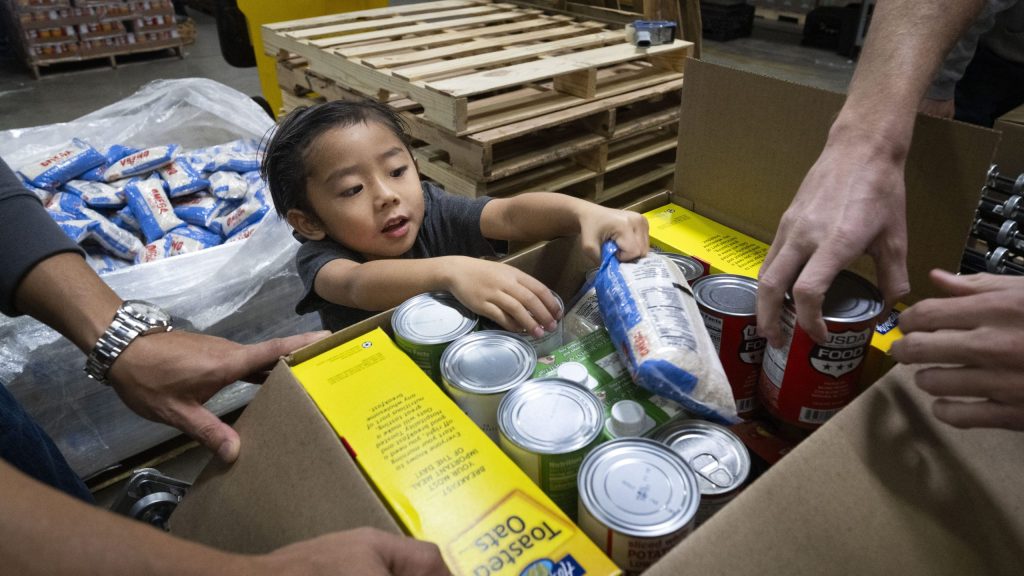
The Trump administration is quietly pursuing a regulatory change that would strip federal nutrition assistance from an estimated 6 million low-income Americans—including nearly two million children—as it spends billions on an illegal, open-ended war on Iran that has killed more than a thousand people and plunged the global economy into chaos.
The change sought by the US Department of Agriculture would curb broad-based categorical eligibility in the Supplemental Nutrition Assistance Program (SNAP). Broad-based categorical eligibility allows states to automatically qualify residents for SNAP if they are already enrolled in other aid programs, such as Temporary Assistance for Needy Families, thus reducing administrative hurdles and costs.
The Center on Budget and Policy Priorities (CBPP) estimated in a blog post published late last month—the day before President Donald Trump announced the joint US-Israeli assault on Iran—that gutting broad-based categorical eligibility would likely strip modest federal food aid from around 6 million people, including nearly 2 million children.
“The people losing access to food assistance from SNAP, school meals, and [the Women, Infants, and Children Program] would mainly be working families, older adults, and people with disabilities,” the think tank noted. “In other words, the change would primarily harm groups that federal and state policymakers from across the political spectrum have long sought to help: people who work but are living near poverty; older adults and people with disabilities with low, fixed incomes; and people trying to build modest savings in order to become more economically independent.”
The Congressional Budget Office has projected that restricting broad-based categorical eligibility would result in roughly $11 billion in savings over a 10-year period—or just over $1 billion a year.
The Trump administration is currently spending
Sean O’Brien sold workers and unions out to Trump—these Teamsters are running to oust him.
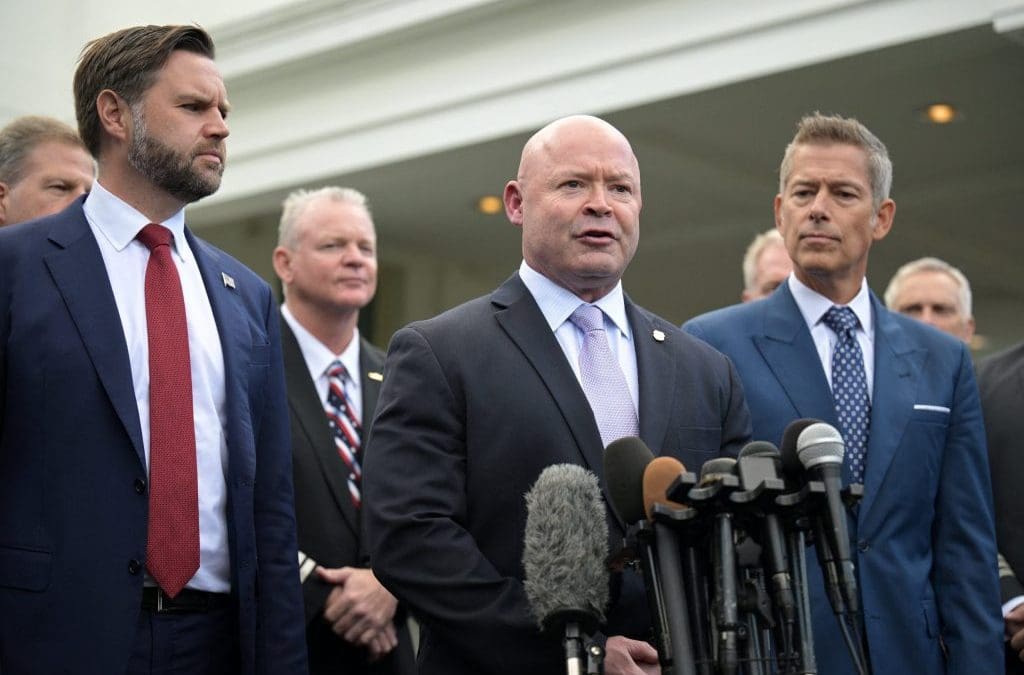
As general president of the union, Sean O’Brien has operated with a “Teamsters vs. Everybody” mentality, especially when it comes to dealing with President Donald Trump and embracing the MAGA right. But now, 14 months into the second Trump administration, the labor movement and the entire working class—Teamsters members included—is under attack. In this episode of Working People, we speak with veteran Teamsters Richard Hooker Jr. and John Palmer, who are running to oust O’Brien from leadership in the upcoming union election.
Guests:
Richard Hooker Jr. has dedicated 26 years to the Teamsters, spending 20 of those years at UPS and the last six in leadership roles. He is the Secretary-Treasurer and Principal Officer of Teamsters Local 623 in Philadelphia, and he is now running on the Fearless Slate to unseat Sean O’Brien as a candidate for general president of the International Brotherhood of Teamsters.
John Palmer has 38 years of experience in the Teamsters and is currently serving as a vice president at large of the International Brotherhood of Teamsters. He is running on the Fearless Slate as a candidate to be the union’s general secretary-treasurer.
Additional links/info:
Teamsters Fearless Slate website
Hank Kennedy, Current Affairs, “Sean O’Brien sold labor to Trump, and got nothing”
Michael Sainato, The Guardian, “Labor activist takes on Teamsters leader allying with Trump: ‘He doesn’t represent the workers’”
Joe Allen, CounterPunch, “Why are the Teamsters endorsing Greg Abbott?”
Peter Eavis, The New York Times, “UPS says it is cutting up to 30,000 jobs”
Maximillian Alvarez, TRNN, “Everybody hates Sean”
Maximillian Alvarez, TRNN, “We asked 8 different Teamsters what they thought of Sean O’Brien’s speech—their responses may surprise you”
Featured Music:
Jules Taylor, Working People Theme Song
Credits:
Audio Post-Production:

A billion-dollar company poisoned their town, then moved on. Now people are dying.
Three years ago, on Feb. 3, 2023, the Norfolk Southern train derailment and chemical disaster—one of the worst industrial disasters in US history—took place in the small town of East Palestine, OH. Since that fateful day, residents have been exploited and abandoned by Norfolk Southern, the government, opportunistic politicians, sensationalist media outlets, and self-serving attorneys, but we haven’t forgotten them. On the three-year anniversary of the day that changed their small-town lives forever, TRNN Editor-in-Chief Maximillian Alvarez was on the ground in East Palestine speaking with residents about their lives and needs today. Here is what they said…
Additional links/info:
Ohio Valley Derailment Mutual Aid Facebook page and fundraiser
Chemically Impacted Communities Coalition (CICC) website
Golomb Research Group (UCSD) website and East Palestine Health Effects Study website
Maximillian Alvarez, The Real News Network, “America’s toxic future looks like East Palestine, Ohio, today” (click for a full list of all of Max’s East Palestine reporting for TRNN over the last three years)
Josh Funk & Julie Carr Smyth, AP, “Lawsuit blames deaths on Ohio train derailment as Vance says US needs ‘to do better on rail safety’”
Credits:
Filmed by Maximillian Alvarez
Post-Production by David Hebden
Transcript
The following is a rushed transcript and may contain errors. A proofread version will be made available as soon as possible.
Jami Wallace:
I am Jami Wallace from East Palestine, Ohio. It was three years ago today on February 3rd, 2023, that a Norfolk Southern train derailed in my community carrying hazardous chemicals. It’s now been three years. We are still here. We still need help. Our health is failing. I have been diagnosed with multiple different long-term illnesses that all can be related to the chemicals.
Ashley