by Sydney Carruth | May 18, 2026 | News
A New York state judge ruled Monday to allow key evidence to be used in the murder trial of Luigi Mangione, who is accused of killing a healthcare company CEO in New York in December 2024.
Judge Gregory Carro of the New York State Supreme Court said prosecutors can use as evidence a gun found in Mangione’s backpack and notes detailing his frustrations with the healthcare industry.
Mangione faces trial in September on second-degree murder and other charges in the death of UnitedHealthcare CEO Brian Thompson on Dec. 4, 2024. He was arrested at a McDonald’s in Altoona, Pennsylvania, five days after Thompson was killed.
Carro ruled that some of the evidence found in the search of the backpack – Mangione’s cellphone, passport, wallet and a computer chip – was unlawfully collected because Mangione was not in custody but did not have sufficient control over the backpack when it was taken and searched by authorities.
The gun and notebook, however, were found through a valid inventory search at the police station, according to the judge’s decision.
The ruling followed a nine-day suppression hearing in which Mangione’s defense attorneys argued the gun, notes and other contents of his bag should be excluded as evidence from the state trial because the bag was searched by authorities without a warrant, which the defense said was unlawful. Prosecutors with the Manhattan District Attorney’s Office argued the search was lawful.
This is a developing story. Check back for updates.
The post Judge allows key evidence in Luigi Mangione’s New York murder trial appeared first on MS NOW.

by Jake Johnson | May 18, 2026 | Article, Economy, Economy and Inequality, IRS, Politics and Movements: US, Reprint, Trump
This story originally appeared in Common Dreams on May 15, 2026. It is shared here under a Creative Commons (CC BY-NC-ND 3.0) license.
The top Democrat on the House Judiciary Committee on Thursday accused US President Donald Trump of “orchestrating a $1,700,000,000 fraud on the American taxpayer to line the pockets of his MAGA political allies” amid new reporting on the terms Trump is seeking in talks to settle his $10 billion lawsuit against the Internal Revenue Service.
ABC News reported late Thursday that Trump is expected to drop his lawsuit in the coming days “in exchange for the creation of a $1.7 billion fund to compensate allies who claim they were wrongfully targeted by the Biden administration.” The money would come from the Treasury Department’s Judgment Fund, which pays out court judgments and settlements against the federal government.
The president is also expected to receive a public apology from the IRS for the leak of his tax returns during his first White House term.
Rep. Jamie Raskin (D-Md.) said in a statement that the reported settlement terms represent “another installment” in Trump’s “ongoing effort to turn the federal government into a personal cash machine for his unpopular extremist movement.”
“This is a massive and unprecedented presidential plunder of the American people,” said Raskin. “Worse still, this is only the beginning—a declaration that the prior payouts were just a down payment, and that he now intends to earmark billions more in taxpayer dollars for his political allies, sycophants, and private militia of unemployed insurrectionists.”
“The president has no authority to conjure up billion-dollar compensation schemes or raid the Judgment Fund, which exists to settle valid lawsuits. Trump is systematically converting neutral government mechanisms into a presidential slush fund to build
by Chris Walker | May 18, 2026 | cash bail, cashless bail, Donald Trump, imprisonment, News, Trump executive orders
The U.S. House of Representatives passed legislation last week designed to deter states and municipalities from instituting or continuing cashless bail programs, even though such policies recognize that the release of individuals from jail, pending their chance to argue their innocence in courts of law, shouldn’t be restricted based on a person’s income. The Cashless Bail Reporting Act passed…
Source
by Shireen Al-Adeimi | May 18, 2026 | Article, cuba, Economy and Inequality, Oil, Politics and Movements: International, Politics and Movements: US, Reprint
This article was originally published by Truthout on May 15, 2026. It is shared here under a Creative Commons (CC BY-NC-ND 4.0) license.
Cuba’s government has announced that it has run out of oil.
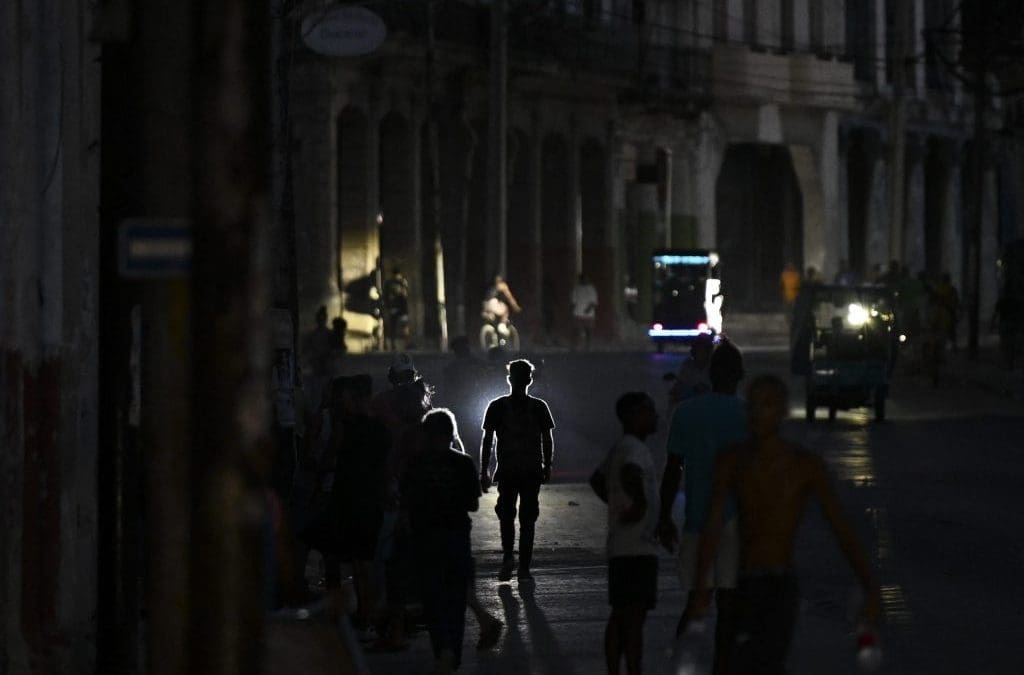
On Wednesday night, Cuba’s energy minister Vicente de La O Levy said that the country has completely run out of diesel and fuel oil, and that the national grid is in a “critical” state. He further described how in the capital city of Havana, “the blackouts today exceed 20 or 22 hours.”
“The situation is very tense, it’s becoming hotter,” he added, referring to the start of summer that brings a need for more energy.
At the start of January, Trump halted Venezuelan oil exports to Cuba, following the U.S.’s kidnapping of Venezuelan President Nicolás Maduro and de facto takeover of Venezuela’s oil industry. Later that month, Trump imposed a total oil blockade on Cuba, imposing tariffs on countries that supply oil to the country, pressuring Mexico to stop its oil shipments to Cuba, and seizing oil shipments traveling to the island country.
At the end of March, a Russian tanker arrived in Cuba carrying an estimated 730,000 barrels of crude oil, breaking the U.S. blockade and temporarily easing the crisis. The crude was refined in April and provided relief for a few weeks. But this fuel has run out, Cuban officials explained. This was the sole shipment of fuel allowed to enter Cuba in more than four months.
.Cuba began suffering from power cuts in 2019, after the first Trump administration imposed “maximum-pressure sanctions.” But since January, these have become more frequent and severe, at times lasting several days.
Trump’s blockade has decimated Cuba’s universal health care system, causing deaths and
by Steve Benen | May 18, 2026 | Health, Maddowblog, News, Politics
When we think about the many officials in the Trump administration who hold positions of power and authority despite their backgrounds and lack of qualifications, we tend to focus on high-profile figures, such as Health and Human Services Secretary Robert F. Kennedy Jr., Defense Secretary Pete Hegseth and Director of National Intelligence Tulsi Gabbard, among others.
But just below this level is another group of officials in key positions. Their names might not be immediately recognizable to most Americans, but they have important responsibilities despite their backgrounds and lack of qualifications.
Marty Makary, for example, recently left his position as the head of the Food and Drug Administration, leading a young Florida lawyer named Kyle Diamantas to serve as the acting FDA commissioner. As Rolling Stone noted, Diamantas, who has no medical background, is perhaps best known for being hunting buddies with Donald Trump Jr., before he took on a role helping lead the administration’s food safety program.
There are countless related examples — the teleportation guy leading the Federal Emergency Management Agency’s Office of Response and Recovery also comes to mind — though another unexpected one emerged last week when we learned more about Dr. Brian Christine, one of the top public health officials in charge of infectious disease policy.
Though Christine, who came highly recommended by Republican Sen. Tommy Tuberville of Alabama, is not well known nationally, he recently spoke at the Trump administration’s press conference on the U.S. response to the hantavirus outbreak.
Viewers probably didn’t fully appreciate why Christine was a provocative choice to speak on behalf of the administration. CNN reported:
Before he joined the Trump administration last year, Christine was