by Steve Benen | Nov 12, 2026 | Congress, Justice Department, Maddowblog, White House
In the closing weeks of the midterm election cycle, Donald Trump struggled to formulate a closing argument, but the president had plenty to say about Democratic Rep. Ilhan Omar.
Indeed, after the president ordered his administration to target the Minnesota congresswoman, federal agents seized the laptop, cellphone and passport of a sitting member of Congress based on highly dubious evidence. Soon after, Trump began falsely telling voters that “the Democrat [sic] Party has conceded her seat” and she will no longer be permitted to serve in Congress. In late October, he went so far as to claim she’d been expelled from the House.
None of this reflected reality in any way, and Omar, who’s long denied any wrongdoing, soon after won re-election by a 60-point margin in her Minneapolis-area district.
Time will tell what, if anything, comes of the administration’s ongoing investigation into the congresswoman, but in the meantime, we’re continuing to learn more about the scope of Team Trump’s efforts. The New York Times reported:
Federal prosecutors filed a felony charge earlier this year against a man who briefly served as a bodyguard for Representative Ilhan Omar in what his lawyer described as an unusual gambit to obtain incriminating information about the lawmaker. […]
[Bruce Rivers, the lawyer for the bodyguard, Abdullahi Mohamed] said that prosecutors spent months trying to turn the bodyguard into an informant to bolster their case against Ms. Omar. In a move he described as shocking, Mr. Rivers said that prosecutors repeatedly told him and Mr. Mohamed that the investigation into Ms. Omar was “100 percent being run by 1600 Pennsylvania Ave.,” the address of the White House.
Rivers, a veteran
by Julia Conley | Nov 12, 2026 | Climate Crisis, Fossil Fuels, News, Trade, UN
Ahead of an official side event at the United Nations Climate Change Conference in Antalya, Türkiye, campaigners on Thursday released an analysis of UN data regarding secretive deals within trade agreements aimed at protecting the profits of corporations, including fossil fuel giants, which have now claimed at least $443 billion from the legal provisions. Investor-state dispute settlements…
Source

by Ross Domoney | Nov 12, 2026 | France, Politics and Movements: International, Unions, video
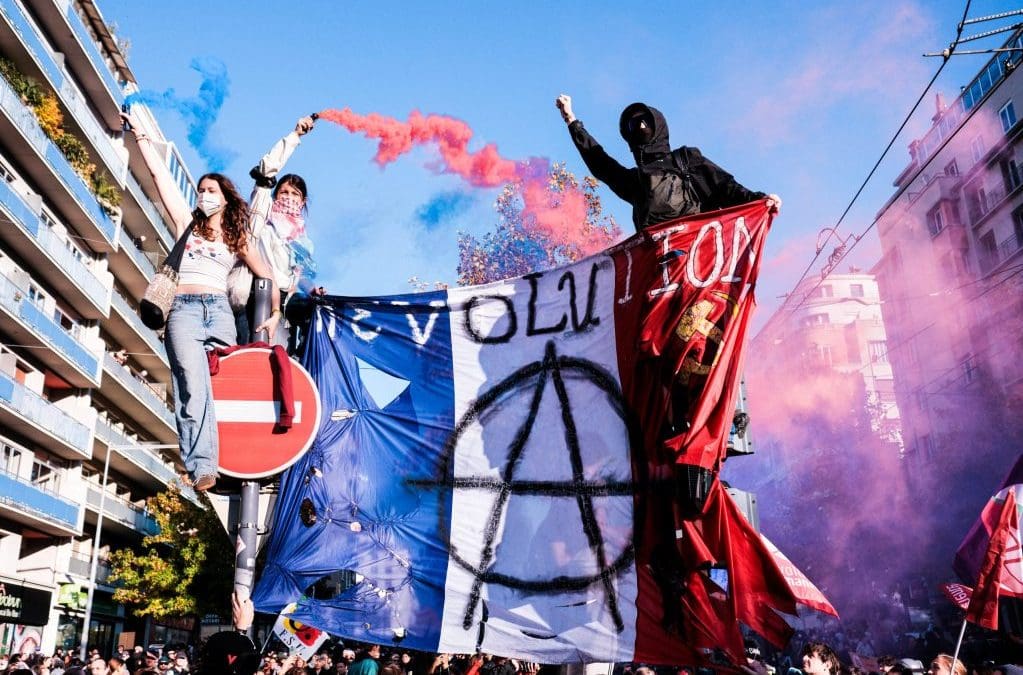
On November 5, 2026, workers, trade unions, and members of the Yellow Vest movement took to the streets across France in a mass nationwide strike, joining the student uprising that has gripped the country and captured the attention of the world, with demonstrations, riots, and barricades spreading throughout towns and cities.The movement began weeks earlier, when students started blockading schools across France, protesting deteriorating conditions in the education system amid a deepening cost-of-living crisis. As demonstrations spread, they faced severe police repression, including horrific injuries caused by so-called non-lethal riot control weapons. These injuries included students loosing eyes from rubber bullets and hands from stun-grenades. The police violence helped galvanize wider support, turning school protests into a broader national movement, which at times has teetered on the brink of a full-scale insurrection.For this on-the-ground report, Ross Domoney of The Real News Network and Shadowgraph Media was in France documenting the uprising, police repression, and the growing movement of workers and young people challenging the old-order.The uprising has now spread across Europe with riots and protests happening in multiple countries.
Related Links:
Ross Domoney’s Instagram and X
Shadowgraph Media Instagram
Tulyppe Instagram
Credits:
Produced by The Real News Network and Shadowgraph Media
Filmed, edited and directed by Ross Domoney
Local Producer Tulyppe
Special Thanks to Nadia Péridot
Transcript
The following is a rushed transcript and may contain errors. It will be updated.
Speaker 1:
An uprising has spread across France and the cops are cracking down hard. Teachers are trying to protect their students from batten charges. What began as school blockades over crumbling conditions has erupted into a nationwide revolt against the cost of living crisis and police violence. The
by Steve Benen | Nov 12, 2026 | Maddowblog, White House
To a degree unseen since Watergate, Democratic officials and candidates emphasized government corruption as a central issue in the midterm elections. It proved effective: Polls showed voters prioritizing corruption in ways that likely caught Republicans off guard.
There’s no great mystery as to why: Donald Trump’s corruption was so uniquely brazen that it helped the issue break through for the electorate. As writer Brian Beutler summarized a few weeks before Election Day, in reference to the president, “He isn’t just more corrupt than most politicians; corruption is his raison d’être. This isn’t just ‘government corruption’ to be reformed away. It’s a GOP crime spree.”
After Democrats were able to capitalize on the backlash to widespread corruption, the party took the obvious next step: It started making plans to use Congress’ oversight authority to investigate years’ worth of wrongdoing.
This, by all appearances, has sparked widespread panic in the White House and throughout the Republican administration — according to whistleblowers, at least one Cabinet agency has begun destroying documents, in the hopes of keeping them from lawmakers — and the president himself appears to be increasingly anxious about the potential for sunlight on activities he has long preferred to keep in the shadows.
To that end, Trump spent the first weekend after the midterms accusing the incoming Democratic majority of being “extortionists” who deserve “imprisonment,” and ordering his Justice Department to “look into” the Democrats’ “totally illegal” plans to conduct routine oversight.
The Republican used his social media platform on Thursday morning to publish a series of related missives, each of which was rooted in the idea that it’s his Democratic opponents who are actually corrupt.
by Kelly Hayes | Nov 12, 2026 | Authoritarianism, Congress, Criminalization, Deportations, Donald Trump, elections, Fascism, ICE, Interview, Podcast, silicon valley
The midterms delivered a stunning rebuke of Trump and the MAGA movement, but what will it take to turn electoral victories into lasting change? In this episode of “Movement Memos,” host Kelly Hayes talks with anti-authoritarian strategist Scot Nakagawa about the opportunities and dangers of this political moment, the enduring power of tech oligarchs, and how movements can build the solidarity and…
Source