by Medea Benjamin | Dec 17, 2025 | Article, Drones, Opinion, Politics and Movements: International, Politics and Movements: US, Reprint
This story originally appeared in Common Dreams on Dec. 16, 2025. It is shared here under a Creative Commons (CC BY-NC-ND 3.0) license.
In May 2013, as President Barack Obama delivered a major foreign-policy speech in Washington, I managed to slip inside. As he was winding up, I stood and interrupted, condemning his use of lethal drone strikes in Yemen, Pakistan, and Somalia.
“How can you, a constitutional lawyer, authorize the extrajudicial killing of people—including a 16-year-old American boy in Yemen, Abdulrahman al-Awlaki—without charge, without trial, without even an explanation?”
As security dragged me out, Obama responded, “The voice of that woman is worth paying attention to.” Perhaps my questions touched a chord in his conscience, but the drone attacks did not stop.
Just before that incident, I had returned from Yemen, where a small delegation of us met with Abdulrahman’s grandfather, Nasser al-Awlaki—a dignified man with a PhD from an American university, someone who genuinely believed in the values this country claims to represent. He looked at us, grief etched into his face, and asked, “How can a nation that speaks of law and justice kill an American child without apology, without even a justification?”
Under Obama, drone strikes killed thousands of people. Entire communities lived under the constant terror of buzzing drones—never knowing whether a flash in the sky meant death for them, their children, or the neighbors who ran to help.
We heard these horrors firsthand in 2012, when CODEPINK traveled to Pakistan to meet with victims’ families. A tribal leader from Waziristan described attending a peaceful jirga—a gathering of elders—when a US missile obliterated the meeting. Dozens were instantly killed. As survivors rushed to help the wounded, a second missile struck.
Forty-two people died, including elders
by Zeeshan Aleem | Dec 17, 2025 | Opinion
President Donald Trump signed an executive order on Tuesday designating the opioid fentanyl a “weapon of mass destruction” and describing drug flows into the country as “a direct military threat to the United States of America.” The preposterous order seems intended to expand the grounds on which the U.S. can wage war in the Western hemisphere and beyond.
Trump’s executive order mischaracterizes illicit fentanyl as something “closer to a chemical weapon than a narcotic” that “threatens our national security and fuels lawlessness in our hemisphere and at our borders.” It calls on the Department of Defense, the Department of Homeland Security and the Department of Justice to collectively guard against “the potential for fentanyl to be weaponized for concentrated, large-scale terror attacks by organized adversaries.”
Trump has attempted to appropriate the ideas and language of former President George W. Bush’s “war on terror” toward new ends.
Trump’s description of fentanyl as a chemical weapon is untenable. Fentanyl is a synthetic opioid (which is a lot more potent than heroin and morphine). Though it is abused illicitly as a street drug, classifying it as a weapon — to say nothing of a “weapon of mass destruction” — makes no sense if only because it also is used in the U.S. for legitimate medical reasons. Nobody disputes that fentanyl’s tremendous potency makes it extremely dangerous outside of a supervised medical context, but a drug that can be deadly isn’t necessarily a weapon.
Trump’s executive order rests on the assumption that drug cartels are terrorist organizations that see the U.S. as their adversary. But terrorist organizations have political and ideological goals. By contrast, cartels are profit-seeking entities,
by Jarvis DeBerry | Dec 17, 2025 | Opinion, Politics
On the first day of the first Black History Month of his first term, Donald Trump announced: “Frederick Douglass is an example of somebody who’s done an amazing job and is being recognized more and more, I notice.” Whatever confusion the president’s tenses suggested over when America’s most eloquent abolitionist lived, Douglass, dead for 122 years then and almost 131 years now, is due all the posthumous recognition he gets. But when a group tapped by Congress suggested minting a Douglass quarter as part of next year’s semiquincentennial, the administration of the man who thinks Douglass has been amazing said “no,” The New York Times reported this week.
The Citizens Coinage Advisory Committee suggested a series of coins, according to the Times, that would tell a story of America that doesn’t stop at the Declaration of Independence or the Revolutionary War but would also include abolition, women’s suffrage and the Civil Rights Movement. But this second Trump administration, dedicated to the proposition that any comprehensive history of the U.S. amounts to godless DEI, has resisted minting coins celebrating the pluribus in our unum — even as it plans a coin celebrating Trump.
“Frederick Douglass is an example of somebody who’s done an amazing job and is being recognized more and more, I notice.”President Donald Trump on Feb. 1, 2017
In October, the U.S. Treasury shared proposed images for a $1 commemorative coin featuring an image of Trump on both sides. “Heads” showed the president’s profile and “tails” showed Trump with his fist raised, an American flag behind him and the words “FIGHT FIGHT FIGHT” along the circumference. The administration appears to have since toned
by Ja'han Jones | Dec 17, 2025 | Opinion
Happy Tuesday! Here’s your Tuesday Tech Drop, a roundup of the top stories at the intersection of technology and politics from the past week.
Ford flip-flips on EVs
Ford’s electric vehicle plans appear to have fallen victim to President Donald Trump’s self-destructive economy. The company announced Monday that it is planning to take a nearly $20 billion hit as it pivots away from battery-powered vehicles, a move the company’s CEO attributed in part to Trump’s anti-EV agenda.
As Reuters reported:
The outlook for electrics dimmed significantly this year as U.S. President Donald Trump’s policies yanked federal support for EVs and eased tailpipe-emissions rules, which could encourage carmakers to sell more gas-powered cars.
U.S. sales of electric vehicles fell about 40% in November, following the September 30 expiration of a $7,500 consumer tax credit, which had been in place for more than 15 years to stoke demand. The Trump administration also included in the massive tax and spending bill that passed in July a freeze on fines that automakers pay for violating fuel-economy regulations.
Trump’s economic agenda has been devastating for carmakers and consumers alike. His tariffs have raised production costs for auto manufacturers, and consumers have begun seeing those price hikes as well. Meanwhile, the administration’s infatuation with gas-guzzling vehicles is causing one of America’s biggest automakers into a costly pivot.
Read more at Reuters.
Online protections for children
A House subcommittee advanced more than a dozen bills that their authors say are designed to protect children from abuse and other manipulation online. But there’s bipartisan concern that the bills either don’t go far enough or prohibit states from taking effective measures on their own.
Read more at Tech Policy Press.
Agencies
by Ja'han Jones | Dec 17, 2025 | Opinion
A criminal investigation appears to have helped kill a Jared Kushner-backed plan to build a Trump-branded hotel in Belgrade, Serbia.
As The Wall Street Journal reports, the president’s son-in-law’s investment firm decided to kill the project after four Serbian government officials, including a Cabinet minister, were indicted in connection with their push for its approval. The plans had faced widespread backlash in Serbia, particularly after the country’s Parliament voted last month to strip historic site protections from the buildings where the hotel was to be located.
Democrats in Congress have raised concerns for years about Kushner’s business dealings with foreign governments and wealthy elites abroad, which have continued as he has conducted diplomatic negotiations on behalf of the Trump administration this year.
Per the Journal:
Jared Kushner pulled out of a planned Trump-branded development in Belgrade after the project sparked protests and the indictment of a senior Serbian politician.
On Monday, a special prosecutor indicted a cabinet minister and three other officials over the project, a planned trio of towers in a central Belgrade site once bombed by NATO.
‘Because meaningful projects should unite rather than divide, and out of respect for the people of Serbia and the City of Belgrade, we are withdrawing our application and stepping aside at this time,’ a spokesman for Kushner’s private-equity firm, Affinity Partners, said hours later.
For the time being, it looks like Belgrade’s historic sites won’t be demolished to build what would effectively be a shrine to the Trump family. But I wouldn’t bet on this quieting Democrats’ concerns about the family’s international ventures: That the deal was under consideration at all arguably stands to inflame concerns about foreign governments’
by Michael A. Cohen | Dec 17, 2025 | Opinion
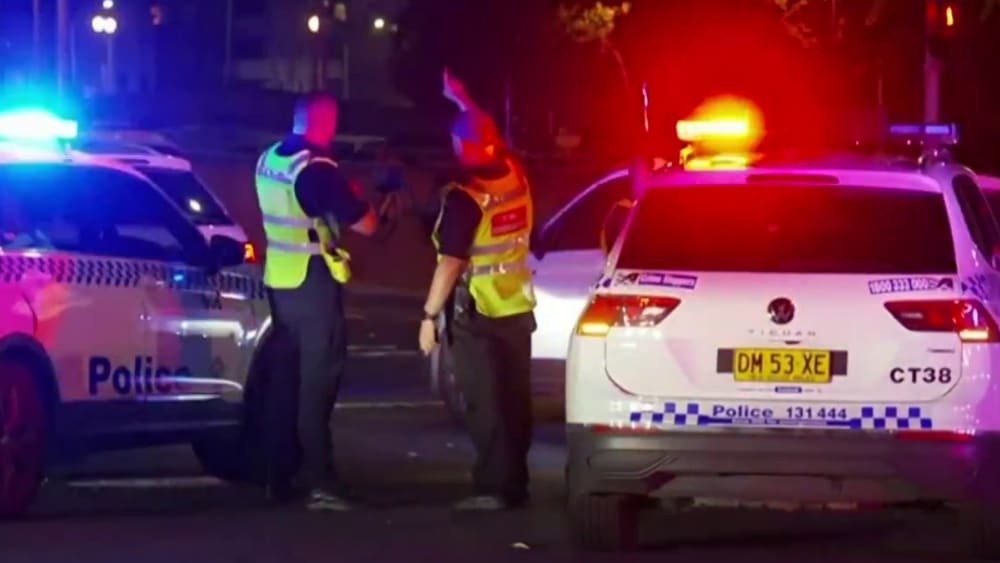
On Sunday, hundreds of Australian Jews gathered, as Jews have done for millennia, to light the Menorah on the first night of Hanukkah. At the same time, two armed men engaged in another historic custom: targeting Jews because they are Jews. Fifteen people were killed in the massacre at Bondi Beach, including a 10-year-old girl and an 87-year-old Holocaust survivor.
For Australia’s small but vibrant Jewish communities, this weekend’s tragedy was horrifying but, on some level, hardly surprising. Since the massacre of more than 1,000 Israelis on Oct. 7, 2023, antisemitic incidents in Australia have increased fivefold. Indeed, only two days after the worst mass murder of Jews since the Holocaust, a demonstration outside the world-famous Sydney Opera House led to chants of “F— the Jews.”
Since then, the litany of antisemitic incidents in the land Down Under will be all too familiar to Diaspora Jewish communities around the world.
For Australia’s small but vibrant Jewish communities, this weekend’s tragedy was horrifying but hardly surprising.
A synagogue was burned to the ground. Kosher restaurants were vandalized. Protests were launched at Jewish restaurants. A Jewish educational institution was spray-painted with antisemitic epithets, and swastikas showed up on the walls of local synagogues. That this unending cycle of intimidation, threats and provocation would eventually lead to violence should be a surprise to no one.
Indeed, why in the two years since the worst massacre of Jews since the Holocaust are Jewish communities in New York City, Manchester, London, Toronto, Los Angeles and Amsterdam under siege?
First, for more than two years, many anti-Israel activists have preached a message of “globalize the intifada” or “intifada revolution” and “from the