by Zeeshan Aleem | Dec 23, 2025 | Opinion
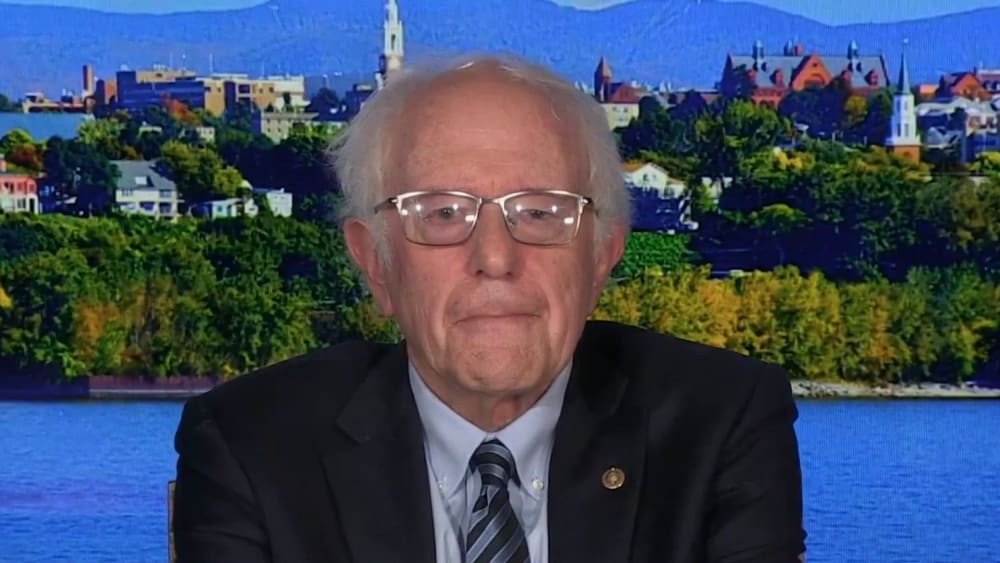
One of the most influential progressives in Congress is gearing up to pitch her fellow Democrats on embracing “Medicare for All” as a health care goal. It’s a badly needed policy that never should have vanished from Democrats’ radar.
Politico reported on Thursday that Rep. Pramila Jayapal, D-Wash., a former chair of the Congressional Progressive Caucus, “plans to present polling to her House Democratic colleagues next month as she argues for the electoral merits of Medicare for All — even in battleground districts the party must win to flip the House next fall.”
Medicare for All is single-payer health insurance — a system under which the administration of health care remains private but insurance is run and paid for by the federal government, replacing all private coverage or most private coverage, depending on the plan. In the 2020 Democratic presidential primaries, many major progressive candidates either supported Medicare for All as their chief proposal for health insurance or referred to it as a North Star —a goal to move toward with incremental plans like a government-run “public option.” But after Joe Biden won the nomination, the policy lost momentum — and he never tried to make good on his advocacy for a public option.
Jayapal’s survey is not the only one finding majority support for Medicare for All more recently.
Jayapal’s poll, which was paid for by her leadership political action committee and conducted by GQR Research, surveyed 1,000 likely 2026 voters from Nov. 5 to 13 and oversampled voters in battleground House seats. The survey found that 54% of voters nationally and 56% in battleground districts support Medicare for All, Politico reported. The poll
by Ja'han Jones | Dec 23, 2025 | Opinion
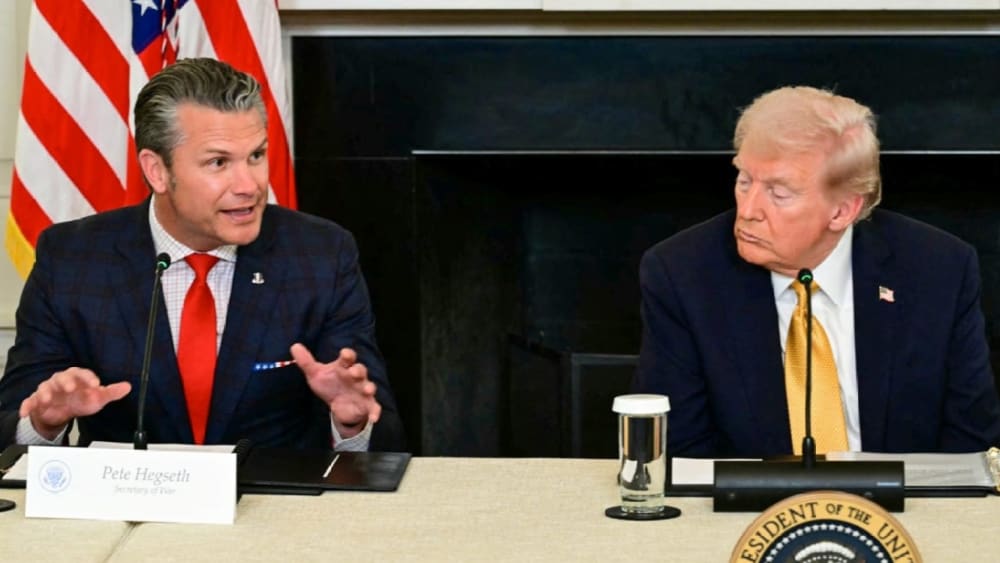
The Trump administration and its allies opened up a new frontier in their racist assault on diversity this week, as Trump’s handpicked workplace discrimination enforcer issued an all-points bulletin calling on white men to file suits over diversity policies.
Andrea Lucas, head of the Equal Employment Opportunity Commission, released a video Wednesday calling for white men who claim they’ve been hurt by diversity policies to file claims to potentially “recover money under federal civil rights laws.”
In an article published one day later, Lucas was quoted telling Reuters that her intent as EEOC chair is to “shift to a conservative view of civil rights,” and she vowed to go after companies with diversity policies next year. And as we’ve seen from the current regime leading the Justice Department’s civil rights division, a “conservative view” of civil rights in Trump’s second term often translates to bogus claims of anti-white oppression and to an outright assault on equality.
Lucas’ announcement comes as conservatives – including JD Vance and Donald Trump Jr. — were ramping up their baseless cries that white men are being victimized by dastardly DEI policies.
To be clear, the conservatives making such claims haven’t provided any proof to support their fantasy that diversity policies discriminate against white men. To the contrary, there’s ample evidence that white men have benefited from such policies, and furthermore, that Trump’s war on DEI stands to hurt them, too.
There’s certainly great irony to cries coming from the MAGA movement about the supposedly forgotten white man. The Trump administration features men like Darren Beattie and Paul Ingrassia, who has essentially maintained that white men must be in charge for
by Zeeshan Aleem | Dec 18, 2025 | Opinion
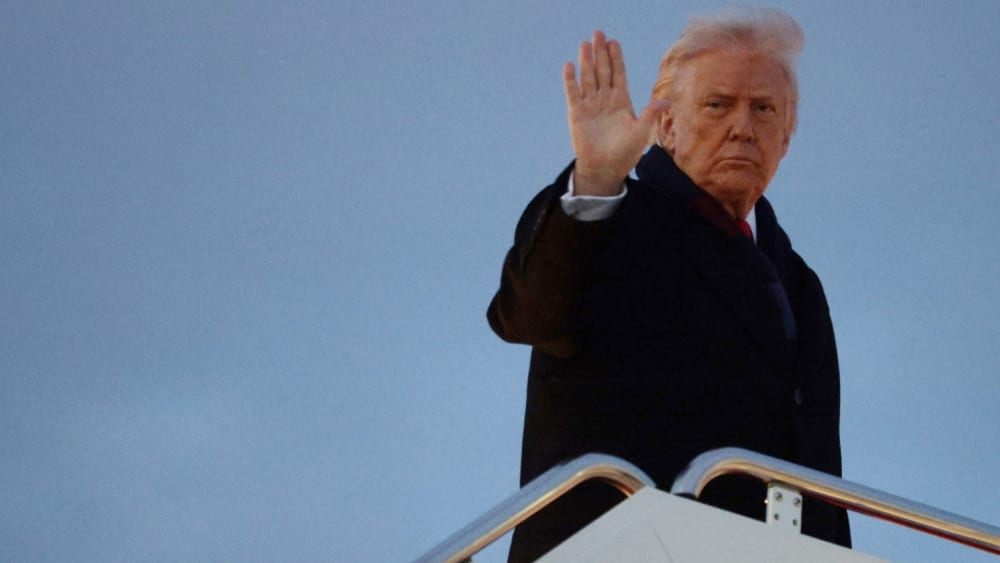
President Donald Trump escalated his effort to force regime change in Venezuela on Tuesday by announcing a blockade of all “sanctioned oil tankers” coming in and out of the country.
On Truth Social, Trump boasted about the military assets he’s moved into the Caribbean — “Venezuela is completely surrounded by the largest Armada ever assembled in the History of South America” — and promised the pressure campaign would continue until “they return to the United States of America all of the Oil, Land, and other Assets that they previously stole from us.” On Wednesday, Trump doubled down, telling reporters, “We had a lot of oil there. As you know, they threw our companies out. And we want it back.”
Trump didn’t specify exactly what he meant, but he’s probably referring to Venezuela’s nationalization of its oil sector in the 1970s through the 2000s. As The New York Times explains:
[T]he Venezuelan government forced Western firms decades ago to become minority partners in joint ventures with the state-owned oil company, Petróleos de Venezuela, S.A., or PDVSA.
American companies were a major presence in the industry until the 1970s. That decade, Venezuelan leaders put the industry under state control, creating PDVSA, in a popular action that was a hallmark of the country’s democratic and nationalist movements. Hugo Chávez, the socialist leader, enshrined that in the Constitution after he came to power in 1999.
Venezuela’s decision to nationalize its oil sector meant it took over private assets belonging to multinational corporations based in the U.S. (and elsewhere), but it hardly stole oil — the oil belongs to Venezuela. “Venezuela’s natural resources never belonged to the United States,”
by Ja'han Jones | Dec 18, 2025 | Opinion
The Trump administration’s disturbing proposal to expand social media reviews for prospective immigrants is sending tremors through the travel industry, with a trade group warning about the policy’s destructive potential.
The administration hasn’t hidden its intent to censor views that counter President Donald Trump’s. And last week, U.S. Customs and Border Protection announced that people from 42 countries could soon have to submit five years’ worth of social media history to obtain a visa waiver to travel to the U.S.
When asked about the policy last week, Trump dismissed the possibility that it could hurt the economically important tourism industry. But on Monday, the U.S. Travel Association rebutted the president, with a joint statement making clear that its 1,000-plus members don’t support the proposal:
We are deeply concerned by the recent announcement by U.S. Customs and Border Protection that it may seek social media history from Visa Waiver Program travelers to the United States. And without more detail from CBP, there are legitimate questions from travelers about what information they might need to provide, and from security experts as to whether this policy would meaningfully increase America’s security. One thing that isn’t in question: this policy could have a chilling effect on travel to the United States.
The statement added that international travelers “come here to do deals with American businesses, buy American products and experience the beauty of our great nation,” and warned that if the policy is implemented, “millions of travelers could take their business and the billions of dollars they spend elsewhere.”Americans have a clear choice as to whom they should believe here. On one hand, there’s Trump, a multitime failed
by Jessica Levinson | Dec 18, 2025 | Opinion, Politics
President Donald Trump issued an executive order last week announcing a federal policy in favor of minimal artificial intelligence regulation. The executive order, called “Ensuring a National Policy Framework for Artificial Intelligence,” targets “onerous” state laws that the administration views as forcing “ideological bias” into AI models or undermining “truth outputs.”
The primary goal is to allow AI to develop without significant limits.
By its own terms, the primary goal of the executive order is to squash or seriously decrease any state regulation of AI and to allow AI to develop, largely without significant limits. Some states have passed AI restrictions to address concerns related to privacy, misinformation and bias, but the Trump administration, which says AI development must proceed with minimal regulatory friction to ensure American dominance of the sector, has described what those states are doing as problematic. States are not going quietly; instead, they’re already pushing back against the Trump administration. Florida Republican Gov. Ron DeSantis said on Monday that regardless of Trump’s executive order, Florida will move forward with its plan to regulate AI, in part to create safeguards for children.
Policy issues aside, the executive order faces serious legal headwinds and is unlikely to withstand court challenges because, once again, Trump grossly overestimates his power.
Play
Trump admin ‘doesn’t have a strategy’ on AI: Ed Elson
December 12, 2025 / 07:18
The Trump administration is once again trying to achieve its goals by waving the magic wand of an executive order as if it will turn existing AI regulations into fairy dust. But an EO is the wrong tool for that. The Trump administration needs to do instead what it has thus far refused
by Hayes Brown | Dec 17, 2025 | Opinion, White House
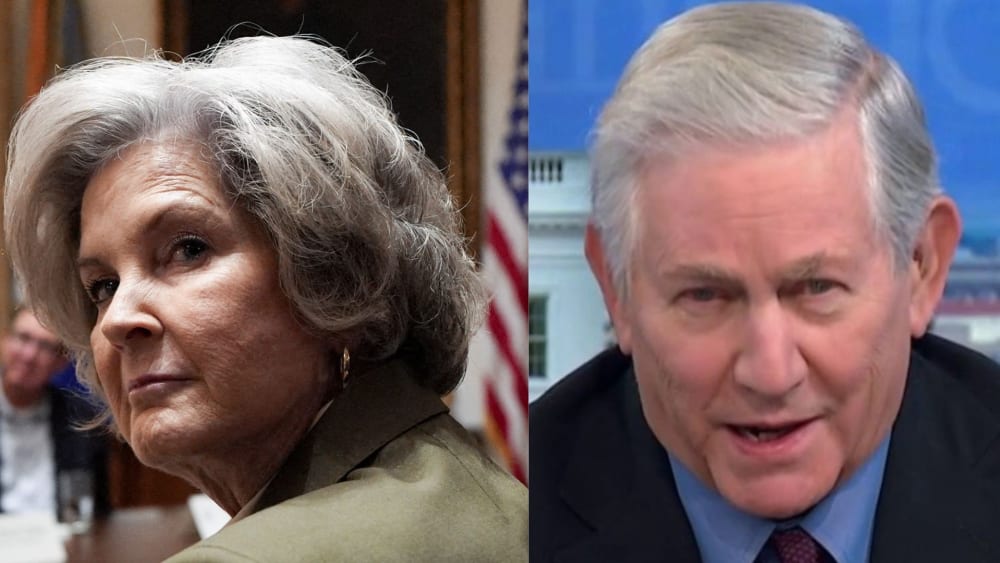
White House chief of staff Susie Wiles broke the mold when she signed onto the hugely influential job. The first woman to hold the role, she’s also skillfully avoided making headlines during the first year of President Donald Trump’s second term. But that all changed with a pair of bombshell articles published Tuesday from Vanity Fair that shoved the reticent backstage player directly into the spotlight.
It’s true that Wiles has tamped down on the conniving and backbiting that characterized Trump’s first turn in the White House. She may even outlast the longest of the four(ish) chiefs that held the job during those years. But based on what she revealed over the course of her 11 on-the-record interviews with author Chris Whipple, her job survival depends on being exactly the enabler-in-chief that Trump has needed at his side.
Wiles herself disagrees with that moniker, but by her own admission, she hasn’t had any major confrontations with the president over weighty topics such as constitutional rights or a policy’s cost in human lives. (After the Vanity Fair articles were published, she denounced them in a statement as “a disingenuously framed hit piece on me and the finest president, White House staff and Cabinet in history.”)
She instead says the difficult conversations she’s had with Trump in her current role are “over little things, not big.” Wiles prefers to see herself as someone judicious in her pushback. “So no, I’m not an enabler,” she told Whipple. “I’m also not a b—-. I try to be thoughtful about what I even engage in. I guess time will tell whether I’ve been effective.”
It’s a responsibility that Wiles