

US provides $300 million in earthquake recovery money to Venezuela while sitting on $8 billion in stolen oil wealth
This story originally appeared in Common Dreams on July 06, 2026. It is shared here under a Creative Commons (CC BY-NC-ND 3.0) license.
The Trump administration has seized at least $8 billion worth of Venezuela’s oil wealth since it overthrew President Nicolás Maduro in January, according to the New York Times.
Now, as Venezuela struggles to cope with a catastrophic pair of earthquakes late last month that killed at least 3,300 people and left tens of thousands more injured and homeless, and 41,000-50,000 people are reported missing, the US is providing just $300 million in humanitarian aid, a small fraction of the money it purloined.
The Associated Press reported on Monday that international rescue teams have begun to pull out as hopes of finding missing loved ones alive dwindle each day after the disaster.
🇻🇪 Update: The death toll has risen to 3,342, with 16,740 people injured, the country’s Communication and Information Ministry said Sunday. https://t.co/HQfKAMomRZ— Drop Site (@DropSiteNews) July 6, 2026
Shortly after deposing Maduro, US President Donald Trump declared that the US “took over Venezuela… and the oil is flowing.”
Economist Francisco Rodriguez has found that during the first quarter of 2026, after Trump overthrew Maduro and the US began expropriating Venezuelan oil, the country experienced the lowest rate of economic growth since 2021, even as oil exports rose.
As Roxanna Vigil, a former senior sanctions policy adviser at the US Treasury Department’s Office of Foreign Assets Control, explained in an article for the Council on Foreign Relations last month, “almost 100 million barrels of oil worth an estimated $8 billion have flowed through a process marked by no transparency and minimal oversight.”
“While the Trump administration has repeatedly framed this control as benefiting both countries, it has not publicly disclosed how much Venezuelan oil it
Lesson from the Iran War #42,765: Making enemies makes us poorer
This article originally appeared on Dean Baker’s Patreon. It is reprinted here with permission.
Our Secretary of Defense (or War) Pete Hegseth seems to be having a really great time killing people in Iran, but his live action video games come at a big cost, not just in lives, but in budget dollars. To be clear, the main reason to be opposed to this pointless war is its impact on the people of Iran and elsewhere in the region. But it also has a huge economic cost that is seriously underappreciated.
The short-term cost is the shortage of oil, natural gas, fertilizers, and other items that would ordinarily travel through the Straits of Hormuz. This shortage has already sent prices of many items soaring. The impact is not just on the goods themselves, but there is a large secondary impact due to higher shipping costs, and if fertilizer supplies are not resumed soon, higher food prices, due to lower crop yields. This is a big hit to people in wealthy countries, but it is life-threatening to people living on the edge in Sub-Saharan Africa and South Asia.
But in addition to the short-term cost, there is also a longer-term cost insofar as we are making new enemies and therefore will have higher bills for military spending long into the future. We already got the first taste of this as the Trump administration floated the idea of a $200 billion special appropriation to cover the cost of the war.
The Military is Really Big Bucks
There is remarkably little appreciation of how much money is at stake with wars and the military. This is because the media
Cuba runs out of oil amidst suffocating US blockade
This article was originally published by Truthout on May 15, 2026. It is shared here under a Creative Commons (CC BY-NC-ND 4.0) license.
Cuba’s government has announced that it has run out of oil.
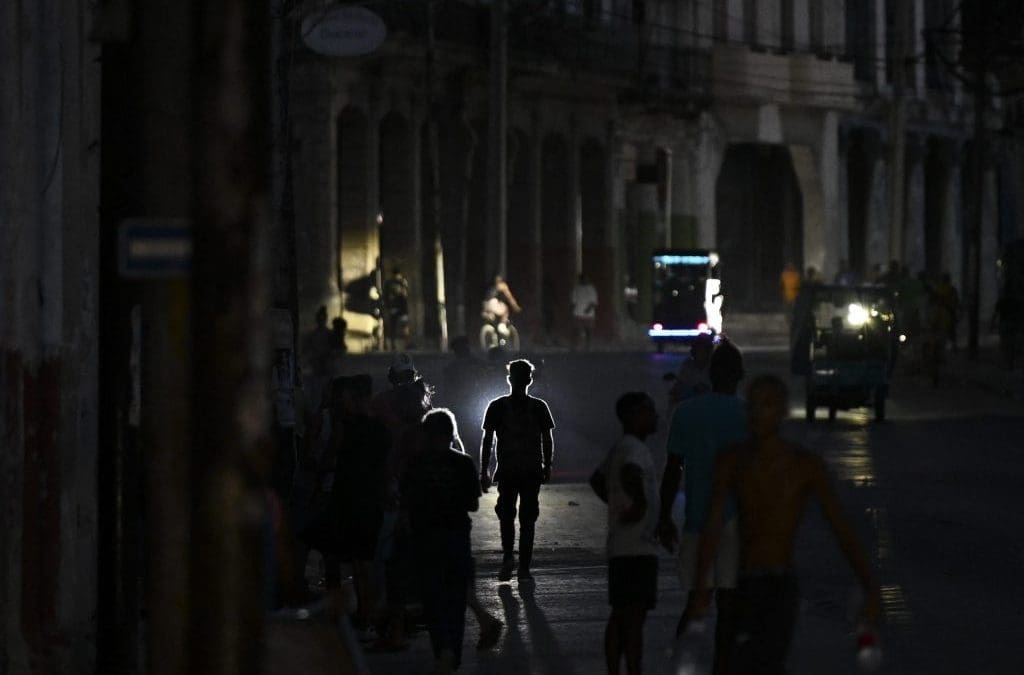
On Wednesday night, Cuba’s energy minister Vicente de La O Levy said that the country has completely run out of diesel and fuel oil, and that the national grid is in a “critical” state. He further described how in the capital city of Havana, “the blackouts today exceed 20 or 22 hours.”
“The situation is very tense, it’s becoming hotter,” he added, referring to the start of summer that brings a need for more energy.
At the start of January, Trump halted Venezuelan oil exports to Cuba, following the U.S.’s kidnapping of Venezuelan President Nicolás Maduro and de facto takeover of Venezuela’s oil industry. Later that month, Trump imposed a total oil blockade on Cuba, imposing tariffs on countries that supply oil to the country, pressuring Mexico to stop its oil shipments to Cuba, and seizing oil shipments traveling to the island country.
At the end of March, a Russian tanker arrived in Cuba carrying an estimated 730,000 barrels of crude oil, breaking the U.S. blockade and temporarily easing the crisis. The crude was refined in April and provided relief for a few weeks. But this fuel has run out, Cuban officials explained. This was the sole shipment of fuel allowed to enter Cuba in more than four months.
.Cuba began suffering from power cuts in 2019, after the first Trump administration imposed “maximum-pressure sanctions.” But since January, these have become more frequent and severe, at times lasting several days.
Trump’s blockade has decimated Cuba’s universal health care system, causing deaths and
Cuba Runs Out of Oil Amidst Suffocating US Blockade
Cuba’s government has announced that it has run out of oil. On Wednesday night, Cuba’s energy minister Vicente de La O Levy said that the country has completely run out of diesel and fuel oil, and that the national grid is in a “critical” state. He further described how in the capital city of Havana, “the blackouts today exceed 20 or 22 hours.” “The situation is very tense…
Source
‘These are the mistakes a dying empire makes’
This story originally appeared in In These Times on May 4, 2026.
It’s been more than two months since President Donald Trump dropped the first bombs in his illegal war with Iran, and U.S. consumers are increasingly footing the bill.
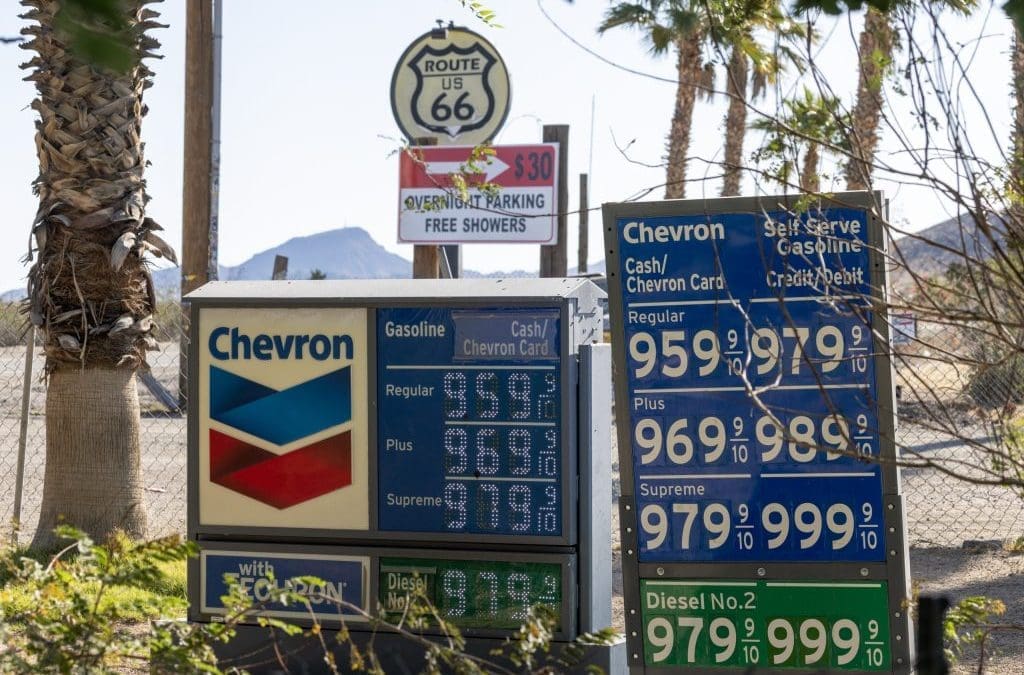
With traffic through the Strait of Hormuz remaining a tiny fraction of what it was before Trump began this latest regime-change campaign, oil prices reached a four-year high of more than $125 per barrel last week. Over the course of the same week, average gas prices surged more than 30 cents to reach $4.45 per gallon, roughly $1.50 higher than the pre-war average. With no sign of reversing course, economists continue to warn of recession.
In late April, Norwegian professor Glenn Dieson sat down with Richard Wolff, one of the world’s most prominent Marxist economists, to discuss how these impacts to the global economy will shape Trump’s war plans (or lack thereof), and why the last two months have signaled the “decline of the American empire.”
Glenn DiesenWelcome back. We are joined today by Professor Richard Wolff to discuss “Economic Fury,” the new arm of the U.S. war against Iran.
Richard WolffGlad to be here, Glenn.
Diesen[Treasury Secretary] Scott Bessent has now complemented [“Operation Epic Fury”] with “Economic Fury,” the sanctions policies against Iran. It’s been a bit confusing, because first there’s a sanction on all Iranian oil, then they open up the Iranian oil to help stabilize the markets. Then there’s a blockade on Iranian ports. How do you assess this new effort to strangle Iran?WolffWell, we have stopped following the kind of herky-jerky, on-again off-again statements, because they are so often inconsistent one with the other. Either you are going to take the steps that make oil supply more plentiful and drive down the price, or