by C.J. Polychroniou | Jun 27, 2026 | Albania, Europe, Interview, Jared Kushner, Protests
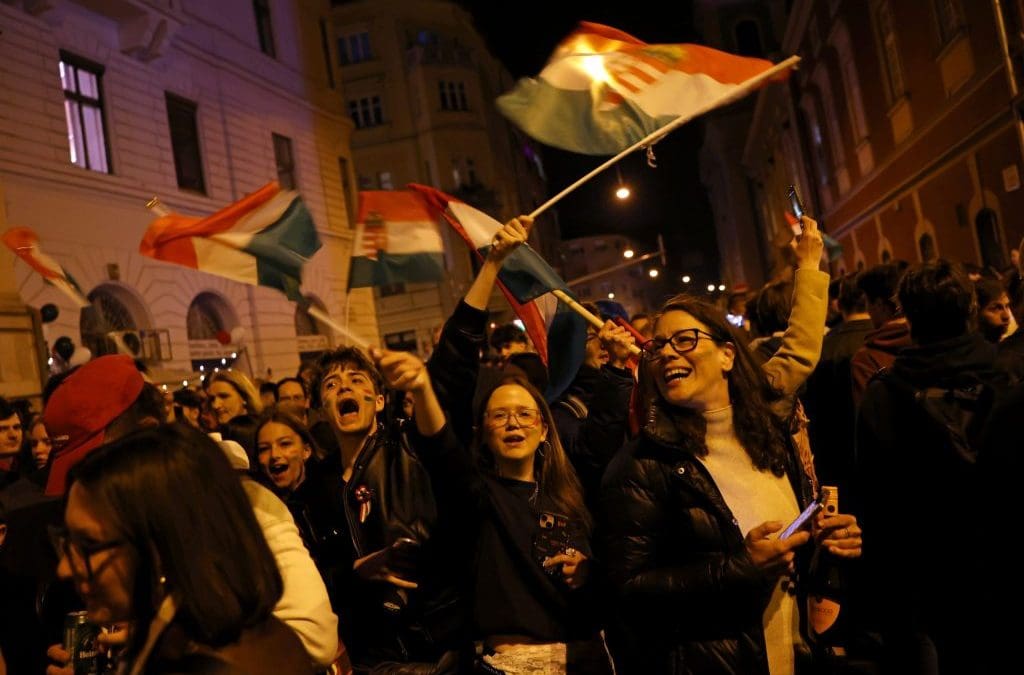
Albania, a country in the southwestern region of the Balkan peninsula, is witnessing one of the biggest waves of anti-government protests since the final end of socialism in 1992. The protests began in late May in opposition to the construction of a multibillion-dollar luxury resort backed by Jared Kushner, Donald Trump’s son-in-law, in the protected delta area of Vjosa-Narta, but they have now…
Source
by Shireen Akram-Boshar | Jun 24, 2026 | Climate Change, Climate Crisis, Europe, Heat Wave, News, World Health Organization
A record-breaking heat wave has enveloped much of Europe over the past week, with temperatures reaching as high as 113 degrees Fahrenheit in southern Spain. Scientists say this is the new reality of climate change. France, Italy, Spain, and the U.K. have all issued high-level “red” heat alerts, with more than half of France under red alerts. Tuesday’s temperature topped 112 degrees…
Source

by Richard D. Wolff | Jun 1, 2026 | Article, Europe, Politics and Movements: International, Politics and Movements: US, Reprint, Russia
This story originally appeared in Professor Richard Wolff’s Substack on May 21, 2026. It is shared here with permission.
By the end of World War 2 in Europe, that continent’s extremely violent self-destruction had killed tens of millions and wrecked many economies. Its politically dominant employer classes had driven their national governments to a clash that had produced those results. By 1945 the war’s outcome had proved far worse than many in those classes had imagined or wanted before the war. Europeans had struggled after 1917/1918 to overcome their self-destruction in World War 1. In the short span between the end of the First and the beginning of the Second World War, Europe destabilized itself via its reparations program, Germany’s staggering inflation, and then global capitalism’s worst ever collapse in 1929. The consequences of those destabilizations ramified across Europe and undermined the League of Nations effort to prevent a second world war.
In 1945, for most Europeans, the greatest urgency attached to recovery from the war. For Europe’s employing classes, more urgent still were defenses against certain immediate threats. Russia’s army had been crucial to defeating the Nazis and to forging Russia’s post-war alliances with Eastern Europe. The mass of the USSR’s military forces, potentially supplemented by those of its new Eastern European allies, struck western Europe’s employer classes as existential threats. After 1945, western Europe’s employer classes smoothly and quickly refocused their hatred from a dead Hitler to the living Stalin and to their nations’ communist parties allied to Stalin.
Western Europe’s employer classes were threatened domestically by communist and socialist political parties whose militants had often led underground anti-fascist or anti-Nazi
by Stephen Zunes | May 6, 2026 | Cold War, Donald Trump, Europe, Iran, Iran nuclear agreement, Iran Nuclear Deal, Iran nuclear program, iran war, Iraq War, Jared Kushner, JCPOA, negotiations, Op-Ed, Sanctions, Steve Witkoff, Strait of Hormuz, Trump Administration, uranium enrichment, Vietnam War, War, war in Iran
U.S. efforts to force an end to the stalemate in the Strait of Hormuz by attempting to escort a few U.S.-flagged ships through the Iranian closure will not only fail to relieve the worsening global fuel crisis and disruption of supply chains, it risks a resumption of full-scale war. The Trump administration has rejected Iran’s suggestion for negotiating an end to the blockade followed by a…
Source