by Chris Walker | Jul 10, 2026 | Climate Change, Climate Crisis, Europe, Global Warming, heat, Heatwaves, News
A new report on climate in Europe found that last month — which saw a series of heat waves — was the hottest June in the western portion of the continent on record. What’s more, the findings from the Copernicus Climate Change Service (C3S), which partnered with the European Centre for Medium-Range Weather Forecasts to produce the report, noted that last month was also the second-hottest…
Source

by Ray levy uyeda | Jul 8, 2026 | AI, Article, Climate Change, Climate Crisis, Economy and Inequality, Politics and Movements: US, Reprint
This story originally appeared in Prism on June 29, 2026.
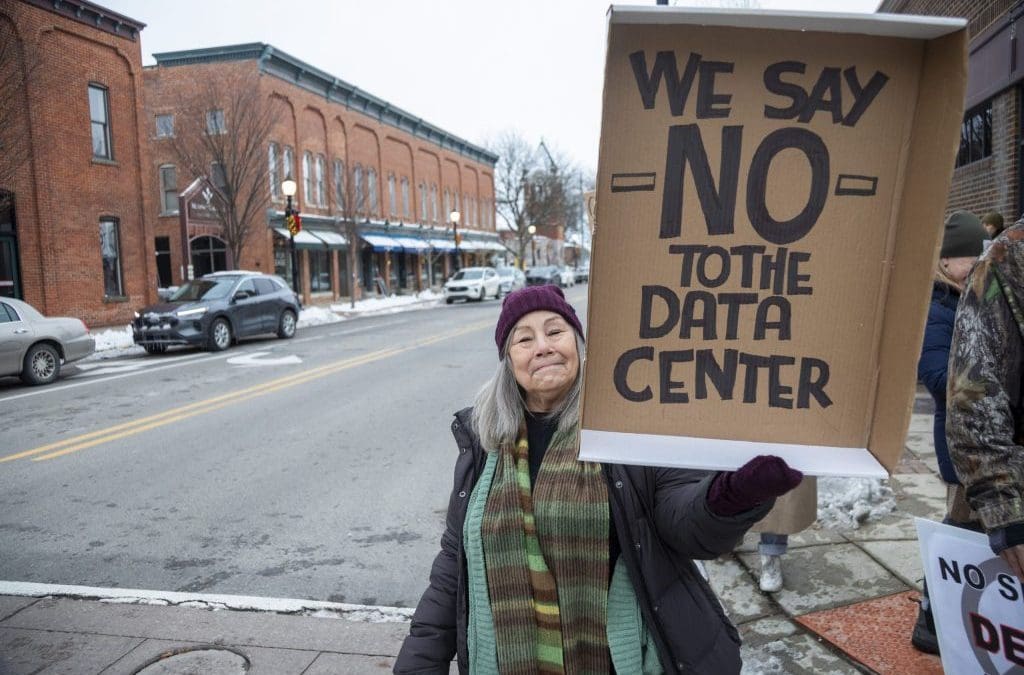
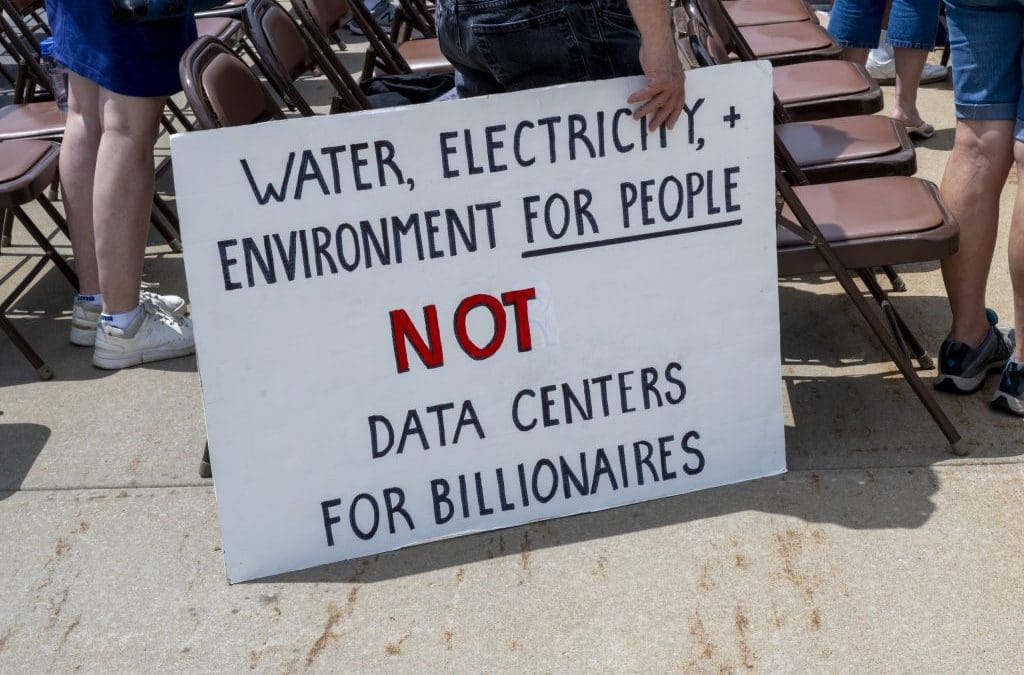
Across the country, politicians are starting to heed the public’s concerns about data centers.
Almost 75% of Americans across the political spectrum oppose constructing data centers near their homes, according to a recent Gallup poll. A majority—63%—are concerned by federal regulatory agencies’ practice of approving projects without first evaluating environmental and public health concerns.
These numbers not only paint a stark picture of the massive backlash to the rapid and rapacious buildout of data processing facilities (some of which consume enough energy to power a midsize city), but they’re also an indicator that the public feels very differently than the corporations pushing for their construction. The country has never been more divided, but on data centers, residents agree: It’s time to pump the brakes.
Communities that are already forced to contend with the consequences of data centers warn of their near-constant noise pollution, voracious consumption of water, and discharge of pollutants into local ecosystems. However, it’s not just environmental concerns that undergird the community-led protests against data center development. Many are also concerned about how data centers come to fruition—often through violations of democratic processes in the form of shadowy backroom deals and nondisclosure agreements. There’s also the continued rise in utility rates at a time when nearly half (49%) of American households don’t make enough money to cover expenses. Americans contend with issues of drought, fossil fuel dependence, and habitat loss. Generational farmland is being gobbled up to prop up acres of data warehouses. The list goes on.
Three years after OpenAI’s artificial intelligence (AI) tool Chat GPT forever changed the world’s orientation to computing, governments are responding
by Joseph Winters | Jul 6, 2026 | Banks, Climate Crisis, Coal, Fossil Fuels, Net Zero, News Analysis, Oil and Gas Industry, plastics
For the past two years, more than a dozen major banks have been not only reneging on their climate commitments, they’ve been actively making the crisis worse. In 2024 and 2025, during the leadup to President Donald Trump’s second inauguration, all six of the nation’s largest banks abandoned the Net-Zero Banking Alliance, a voluntary climate coalition, precipitating the Alliance’s complete…
Source
by Jessica Corbett | Jul 4, 2026 | alberta, Big Oil, Canada, Climate Crisis, Mark Carney, News, Pipelines, Tar Sands
On the heels of young Canadians suing over Prime Minister Mark Carney’s climate “failure” and people across the country mobilizing to urge the government to “stop fast-tracking destruction,” the Liberal leader on Thursday made a pair of fossil fuel-related announcements that sparked fresh anger. Carney and Alberta Premier Danielle Smith of the United Conservative Party announced that the…
Source
by Shireen Akram-Boshar | Jul 2, 2026 | AI, Article, Climate, Climate Crisis, Economy and Inequality, Politics and Movements: US, Reprint
This article was originally published by Truthout on July 01, 2026. It is shared here under a Creative Commons (CC BY-NC-ND 4.0) license.
A heat wave is spreading across the U.S. this week that will affect over 250 million people from the Midwest to the East Coast.
Last week, a heat dome covered much of Europe, causing over 1,300 excess deaths. This week, a new heat dome is bringing record-shattering heat to two thirds of the U.S. population, affecting areas that normally do not see such high temperatures.
The heat wave is expected to worsen as the week continues. Heat indexes – or how hot the temperature feels to the body, worsened by high humidity – are expected to reach between 100 and 110 degrees over large parts of the country. On Tuesday, the highest heat index value was 113.6 degrees Fahrenheit in southern Illinois.
Temperatures are expected to peak on Thursday and Friday, with cities like Newark, New Jersey, and Philadelphia, Pennsylvania, expecting actual temperatures of 105 degrees Fahrenheit starting Thursday. Parts of Virginia and North Carolina are expecting four to five consecutive days of 100-degree heat, from Wednesday, July 1 through the July 4 weekend.
Last week, a study from World Weather Attribution found that Europe’s heat wave would have been “virtually impossible” without climate change. Similar findings are expected for this U.S. heat wave.
In France alone, around 1,000 excess deaths were reported during the heat wave last week – hundreds more deaths per day compared with the daily death rate before the heat wave.
Fewer Americans are expected to die from heat in the U.S. than in Europe, largely because the U.S. has far more air conditioning, particularly in homes.
But
by Shireen Akram-Boshar | Jul 1, 2026 | AI, Climate Change, Climate Crisis, Data Center, data centers, Environment, Health, Heat Dome, Heat Wave, News
A heat wave is spreading across the U.S. this week that will affect over 250 million people from the Midwest to the East Coast. Last week, a heat dome covered much of Europe, causing over 1,300 excess deaths. This week, a new heat dome is bringing record-shattering heat to two thirds of the U.S. population, affecting areas that normally do not see such high temperatures.
Source