by Shireen Akram-Boshar | Jun 12, 2026 | federal, Gaza, News, Palestine, Student activisim, University of Michigan
Eight activists are facing federal charges for their Palestine solidarity activism in Michigan. On Wednesday morning, the FBI raided the homes of seven of the activists, and prosecutors unsealed an indictment against them and another activist following their arrest. The federal government is charging the activists – most of whom attended the University of Michigan in Ann Arbor – with…
Source

by Ines de la Cuetara | Jun 12, 2026 | News
Albanian Prime Minister Edi Rama on Friday pledged to move forward with negotiations on a controversial luxury coastal resort linked to Ivanka Trump and her husband, Jared Kushner, that is set for construction on the country’s only island.
The deal has sparked protests in Albania, with some calling for Rama’s resignation. But in an interview Friday with MS NOW, the prime minister waved off such criticism as “ideological bulls—.”
He told MS NOW that “negotiations” for the property were still ongoing and dismissed concerns of any conflict of interest, insisting talks began before President Donald Trump returned to the White House last year and that Kushner, Trump’s son-in-law, was not acting on behalf of the U.S. government.
“When Jared Kushner and Ivanka came here and we started work together, it was not clear if Trump would go to jail or go to the White House,” he said, appearing to refer to Donald Trump’s legal battles ahead of the 2024 election.
The project, backed by Kushner’s investment firm, Affinity Partners, will cost an estimated $1.6 billion. It involves the construction of dozens of hotels, apartments and villas along the country’s western coast. A larger development is planned for the Narta Lagoon area, home to a wildlife reserve, and a smaller resort is set to be built on the uninhabited island of Sazan, a former communist-era military base.
Ivanka Trump said she and her husband first came across the location by accident while on a trip in 2021. “We were on a friend’s boat, and we stopped for a swim,” she told podcaster David Senra last month. “Effectively, that’s how we found it. We swam to the
by Taya Graham and Stephen Janis | Jun 12, 2026 | Epstein, ICE, Inequality Watch, Politics and Movements: US, Trump, video
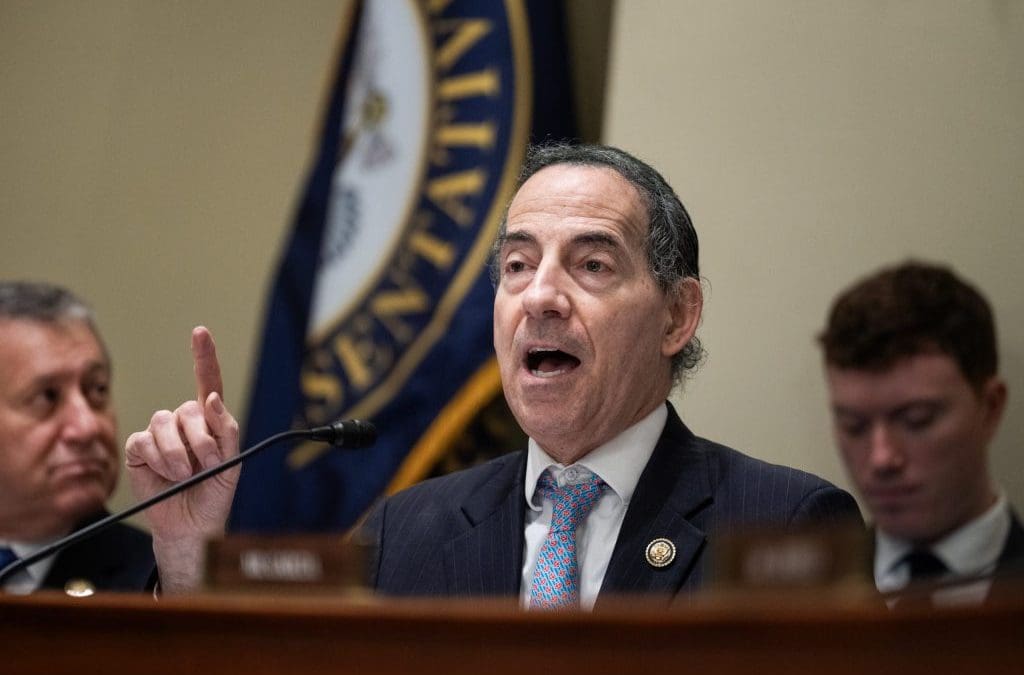
As part of our continuing coverage of Trump’s multi-pronged push to interfere with the upcoming midterm elections, we have been talking to a variety of voices on what they fear most from the administration. In this discussion with Democratic Congressman Jamie Raskin, he accuses the Trump administration of constructing a private police force within the federal government and seeking to fund an extrajudicial efforts to also interfere with free and fair elections.
Credits:
Production: Taya Graham/Stephen Janis
Post-Production: David Hebden
Transcript
The following is a rushed transcript and may contain errors. It will be updated as soon as possible.
Stephen Janis:
At the Real News Network, we have been covering the threat to midterm elections. Now, we came to the Networks Conference here in Philadelphia, Pennsylvania to speak to Congressman Jamie Raskin. When he told us about what he thinks might happen in November should scare all of us. You know, you introduced a Blanche Act, is that what it’s called? Yes. Yeah. So the Senate just passed the reconciliation bill and did nothing to it. So what are your thoughts at this moment that can be done to prevent it and what are your concerns about this slush fund that has been proposed by the Trump administration?
Rep. Jamie Raskin:
Well, the vast majority of Americans reject the idea that the Trump regime should be able to take 1.776 billion of taxpayer money and give it to convicted criminals, Proud Boys and Oath Keepers and other extremists who tried to storm or who stormed the Capitol and tried to overthrow a presidential election. It’s outrageous and it violates about a dozen different federal laws and constitutional provisions. So
by Derek Seidman | Jun 12, 2026 | AI, Corruption, Donald Trump, Donald Trump Jr, Eric Trump, Gulf States, Jared Kushner, News, Private Equity, TikTok, Trump Administration
“Kushner is now a billionaire,” proclaimed Forbes in September 2025 of Donald Trump’s son-in-law Jared Kushner. While just over half of Kushner’s wealth — $560 million — comes from his family’s real estate empire, what’s catapulted Kushner into billionaire status is the growth of his private equity firm, Affinity Partners, formed in 2021. “[T]hese days,” said Forbes, Kushner is “laser-focused…
Source
by Don Bell | Jun 12, 2026 | Opinion
Bipartisan agreement on the Hill is all too rare. But over the past week, unlikely allies on both sides of the aisle came together to oppose the appointment of Bill Pulte to lead our nation’s intelligence community as acting Director of National Intelligence and refused to vote for an extension of Section 702 of the Foreign Intelligence Surveillance Act, a controversial law which essentially allows the government to gather Americans’ private calls, texts and emails without a warrant.
The pushback was so intense that President Donald Trump announced a new nominee, U.S. attorney for the Southern District of New York Jay Clayton, who has publicly supported several recent controversial Trump statements and initiatives, to permanently lead the office. Notably, Trump moved up Pulte’s installation as well. He will still serve as acting DNI until a permanent leader is confirmed. While Pulte is a uniquely unqualified and dangerous pick, nominating a replacement doesn’t change the fact that extending FISA in its current form, amid the rapidly expanding use of domestic surveillance, threatens all of us.
While Pulte is a uniquely unqualified and dangerous pick, nominating a replacement doesn’t change the fact that extending FISA in its current form threatens all of us.
Pulte is a symptom — not the cause — of an already gargantuan and dangerously broken surveillance system. Regardless of who is leading the Office of the Director of National Intelligence, lawmakers who care about protecting Americans’ constitutional rights and security should continue to reject any extension of FISA that does not meaningfully protect our data from government misuse.
The debate around FISA is about protecting Americans’ private data from warrantless surveillance. Normally,