by Steve Benen | Jul 10, 2026 | Congress, Maddowblog, White House
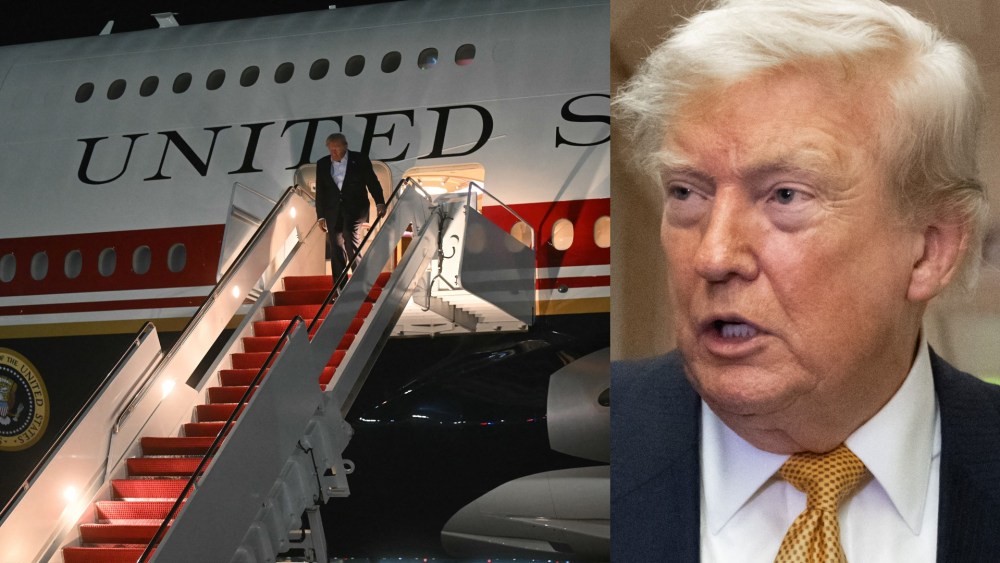
Two weeks ago, the Republican-led House easily passed a landmark housing bill on a 358-32 vote, following a similarly lopsided 85-5 vote in the GOP-led Senate. The stage was literally set for the most important bill signing ceremony of the year, right up until Donald Trump threw a tantrum, scrapped the plans and prioritized a voter suppression proposal that lacks the support to pass.
Shortly after the surprising developments, House Speaker Mike Johnson told reporters that he had spoken directly with the president and was confident that he would eventually sign the bill into law. “The president, when we go through the details of the bill, he’s going to understand that it’s a good product,” the Louisiana Republican said.
As is often the case, Trump made Johnson look foolish soon after. On Friday morning, the president published a 229-word screed to his social media platform that read, in part:
I will not sign the Housing Bill, which has been fully approved by Congress and sent to the White House, in PROTEST over the fact that the United States Senate is not capable of passing THE SAVE AMERICA ACT.
In the sentences that follow, Trump had nothing to say about the housing bill that is pending on his desk and instead made a series of hysterical claims about his anti-voting proposal.
It’s important to emphasize that he didn’t say he’d veto the housing bill, declaring only that he wouldn’t sign it. As a result, the legislation is set to automatically become law on Friday night at midnight, unless Trump changes direction again.
For proponents of the underlying policy, that’s good news. Indeed, the legislative package, formally named
by Jessica Huseman | Jul 10, 2026 | 2026 election, 2026 Elections, 2026 midterms, Donald Trump, Election Assistance Commission, elections, Help America Vote Act, midterms, News, Supreme Court, Voting, Voting Rights
President Donald Trump fired all three remaining members of the U.S. Election Assistance Commission on Thursday, abruptly disabling the only federal agency devoted solely to election administration at a moment when Trump has sought to reshape federal voting rules. The two Democratic commissioners, Thomas Hicks and Benjamin Hovland, were notified by email. “On behalf of President Donald J.
Source
by Steve Benen | Jul 10, 2026 | 2026 election, elections, Maddowblog, News, Politics
In the wake of the 2000 elections, there was one thing Democrats and Republicans could agree on: The entire election cycle was a mess that exposed structural and institutional flaws that required reforms.
It wasn’t easy, but Congress ultimately passed the Help America Vote Act (better known as HAVA) in 2002, which included a variety of constructive changes and created a new entity called the Election Assistance Commission.
In the 24 years that followed, the EAC wasn’t particularly controversial. The point of the commission, as its name implies, is to assist state and local election administrators with training, security grants, voluntary election management guidelines and detailed information on best practices, including specifications for testing and certifying election equipment.
There was no reason to gut the commission. Donald Trump did it anyway. MS NOW reported:
President Donald Trump fired the remaining members of the Election Assistance Commission on Thursday, a White House official confirmed to MS NOW.
The move effectively leaves the bipartisan agency without any commissioners and unable to carry out its official duties just months before the 2026 midterm elections.
For all of the Republicans’ overwrought rhetoric about “election security” and “election integrity,” the gutting of the EAC moves the nation in the opposite direction.
Until very recently, such a move wouldn’t have just been seen as a power grab, it also would have been recognized as legally dubious. Commission members are Senate-confirmed officials serving on an independent agency. The idea that a president could just send them an email and push them into unemployment was unrealistic.
But after Republican-appointed justices on the Supreme Court issued their ruling in Trump v. Slaughter early last week, the executive
by Sydney Reynolds | Jul 10, 2026 | News
NASHVILLE, Tenn. — Data center development has become a political flashpoint in local communities nationwide in recent months. But a proposal to build a sweeping data campus next to the Nashville Zoo — potentially putting a group of endangered clouded leopards at further risk — has expanded this local fight into a viral, bipartisan campaign against data centers that’s drawn in celebrities and hundreds of thousands online.
Over 200 locals waited for hours outside a Metropolitan Council meeting Tuesday night for their chance to speak out against a proposed data center, which would sit on a property abutting the Nashville Zoo. DC BLOX, an Atlanta-based data company, wants to purchase the site and build a $700 million, 50-megawatt campus that would eventually include multiple data center buildings, the largest of which would be 261,000 square feet, according to The New York Times. It would use enough electricity to power tens of thousands of homes, though DC BLOX has pledged to pay for any necessary grid improvements to protect locals footing the bill.
That size of campus would likely have its own power substation and generator yards, emitting lots of noise and light — in this case, just 300 feet away from a breeding facility for the endangered clouded leopard, the Nashville Zoo’s most famous inhabitant.
“I’m unaware of any other zoo in the country that’s experienced this,” Zoo CEO Rick Schwartz told MS NOW. “We do not want our animals to be the experiment to gather that research.”
View this post on Instagram
Schwartz said he is especially worried about the potential for low-level sound frequencies to travel from the center to the

by Nicholas Grossman | Jul 10, 2026 | Opinion, White House, World
The U.S. and Iran are shooting again, the second (and larger) flare up since they signed a Memorandum of Understanding in June.
The main point of contention is the Strait of Hormuz, a vital waterway for international trade that Iran blocked in response to the initial U.S.-Israel attack in February. The MOU reflects U.S. desperation to get ships flowing again, giving Iran economic benefits in exchange for Iran merely promising to “make arrangements … for the safe passage of commercial vessels,” without specifying what those arrangements are. Iran has consistently asserted it will control Hormuz and charge fees for passage, while the U.S., especially President Donald Trump, has been acting as if the strait is totally open and on a fast track back to prewar normal.
Except it clearly isn’t. More ships went through after the MOU, but even at peak it was fewer than half the daily prewar average. They avoided the middle of the strait, fearing mines, and Iran told them to travel by Iranian coastal waters and register with a new “Persian Gulf Strait Authority.” The U.S., for its part, encouraged ships to bypass Iran by hugging Oman’s coast on the opposite side. Iran shot at some ships near Oman to assert control, the U.S. shot at Iran to contest it, then back-and-forth retaliation followed.
Reaching a real peace agreement is even harder when the president keeps lying about the reality of the situation, and demanding that others do as well.
The fight could escalate or settle down again, but the underlying problem remains: a large gap between (1) the facts on the ground and the text of the MOU, and