by Mansa Musa | Jul 21, 2026 | Prison Industrial Complex, prison reform, Prisons and Policing, Rattling the Bars, video
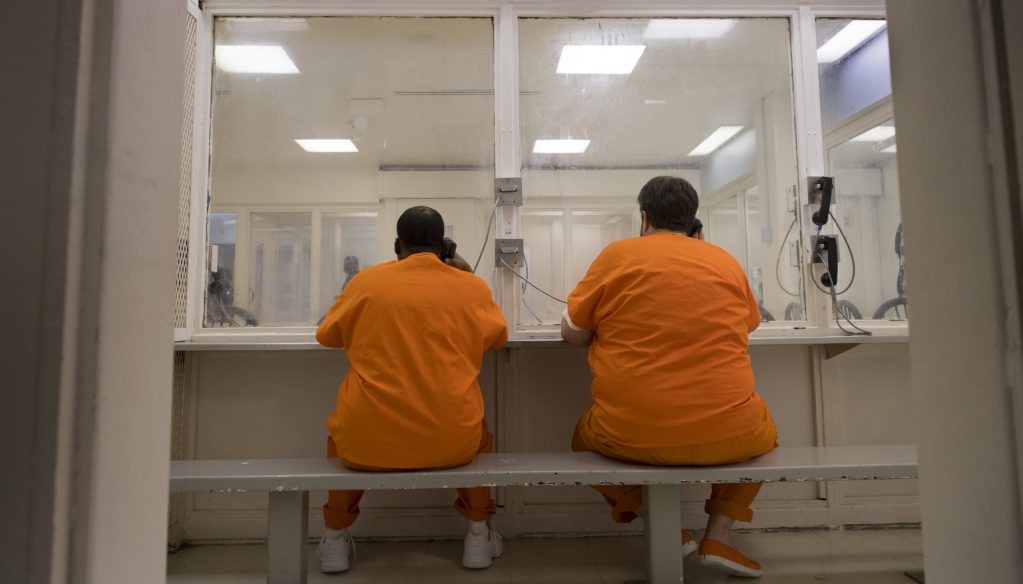
A groundbreaking new report reveals a direct link between prison phone call rates and prison safety: higher rates fuel more violence within prisons; lower rates and free phone calls dramatically reduce it. In this episode of Rattling the Bars, host and former political prisoner Mansa Musa speaks with Peter Mayer, director of research and data innovation for Worth Rises.
Additional links/info:
Worth Rises website, Facebook page, Bluesky page, X page, and Instagram
Peter Mayer & Bianca Tylek, Worth Rises (May 2026), “Critical Connections: The Power of Free Communication in Prisons and Jails”
Credits:
Producer / Videographer / Editor: Cameron Granadino
Transcript
The following is a rushed transcript and may contain errors. It will be updated.
Mansa Musa:
Welcome to this edition of Rattling the Bars. I’m your host, Mansa Musa. Prior to being released from prison, I served 48 years and days and months. When I first went in prison, we ain’t had no telephone system. So everything was letters. Then they put a telephone system in. And when they put the telephone system in, this created a whole new attitude in the prison population. People was able to get on the phones to talk to their families. They had organized a phone system where you can get designated time so you ain’t have to worry about staying in line. It was like something unusual. And when they first started talking about it, most of us were skeptic. Oh, they ain’t going to put no telephone. But now this is a major feature in every prison in the United States of America and county jails and detention centers as well.
Joining me today to talk about the groundbreaking new report
by Truthout | Jul 21, 2026 | Uncategorized
The Trump administration sought the phone records of New York Times journalists and their family members, ostensibly to gather evidence that could reveal who leaked information to the publication this month regarding a Qatari-gifted jet that is meant to become the next Air Force One. Press freedom advocates have called the move a “gross” overreach to stifle reporting on the Trump…
Source
by Steve Benen | Jul 21, 2026 | Maddowblog
Today’s installment of campaign-related news items from across the country.
* When South Carolina Gov. Henry McMaster last week appointed the late Sen. Lindsey Graham’s younger sister, Darline Graham, to fill her brother’s vacancy, it was widely assumed she’d serve as a temporary “caretaker” senator through the end of the year. Those assumptions were mistaken.
“I’ve made a decision,” she told Fox News’ Sean Hannity as the week got underway. “I’m in.”
Graham has already received President Donald Trump’s backing as she seeks a full six-year term, but she will apparently not run unopposed: Reps. Russell Fry and Ralph Norman have also launched campaigns for the seat. (Rep. Nancy Mace considered the race before bowing out.)
As for the unusual nominating process, a weeklong filing period is now underway, which will be followed by an Aug. 11 special primary. If no one wins a majority, there will be an Aug. 25 runoff.
* It’s primary day in Arizona, featuring a variety of interesting contests, including a Republican gubernatorial race that pits two incumbent members of Congress against each other: Reps. Andy Biggs and David Schweikert. The winner will take on incumbent Democratic Gov. Katie Hobbs in the fall.
* In Nebraska’s Senate race, Cindy Burbank, the Democratic nominee, filed the paperwork late last week to withdraw from the general election as part of an effort to boost independent candidate Dan Osborn.
* Republican officials across North Carolina are trying to move early voting sites off college campuses and reduce Sunday voting. There’s no great mystery as to why: As The New York Times reported, officials in both parties have called the moves “a blatant attempt to make
by Anita Hofschneider | Jul 21, 2026 | deep sea mining, Environment, Mining, News, Polynesia
The government of French Polynesia plans to challenge an American startup’s proposal to explore the waters just beyond its maritime borders for seabed mining. “We were approached, but we were not consulted,” Moetai Brotherson, the territory’s president, told Grist. “We are not remaining passive while industrial activities are proposed immediately next to ecosystems that French Polynesia has…
Source
by Hunter Woodall | Jul 21, 2026 | News
The leader of the Democratic National Committee this week stood by the organization’s strategy as new campaign finance reports show a massive financial disadvantage compared with its Republican rival.
DNC Chair Ken Martin published a lengthy defense amid a challenging cash situation that could carry wide-ranging impacts for the midterms and beyond. New disclosures show that at the end of June, the DNC had about $16.3 million in cash left in the bank along with more than $18 million in debt, compared with the Republican National Committee carrying more than $128 million in cash on hand and no debts.
A large disparity has existed for months but has grown, and could seriously hamper Democrats’ hopes of retaking the congressional majorities. In his post, Martin writes that the DNC “made a conscious decision to invest money in the work required to win in 2025, 2026 and beyond. We are converting the cash we raise into electoral assets: more people, earlier organizing, better technology, and stronger state parties.”
“That answer may be unsatisfying to people who believe the purpose of a political party is to accumulate the largest possible bank balance until the final days before an election. But a party is not a savings account. Its purpose is to build power,” Martin said in the post.
“We are replacing a boom-and-bust campaign model with permanent political infrastructure. We are not choosing between winning now and building for the future.”DNC Chair Ken Martin
Through the end of June, federal records show the RNC had spent close to $73 million this year compared with $59 million by the DNC.
“While the DNC opines in depressing blog posts, Republicans are