by Sydney Carruth | Oct 2, 2026 | News
A man was arrested Thursday and charged with stalking former Trump administration adviser Katie Miller, in a case that prompted disagreements among high-level FBI officials and led to the demotions of two senior agents assigned to it.
John Anthony Proia III, 41, was indicted by a federal grand jury in Boston on one count of cyberstalking a “former political advisor and prominent member of the Republican Party,” the Justice Department said in a press release. The unnamed victims cited in the release are Miller and her husband, White House deputy chief of staff Stephen Miller, a DOJ official granted anonymity to discuss sensitive matters told MS NOW.
Katie Miller, a conservative podcaster, received at least 40 “menacing” phone calls, text messages and voicemails from multiple phone numbers between Aug. 3 and Sept. 23, the DOJ said in its press release. The alleged harassment took place late at night and included several vulgar text messages sent to phone numbers associated with Katie Miller’s parents, decrying them for their daughter’s marriage to “evil” Stephen Miller, according to the DOJ.
“Did you raise her to be trash or did that just happen naturally?” read one text message allegedly sent to Katie Miller’s father.
In a post on X, Katie Miller thanked the DOJ and FBI for “keeping me and family safe,” adding that it was “good to see a Boston grand jury indict this man.”
Proia pleaded not guilty to the felony charge in an initial court appearance before a magistrate judge on Thursday.
“Today, the FBI’s Joint Terrorism Task Force arrested John Proia for allegedly engaging in a sustained campaign of harassment to frighten this victim and her
by Amy Goodman | Oct 2, 2026 | Capital Punishment, Christa Pike, Death Penalty, death sentence, Execution, Interview, Lethal Injection, Tennessee
Tennessee’s Governor Bill Lee has halted executions for the remainder of the year after a death row prisoner survived two lethal injections on Wednesday. According to her lawyers, Christa Pike was still breathing after she was strapped to a gurney and injected with two syringes of pentobarbital in a botched execution that spanned more than two hours. Prior to the scheduled execution…
Source

by Jill Filipovic | Oct 2, 2026 | Criminal Justice, culture, Opinion
A message shared in a groupchat in 2024 profoundly changed many lives: A student at Cornell University sent out a call to his fellow friends and fraternity brothers on a chat called “Chi Phi Actives” that there was “free p—-” available for the taking, according to a recently filed lawsuit.
Documentation of this message exchange is central to the case, which is being brought against seven men in the chat, their fraternity, Cornell University, the local district attorney’s office and the bar accused of serving the subject while underage at the time.
Because that so-called “free p—-” was attached to a human woman, referred to as Jane Doe in the lawsuit. Jane Doe alleged she was rendered passive by alcohol and drugs; effectively a receptacle for the impulses and a misplaced desire for male bonding amongst more than a half-dozen men who she alleged proceeded to have nonconsensual sex with her while she remained in a compromised state.
Social media did not, in fact, make us more social; instead, it put a screen between us and other human beings.
Later, the woman reported it to campus police; after viewing her signed statement, prosecutors at the Tompkins County District Attorney’s Office didn’t find grounds to bring criminal charges. The recent lawsuit alleged her initial report was not properly handled by campus police or the DA’s office (two men were expelled and the fraternity was suspended). Attorneys of some of the seven men named in the lawsuit have publicly denied allegations. Cornell on Thursday agreed to an independent investigation into the allegations. The Tompkins County DA said his office was unaware of some of the details
by Chris Walker | Oct 2, 2026 | 2026 Elections, AI, Artificial Intelligence, Deepfakes, Derrick Van Orden, News, Rebecca Cooke, Wisconsin
This week, Rebecca Cooke, the Democratic candidate for a House of Representatives race in western Wisconsin, sent a “cease and desist” order to her Republican opponent, Rep. Derrick Van Orden, due to his constant use of artificial intelligence (AI) generated “deepfakes” featuring her likeness. The ads depict Cooke in fictional situations, including a conversation with former President Joe…
Source
by Brad Reed | Oct 2, 2026 | Article, elections, midterms, Politics and Movements: US, Reprint, Voting Rights
This story originally appeared in Common Dreams on Oct. 02, 2026. It is shared here under a Creative Commons (CC BY-NC-ND 3.0) license.
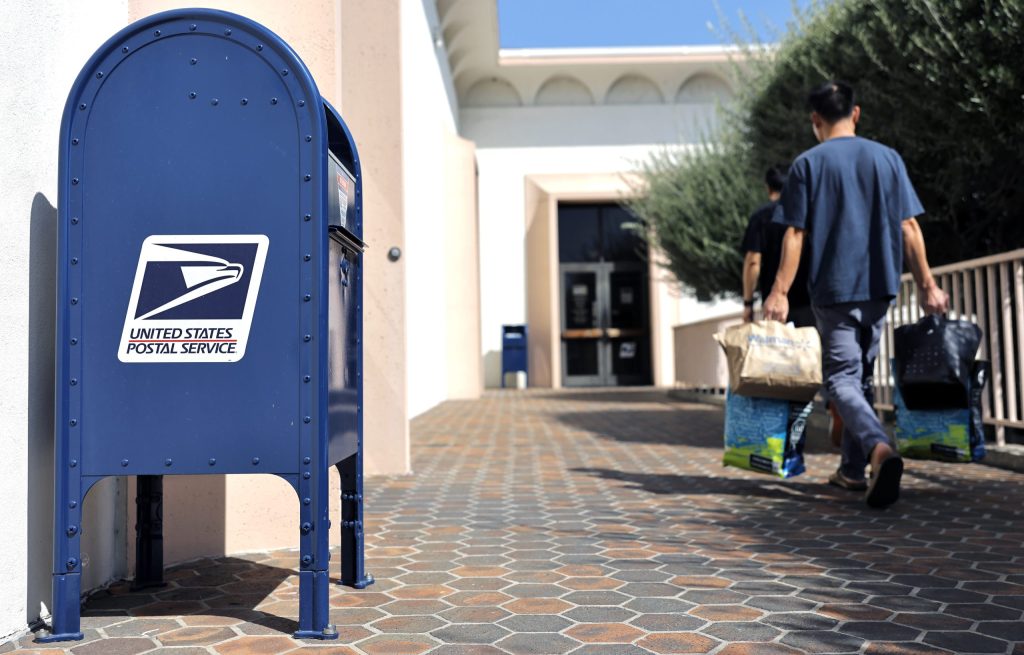
An analysis published Friday by Democracy Docket warned that “tens of thousands” of voters across the US face “risk of disenfranchisement” thanks to actions being taken by the United States Postal Service.
The analysis, written by veteran election reporter Jim Saksa, points to a new USPS policy known as Regional Transportation Optimization (RTO) that “will eliminate evening mail pickups from post offices more than 50 miles away from a regional processing facility, most of which are located in major urban areas.”
For people who live in these areas, ballots sent on Election Day will be postmarked and delivered at least a day later than in previous election years, thus making it ineligible to be included in final election tallies.
“In every state, a day’s delay in delivery means that if mail voters wait until the last day or two before the election to mail their ballot,” Saksa explained, “they could be disenfranchised.”
Saksa reported that this policy is currently active in “about 42.5% of all ZIP codes” in the continental US, and is scheduled to eventually take effect in around 70% of all ZIP codes. No additional ZIP codes are expected to be added between now and election day.
Saksa also said that voters concerned about their ballots not being counted should deliver them in person to their local post office, where they can ask an employee to postmark it.
President Donald Trump has tried for the last several months to use USPS to meddle with states’ mail-in voting systems.
In March, the president signed an executive