by MS NOW | Nov 6, 2026 | Answers with Andrew Weissmann, Criminal Justice
Each week, MS NOW legal analyst Andrew Weissmann, co-host of our “Main Justice” podcast, answers legal questions from our audience in our MS NOW Membership exclusive series, “Answers with Andrew Weissmann.”
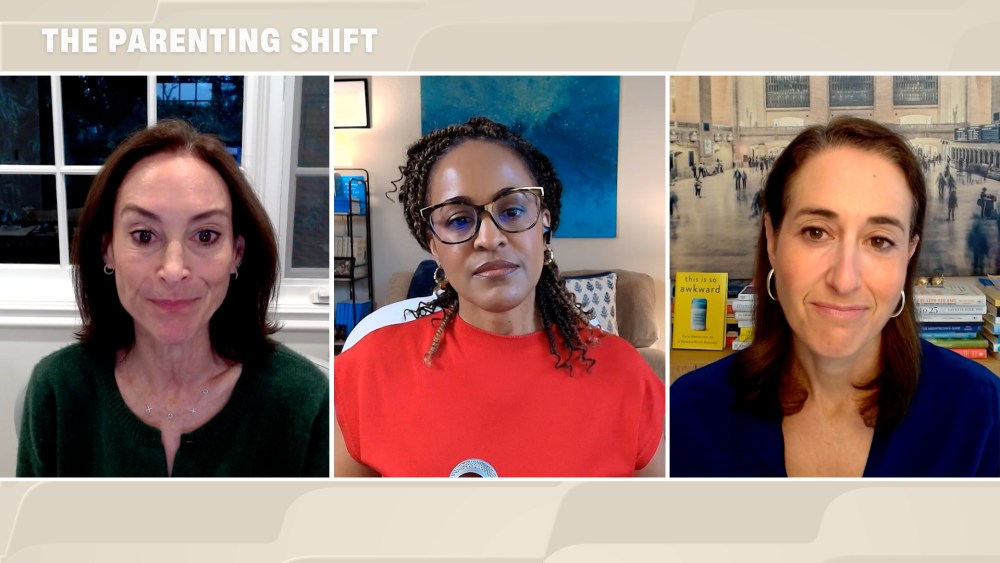
In the video above, Weissmann addresses a question from MS NOW Member Bec J., who asked: “If cabinet members are impeached and convicted, does that mean they cannot be pardoned?” Watch for Weissmann’s discussion of the challenges in impeachment proceedings and how removal from office differs from criminal charges.
Other questions from MS NOW Members that Weissmann addressed this week:
Why is it illegal to lie in commercials for products and services but legal to lie in campaign commercials and political speech? — Jo B.
If a pardon is given in return for a bribe, is the pardon still incontestable if the bribery is proven/prosecuted? — JMT
Are there any repercussions for the DOJ attorneys who lie in court or are unable to provide any evidence. It seems there are so many examples of this. How about the attorneys who supposedly provided notice to the court about the cutting down of the golf course trees at 4:55 p.m. on a Friday afternoon? — Amy P.
Can you compare and contrast your current MS NOW job with those you held while working in the government and serving in the Justice Department? — Scott in Seattle
Become an MS NOW Member to watch all of Weissmann’s answers, get the chance to submit your own questions and explore full episodes of all the MS NOW Membership exclusive series.
.related{display: none !important;}
The post Does impeaching a Cabinet member make them ineligible for a pardon? appeared first on MS NOW.
by Jordan Rubin | Nov 6, 2026 | Criminal Justice, Deadline: Legal Blog, Supreme Court, White House
Ahead of Donald Trump’s return to office in January 2025, a divided Supreme Court declined to halt his criminal sentencing in New York.
Over dissent from four of the court’s six GOP-appointed justices, the five-justice majority let the sentencing proceed for two main reasons: One was that Trump was only being sentenced to an unconditional discharge, which is basically a nonpenalty; the other was that “the alleged evidentiary violations at President-Elect Trump’s state-court trial can be addressed in the ordinary course on appeal.”
Nearly two years later, that “ordinary course” is still unfolding.
On Thursday one of the president’s personal lawyers, Robert Giuffra, was in a Manhattan courtroom to press Trump’s appeal in the so-called hush money case. Those “alleged evidentiary violations” were among the arguments presented to the appellate panel — that is, that some of the evidence used to convict Trump at his spring 2024 trial ran afoul of the presidential immunity ruling the Supreme Court announced that summer.
Trump was convicted of falsifying business records to cover up a hush money scheme in connection with the 2016 presidential race. Although covering up a hush money scheme is not an official act protected by presidential immunity, Trump’s lawyers have cited the immunity ruling’s related prohibition against using evidence of official acts to secure convictions for unofficial conduct. They have pointed to evidence from his first term in office: discussions with White House communications director Hope Hicks, statements on social media, discussion with the attorney general and testimony about White House operations.
Immunity is not the only issue in the appeal. Much of the discussion at Thursday’s hearing focused on Giuffra’s argument that
by Ken Dilanian | Oct 3, 2026 | Criminal Justice, News, White House
The hack of FBI computer systems exposed sensitive personal information about nearly every FBI employee, as well as thousands of local law-enforcement officials who worked on FBI task forces, six current and former FBI officials told MS NOW.
FBI officials and outside experts are calling the breach one of the worst counterintelligence disasters in modern history. They say it raises questions about whether negligence was a factor in allowing it to happen.
One FBI agent who works on cybersecurity matters chalked the breach up to “incompetence.”
“This was a vulnerability that supposedly they thought they patched, but managed to miss one of the ways to patch it,” the agent said in a text message, adding that the cause was “definitely incompetence.”
The sensitive employee information that was stolen “should never have been tied to the Internet, either. It belonged on our internal system and some dumbass moved it all” to an internet-facing system, the agent said.
The agent added that the FBI obtained chats in which the hackers expressed disbelief that such sensitive information was available to them so easily.
Google’s threat intelligence experts issued a public warning in June about the vulnerability the hackers exploited, and the FBI took steps to shore up its systems, two cyber security experts told MS NOW, speaking on the condition of anonymity to discuss a sensitive matter.
But the hackers found a way around the FBI patch, they said.
“It’s the fault of whoever in the FBI is responsible for our cyber security,” said the FBI cyber security agent who blamed the breach on “incompetence.” The agent added, “But also whoever pushed that information from our internal system to the Internet.”
An

by Jill Filipovic | Oct 2, 2026 | Criminal Justice, culture, Opinion
A message shared in a groupchat in 2024 profoundly changed many lives: A student at Cornell University sent out a call to his fellow friends and fraternity brothers on a chat called “Chi Phi Actives” that there was “free p—-” available for the taking, according to a recently filed lawsuit.
Documentation of this message exchange is central to the case, which is being brought against seven men in the chat, their fraternity, Cornell University, the local district attorney’s office and the bar accused of serving the subject while underage at the time.
Because that so-called “free p—-” was attached to a human woman, referred to as Jane Doe in the lawsuit. Jane Doe alleged she was rendered passive by alcohol and drugs; effectively a receptacle for the impulses and a misplaced desire for male bonding amongst more than a half-dozen men who she alleged proceeded to have nonconsensual sex with her while she remained in a compromised state.
Social media did not, in fact, make us more social; instead, it put a screen between us and other human beings.
Later, the woman reported it to campus police; after viewing her signed statement, prosecutors at the Tompkins County District Attorney’s Office didn’t find grounds to bring criminal charges. The recent lawsuit alleged her initial report was not properly handled by campus police or the DA’s office (two men were expelled and the fraternity was suspended). Attorneys of some of the seven men named in the lawsuit have publicly denied allegations. Cornell on Thursday agreed to an independent investigation into the allegations. The Tompkins County DA said his office was unaware of some of the details
by Austin Sarat | Oct 1, 2026 | Crime & Courts, Criminal Justice, Opinion
Shortly before Christa Pike was supposed to be put to death Wednesday morning, a federal appeals court granted her a temporary stay of execution. On Wednesday evening, a divided Supreme Court lifted it.
Justice Sonia Sotomayor and her two liberal colleagues criticized the high court’s intervention, saying it would allow “the State to execute Pike before litigation over her conviction has properly run its course in the lower courts.”
For a few hours, it had seemed possible that Pike might attain a less gruesome outcome than the one she had been slated for since 1996, when she was convicted of brutally murdering a classmate. The Supreme Court’s action means there will be no happy ending to Pike’s story. Still, it’s worth studying her case and the problems with how it has been handled to understand flaws in our legal system and its uneven application of capital punishment.
All too often, it is easier to stand up for someone whose guilt is in doubt or whose conviction was tainted by prejudice than for someone like Pike.
Many death-row cases that experience a last-minute intervention involve doubts about the guilt of the defendant or their mental fitness. Neither of these issues applies to Pike.
When she was 18, Pike joined the Knoxville, Tennessee, branch of a federal job training program. She started dating a 17-year-old named Tadary Shipp. At some point, Pike began to suspect that another person in the program, 19-year-old Colleen Slemmer, was interested in Shipp. According to The Tennessean, in January 1995, “Pike lured Slemmer to a wooded area near the University of Tennessee’s Agricultural Campus with the promise of marijuana. With the help
by Gene Weingarten | Aug 15, 2026 | Criminal Justice, culture, Opinion
At 1 p.m. Saturday, 17-month-old Daniel Coleman will be memorialized in Atlanta. As of Friday night, it was unclear whether his mother will arrive at the mortuary in handcuffs. After a fraught legal battle, she won permission to attend the service. Deja Coleman will arrive in a police car. She may or may not be handcuffed. The sheriff’s office will decide whether she can wear civilian clothes appropriate for a funeral or if she will be in a green polyester prison jumpsuit. Coleman has been incarcerated since July 29, the day she accidentally killed her son.
This unspeakable tragedy happens alarmingly often to parents from all walks of life — mothers and fathers of every race, rich and poor, absentminded and fanatically organized.
Last month, Coleman, 29, forgot to drop her youngest child, Daniel, off at daycare after she walked her other two children, ages 6 and 4, inside; she soon left Daniel in her car in the employee parking lot of the hospital where she worked as an assistant nurse, and he sweltered to death. Neither Coleman nor the police contest that narrative. By all accounts, what happened to Daniel was an accident occasioned by sleep deprivation and stress. Friends describe Coleman as a cheerful, upbeat person and a devoted mother. Her pastor, Jesse Hardy, said “she would run through a brick wall for those children.”
What makes this case unusual is that Coleman has been charged with second-degree murder. In Georgia, such a crime carries a mandatory minimum prison sentence of 10 years.
This unspeakable tragedy happens alarmingly often to parents from all walks of life — mothers and fathers