by Hayes Brown | Jul 14, 2026 | Opinion, White House
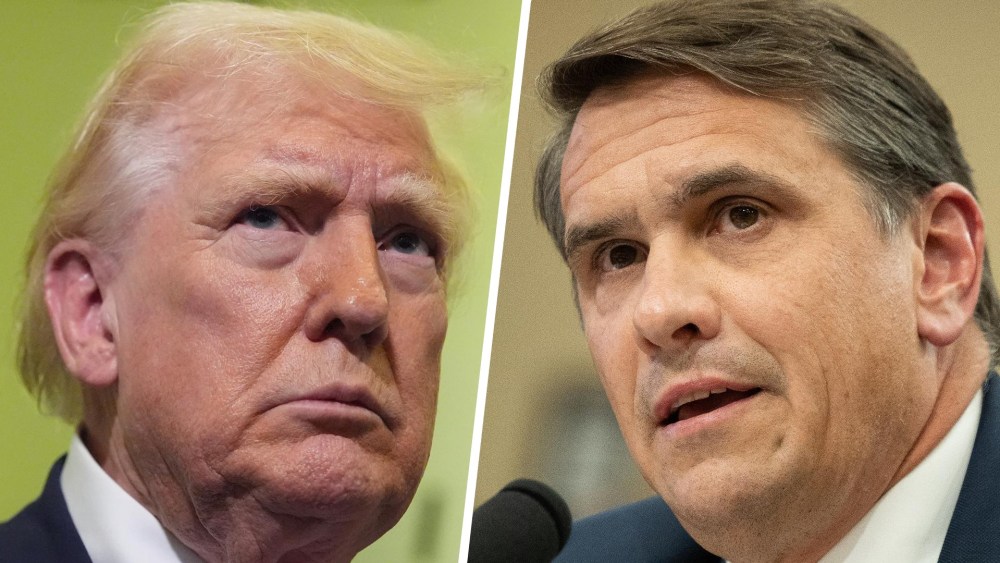
U.S. District Judge Kathleen Williams was skeptical. The case before her purported to be between the Internal Revenue Service and a group of private citizens harmed by a leak of their tax returns. The eye-popping $10 billion in relief they were seeking was wild on its own. But among the plaintiffs was President Donald Trump, who oversees both the IRS and the Justice Department lawyers who would be defending the government’s interests. Or rather they should be defending the government’s interests — because as Williams determined in a scathing ruling Monday, there was never any real conflict for her court to adjudicate.
Instead, as Williams noted in her 56-page order, Trump effectively controlled both sides of the lawsuit at all points, rendering it ineligible for relief from the court system.
The “settlement,” which authorized a $1.776 billion slush fund and granted amnesty to the president and his family from IRS audits, including any that may have already begun on tax returns for last year, was already the most likely outcome before a single brief had been filed from the defendants. In her total rejection of the case, Williams has rightly refused to allow America’s courts to be a fig leaf for Trump to enrich himself and his allies.
In her total rejection of the case, Williams has rightly refused to allow America’s courts to be a fig leaf for Trump to enrich himself and his allies.
For starters, the timing was all wrong. Trump and his fellow plaintiffs claim they were harmed when an IRS contractor stole and leaked their tax records to the press. The contractor was charged in 2023, starting a two-year clock
by Zeeshan Aleem | Jul 14, 2026 | Opinion, White House, World
After the U.S. military detained then-Venezuelan President Nicolas Maduro in January, Secretary of State Marco Rubio outlined a three-part plan for Venezuela: stabilization, recovery, and transition to democracy. But what the U.S. is doing to Venezuela counts as nothing but colonization.
An astonishing report by The New York Times, based on interviews with more than a dozen officials and people close to governments in Washington and Caracas, details the imperial overhaul of Venezuela’s government and economy after Trump’s ouster of Maduro. The U.S. isn’t just setting up an economically advantageous policy regime to access Venezuela’s oil, but is now directly controlling much of Venezuela’s state revenue. “The U.S. Treasury receives the revenue from most of Venezuela’s exports, then disburses it to Venezuela through the country’s banking system, a relationship akin to parents handing out allowances to children,” the Times reports. “Mr. Rubio and his team set the conditions on what that money can be spent on, and by whom.”
The U.S. is systematically stripping Venezuela’s government of its right to self-determination.arco
That’s just one of many remarkable new structures and rules that Rubio has installed to give him immense control over Venezuelan affairs. According to the Times, Rubio is administering the application of U.S. sanctions against Venezuela and determining who in the country can do business with the world without getting hit by penalties. He’s helping set up U.S. access to Venezuela’s oil resources, while boxing out European companies. He’s constantly issuing edicts by text message directly to Acting Venezuelan President Delcy Rodríguez, who has turned to him for sign-off on major political appointments, including the minister of defense. When Venezuela issued
by Steve Benen | Jul 13, 2026 | Maddowblog, White House
By now, Donald Trump has probably grown accustomed to legal setbacks in court, though his case against the IRS has started to backfire in ways the president didn’t see coming. The Associated Press reported:
A federal judge said Monday that President Donald Trump’s lawsuit against the IRS over his leaked tax returns was filed for an “improper purpose” as she referred attorneys for disciplinary actions.
The ruling from U.S. District Judge Kathleen Williams amounts to a stinging rebuke of the Republican president’s lawsuit, characterizing it as an exercise in self-dealing in which he sued an entity that is effectively under his control.
The basic details of Trump’s IRS lawsuit are likely familiar: During his first term, a contractor leaked his tax returns, and six years later, the president has filed suit against the tax agency, saying he’s entitled to $10 billion in taxpayer funds.
In May, he voluntarily withdrew his own litigation, and soon afterward, the administration unveiled his reward for having done so: a compensation fund worth $1.766 billion, which was quickly condemned by members of both parties as a “slush fund” that would be used to benefit the White House’s political allies.
That bipartisan pushback appears to have forced the president to back off his plans for the fund. And at that point, the case appeared to have run its course: Trump filed a rather preposterous $10 billion lawsuit against his own administration; he then abandoned that case before it could be fully adjudicated; and that was that.
Except, it wasn’t quite that simple, and one of the underlying legal problems persisted: The federal judge in the case, responding to a request filed by
by James Downie | Jul 12, 2026 | Economy, Opinion, White House
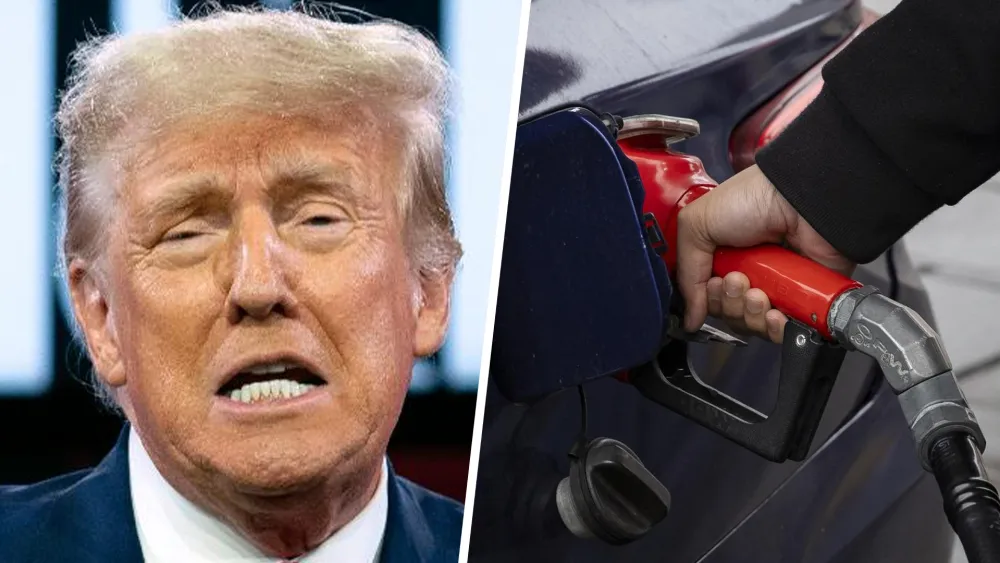
“FREEDOM FUEL HAS ARRIVED,” the White House’s X account announced this week. The post touted the first “Freedom Fuel Network” gas station, “lowering the price at the pump to $3.47 for our 47th President.” The White House’s announcement provided few details, leaving the reader — and the viewer of the accompanying video — the impression that the administration, whether through subsidy or takeover, was directly intervening to lower gas prices.
Freedom Fuel, however, is not stealth Marxism from a president fearmongering about “communist” Democrats. “A VERY smart Retailer, located throughout the Northeast, is stepping up,” Trump announced on social media before the July 4 weekend. “They are doing this because they love the U.S.A.” It is not clear who runs the Freedom Fuel Network, with 25 stations in Pennsylvania and southern New Jersey. The Delaware Department of State lists a filing for Freedom Fuel Network LLC from June 23, but no other information.
But whoever is behind Freedom Fuel, Trump’s praise is emblematic of his second year back in the White House: a half-hearted, poorly thought-out stunt.
The administration later clarified that its support is strictly promotional.
Though the White House post on X said, “President Trump is leading the charge to lower gas prices this summer,” the administration later clarified that its support is strictly promotional. “The administration is not involved in the company, nor has the administration given the company any funding. There is no other entity or person subsidizing the lower gasoline costs,” a White House spokesperson told CNN.
Trump is apparently hoping for copycats. For days, he has complained that gas prices are not as low as they were before he
by Zeeshan Aleem | Jul 11, 2026 | Congress, Opinion, White House
President Donald Trump loves to slap his name on things: hotels, merchandise, stimulus checks and even a cultural institution Congress named for a former president. But Trump pointedly refused to affix his name to a major housing bill that both houses of Congress recently passed with huge veto-proof margins. The bill became law Saturday without his signature.
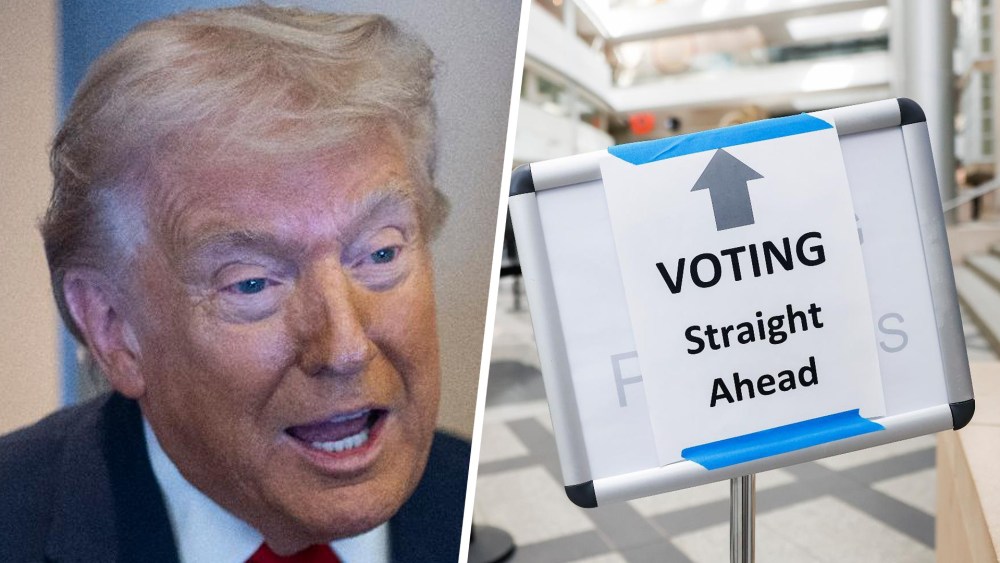
The president declined to sign it because he is still seething over another piece of legislation: his repressive anti-voting bill he calls the Save America Act. Senate Republicans (fortunately) failed to pass that bill, and Trump’s resulting political tantrum is so baffling and self-destructive it beggars belief.
The passage of the 21st Century ROAD to Housing Act marks an extraordinarily rare event in today’s Washington: Congress forming a huge bipartisan majority to achieve something genuinely good. The bill, which addresses the national housing shortage, was the product of a partnership between progressive firebrand Sens. Elizabeth Warren, D-Mass., and Tim Scott, R-S.C., who is a staunch Trump ally. The White House initially backed the bill.
Trump’s description of the housing bill as a “yawn” before refusing to sign it reveals how completely he’s lost the plot.
Robert Kuttner, co-editor of The American Prospect, a progressive policy publication, called the bill a “medley of good ideas.” Among other things, it would streamline environmental reviews (without scrapping standards), make the construction of certain kinds of housing units cheaper, offer economic incentives for local governments to support new construction and make it easier for some consumers to get mortgages. It’s the biggest piece of housing legislation in decades
But just hours before the signing ceremony to sign the housing bill into law, Trump canceled the
by Steve Benen | Jul 10, 2026 | Congress, Maddowblog, White House
Two weeks ago, the Republican-led House easily passed a landmark housing bill on a 358-32 vote, following a similarly lopsided 85-5 vote in the GOP-led Senate. The stage was literally set for the most important bill signing ceremony of the year, right up until Donald Trump threw a tantrum, scrapped the plans and prioritized a voter suppression proposal that lacks the support to pass.
Shortly after the surprising developments, House Speaker Mike Johnson told reporters that he had spoken directly with the president and was confident that he would eventually sign the bill into law. “The president, when we go through the details of the bill, he’s going to understand that it’s a good product,” the Louisiana Republican said.
As is often the case, Trump made Johnson look foolish soon after. On Friday morning, the president published a 229-word screed to his social media platform that read, in part:
I will not sign the Housing Bill, which has been fully approved by Congress and sent to the White House, in PROTEST over the fact that the United States Senate is not capable of passing THE SAVE AMERICA ACT.
In the sentences that follow, Trump had nothing to say about the housing bill that is pending on his desk and instead made a series of hysterical claims about his anti-voting proposal.
It’s important to emphasize that he didn’t say he’d veto the housing bill, declaring only that he wouldn’t sign it. As a result, the legislation is set to automatically become law on Friday night at midnight, unless Trump changes direction again.
For proponents of the underlying policy, that’s good news. Indeed, the legislative package, formally named