by Nicholas Grossman | Jul 10, 2026 | Opinion, White House, World
The U.S. and Iran are shooting again, the second (and larger) flare up since they signed a Memorandum of Understanding in June.
The main point of contention is the Strait of Hormuz, a vital waterway for international trade that Iran blocked in response to the initial U.S.-Israel attack in February. The MOU reflects U.S. desperation to get ships flowing again, giving Iran economic benefits in exchange for Iran merely promising to “make arrangements … for the safe passage of commercial vessels,” without specifying what those arrangements are. Iran has consistently asserted it will control Hormuz and charge fees for passage, while the U.S., especially President Donald Trump, has been acting as if the strait is totally open and on a fast track back to prewar normal.
Except it clearly isn’t. More ships went through after the MOU, but even at peak it was fewer than half the daily prewar average. They avoided the middle of the strait, fearing mines, and Iran told them to travel by Iranian coastal waters and register with a new “Persian Gulf Strait Authority.” The U.S., for its part, encouraged ships to bypass Iran by hugging Oman’s coast on the opposite side. Iran shot at some ships near Oman to assert control, the U.S. shot at Iran to contest it, then back-and-forth retaliation followed.
Reaching a real peace agreement is even harder when the president keeps lying about the reality of the situation, and demanding that others do as well.
The fight could escalate or settle down again, but the underlying problem remains: a large gap between (1) the facts on the ground and the text of the MOU, and
by Carol Leonnig | Jul 9, 2026 | Iran, News, White House
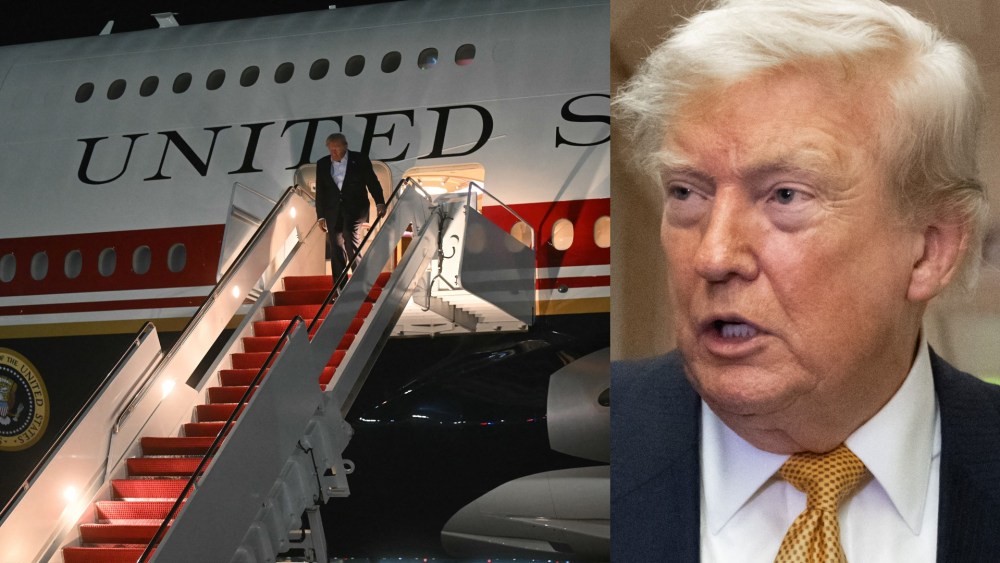
President Donald Trump swapped out his new Qatari-gifted Air Force One for his flight from the NATO summit to the United Kingdom over concerns that the gifted aircraft lacks the secure communications systems and military defenses needed to safely manage a rapidly escalating conflict with Iran, according to two former national security officials familiar with the matter.
Instead, Trump flew from Ankara to a U.S. base in the United Kingdom in his original Air Force One. It was during that flight that Trump authorized additional strikes against Iran, following through on a threat he had made earlier that day to end the on-again, off-again ceasefire.
Trump’s earlier choice to use the gifted Qatari jet as a primary presidential aircraft has been controversial because the gifted plane lacks key military defenses of the original Air Force One, including the ability to refuel mid-air and missile-defense systems, according to a law enforcement official briefed on its capabilities.
The original Air Force One — a Boeing VC-25A from the early 1990s — is a unique military plane outfitted with these capabilities.
.@POTUS boards Air Force One following the conclusion of another historic NATO Summit in Turkey pic.twitter.com/eaWJDWwjHi— Rapid Response 47 (@RapidResponse47) July 8, 2026
The main concern Wednesday was the president’s need to use the command-and-control functions of the original Air Force One, according to two other former security officials. Those systems turn the plane into a “flying situation room,” allowing the president to receive classified intelligence briefings, communicate securely and give orders to military officers around the world.
The Qatari Boeing VC-25B — originally manufactured as a passenger jet in 2012 — does not have some of the original
by Ja'han Jones | Jul 8, 2026 | Business, Opinion, White House
A public hearing began this week as the Trump administration looks to reinstate one of the most widely hated policies of the president’s second term.
Democratic officials are calling the whole thing a sham. And for good reason.
Tuesday marked the opening of a three-day hearing at the Office of the U.S. Trade Representative on the administration’s proposal to hit dozens of countries with new tariffs on grounds that these countries have failed to combat forced labor. The Trump administration adopted this approach after the archconservative Supreme Court overruled its previous rationale for tariffs.
The administration outlined its newly proposed tariffs in a report last month, accusing numerous countries of hurting American workers by inadequately fighting the scourge of forced labor. Several of these countries and the European Union have denied the claims.
As I explained at the time, there’s ample reason to question the administration’s true commitment to stemming the crisis of forced labor and human trafficking — in part because of the whole Epstein files thing, as well as the fact that many federal programs that fight forced labor and human trafficking have been gutted in President Donald Trump’s second term.
In other words, these new tariffs seem like a ploy to restore Trump’s old tariffs, which polling showed Americans broadly detested and said had cost them money.
On Monday, 22 Democratic state attorneys general submitted a public comment to Jamieson Greer, the U.S. trade representative, that all but assures the tariffs will face a legal challenge if the Trump administration tries to impose them. The officials — including AGs from New York, California, Arizona and Michigan — said the tariffs unlawfully use “sham” unfair
by Steve Benen | Jul 8, 2026 | Maddowblog, White House, World
In the three weeks since Donald Trump declared that a “deal” between the United States and Iran was “complete,” the president and his team have been dogged by a series of difficult questions. Why does Iran have to make so few concessions under the memorandum of understanding? Why have prominent members of both parties slammed the agreement as inadequate? Why is Trump’s deal so much worse than the Obama-era Iran deal?
Now, however, the world is confronting a qualitatively different kind of question: Does Trump’s deal still exist?
On Tuesday, U.S. Central Command announced a new round of strikes against Iran, following reports of attacks on merchant ships in the Strait of Hormuz. The Trump administration simultaneously said it was reinstating sanctions on Tehran, which had been eased as part of last month’s MOU.
Soon after, Iran’s military said it had fired missiles and drones targeting U.S. military installations in Bahrain and Kuwait in retaliation for the strikes confirmed by CENTCOM hours earlier.
As for the tenuous ceasefire and peace process, it’s increasingly difficult to be optimistic. Speaking to reporters on Wednesday from the NATO summit in Turkey, Trump called Iranians “scum” and “evil people.” He added, “Frankly, we’ve wasted a lot of time with them. I think we should just do our business.”
The Republican didn’t elaborate as to what that “business” entails, but in context, he appeared to be referring to additional military strikes.
And then he kept going.
Q: Is the ceasefire over? Is the MOU dead?TRUMP: I think it’s over. I don’t want to deal with them anymore. They’re scum. Do you know what scum is? They’re led by sick people. They’re vicious,
by Paul Waldman | Jul 8, 2026 | Opinion, Politics, White House
When Congress passed a bipartisan plan to address housing affordability, President Donald Trump pronounced it “a big yawn.” But give him a construction project to work on — especially one meant for his personal use — and he’s as happy as a kid tearing the wrapping paper off a Barbie Dreamhouse on Christmas.
Trump is altering the White House grounds again. This time, he’s building a helipad so he can land on the White House lawn in style. But instead of a typical helipad — a circle of concrete with a capital “H” visible from the air — this one will embody the spirit of Trump’s presidency. It will be expensive, driven by Trump’s insecurity, and involve a corporate payoff.
For those of you worried it might lack Trump’s unique aesthetic, rest assured: This helipad will be gorgeous.
Exactly how much the helipad will cost is unclear. It is part of a $13 million contract that includes some other work around the White House. But $5 million of the cost is being picked up by Lockheed Martin, the defense contractor that makes the Marine One helicopters through its Sikorsky Aircraft subsidiary.
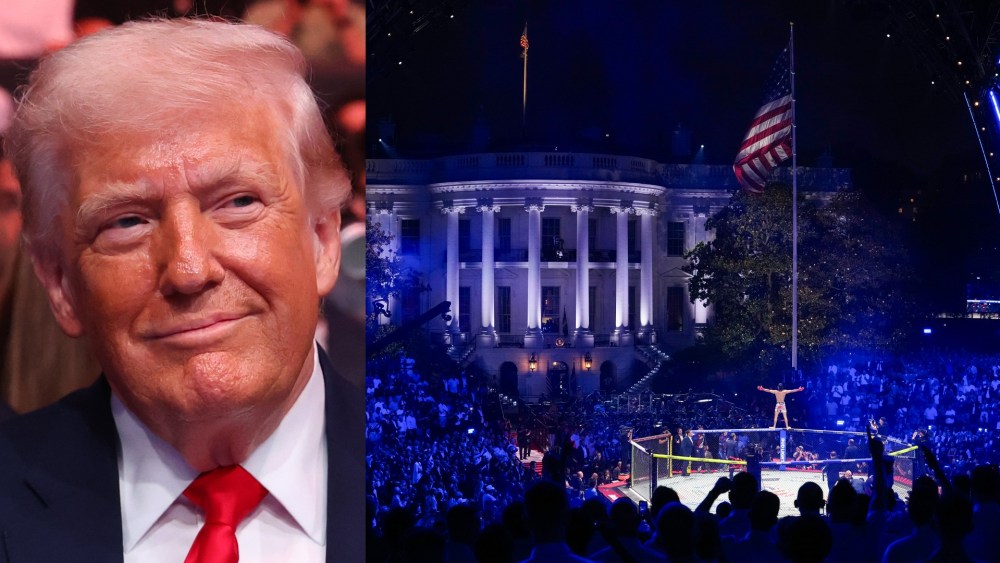
Unlike Trump’s wasteful ballroom project or the gargantuan arch he wants to build to loom over Arlington National Cemetery, the planned helipad construction arises from a genuine need. The helicopters used as Marine One have exhaust vents that point downward, which can burn the grass. Trump already ruined the South Lawn by putting a UFC stadium on it, so this is a good time to build a helipad — but not just any helipad.
For those of you worried it might lack Trump’s
by Daniel R. DePetris | Jul 8, 2026 | Opinion, White House, World
When NATO leaders adjourned the 2025 edition of their annual summit last summer, President Donald Trump emerged from the gathering with nothing but compliments for an alliance he frequently blasts as a charity case. He had reason to be gleeful. After significant pressure from the White House ahead of the summit, NATO members agreed to increase their defense spending to 5% of GDP by 2035, more than double the previous benchmark.
“When I came here, I came here because it was something I’m supposed to be doing, but I left here a little bit different, differently,” Trump told reporters at the concluding press conference. “I watched the heads of these countries get up, and the love and the passion that they showed for their country was unbelievable.”
Trump is an impatient man who wants immediate results — and to be seen as the one driving them.
Those heads of state and government will be lucky to survive this year’s summit with similar accolades. NATO Secretary General Mark Rutte, the organization’s bona-fide “Trump Whisperer,” hoped to make this year’s summit a success, but Trump is yet again souring on the alliance for all sorts of reasons. NATO is likely trending in one direction: an organization whose primary security guarantor is tired of the status quo and is leaving other members to pick up the slack.
Ahead of the summit, Rutte deployed an extensive game plan to keep the U.S. leader’s favor. His first step: tell everybody with eyes and ears that Trump, and Trump alone, is the big, strong man responsible for shaking NATO out of its peacetime slumber. Second, show the president that his pressure tactics are