by Zeeshan Aleem | Oct 4, 2026 | culture, Opinion, White House, World
When I learned that Israeli Prime Minister Benjamin Netanyahu had called for passing a law aimed at revoking the citizenship of two Israeli directors who made a new documentary about the war in Gaza, I figured that he was engaging in his typical flair for dramatics. But when I saw the film for myself, I immediately understood why he felt so threatened by it.
“NAZA,” which is set to release in theaters across the U.S. in the coming weeks, is a jaw-dropping indictment of Netanyahu’s military operation. Directors Yuval Abraham and Rachel Szor interview 24 Israeli intelligence officers and soldiers — whose appearances and voices are digitally altered to provide them with anonymity — to reveal vivid, often horrifying details of the Israeli military’s incursion into Gaza in response to Hamas’ Oct. 7 war crimes.
One might wonder what’s left to learn or condemn after Gazans have documented so much of Israel’s brutal treatment of civilians through videos that have, at times, made social media feeds almost unwatchably grim. Moreover, many human rights organizations and scholars of genocide have for years characterized Israel’s ongoing operation as genocidal.
Yet even if you follow the conflict fairly closely, “NAZA” will likely reveal new information to you about how the Israeli military dominates Gaza and internally rationalizes its brutalization. And if you’re unconvinced that Israel’s military operation is beyond the pale, this might just be the thing that changes your mind.
What might frighten Netanyahu more than anything is some of the interviewees’ ultimate assessment of what they participated in.
“NAZA,” which is a Hebrew military acronym that means “collateral damage,” shreds the myth that the Israeli military
by Ken Dilanian | Oct 3, 2026 | Criminal Justice, News, White House
The hack of FBI computer systems exposed sensitive personal information about nearly every FBI employee, as well as thousands of local law-enforcement officials who worked on FBI task forces, six current and former FBI officials told MS NOW.
FBI officials and outside experts are calling the breach one of the worst counterintelligence disasters in modern history. They say it raises questions about whether negligence was a factor in allowing it to happen.
One FBI agent who works on cybersecurity matters chalked the breach up to “incompetence.”
“This was a vulnerability that supposedly they thought they patched, but managed to miss one of the ways to patch it,” the agent said in a text message, adding that the cause was “definitely incompetence.”
The sensitive employee information that was stolen “should never have been tied to the Internet, either. It belonged on our internal system and some dumbass moved it all” to an internet-facing system, the agent said.
The agent added that the FBI obtained chats in which the hackers expressed disbelief that such sensitive information was available to them so easily.
Google’s threat intelligence experts issued a public warning in June about the vulnerability the hackers exploited, and the FBI took steps to shore up its systems, two cyber security experts told MS NOW, speaking on the condition of anonymity to discuss a sensitive matter.
But the hackers found a way around the FBI patch, they said.
“It’s the fault of whoever in the FBI is responsible for our cyber security,” said the FBI cyber security agent who blamed the breach on “incompetence.” The agent added, “But also whoever pushed that information from our internal system to the Internet.”
An
by Clarissa-Jan Lim | Oct 3, 2026 | Congress, News, White House
President Donald Trump took a sundown fight with Sen. Tom Cotton public on Saturday.
The president posted on social media what appeared to be the Arkansas Republican’s cell phone number, expressing anger over the senator’s opposition to legislation making daylight saving time permanent.
“For some reason, Tom is stopping the Bill and, in the Senate, it’s very easy to do, it only takes one!” Trump wrote on Truth Social about the Sunshine Protection Act, which has been held up in the Senate. He described Cotton as “a friend of mine,” but nevertheless urged his followers to “call Tom on his cellphone” before posting a phone number with a northeast Arkansas area code.
An MS NOW call to that number went to voicemail, and its mailbox was full. Cotton’s office did not immediately respond to MS NOW’s requests for comment. But the senator explained his opposition to the bill in a post on X on Saturday afternoon, without addressing Trump’s efforts to direct a horde of angry callers his way.
No one likes changing the clock, me included, but Congress has enacted permanent Daylight Savings Time multiple times before and repealed it each time once Americans experienced absurdly late sunrises in the winter. Arkansans don’t want their kids going to school in the pitch…— Tom Cotton (@SenTomCotton) October 3, 2026
The senator said he includes himself among those who do no like changing the clocks each spring and fall. “But Congress has enacted permanent Daylight Savings Time multiple times before and repealed it each time once Americans experienced absurdly late sunrises in the winter,” Cotton said. “Arkansans don’t want their kids going to school in the
by Cedric Alexander | Oct 3, 2026 | immigration, Opinion, Politics, White House
The lawsuits filed this week by the survivors of Renee Good, who was shot dead Jan. 7 by Immigration and Customs Enforcement agent Jonathan Ross in Minneapolis, make the general claim that Ross had no reason for killing the 37-year-old mother of three. But plaintiffs make two more specific allegations that particularly trouble me as a 40-year law enforcement veteran who trained other officers.
The lawsuits say at least one ICE agent told Good, who was in the driver’s seat of an SUV, that she could leave the scene where ICE agents were working at about the same time other agents were ordering her out of her car. The lawsuits also allege that agents at the scene not only failed to provide aid to Good after she was shot but also stopped a doctor from trying to help her.
These are but allegations. The government has claimed Ross fired in self-defense because he feared she was about to run over him with her vehicle, and a court may eventually decide whether he was justified. But the allegations that Good was given conflicting orders and denied medical aid after she’d been shot describe failures I’ve seen before and know have no place in professional policing.
The allegations that Good was given conflicting orders and denied medical aid after she’d been shot describe failures I’ve seen before and know have no place in professional policing.
As someone who has led police officers, I have defended them when they are right. I know a vehicle can kill an officer as surely as a gun can, and agents are right to respect that. But that’s why sound
by Nick Akerman | Oct 3, 2026 | Opinion, White House
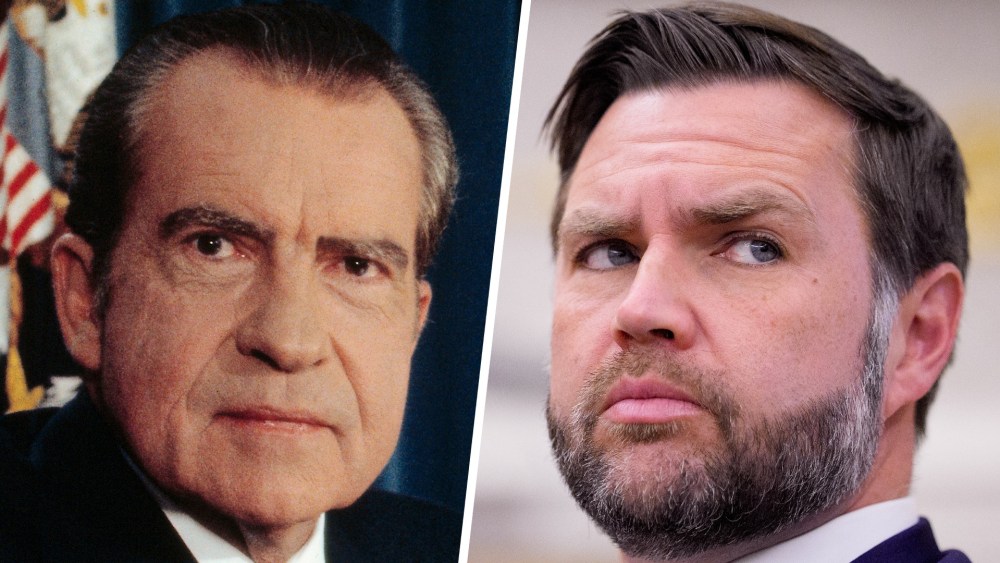
The Justice Department’s Office of Professional Responsibility recently hosted a former Nixon White House fellow as part of the administration’s effort to “[review]whether the special prosecutor’s office that investigated the famed Watergate break-in committed misconduct,” The Wall Street Journal has reported.
The fellow in question, Geoff Shepard, who has become something of an evangelist for this bonkers revisionist conspiracy theory, recently published a book, “The Real Watergate Scandal: Collusion, Conspiracy and the Plot That Brought Nixon Down.”
Like Vance, Shepard claimed to OPR that “the deep state took Nixon down.” The opposite is true.
Shepard was not personally involved in any of the Watergate criminality and says he relies on documents he found in the National Archives to support his theory.
I was an assistant special Watergate prosecutor from 1973 to 1976. A review of my files turned up only one innocuous reference to Shepard: He was present with an aide to Chuck Colson, special counsel to the president, who pleaded guilty to obstruction of justice.
Shepard reportedly presented his theory to OPR for more than two hours in a “78-page slide deck,” per the Journal. Shepard’s conspiracy theory appears to support Vice President JD Vance’s comments to the Nixon Library this past summer, that there is a parallel to what “the same institutions tried to do to Donald Trump in the first Trump administration.”
Like Vance, Shepard claimed to OPR that “the deep state took Nixon down.”
The opposite is true. Nixon took himself down and tried to use the deep state to cover up his crimes.
Nixon orchestrated the Watergate cover-up that was recorded on his Oval Office taping system. The “smoking gun” tape of
by Jordan Rubin | Oct 3, 2026 | Deadline: Legal Blog, Supreme Court, White House
Welcome back, Deadline: Legal newsletter readers. The new Supreme Court term starts Monday. We’re coming off a huge term that featured historic decisions on birthright citizenship, voting rights, tariffs, presidential firing power and more. Despite losing on citizenship and tariffs, and despite being blocked from immediately firing Federal Reserve board member Lisa Cook, the Trump administration is pressing backup plans on those fronts that could eventually return them to the high court.
The justices were off the bench for the summer, but they decided several important emergency matters, including ones related to the November midterm elections. Although they backed Donald Trump’s White House ballroom construction — over a notable dissent led by Chief Justice John Roberts — the justices blocked the president’s mail ballot restrictions as well as Missouri’s bid to use a congressional map that could’ve gained Republicans another House seat next month.
Trump lashed out on social media following those losses, calling his three high court picks who ruled against him “merely a shell of their original selves.” In a line that Democrats likely agree with but for different reasons, he said the court’s “inability and unwillingness to do the right thing for our Country will go down, in a very negative way, in the annals of History.”
The dramatic complaint follows a term that was an overall win for Trump and the GOP. And just this month, the court granted emergency relief ahead of the midterms for Republicans on campaign broadcast advertising rates and, for the administration, on using a citizenship verification database — the latter over dissent from the court’s Democratic appointees, who raised concerns about lawful voters being