by Michael A. Cohen | May 9, 2026 | Opinion
Great Britain saved my family from Nazism.
On the eve of World War II, many countries, including the United States, still limited Jewish immigration. But in July 1939, my grandparents were able to flee Germany for England. They settled in London, and two years later, my mother was born. Eight years after that, they emigrated to the United States. The family they left behind died in Hitler’s death camps.
Most European Jews were unable to escape — in part, it must be pointed out, because of British policy. Many of them would have gladly taken refuge in Palestine, then a British colony. But in May 1939, the British government effectively ended Jewish immigration to the territory. Still, for my family, Britain will always be viewed fondly as a safe haven from the horrors of the Holocaust.
That fondness makes the current situation for British Jews uniquely painful. Once a nation that welcomed victims of the Nazis, today the U.K. is increasingly a place where Jews are forced to look over their shoulder and hide their Jewishness. For American Jews, what’s happening across the Atlantic offers a disquieting preview of our possible future.
Last year, violent assaults against American Jews reached the highest level since 1979.
Over the last 2 1/2 years, but particularly in the last few weeks, antisemitic violence and harassment have become the new normal for British Jews. Last week, in the predominantly Jewish neighborhood of Golders Green in London, two Jewish men were stabbed by a knife-wielding attacker. This violence follows multiple arson and attempted arson attacks on synagogues, Jewish businesses and a Jewish ambulance service in London. And last fall, two
by Jessica Waters | May 9, 2026 | Opinion
I testified before Congress last week about safety. And then I became the target of extremist hatred.
I addressed a House Judiciary subcommittee for two hours about the Freedom of Access to Clinic Entrances Act, a federal law — that Republicans want to repeal — that prohibits violence and harassment against reproductive healthcare providers or patients seeking that care.
In less than 24 hours, I saw from the alerts and my inbox tally that I had received or been mentioned in hundreds of thousands of ugly, abusive comments.
Less than an hour from when I walked out of Congress, my phone began lighting up with emails and social media alerts (and urgent messages from security teams tracking them). Scores of the messages and posts said: You are a bitch. A whore. Slurs that can’t be published. Some questioned whether I can still be “aborted” and then answered, “I think she can.” They said things like, “this is why firing squads are back.” They asked one another where I work. They hypothesized that I am infertile and that I hate children. They said they should “exact vengeance,” that I will burn in hell, that I am Satan, that I am evil.
In less than 24 hours, I saw from the alerts and my inbox tally that I had received or been mentioned in hundreds of thousands of ugly, abusive comments.
Play
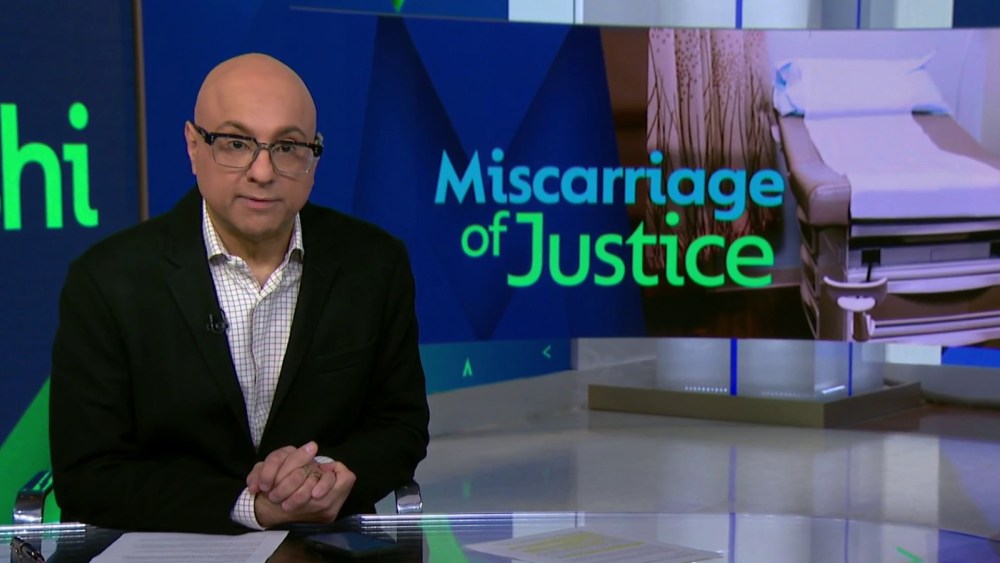
The new post-Roe reality: Emergency healthcare imperiled and miscarriage prosecuted
June 8, 2025 / 05:00
I quickly learned that a member of the subcommittee that held the hearing had posted a clip from the hearing on social media. Rep. Brandon Gill, R-Texas, didn’t attend most of the hearing but
by Tara C. Smith | May 9, 2026 | Opinion
We are witnessing an outbreak of a virus that is new to most individuals, a species of hantavirus called the Andes virus. Most hantavirus outbreaks are associated with outdoor adventuring, such as unknowingly camping with rodents, or merely cleaning a house where rodents have left droppings. But this one seemingly began on a cruise ship navigating the Atlantic. Many of us expect the risk of viruses such as norovirus, Covid-19 and influenza on these types of voyages. Less so hantavirus, especially a species that seems to be transmitted person to person. This has understandably put people on edge, with the specter of January 2020 lingering prominently in our collective memory.
Having more questions than answers at this stage also drives anxiety. So let’s start with what we know about the outbreak:
Play
Health officials across 4 continents race to contain Hantavirus outbreak
May 8, 2026 / 05:44
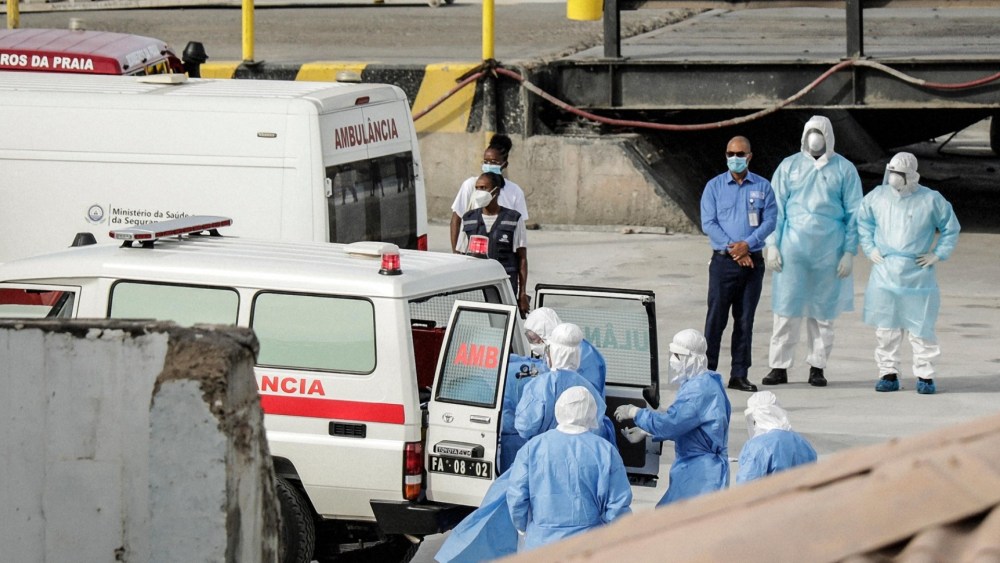
On April 1, the ship MV Hondius departed from Ushuaia, Argentina, and began moving through the south Atlantic. On April 6, one passenger began to feel ill, reporting a fever, diarrhea and a headache. He died on April 11. His body remained on board for two weeks. His wife fell ill on April 24 and died two days later, having made it to South Africa with her husband’s body. Lab testing of samples from two patients confirmed that the infection is due to the Andes virus, and one viral genome has already been sequenced.
Because the incubation period of the virus can be as long as six weeks, more cases may surface.
As of May 8, there are nine cases of infection associated with the ship. Three people have
by Ja'han Jones | May 9, 2026 | Opinion
“Trump Administration Cuts Cyberdefense Even as Threats Grow.”
That October headline from The New York Times has been swirling in my head over the past couple of days, along with various other reports of the Trump administration’s gutting of the country’s cybersecurity infrastructure over the past year, amid news of a debilitating hack that has rocked the American education system.
Wired reported on the incident, calling it a “new kind of ransomware debacle”:
The widely used digital learning platform Canvas was put into “maintenance mode” on Thursday after its maker, the education tech giant Instructure, suffered a data breach and faced an extortion attempt by attackers using the recognizable moniker “ShinyHunters.” Though the hackers have been advertising the breach and attempting to extract a ransom payment from Instructure since May 1, the situation took on additional immediacy for regular people across the US and beyond on Thursday because the Canvas downtime caused chaos at schools, including those in the midst of finals and end-of-year assignments.
CNN reported that this incident, which affected thousands of K-12 schools and universities in the United States, purportedly was the second such hack within weeks:
This was the second school data breach claimed by ShinyHunters this month. In Thursday’s ransom note, the group claimed it had hacked Instructure “again” and faulted the company’s response to the previous attack: “Instead of contacting us to resolve it they ignored us and did some ‘security patches.’”
As more details emerge, we’ll hopefully better understand how this attack occurred and how to thwart future ones. But it’s not promising that the Trump administration has dismantled key agencies responsible for answering these questions.
In November, a CNBC
by Taya Graham and Stephen Janis | May 8, 2026 | Article, Economy and Inequality, Inequality, Inequality Watch, Opinion, Politics and Movements: US, Prisons and Policing
The press conference for Epstein survivors we covered earlier this year felt claustrophobic.
It was the afternoon before President Donald Trump’s State of the Union address in February. The women who had suffered at the hands of the world’s most infamous predator were crammed into a small meeting room in the Cannon House Office Building in Washington, DC.
They had gathered to demand acknowledgement that evening from both Congress and the President. The venue was so tiny, there was barely room for the survivors to gather around the podium.
The assemblage stood in stark contrast to what we found in the emails we had been poring over after the Justice Department released an often-opaque database of documents gathered during several investigations of the historic sex predator.
Based on what we’ve read, Epstein and his associates inhabited a world of material and social abundance. They weren’t constrained or forced to plead for anything. Their lives were full of easily obtained wealth, which afforded plenty of space to commit crimes.
This contrast reveals what this scandal is ultimately about: not just one man’s crimes, but the unimaginable inequality that made asking for tens of millions of dollars as easy as writing a poorly worded email. In fact, all Epstein had to do to enrich himself was to ask.
Consider what Epstein sent to media mogul Mortimer Zuckerman in July of 2014:
I’m happy to hear from you, happy to see your stock at the 120 level. an increase in over 100
million in new net worth in only a few months. (how long did it take for the first 100?) I
assume, by your email, that as I predicted, you have
by Zeeshan Aleem | May 8, 2026 | Opinion
A group of 30 progressive House Democrats sent a letter to Secretary of State Marco Rubio on Monday urging the Trump administration to both acknowledge and provide details on Israel’s undeclared nuclear program amid its participation in the Iran war.
It’s a surprising and strikingly bold idea. The U.S. government has never officially acknowledged the program, and Israel’s policy has been to neither confirm nor deny possession of a nuclear arsenal, instead relying on “nuclear ambiguity” as a strategic deterrent. If Washington acknowledged Israel has nuclear weapons, it would be a break from a long bipartisan tradition of the U.S. helping to provide cover for Israel’s policy.
Led by Rep. Joaquin Castro of Texas, the Democrats’ proposed policy would improve the United States’ ability to make smart strategic decisions in the Middle East, claim more credibility as it tries to broker nuclear nonproliferation efforts, and help stabilize a region wracked by regional power competition. Simultaneously, it would be a tool for progressives to create more distance between the U.S. and Israel — by insisting that Washington stop treating it as a special exception to so many of its policies.
It is a matter of global safety for the international community to have a sense of Israel’s “red lines.”
While it has never been officially confirmed that Israel has nukes, such an arsenal is widely believed to exist by experts and nuclear weapon watchdogs, and it has been privately acknowledged by the U.S. intelligence community for decades. But there have been notable instances in which people in the know have appeared to let the truth slip. Former CIA Director Robert Gates described Israel as