by Michael A. Cohen | Sep 25, 2026 | Economy, Opinion, White House, World
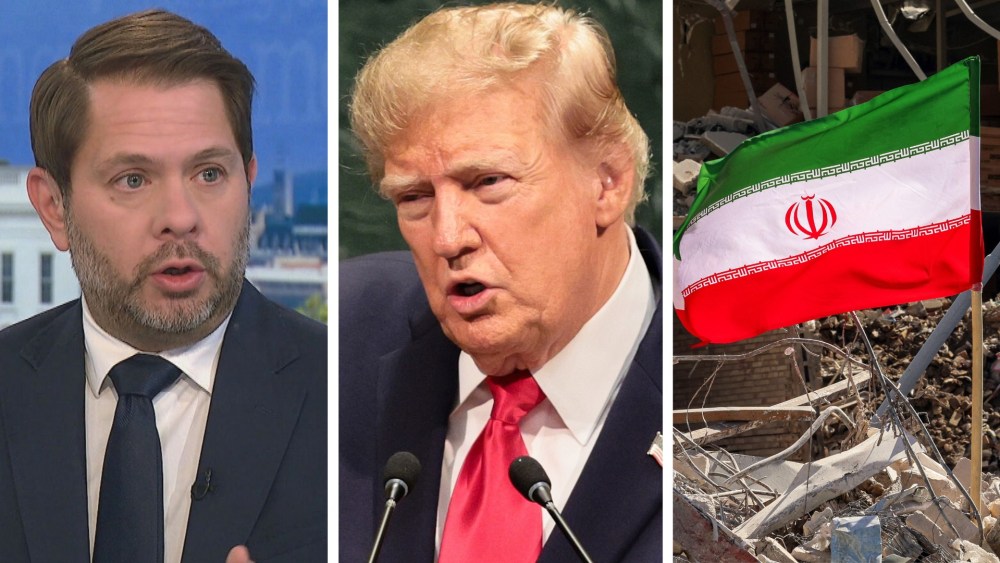
If recent public opinion polling is correct, the Republican Party is on the verge of an electoral bloodbath. While it’s typical for the incumbent party to struggle in midterm elections, the situation today for the GOP is far more perilous — and a big part of the reason is President Donald Trump’s decision to go to war against Iran.
More than 200 days since it began, it’s clear that the Iran war is a strategic disaster, and that view is widely shared by the American people. Support for the war routinely polls in the low-30s, but of greater concern for Republicans are the second and third order effects of the war.
Gas prices are up around 50% since the war began — and have spiked this month. Sticker shock at the pump has contributed to higher inflation, a more than 20% rise in airline ticket prices (because of higher jet fuel costs) and even a 1.25 percentage point jump in mortgage rates, because the Federal Reserve has been forced to keep interest rates higher.
In a new report I wrote this week for the Stimson Center, a nonpartisan foreign policy think tank in Washington, D.C., Mark Zandi, the chief economist at Moody’s Analytics, estimated the total cost of the war at $220 billion — that’s approximately $1,650 per average American household.
More than 200 days since it began, it’s clear that the Iran war is a strategic disaster, and that view is widely shared by the American people.
The Pentagon’s share of the Iran debacle is around $40 billion and the costs keep ticking up. To make matters worse, the United States has used
by Susan Del Percio | Sep 24, 2026 | elections, Opinion, White House
Just like the ever-elusive yet somehow continual sightings of Bigfoot and the Loch Ness Monster, it seems that every so often there are fanciful whispers of Republican lawmakers en masse breaking away from President Donald Trump.
When it comes to Trump’s relationship with Republicans, though, the actual explanation is far less sensational than many headlines would have us believe. All you really have to do is look at the poll numbers to understand why certain candidates take certain positions — or, in the case of some Republicans, inch away from Trump.
In the past, and out of fear, most Republicans nibbled around the edges when trying to show their independence from Trump.
With just a couple of weeks to go until early voting starts in many states, a few vulnerable Republicans are taking calculated risks in breaking with Trump on issues they sense their constituents will respond to. In other words, it is better to win and say sorry than to be a loyal foot soldier and lose.
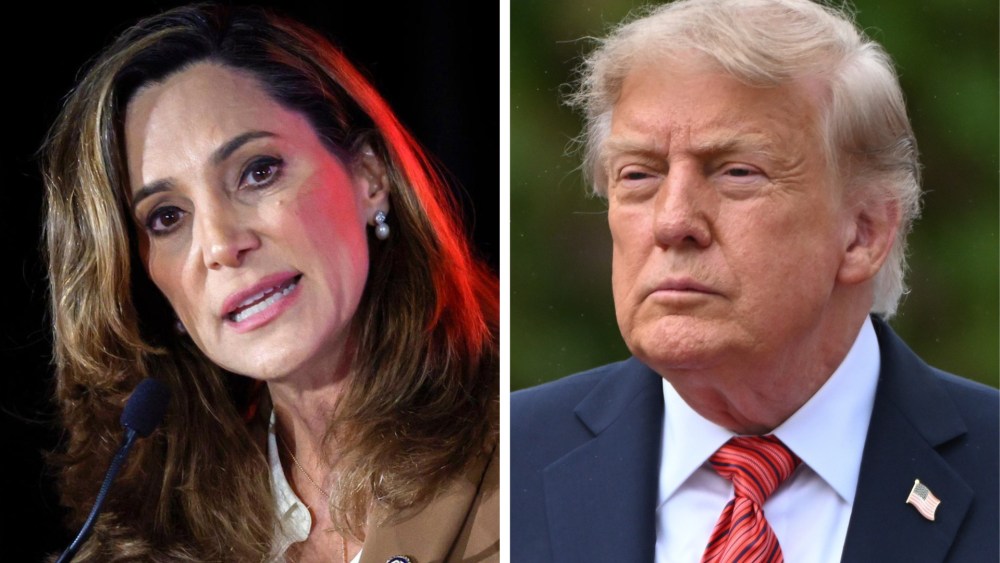
In the past, and out of fear, most Republicans nibbled around the edges when trying to show their independence from Trump, but last week Rep. Maria Elvira Salazar, R-Fla., took a big public swipe at Trump, running a television ad in which she addressed the president straight to camera:
“Mr. President, some of your immigration enforcement efforts have gone too far,” she said. “The same Hispanics who helped you get to the White House in 2024 feel betrayed today.”
Play
GOP congresswoman calls out Trump over immigration in new campaign ad
September 18, 2026 / 10:22
In Michigan, Mike Rogers, the Republican nominee for U.S. Senate, distanced himself from Trump on
by Zeeshan Aleem | Sep 24, 2026 | elections, Opinion, White House
President Donald Trump’s approval rating dropped to a record low of 32% this week, according to a new Reuters/Ipsos poll. But that’s not where the bad news stops for the president and his party’s midterm prospects. Just 30% of Republican voters “strongly” approve of the job he’s doing. And another key part of Trump’s base appears to be cooling on him, as well.
Only about 4 in 10 rural voters approve of Trump’s performance on the economy, according to a new poll conducted by The Associated Press in partnership with KFF. The AP and KFF Health News’ write-up of the survey, which surveyed over 2,000 rural American voters over two weeks beginning in mid-August, explained that the poll found that “the costs of groceries, gas and healthcare rank as top pain points for the rural voters,” and that a larger share of rural voters report being more worried about being able to afford groceries or gas than voters overall.
“About half of rural American voters believe the economy is worse off now than when President Donald Trump returned to office,” the report noted. Trump’s overall approval rating came in at 48% with rural voters.
These numbers spell trouble for the GOP as the November elections approach. Nearly 7 in 10 voters from rural communities voted for Trump in the 2024 and 2020 elections. But they’re showing signs of serious disenchantment with the president over the biggest issues of the day — the economy and the cost-of-living crisis. That doesn’t mean they’ll defect to the Democratic Party en masse. But it does significantly increase the likelihood that they will decline to vote at all.
Trump’s
by Keturah Kendrick | Sep 24, 2026 | Civil Rights, Opinion
It has been almost four days and I’m still experiencing restless sleep after reading Nikole Hannah-Jones’ essay in The New York Times, “In Fighting for Every Black Child, Did I Betray My Own?” Trained as an English teacher in New York City, I’m a Black woman who taught for 10 years at a school similar in all ways but one to the middle school where Hannah-Jones sent her daughter. Hannah-Jones’ bright, ambitious teenager accused her mother of intentionally sending her to “a bad school” when her class privilege could have bought better options.
I taught at a school founded by a white woman philanthropist who wanted to give students who lived north of 96th Street in Manhattan the “same” educational opportunities her own children had. Her privilege brought with it funding and resources that other schools in our district struggled to access. Although I taught mostly in the middle school, I joined my high school colleagues in boasting of our 100% high school graduation rate and 100% college acceptance rate. We knew we were doing great work. We also knew we were an exception to the many schools failing Black and brown students across all five boroughs.
We knew we were doing great work. We also knew we were an exception to the many schools failing Black and brown students across all five boroughs.
At the heart of Hannah-Jones’ essay is a mother with a long, distinguished history of writing about school segregation and how it operates, trying to articulate the deep, relentless and intentional segregation of New York City public schools — and who wanted to protect her daughter from the social
by Danielle Steitz | Sep 23, 2026 | Opinion, White House
Let’s be clear: No matter what President Donald Trump may say, the national security of the United States does not require the construction of a massive arch in the middle of a traffic circle.
In a saner world, this would not need to be said. But on Friday, the president announced a new purpose for the 250-foot-tall tourist attraction he is seeking to build in the roundabout at the end of Washington’s Memorial Bridge. The arch will double as a “military complex,” Trump said, housing drones and ammo while providing a platform for snipers.
What possible threat aimed at Arlington National Cemetery — of all places — requires the construction of a marble-and-gold arch?
Throughout his second term, Trump has repeatedly invoked flimsy national security excuses to justify policy priorities both big and small. The arch might be the most ludicrous example yet: By claiming that this obvious vanity project is in fact a top Pentagon priority, the administration is clearly hoping it can convince U.S. District Judge Tanya Chutkan to reconsider her injunction pausing its construction.
My guess is that the argument will get laughed out of court. But that leaves a bigger issue: Judges have long given presidents vast leeway when it comes to national security decisions. Trump’s obvious abuse of that privilege has started forcing them to rethink that stance, which could make it harder to deal with a real emergency in the future.
Play
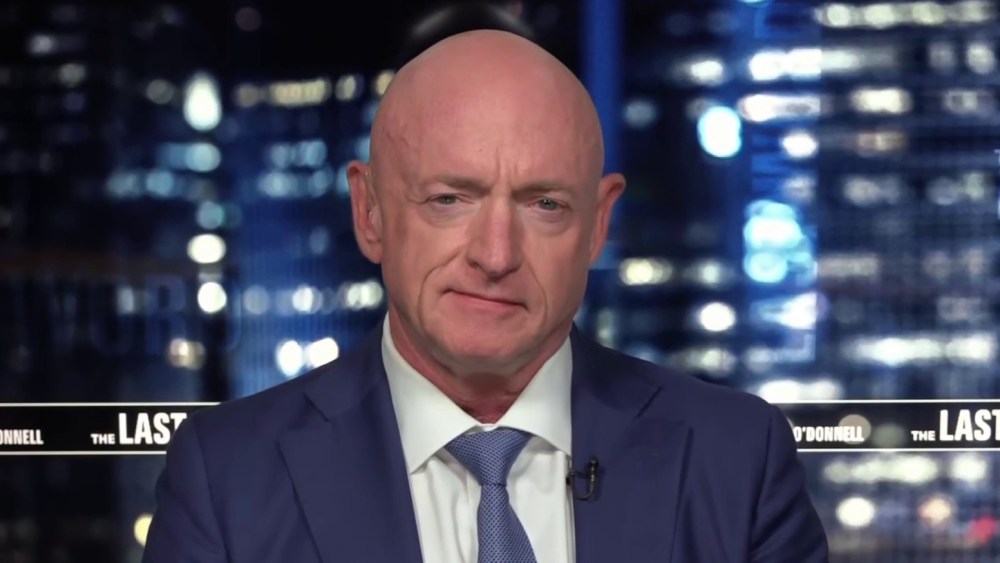
‘Assault on liberty’: Trump blasted by Democratic Sen. Kelly over arch
September 21, 2026 / 08:16
Now, about that arch. The monument/arms depot/sniper hideout that Trump is proposing would stand at the entrance to Arlington National Cemetery, where tens of
by Paul Waldman | Sep 23, 2026 | Opinion
According to a new investigation from ProPublica, Sen. Susan Collins narrowly escaped being embroiled in an FBI bribery probe into defense contracts, lawmakers and large campaign contributions. For that, she can thank the Trump administration’s commitment to making America a place where the wealthy, connected and morally flexible can get away with almost anything. The good news is that if we’re determined enough, we can undo the damage that has been done.
ProPublica’s story begins in 2019, when the head of Collins’ super PAC, Scott Reed, met with executives from a defense contractor called Navatek that the senator had helped land a Navy research contract in Maine. Then Collins’ fundraiser made a request: The company should make a six-figure donation to help the senator in her re-election bid. The executives said they would pony up — if Collins helped them get more contracts.
When President Donald Trump took office in 2025, he gutted the Justice Department’s public integrity section, the unit that investigates political corruption.
But government contractors aren’t allowed to contribute to campaigns.
“To skirt campaign finance laws and conceal the source of the funds,” ProPublica reported, “Navatek planned to funnel the donation through a shell company. The CEO [Martin Kao] wanted assurance that Collins would know where the money came from. Reed confirmed that she would, the executive said — and that Navatek would get its government contracts.”
When the FBI closed in on Kao, he gave them the names of “dozens of lobbyists, congressional staffers and members of Congress who he said helped him trade cash for contracts.” ProPublica said it independently corroborated much of his account by reviewing legal records and