by Jonathan Fritz | Sep 26, 2026 | Opinion, White House, World
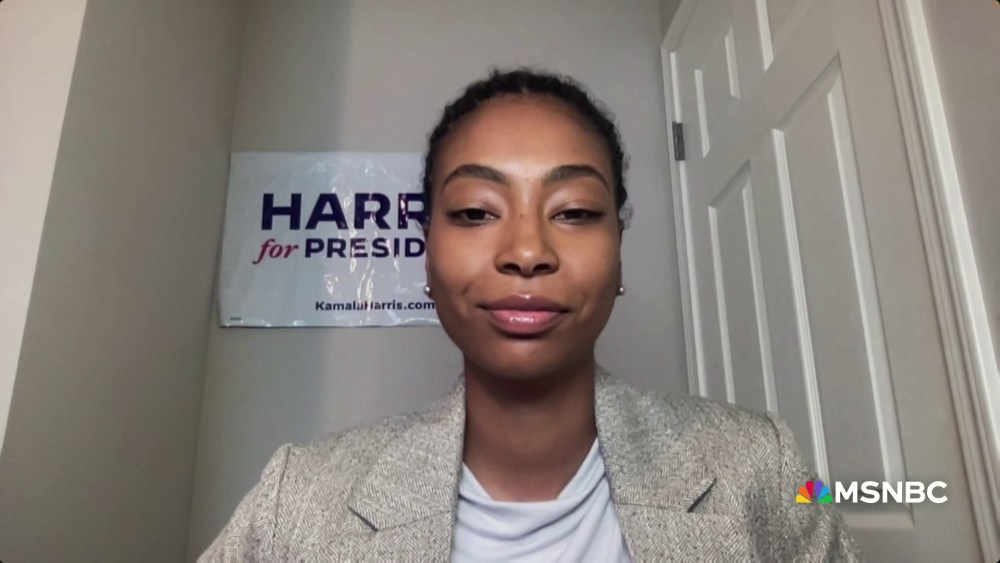
From the perspective of advancing U.S. interests on issues that directly matter to the American people, Xi Jinping’s visit to Washington scored somewhere between low and incomplete. But even as we await the final grades on specific deals hashed out during the summit, the Trump administration is likely headed for a solid F on geopolitical messaging that humiliated the United States — and resulted in no strategic gains for the nation or its allies.
President Donald Trump rolled out far more than a very long red carpet for the visiting leader of the People’s Republic of China. Trump and the first lady met Xi and his wife, Peng Liyuan, on the tarmac. (Before Trump greeted Russian leader Vladimir Putin on the tarmac in Alaska in 2025, no U.S. president had welcomed a foreign leader in that fashion since John F. Kennedy.) Trump also provided full official honors, ordered a military jet flyover and gushed about his “great friendship” with the Chinese leader.
This treatment stands in stark contrast to the way the visiting leaders of America’s most important Indo-Pacific allies have been received during Trump’s second term.
This treatment stands in stark contrast to the way the visiting leaders of America’s most important Indo-Pacific allies have been received during Trump’s second term.
Australian Prime Minister Anthony Albanese was met only by the Australian ambassador when he came to Washington in fall 2025. Japanese Prime Minister Sanae Takaichi — who has faced heavy economic and diplomatic pressure from China ever since telling her parliament that a Chinese attack on Taiwan might constitute an existential threat for Japan — arrived at the airport earlier in the
by Charles F. Coleman Jr. | Sep 25, 2026 | culture, Opinion, Politics
The first episodes of Netflix’s reboot of “A Different Word” feel like they were ripped from recent headlines. The fictional Hillman College, which we were first introduced to almost 40 years ago on NBC, is struggling with federal budget cuts to historically Black colleges and universities, with what’s called enrollment management and dilapidated facilities. There are also nods to the current geopolitical consciousness of today’s students, who are protesting and demonstrating in keeping with the radical tradition of HBCU students of past years. We see them complaining about the same crumbling dormitories their parents occupied decades earlier and dealing with “purge day,” when those who can’t pay their tuition are unenrolled.
There’s also the star athlete whose father — a prominent character in the original series — worries that his son is forsaking better opportunities by playing for Hillman and would have access to better facilities and NIL money if he played at a predominantly white school. In this way, the series lays bare the realities that many HBCUs and the students themselves are grappling with.
When I was at Howard University at the turn of the millennium, I had classmates who decided to attend an HBCU because they’d watched “A Different World” every week as kids.
When I was at Howard University at the turn of the millennium, I had classmates who decided to attend an HBCU because they’d watched “A Different World,” a spinoff of “The Cosby Show,” every week as kids. According to The Atlanta Journal-Constitution’s UATL, “From 1986, the year before ‘A Different World’ premiered, to 1994, the year after it ended, HBCU enrollment rose from about 223,000 to
by Michael A. Cohen | Sep 25, 2026 | Economy, Opinion, White House, World
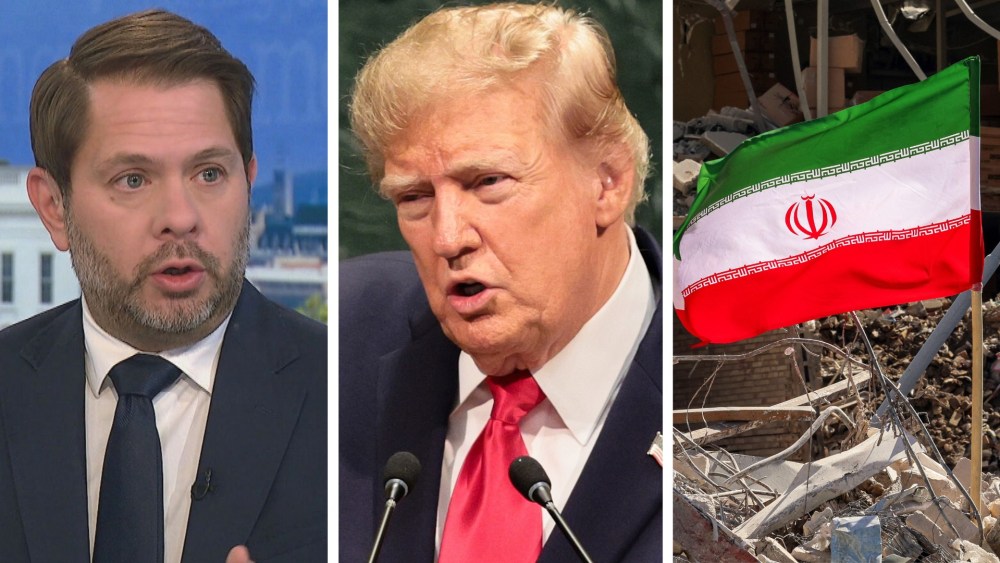
If recent public opinion polling is correct, the Republican Party is on the verge of an electoral bloodbath. While it’s typical for the incumbent party to struggle in midterm elections, the situation today for the GOP is far more perilous — and a big part of the reason is President Donald Trump’s decision to go to war against Iran.
More than 200 days since it began, it’s clear that the Iran war is a strategic disaster, and that view is widely shared by the American people. Support for the war routinely polls in the low-30s, but of greater concern for Republicans are the second and third order effects of the war.
Gas prices are up around 50% since the war began — and have spiked this month. Sticker shock at the pump has contributed to higher inflation, a more than 20% rise in airline ticket prices (because of higher jet fuel costs) and even a 1.25 percentage point jump in mortgage rates, because the Federal Reserve has been forced to keep interest rates higher.
In a new report I wrote this week for the Stimson Center, a nonpartisan foreign policy think tank in Washington, D.C., Mark Zandi, the chief economist at Moody’s Analytics, estimated the total cost of the war at $220 billion — that’s approximately $1,650 per average American household.
More than 200 days since it began, it’s clear that the Iran war is a strategic disaster, and that view is widely shared by the American people.
The Pentagon’s share of the Iran debacle is around $40 billion and the costs keep ticking up. To make matters worse, the United States has used
by Susan Del Percio | Sep 24, 2026 | elections, Opinion, White House
Just like the ever-elusive yet somehow continual sightings of Bigfoot and the Loch Ness Monster, it seems that every so often there are fanciful whispers of Republican lawmakers en masse breaking away from President Donald Trump.
When it comes to Trump’s relationship with Republicans, though, the actual explanation is far less sensational than many headlines would have us believe. All you really have to do is look at the poll numbers to understand why certain candidates take certain positions — or, in the case of some Republicans, inch away from Trump.
In the past, and out of fear, most Republicans nibbled around the edges when trying to show their independence from Trump.
With just a couple of weeks to go until early voting starts in many states, a few vulnerable Republicans are taking calculated risks in breaking with Trump on issues they sense their constituents will respond to. In other words, it is better to win and say sorry than to be a loyal foot soldier and lose.
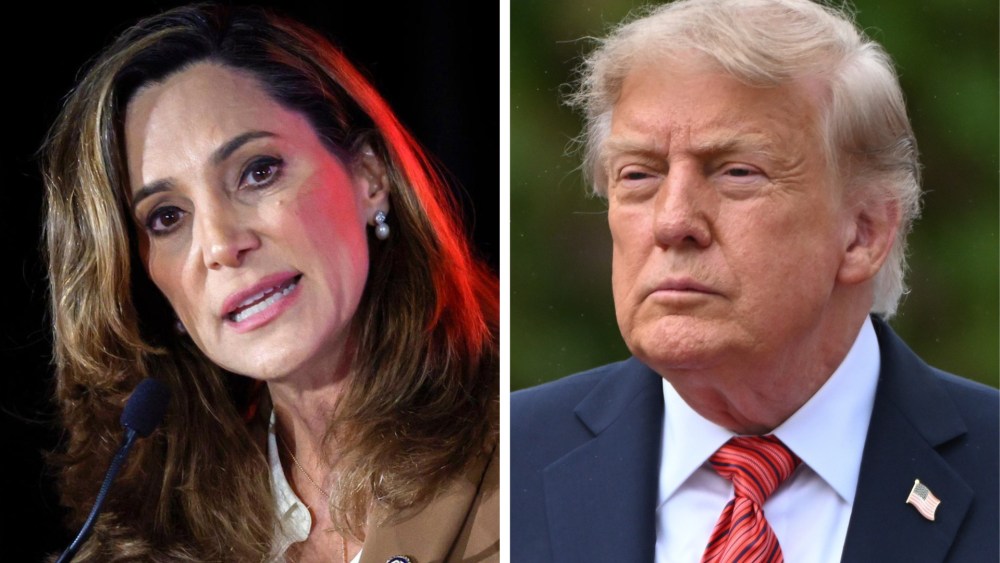
In the past, and out of fear, most Republicans nibbled around the edges when trying to show their independence from Trump, but last week Rep. Maria Elvira Salazar, R-Fla., took a big public swipe at Trump, running a television ad in which she addressed the president straight to camera:
“Mr. President, some of your immigration enforcement efforts have gone too far,” she said. “The same Hispanics who helped you get to the White House in 2024 feel betrayed today.”
Play
GOP congresswoman calls out Trump over immigration in new campaign ad
September 18, 2026 / 10:22
In Michigan, Mike Rogers, the Republican nominee for U.S. Senate, distanced himself from Trump on
by Zeeshan Aleem | Sep 24, 2026 | elections, Opinion, White House
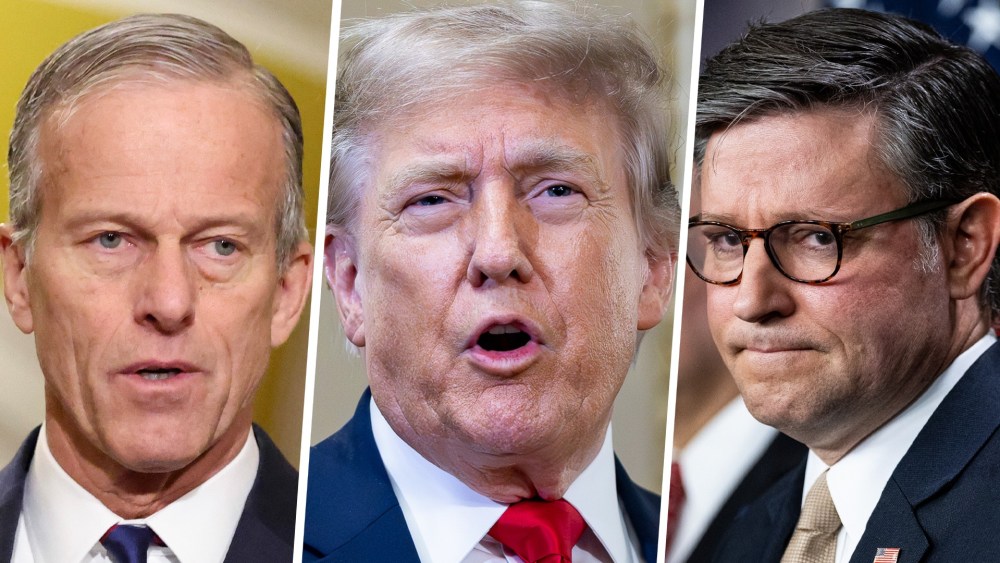
President Donald Trump’s approval rating dropped to a record low of 32% this week, according to a new Reuters/Ipsos poll. But that’s not where the bad news stops for the president and his party’s midterm prospects. Just 30% of Republican voters “strongly” approve of the job he’s doing. And another key part of Trump’s base appears to be cooling on him, as well.
Only about 4 in 10 rural voters approve of Trump’s performance on the economy, according to a new poll conducted by The Associated Press in partnership with KFF. The AP and KFF Health News’ write-up of the survey, which surveyed over 2,000 rural American voters over two weeks beginning in mid-August, explained that the poll found that “the costs of groceries, gas and healthcare rank as top pain points for the rural voters,” and that a larger share of rural voters report being more worried about being able to afford groceries or gas than voters overall.
“About half of rural American voters believe the economy is worse off now than when President Donald Trump returned to office,” the report noted. Trump’s overall approval rating came in at 48% with rural voters.
These numbers spell trouble for the GOP as the November elections approach. Nearly 7 in 10 voters from rural communities voted for Trump in the 2024 and 2020 elections. But they’re showing signs of serious disenchantment with the president over the biggest issues of the day — the economy and the cost-of-living crisis. That doesn’t mean they’ll defect to the Democratic Party en masse. But it does significantly increase the likelihood that they will decline to vote at all.
Trump’s
by Keturah Kendrick | Sep 24, 2026 | Civil Rights, Opinion
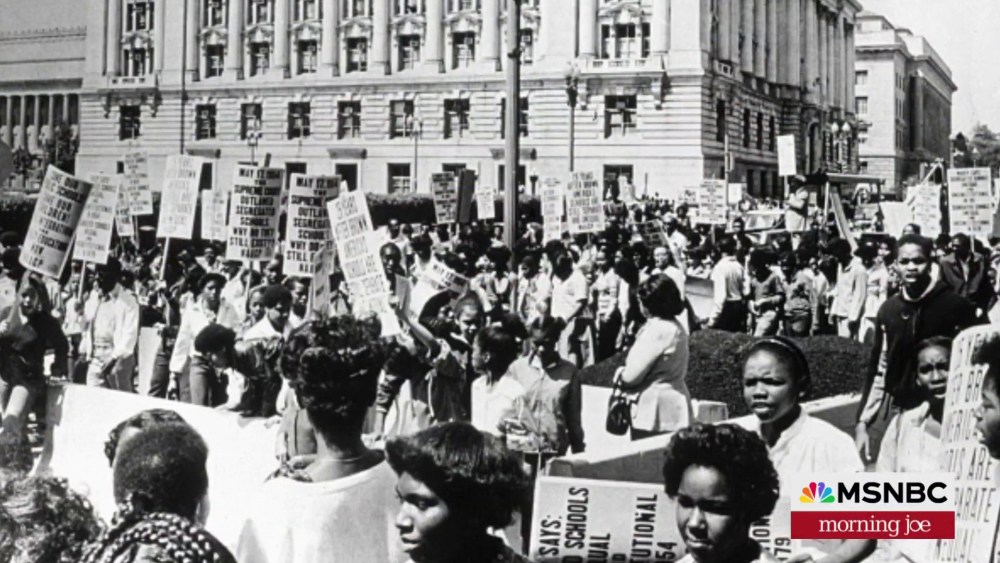
It has been almost four days and I’m still experiencing restless sleep after reading Nikole Hannah-Jones’ essay in The New York Times, “In Fighting for Every Black Child, Did I Betray My Own?” Trained as an English teacher in New York City, I’m a Black woman who taught for 10 years at a school similar in all ways but one to the middle school where Hannah-Jones sent her daughter. Hannah-Jones’ bright, ambitious teenager accused her mother of intentionally sending her to “a bad school” when her class privilege could have bought better options.
I taught at a school founded by a white woman philanthropist who wanted to give students who lived north of 96th Street in Manhattan the “same” educational opportunities her own children had. Her privilege brought with it funding and resources that other schools in our district struggled to access. Although I taught mostly in the middle school, I joined my high school colleagues in boasting of our 100% high school graduation rate and 100% college acceptance rate. We knew we were doing great work. We also knew we were an exception to the many schools failing Black and brown students across all five boroughs.
We knew we were doing great work. We also knew we were an exception to the many schools failing Black and brown students across all five boroughs.
At the heart of Hannah-Jones’ essay is a mother with a long, distinguished history of writing about school segregation and how it operates, trying to articulate the deep, relentless and intentional segregation of New York City public schools — and who wanted to protect her daughter from the social