by Imran Khalid | Apr 5, 2026 | Opinion
As the United States and Israel enter the second month of Operation Epic Fury, the conversation in Washington has shifted from the tactical to the transformational. President Donald Trump’s April 1 prime-time address — declaring that core military objectives are “nearing completion” and that the “hour of freedom is at hand” — has accelerated a dangerous countdown. While the degradation of missile sites and the blockade at the Strait of Hormuz represent a tactical endgame, they also expose a strategic void: the question of who, exactly, will hold the keys to Tehran once the jets fall silent.
Beneath the applause of the convention circuit lies a profound geopolitical gamble that the West has lost before.
In this vacuum, a familiar ghost of history has reappeared to offer an answer. Reza Pahlavi, the exiled Crown Prince of Iran, son of the former shah, has emerged as a seductive head of “government-in-waiting.” His vision, recently pitched to enthusiastic crowds in Texas during the Conservative Political Action Conference, promises a post-revolutionary Iran that recognizes Israel, signs the Cyrus Accords, and opens a trillion-dollar market to American investment.
But beneath the applause of the convention circuit lies a profound geopolitical gamble that the West has lost before. While Trump has recently signaled skepticism about Pahlavi leading Iran, Pahlavi remains a rockstar figure for the interventionist wing of the Republican Party that views him as the key to a post-revolutionary framework. The enthusiasm for Pahlavi among a powerful segment of Washington suggests a return to the “liberator in a suit” archetype. While Vice President JD Vance — the current favorite for 2028 — has remained a vocal
by Adam Johnson | Apr 5, 2026 | Article, Iran, Media Criticism, Opinion, Politics and Movements: International, Politics and Movements: US, War
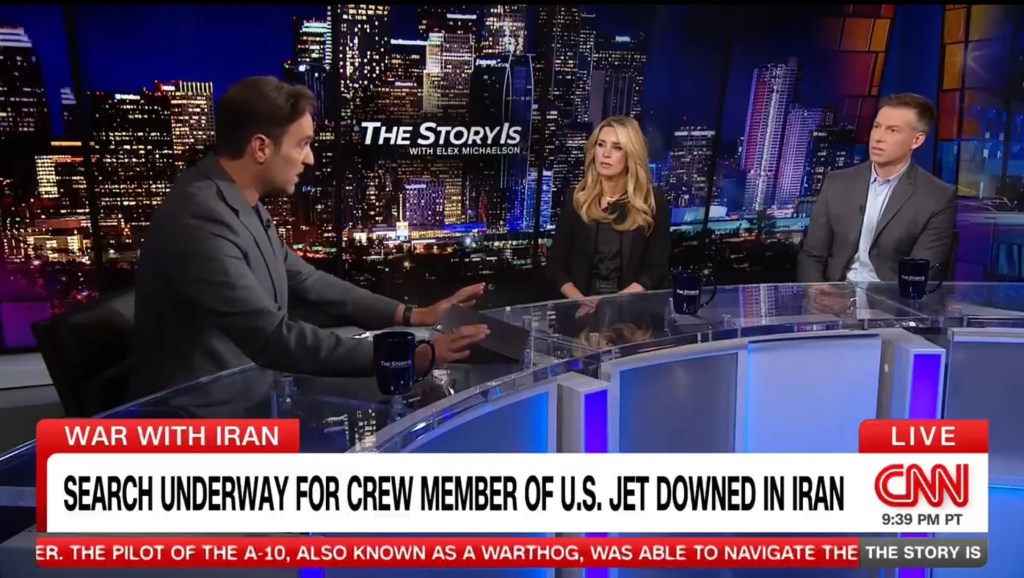
The term “hostage” is broadly understood to be the illegitimate capture of a civilian in order to extract concessions from a government or military actor. A “prisoner of war” is broadly understood to be a combatant captured by an adversary in the course of a battle. The former conveys innocence on the part of the captured and illegitimacy, terrorism and criminality on the part of the capturer. The latter conveys a lawful and reasonable response to being attacked by another military actor. Thus, how and why our media is framing Iran’s response to the unprovoked attack by the US is of tremendous importance: any potential “hostage crisis” could be used to further escalate the conflict and rally public support behind increased military aggression on the part of the US-Israeli coalition.
So it’s noteworthy that the mere potential of a single American being captured by Iran is immediately being framed by western media as an illegitimate act of aggression on the part of the country he or she was bombing. Indeed, several major Western media outlets are already rushing to frame the capture of a prisoner of war as a “hostage”:
Times of London: “US fighter pilot feared to have been taken hostage by Iran”
BBC: “If the airman is taken hostage and images circulated, it will be a propaganda victory for Iran”
ABC News Australia: “If the missing pilot is taken hostage…” “A US pilot taken hostage…”
“US fighter pilot… taken hostage by Iran.” Let us stew in that Orwellian phrasing for a bit. Though they do not explicitly call the downed pilot is a “hostage,” the New York Times dutifully orients his capture squarely
by Zeeshan Aleem | Apr 4, 2026 | Opinion
“With a little more time, we can easily OPEN THE HORMUZ STRAIT, TAKE THE OIL, & MAKE A FORTUNE,” President Donald Trump posted on social media Friday morning. “IT WOULD BE A “GUSHER” FOR THE WORLD???”
It was another day, another ludicrous Trump post — but one that could portend serious consequences for his disastrous war on Iran. It’s unlikely that Trump actually wants the consequences that would come with trying to take control of the strait, and it certainly wouldn’t be easy.
During his primetime address about the war Wednesday night, Trump signaled that he was willing to let Iran maintain control of the Strait of Hormuz and let the other countries sort out the mess he made. Trump said “we don’t need” the oil that passes through the strait, and he called on other countries to “go to the strait and just take it, protect it, use it for yourselves.” He added, “When this conflict is over, the strait will open up naturally.”
Any serious attempt to reopen the strait by force would almost certainly prolong the war.
But on Friday, Trump appeared to be floating the idea that with more time, the U.S. could seize the strait — and profit from it. (He posted later in the day, “KEEP THE OIL, ANYONE?”) That post echoed his intermittent yearning for a Venezuela-style solution to the conflict with Iran, in which he siphons off resources from a country he’s successfully brought to heel.
But in its response to U.S. military power, Iran has proved to be nothing like Venezuela. The war has already exceeded Trump’s initial longer range estimate of five weeks, and any serious attempt to
by Walker Schulte Schneider | Apr 4, 2026 | Opinion
On Sunday night, March 22, four masked men forced open the front door to the Magnani-Rocca Foundation, a private art collection nestled in the fields of northern Italy. In less than three minutes, the thieves climbed the stairs, turned left, and entered the French Room, where they grabbed three paintings off the wall: “Les Poissons” (1917) by Pierre-Auguste Renoir; “Still Life with Cherries”(1890) by Paul Cézanne; and “Odalisque on the Terrace” (1922) by Henri Matisse.
They intended to keep going — authorities later found another Renoir taken off the wall — but the alarm sounded, forcing the thieves to abandon their work and flee by climbing over a fence. They remain at large.
The name of the game these days is more smash-and-grab than “Thomas Crown Affair.”
You might be wondering: another one?
You bet, and it’s not just you — a lot of people seem to agree that art heists are becoming more common.
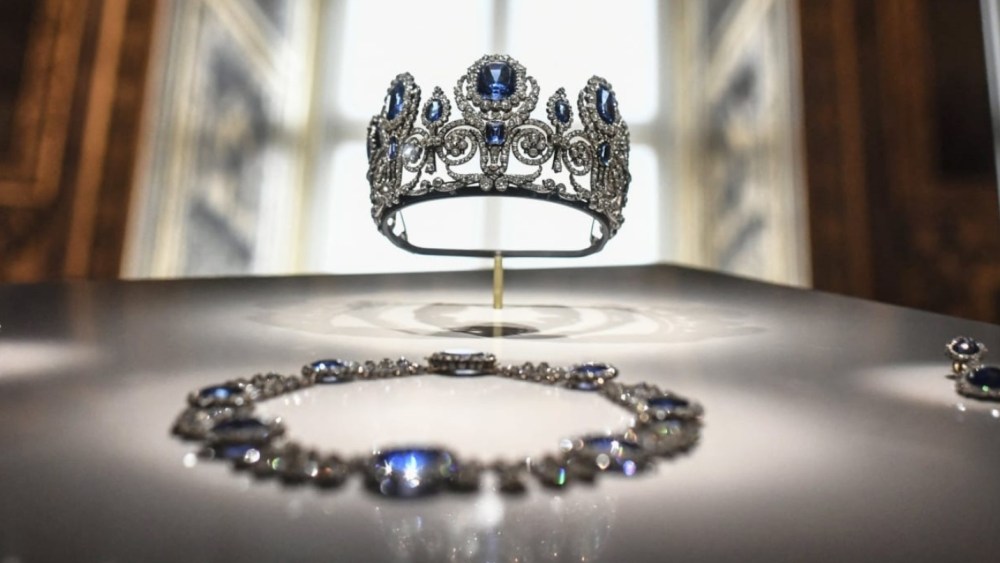
ARTNews reported that 2025 was “seemingly a record year for art theft.” The Magnani-Rocca robbery is the latest in a string of thefts targeting museums over the past year or so, what the Economic Times described as “part of a broader pattern … [of] high-profile museum burglaries.” The most famous is the Louvre robbery from last October, when a group of individuals hacked their way into the museum in broad daylight and made off with jewelry valued at roughly $100 million.
Lesser-known recent heists from the past year include: the Drents Museum (golden Romanian artifacts — three-quarters of which were returned this Thursday); the Adrien Dubouché National Museum (Chinese porcelain works); the French National Museum of Natural History (gold nuggets); the Bristol
by Ja'han Jones | Apr 4, 2026 | Opinion
The head of Catholic chaplains for the U.S. military said President Donald Trump’s war with Iran is not morally justifiable.
Archbishop Timothy Broglio’s remarks to CBS News’ “Face the Nation,” published in transcript ahead of an interview to air Sunday, are the latest evidence of growing backlash toward the president’s deadly and economically destructive war.
Broglio, who oversees more than 200 catholic priests who serve as chaplains for U.S. service members, said he agrees with Pope Leo XIV, who has condemned the war and the Trump administration’s promotion of it using biblical references and video game memes and has urged negotiations for peace.
In his remarks, the archbishop said:
Under the just war theory, it is not [justified] because while there was a threat with nuclear arms, it’s compensating for a threat before the threat is actually realized. And I think there, I would line myself up with Pope Leo, who has been urging for negotiation. I realize also that you could say, well, ‘with whom are you going to negotiate?’ And that is a problem. But in the meantime, lives are being lost, both there and also among our troops. So it is a concern.
The archbishop conceded that the Trump administration may have had information that led it to think war was the only option, but he said it’s “hard to cast this war, you know, as something that would be sponsored by the Lord.”
Broglio’s comments speak to a tension that Trump’s war and trigger-happy foreign policy has exacerbated between the administration and many in the Catholic community, including some of the president’s supporters. Those tensions seem unlikely to be helped by the
by Jay Michaelson | Apr 4, 2026 | Opinion
Democrats have a “genocide” problem. And they need to face it directly.
Polls have shown that somewhere between 72% and 77% of Democrats believe that Israel committed genocide in Gaza. But a significant percentage disagree, with some — particularly American Jews — alleging that the charge itself is evidence of antisemitic bias.
Meanwhile, the word “genocide” has become a litmus test for Democratic candidates, both in the 2026 election and looking ahead to 2028. It is now routine for candidates to be asked to raise their hand if they think Israel committed genocide.
No answer is without its costs. To answer “no” is a deal-breaker for progressives — “disqualifying,” in the words of online commentator Matt Bernstein. Yet to answer “yes” is disqualifying for many centrists. And to say “it’s complicated” — as potential presidential contender Gov. Andy Beshear of Kentucky and congressional candidate Scott Wiener of California have tried recently — doesn’t please anybody.
Behold, the Democrats’ circular firing squad.
Play
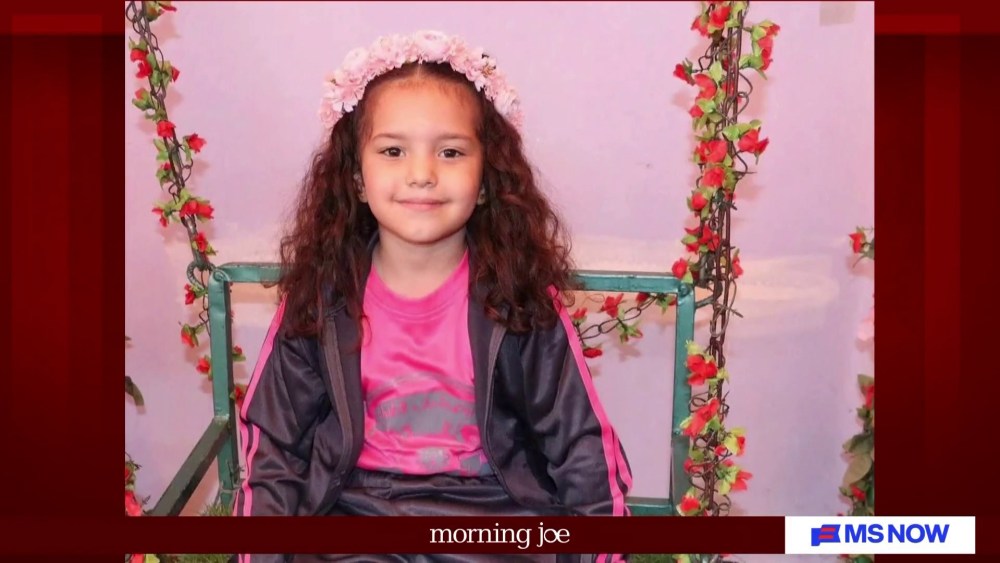
Oscar-nominated docu-drama tells the story of a five-year-old killed in Gaza
March 5, 2026 / 06:45
The truth is, Democrats are never going to all agree about this issue; it’s too explosive and too divisive. (I speak from experience, having written about it for three years.) But they can learn to disagree.
The first step is to observe that different people mean different things when they use the word.
For many progressives, only the word “genocide” describes the horror of 72,000 dead Palestinians (including thousands of children), a society in ruins, many likely war crimes and a military campaign conducted with reckless disregard for the lives of the innocent people caught in the crossfire. Indeed, there was so