by Dean Baker | May 19, 2026 | Article, Economy and Inequality, Iran, Oil, Politics and Movements: International, Politics and Movements: US, Reprint, War
This article originally appeared on Dean Baker’s Patreon. It is reprinted here with permission.
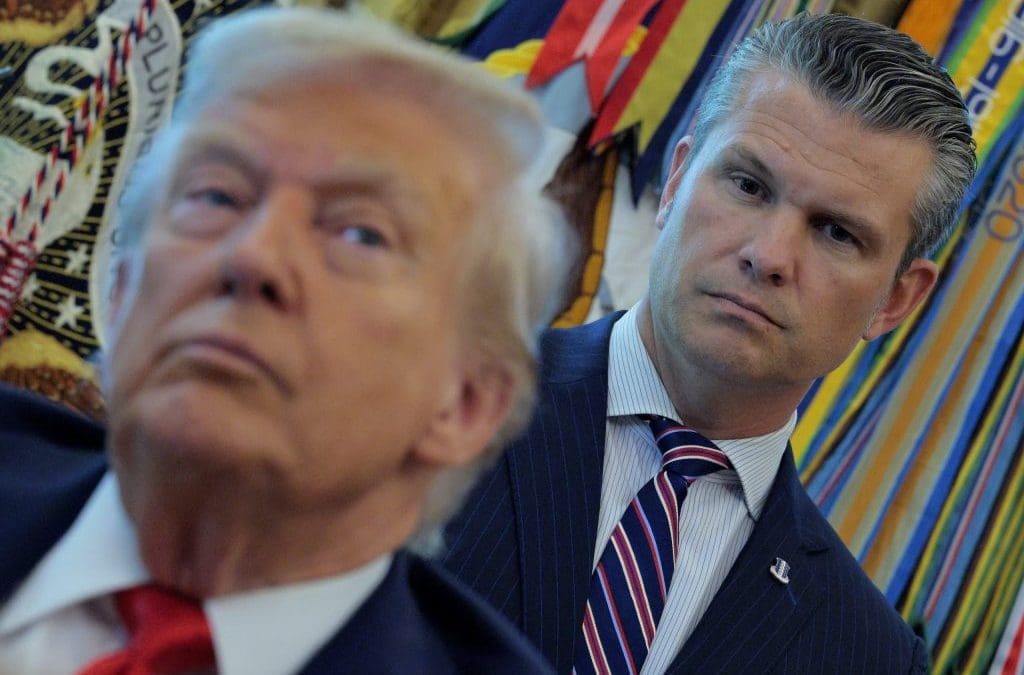
Our Secretary of Defense (or War) Pete Hegseth seems to be having a really great time killing people in Iran, but his live action video games come at a big cost, not just in lives, but in budget dollars. To be clear, the main reason to be opposed to this pointless war is its impact on the people of Iran and elsewhere in the region. But it also has a huge economic cost that is seriously underappreciated.
The short-term cost is the shortage of oil, natural gas, fertilizers, and other items that would ordinarily travel through the Straits of Hormuz. This shortage has already sent prices of many items soaring. The impact is not just on the goods themselves, but there is a large secondary impact due to higher shipping costs, and if fertilizer supplies are not resumed soon, higher food prices, due to lower crop yields. This is a big hit to people in wealthy countries, but it is life-threatening to people living on the edge in Sub-Saharan Africa and South Asia.
But in addition to the short-term cost, there is also a longer-term cost insofar as we are making new enemies and therefore will have higher bills for military spending long into the future. We already got the first taste of this as the Trump administration floated the idea of a $200 billion special appropriation to cover the cost of the war.
The Military is Really Big Bucks
There is remarkably little appreciation of how much money is at stake with wars and the military. This is because the media
by Ja'han Jones | May 19, 2026 | News Analysis
Happy Tuesday! Here’s your Tuesday Tech Drop, the past week’s top stories from the intersection of politics and technology.
GAO’s DOGE probe hampered
Officials at some federal agencies are reportedly stonewalling the Government Accountability Office’s investigation into what sensitive information Elon Musk and other federal employees may have accessed while working for the so-called Department of Government Efficiency.
The Washington Post reported on officials who have spurned requests from the GAO, which conducts audits and investigations into federal misconduct. Wouldn’t you like to know whether and how Musk and his minions garnered access to some of the government’s most highly guarded documents? I, for one, am certainly curious why some officials are blocking these efforts.
A GAO spokeswoman told the Post that the agency remains “committed to fulfilling our statutory audit responsibilities,” adding, “Timely cooperation from [a] federal agency is essential to ensuring Congress has the information it needs to conduct effective oversight.”
I don’t know about you, but to me that sure sounds like “you better hand over the documents.”
Read more at The Washington Post.
Elon’s latest L
Musk lost his lawsuit against OpenAI that could have led to a massive overhaul of the artificial intelligence company. The ruling, which the X owner has vowed to appeal, was something of a victory for OpenAI and its CEO, Sam Altman.
But Altman didn’t survive unscathed, as there were parts of the trial that made him appear quite untrustworthy.
Read more at Bloomberg.
Trump’s stock trades
I wrote about a new financial disclosure showing that President Donald Trump bought and sold stocks in tech companies, including Palantir and Nvidia, while his administration has had a hand in regulating — and enriching —
by Shireen Akram-Boshar | May 19, 2026 | Flotilla, Gaza, Gaza Blockade, Global Sumud Flotilla, News, Palestine, Sanctions, Trump Administration
On Tuesday, the U.S. Department of the Treasury sanctioned four Gaza flotilla activists, baselessly smearing them as part of “Hamas support networks.” The four activists — Saif Abukeshek, Jaldia Aueda, Hisham Abu Mahfuz, and Mohammed Khatib — are part of the Global Sumud Flotilla, a flotilla attempting to break Israel’s siege of Gaza in order to deliver humanitarian aid to Palestinians.
Source
by Chris Walker | May 19, 2026 | 2020 presidential election, Capitol Attack, Donald Trump, January 6, News, Oath Keepers, Proud Boys, Todd Blanche
During Senate testimony on Tuesday, acting Attorney General Todd Blanche told senators that anybody in the U.S. who feels they’ve been wrongly targeted by federal prosecutors or investigators will now be eligible for millions of dollars in payouts — including violent participants in the January 6, 2021, attack on the U.S. Capitol building. The new “anti-weaponization fund” is the result of a…
Source
by Steve Benen | May 19, 2026 | Justice Department, Maddowblog, News, Politics
In broad strokes, the deal between Donald Trump and his own administration appears corrupt but straightforward: The president withdrew his deeply foolish $10 billion civil suit against the Internal Revenue Service, and in exchange, he and his team will put $1.776 billion of taxpayer money into a “fund” that is expected to benefit the Republican’s allies.
These basic contours of the agreement, widely panned as a “slush fund” by Democrats and legal experts, were evident not only in public reporting from independent news organizations but also in a nine-page agreement that Trump’s Justice Department released on Monday, offering details about the structure of the scandalous deal.
One day later, Trump’s team quietly decided to add something important. Politico reported:
[A] one-page document posted on the DOJ website early Tuesday includes a sweeping release under which the IRS is “forever barred and precluded” from pursuing “examinations” of Trump, “related or affiliated individuals,” and related trusts and businesses.
The waiver specifically encompasses “tax returns filed before the effective date” of the settlement, which was Monday.
The brief, three-paragraph addendum was signed by acting Attorney General Todd Blanche (who, incidentally, did not sign Monday’s nine-page agreement), and posted online on Tuesday afternoon after Blanche’s appearance before the Senate Appropriations Committee wrapped up.
In addition to the “fund” worth nearly $1.8 billion, Trump can also take comfort in knowing that, according to his DOJ, the IRS won’t pursue any pending tax claims against him, members of his family or his highly controversial family businesses.
A New York Times report added, “[P]rotection from audit could be quite remunerative for Mr. Trump. In 2024, The Times reported that a loss in an I.R.S.