by Ali Velshi | Jul 28, 2026 | elections, The 11th Hour, White House
This is an adapted excerpt from the July 27 episode of “The 11th Hour with Ali Velshi.”
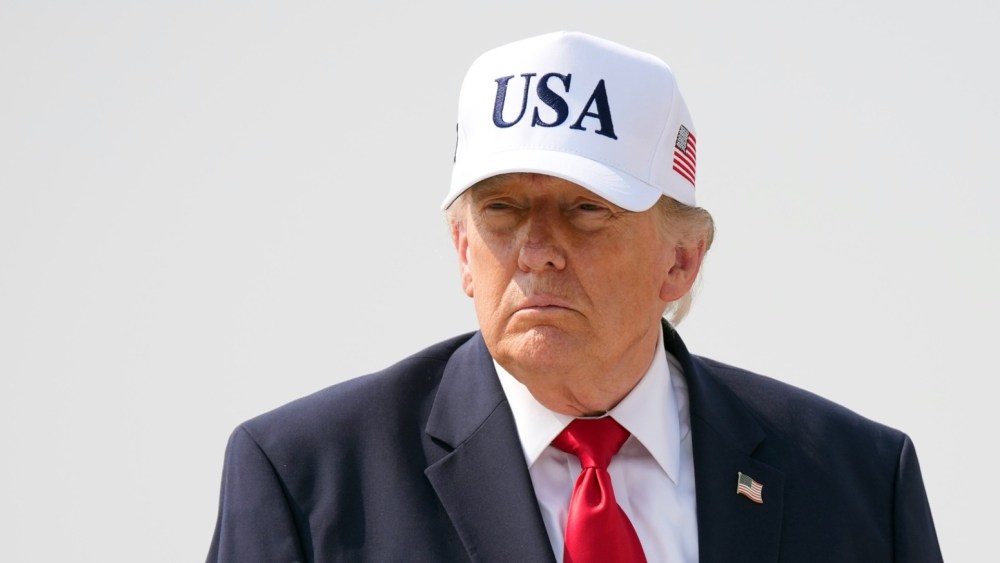
With less than 100 days to go until the midterm elections, President Donald Trump returned to the campaign trail this week, ostensibly to stump for swing-state candidates. However, his real strategy runs on a parallel track that has nothing to do with winning elections by winning more votes, and the president could not help but reveal that during a stop in Michigan on Monday.
Michigan is a battleground state that has become a top priority for Republicans, who widely believe the Senate seat being vacated by Democrat Gary Peters is winnable and perhaps their party’s best opportunity to pick up a seat in the upper chamber this year.
Trump was supposedly there to promote Republicans’ economic agenda, but what he had to say didn’t match up with the experiences many Americans are facing. There was no mention of the high gas prices caused by his war of choice with Iran and no mention of the bipartisan housing bill that became law without his signature and despite his attempt to stonewall it.
He did, however, rail against mail-in ballots, talk up restrictive voter ID and onerous proof-of-citizenship requirements and peddle his voter suppression bill known as the SAVE America Act, a bill that would likely disenfranchise more than 21 million people who can’t readily access the right kind of documents.
Sowing doubts about the midterms is no longer a fringe operation, it’s the executive branch’s official position.
And that’s exactly how he showed his hand. The event had all the trappings of a typical campaign rally, but there was no getting
by Amy Goodman | Jul 28, 2026 | Abelardo de la Espriella, Colombia, Gustavo Petro, ICE, immigration jails, Interview, Marco Rubio
A prominent Colombian activist left the United States after he was arrested by immigration agents and detained for over a month in an ICE jail. Franklin Humberto Coral Garrido, known as Beto Coral, was a frequent online critic of far-right President-elect Abelardo de la Espriella, a Trump ally, in the run-up to Colombia’s election. In a memo obtained by The New York Times in June, U.S.
Source
by Martina E. Vandenberg | Jul 28, 2026 | Business, Opinion, World
Last week, U.S. Trade Representative Ambassador Jamieson Greer announced a new round of sweeping tariffs against 60 countries, which collectively account for more than 99.4% of U.S. trade. After the Supreme Court toppled President Donald Trump’s original tariff regime, Greer took steps to make sure these tariffs would stick. In launching the investigation that justifies the new tariffs, the U.S. trade representative set a test that countries were doomed to fail.
The U.S. government investigation demanded that each country prove that it imposed and effectively enforced a ban on the importation of goods made in whole or in part by forced labor. That inquiry fueled a grueling, monthslong regulatory process that garnered more than 2,100 public comments, testimony by more than 100 witnesses and generated two written reports. The final 431-page report determined that every country under scrutiny had committed unfair trade practices under Section 301 of the Trade Act of 1974. As a result, 19 countries now face 10% tariffs; another 41 countries face tariffs of up to 12.5%.
In launching the investigation that justifies the new tariffs, the U.S. trade representative set a test that countries were doomed to fail.
Crucially, the question the Office of the U.S. Trade Representative asked was not whether a country had forced labor in its own markets; every nation does, including the United States. The question was whether each country sufficiently blocks goods tainted with forced labor from entering its markets. American exceptionalism prevailed. According to the Office of the U.S Trade Representative, “The United States is the only country in the world to adopt, and effectively enforce, a ban on imports made with forced labor.”
This
by Sharon Zhang | Jul 28, 2026 | Corruption, Gambling, News, Polymarket, Prediction Markets, Sports Betting
Americans spent nearly $170 billion on sports bets in 2025, representing more than double the amount Americans spent on movies, books, music, and museums combined last year, a new analysis finds as the betting industry turns to increasingly predatory tactics. According to an analysis by Fortune, Americans placed $166 billion in sports bets last year, while spending a total of $70 billion…
Source