by Ali Velshi | Jul 28, 2026 | elections, The 11th Hour, White House
This is an adapted excerpt from the July 27 episode of “The 11th Hour with Ali Velshi.”
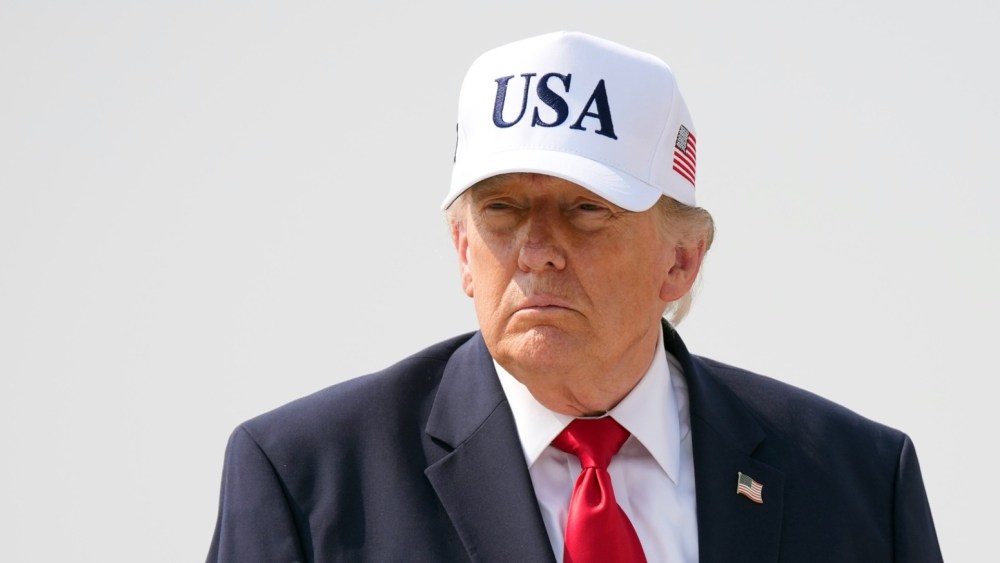
With less than 100 days to go until the midterm elections, President Donald Trump returned to the campaign trail this week, ostensibly to stump for swing-state candidates. However, his real strategy runs on a parallel track that has nothing to do with winning elections by winning more votes, and the president could not help but reveal that during a stop in Michigan on Monday.
Michigan is a battleground state that has become a top priority for Republicans, who widely believe the Senate seat being vacated by Democrat Gary Peters is winnable and perhaps their party’s best opportunity to pick up a seat in the upper chamber this year.
Trump was supposedly there to promote Republicans’ economic agenda, but what he had to say didn’t match up with the experiences many Americans are facing. There was no mention of the high gas prices caused by his war of choice with Iran and no mention of the bipartisan housing bill that became law without his signature and despite his attempt to stonewall it.
He did, however, rail against mail-in ballots, talk up restrictive voter ID and onerous proof-of-citizenship requirements and peddle his voter suppression bill known as the SAVE America Act, a bill that would likely disenfranchise more than 21 million people who can’t readily access the right kind of documents.
Sowing doubts about the midterms is no longer a fringe operation, it’s the executive branch’s official position.
And that’s exactly how he showed his hand. The event had all the trappings of a typical campaign rally, but there was no getting
by Ali Velshi | Jul 3, 2026 | News, The 11th Hour
This is an adapted excerpt from the June 30 episode of “The 11th Hour with Ali Velshi.”
In the 2024 elections, $9.5 billion was spent on congressional races, and $5.3 billion on the presidential race, for a total of $14.8 billion on federal political campaigns, according to data compiled by Open Secrets.
That makes 2024 the second-most expensive election cycle in history, second only to the 2020 election figure of $18.7 billion.
This is not the way the system is supposed to work. Or is it?
Of that $14.8 billion, an estimated $1.9 billion came from so called “dark money groups, nonprofits and shell companies that spend on elections without revealing their donors,” a figure that nearly doubled from 2020, according to the Brennan Center for Justice.
One man, Elon Musk, the world’s richest man and an ardent backer of far-right causes, spent more than $291 million in the 2024 elections, an analysis by Open Secrets found. That made him the biggest individual political donor in the entire 2024 election cycle.
In this election cycle, Musk has poured another $85 million into groups supporting Republicans running in the midterms, per The Washington Post.
This is not the way the system is supposed to work. Or is it?
A majority of Americans don’t seem to think so. Seventy-two percent say there is too much money in politics, according to recent polling from Politico. That many Americans usually don’t agree on much of anything.
But too much money in politics is there by design. Campaign finance laws allow outside groups to pour vast sums into elections.
And here’s the thing: It’s a really bad return on the investment. The U.S. stands alone