by Jonathan Fritz | Sep 26, 2026 | Opinion, White House, World
From the perspective of advancing U.S. interests on issues that directly matter to the American people, Xi Jinping’s visit to Washington scored somewhere between low and incomplete. But even as we await the final grades on specific deals hashed out during the summit, the Trump administration is likely headed for a solid F on geopolitical messaging that humiliated the United States — and resulted in no strategic gains for the nation or its allies.
President Donald Trump rolled out far more than a very long red carpet for the visiting leader of the People’s Republic of China. Trump and the first lady met Xi and his wife, Peng Liyuan, on the tarmac. (Before Trump greeted Russian leader Vladimir Putin on the tarmac in Alaska in 2025, no U.S. president had welcomed a foreign leader in that fashion since John F. Kennedy.) Trump also provided full official honors, ordered a military jet flyover and gushed about his “great friendship” with the Chinese leader.
This treatment stands in stark contrast to the way the visiting leaders of America’s most important Indo-Pacific allies have been received during Trump’s second term.
This treatment stands in stark contrast to the way the visiting leaders of America’s most important Indo-Pacific allies have been received during Trump’s second term.
Australian Prime Minister Anthony Albanese was met only by the Australian ambassador when he came to Washington in fall 2025. Japanese Prime Minister Sanae Takaichi — who has faced heavy economic and diplomatic pressure from China ever since telling her parliament that a Chinese attack on Taiwan might constitute an existential threat for Japan — arrived at the airport earlier in the
by Michael A. Cohen | Sep 25, 2026 | Economy, Opinion, White House, World
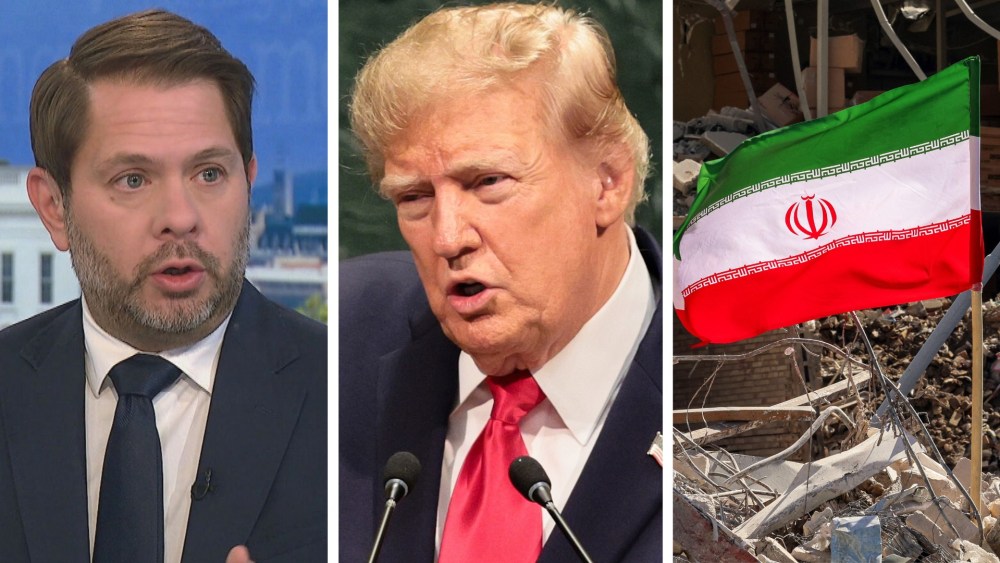
If recent public opinion polling is correct, the Republican Party is on the verge of an electoral bloodbath. While it’s typical for the incumbent party to struggle in midterm elections, the situation today for the GOP is far more perilous — and a big part of the reason is President Donald Trump’s decision to go to war against Iran.
More than 200 days since it began, it’s clear that the Iran war is a strategic disaster, and that view is widely shared by the American people. Support for the war routinely polls in the low-30s, but of greater concern for Republicans are the second and third order effects of the war.
Gas prices are up around 50% since the war began — and have spiked this month. Sticker shock at the pump has contributed to higher inflation, a more than 20% rise in airline ticket prices (because of higher jet fuel costs) and even a 1.25 percentage point jump in mortgage rates, because the Federal Reserve has been forced to keep interest rates higher.
In a new report I wrote this week for the Stimson Center, a nonpartisan foreign policy think tank in Washington, D.C., Mark Zandi, the chief economist at Moody’s Analytics, estimated the total cost of the war at $220 billion — that’s approximately $1,650 per average American household.
More than 200 days since it began, it’s clear that the Iran war is a strategic disaster, and that view is widely shared by the American people.
The Pentagon’s share of the Iran debacle is around $40 billion and the costs keep ticking up. To make matters worse, the United States has used
by Julia Jester | Sep 25, 2026 | Iran, News, White House, World
Israeli Prime Minister Benjamin Netanyahu on Thursday defended his government’s actions against Palestinians and Iranians, telling delegates to the U.N. General Assembly that Israel would not stop fighting.
“Devastating Iran’s nuclear facilities was hard. It was very hard to do. But for me, it was one of the easiest decisions I’ve ever had to make as prime minister, because if we hadn’t done it, we’d all be dead,” he said, striking a defiant tone.
“We will continue to defend our state. We will continue to win because we have no other choice,” he said.
He dismissed accusations that Israel’s war in Gaza amounts to genocide against Palestinian civilians. “Accusing Israel of genocide is the greatest lie of the century,” Netanyahu said.
As some people booed him and walked out of the hall where he addressed U.N. member nations, Netanyahu said, “If there are any other moral cowards who haven’t yet left this hall, please do so now.”
He addressed his critics directly, including New York City Mayor Zohran Mamdani.
“Mr. Mamdani, since you are elected mayor of this city, many Jews no longer feel safe in New York. They talk to me. They tell me this isn’t the city we remember. It changed so quickly. Now it’s no wonder. You praise criminals convicted of supporting Hamas. You count as friends people like Hassan Piker, who said America deserved 9/11. America deserved 9/11. Some friends you have.”
Netanyahu came to the United Nations with high stakes, a tight timeline and few friends. Not even his close ally President Donald Trump, who has yet to endorse him for re-election, stuck around. (Trump left New York before Netanyahu’s arrival
by Allison Detzel | Sep 25, 2026 | Economy, Iran, News, World
MS NOW’s Ali Velshi tore into Marco Rubio, blasting the secretary of state for his “nonsense” claim that diesel prices would be three times their current price if not for Donald Trump’s war with Iran. The “11th Hour” host said Rubio’s remarks proved he wasn’t the “adult in the room” in the Trump administration, as some thought he would be.
During an interview with Fox News, Rubio was asked about the skyrocketing price of diesel, which on Tuesday hit a record high of $6.53 a gallon — up more than 75% from a year ago, according to AAA.
“Every American president says it. Every world leader you meet with tells the president, ‘We agree they can’t have a nuclear weapon,’” Rubio said on Tuesday. “Eventually someone has to do something about it, or it’s going to happen.”
“And then imagine North Korea, but in the Middle East; that would be catastrophic for the world,” he added. “And you wouldn’t be paying $6 or whatever diesel is this morning — you’d be paying triple that.”
But Velshi wasn’t buying it.
“Come on, man — come on,” he said in response to Rubio’s comments. “I used to like you. I used to think you were smart.”
“This nonsense about [how] diesel would have been $18 a gallon if we didn’t attack Iran — that’s not true,” Velshi said. “There was a way to get Iran to not have a nuclear weapon: It was called the Joint Comprehensive Plan of Action, the Iran nuclear deal that was signed in 2015 under the Obama administration.”
The MS NOW host said the agreement “was demonstrated to be working” before “it was ripped
by Steve Benen | Sep 24, 2026 | Maddowblog, White House, World, World News
Around this time seven years ago, Donald Trump came up with a rather outlandish plan. As the White House prepared to host a G7 summit, the president decided the ideal location for the international gathering would be at the Miami-area Doral Resort and Spa — which Trump’s family business happens to own.
Two days later, amid bipartisan pushback, the Republican abandoned the plan and presented himself as a victim.
In his second term, Trump appears far more indifferent to pushback, which is probably why he decided that Doral would be the ideal location for the upcoming G20 summit.
The implications of such a move are significant for reasons the White House ought to understand. The U.S. Constitution includes a provision known as the “Emoluments Clause,” which prohibits U.S. officials from receiving payments from foreign governments; and in this case, the president is effectively telling many of the world’s most powerful leaders that if they wish to participate in an international gathering, they’re required to spend money at a for-profit business owned by the Trump Organization, fueling unavoidable corruption concerns.
But as it happens, that’s not the only problem. MS NOW reported:
Secretary of State Marco Rubio said the U.S. had invited [Vladimir] Putin to the Group of 20 leaders’ summit in Miami in December, saying it would be an opportunity for the Russian president to engage with world leaders.
“We think it’s an opportunity for him to engage not just with the president but with other world leaders,” Rubio said after his meeting with Russian Foreign Minister Sergey Lavrov. “We hope that’s an invitation he’ll accept.”
The Wall Street Journal published an analysis after the announced invitation,
by Ebony Davis | Sep 24, 2026 | Business, News, White House, World
The United States and China have agreed to extend their trade truce through Jan. 10, Treasury Secretary Scott Bessent announced Wednesday.
The extension provides a short-term reprieve from economic tensions as Chinese President Xi Jinping arrived in Washington earlier Wednesday for a high-profile state visit hosted by President Donald Trump.
Bessent announced the extension on Fox News after meeting with Chinese Vice Premier He Lifeng, his second meeting with China’s top economic official in four days.
“We met today to see if we could do a bigger deal as opposed to just a series of smaller things,” Bessent said. “We have agreed today that we will extend what we call the Busan Agreement.”
The agreement extends a nearly yearlong trade truce reached by Trump and Xi in Busan, South Korea, last October that de-escalated a tariff fight between the world’s two largest economies. Under that agreement, Washington lowered some tariffs on Chinese goods, while Beijing agreed to pause new restrictions on rare earth minerals, resume purchases of U.S. soybeans and take steps to curb the flow of fentanyl precursor chemicals.
The truce had been scheduled to expire Nov. 10. The extension also removes a looming source of uncertainty ahead of Thursday’s meeting between Trump and Xi and gives negotiators more time to work toward a broader trade agreement.
Xi’s visit marks his first state visit to the U.S. in more than a decade as the two countries navigate disputes over trade, technology and national security. Trump is set to welcome Xi to the White House on Thursday for talks expected to focus on those issues.
Earlier Wednesday, Bessent said China had raised the possibility of pursuing a