by Ashish Malhotra | Jul 13, 2026 | 2026 World Cup, Donald Trump, Egypt, FIFA, FIFA World Cup, Gianni Infantino, Global South, Iran, Op-Ed, Palestine, Sports, World Cup
It’s hard to say for sure because of the wizardry involved. But Egyptian forward Haissem Hassan took what looked like eight touches of the ball on every part of his left foot imaginable, dancing in between and around two Argentine defenders, before ever putting it on his right. One touch on that right foot, followed by a final move from his left, and the Egyptian forward had done most of the…
Source

by Roey Hadar | Jul 11, 2026 | Opinion, Sports
The quarterfinals of the FIFA Men’s World Cup are underway. And the tournament’s most consequential actor has not been a star player, like Argentina’s Lionel Messi, or even President Donald Trump. No, the most important figure has been the post of video assistant referee, or VAR.
The premise is simple: Should the referee on the field make a “clear and obvious error,” or if there is a “serious missed incident,” another referee sitting off-site in a room with myriad camera feeds can help the in-stadium ref review and correct the mistake.
Nowadays, nearly every burst of joy from a goal is tempered for several minutes by a lengthy wait, either for referees to decide whether they will review it or by the review itself.
It’s a great idea on paper. But the perfect has become the enemy of the good. Instead, even as VAR has been increasingly used in soccer over the past decade, it has become a byword for long reviews and questionable officiating. And its use at this World Cup has felt arbitrary, at best a minimal improvement over human judgment.
At least three dramatic moments in this tournament were altered by VAR.
Croatia’s dramatic last-second equalizer in its round of 32 match against Portugal was called back after VAR used sound-wave technology inside the ball to decide that the goal scorer was offside due to a nearly invisible touch of the ball from a teammate.
The day before, in the round of 32 game between the U.S. and Bosnia and Herzegovina, VAR’s input led to the on-field referee showing U.S. player Folarin Balogun a red card, resulting in an automatic ban. The fallout was
by Noor Noman | Jul 11, 2026 | culture, Opinion, Sports
Joy is perhaps one of the most vulnerable things we can experience. It is an unmediated emotion — unlike anger, for instance, which shrouds pain, or even a deep sense of care. And revealing unmediated emotions is incredibly vulnerable.
Hegemonic masculinity does not give men much permission to experience joy and pleasure (in nonsexual contexts) and its concomitant vulnerability: Rarely do we see men giddy. But this FIFA World Cup has given men permission to experience joy and giddiness in a way that is both rare and profound.
As the underdog Norway prepares to take on England in a quarterfinal match in Miami on Saturday, video of Norway fans’ Viking row (both in stadiums and elsewhere, like in Times Square) have been shared and reshared all over the internet.
Every new viral moment evinces this kind of joy. Take, for instance, Scots descending on America in kilts and chanting “No Scotland, No Party” to the tune of The White Stripes’ “Seven Nation Army” wherever they go; and Egyptians dancing in the streets of Vancouver to music, celebrating their team’s win against against New Zealand; Brazilian fans (alongside some Mexican fans) taking a break from celebrating their team’s win against Japan to console a Japanese fan in tears, holding him as he cried and then cheering him up. Then, there’s the Democratic Republic of Congo superfan, who captured the world’s attention by paying homage to the country’s first president, Patrice Lumumba — a crucial figure in the anticolonial, independence movement — posing as an unflinching statue of the politician at Congo matches.
Play
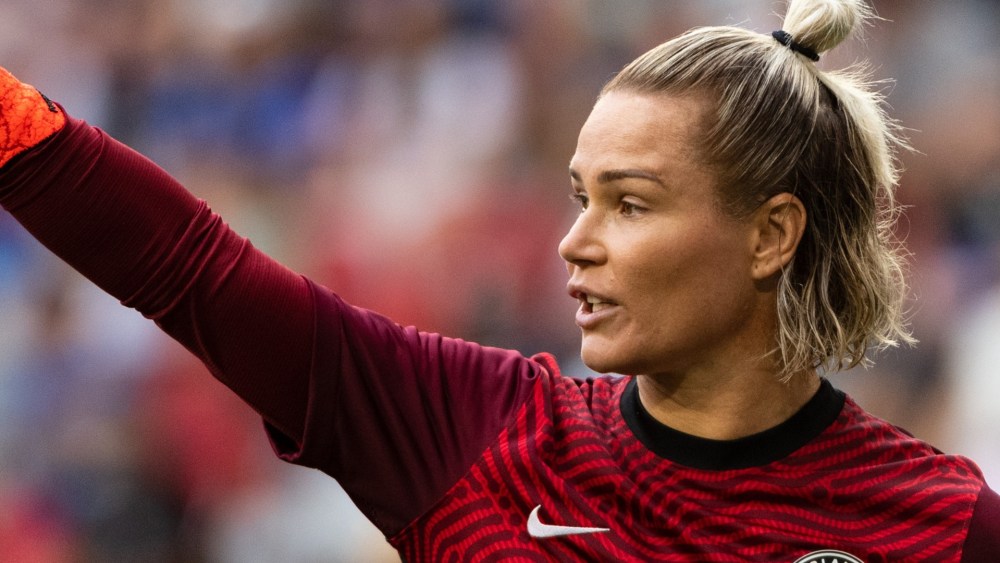
Ashlyn Harris reflects on her legacy in women’s soccer in “Gamechangers” documentary
June 29,
by Sharon Zhang | Jul 7, 2026 | FIFA, International Olympic Committee, Israel, News, Olympics 2016, Russia, Sports, Ukraine
The International Olympic Committee (IOC) announced on Tuesday that it’s lifting its three-year suspension of Russia, paving the way for Russian athletes to compete in future Olympic Games despite the country’s ongoing invasion of Ukraine. The group said in a press release that the decision was made after a “thorough analysis” by its legal arm concluded that the Russian Olympic Committee…
Source
by Kavitha A. Davidson | Jul 6, 2026 | Opinion, Sports, White House
Folarin Balogun is having himself a World Cup. The U.S. Men’s National Team striker has scored three goals in three games to help the Americans reach tonight’s Round of 16 match against Belgium. But after putting the U.S. ahead against Bosnia-Herzegovina on Wednesday, Balogun received a red card, which meant he was suspended for the following game. His absence was the big story heading into tonight’s match, with the U.S. men hoping to reach the World Cup quarterfinals for the first time since 2002.
But over the weekend, Balogun, through no fault of his own, found himself at the center of one of the biggest in-tournament controversies in World Cup history. On Sunday, FIFA stunningly announced that Balogun’s automatic ban would be suspended after an internal review. It is the first time a ban issued during a World Cup has been suspended since 1962 and appears to have come at the behest of American officials, including President Donald Trump.
This is the first time in recent memory that a FIFA ruling has so directly benefited the Americans on the field, and it comes after years of Infantino courting Trump’s favor.
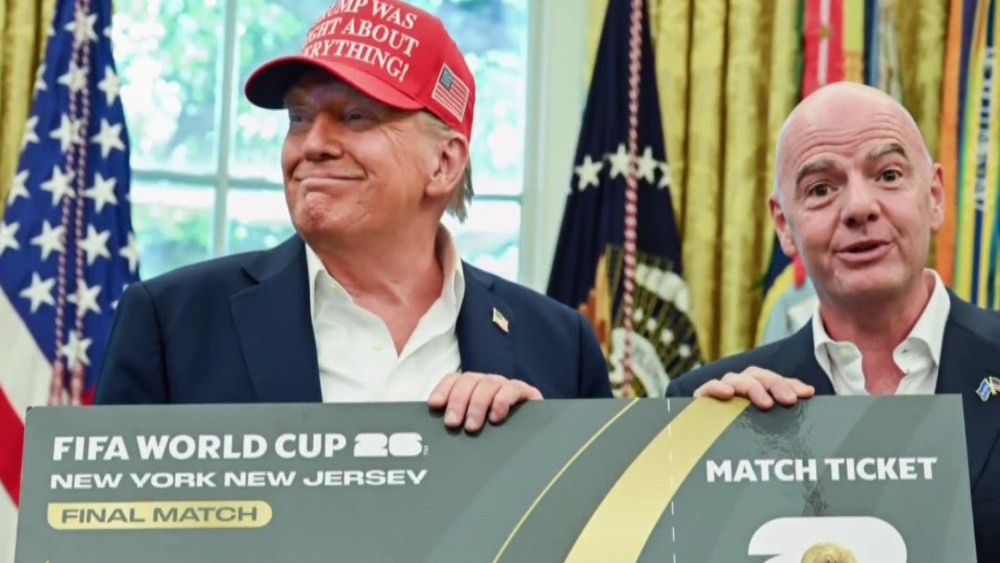
In the aftermath of the Bosnia-Herzegovina game, the U.S. Soccer Federation asked FIFA to rescind the ban, and began exploring legal options. Then Trump got involved. At an Oval Office event Monday, Trump confirmed that he called FIFA President Gianni Infantino about the suspension last week. “I asked for a review because I didn’t think it was a foul,” Trump said, though the president also admitted he did not know what a red card was.
Trump and Infantino both claimed FIFA made the decision
by Mike Wise | Jul 2, 2026 | Opinion, Sports
In the end, just three things remain certain for all of us: death, taxes…and LeBron James curb-stomping another American city’s heart and forcing his fans into debt with the purchase of yet another team’s jersey.
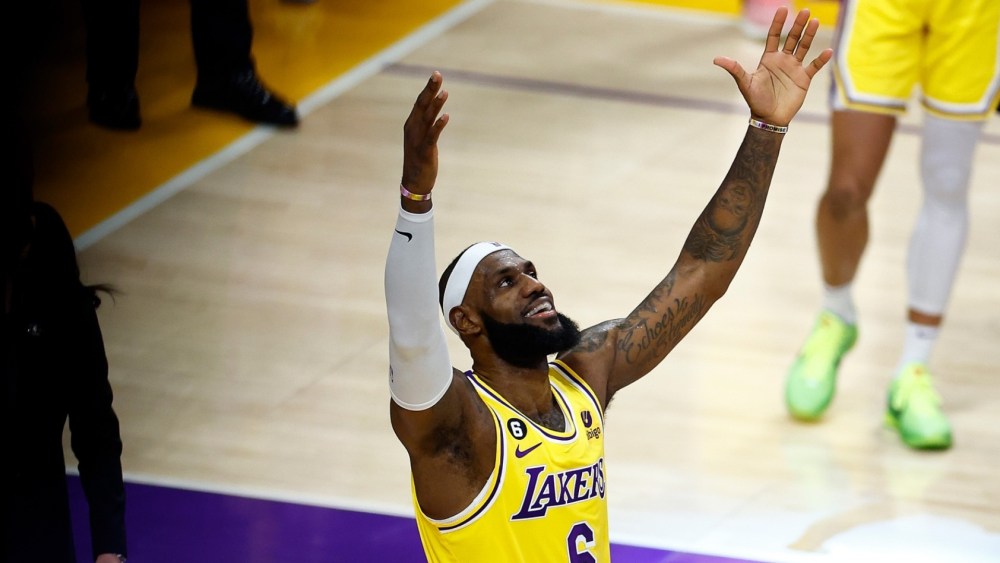
Yes, the GOAT of the NBA, LeBron James, has worn at least 54 different primary regular-season jerseys throughout his career across three franchises: the Cleveland Cavaliers, Miami Heat and the Los Angeles Lakers. But he’s also the GOAT of crushing the heart of a city’s NBA fans. Just as LeBron told the Cleveland Cavaliers he would “take my talents to South Beach” in a wrenching and televised gut-punch of a breakup in 2010, told the Miami Heat he was leaving them in 2015 to go back to Cleveland and then told the Cavaliers he was leaving them again in 2018, the King of Pain has now called it quits with the Lakers and will pursue free agency at 41 years and more than 180 days old.
LeBron James has worn 54 different primary regular-season jerseys throughout his career across three franchises.
Lakers ownership, team legends and his LeBron’s teammates congenially thanked LeBron and described how lucky they were to be in a committed relationship with him for eight years — four years longer than the heartsick Miami Heat. The ugliness of past jiltings was absent — some Cleveland fans torched his jersey when he first left the Cavs — but he’s leaving many a young fan clutching a purple-and-gold No. 23 jersey autographed by LeBron, feeling abandoned and disillusioned. And wondering how much their gullible parents will be willing to pay for LeBron’s authentic, NBA-licensed jersey when he signs with his next team.
Signing LeBron at