by Julio Ricardo Varela | Feb 7, 2026 | Opinion, Sports
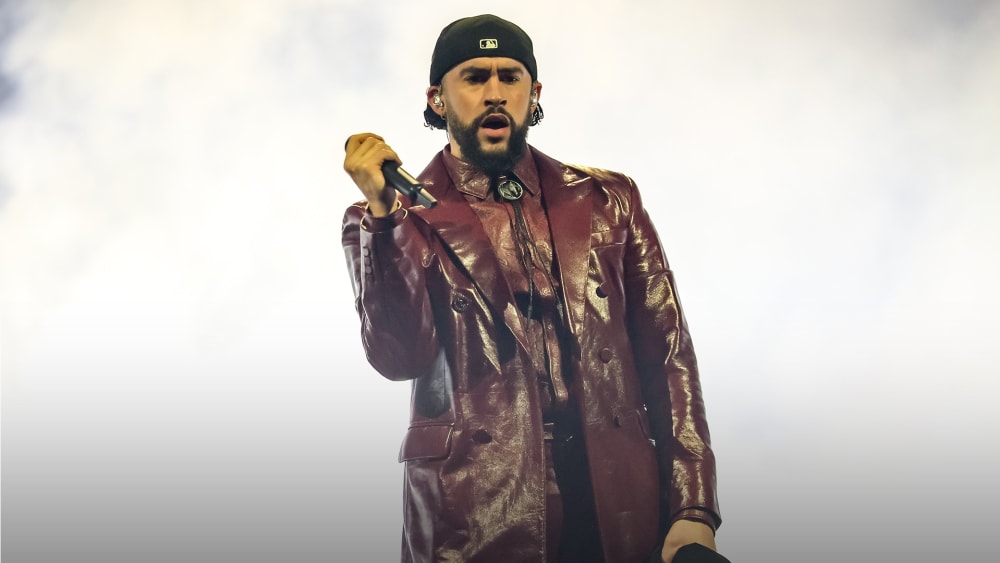
On paper, Bad Bunny is the Super Bowl halftime performer you’d expect the NFL to hate. Most of the league’s owners lean Republican and give to Republican causes, and MAGA influencers have framed the Puerto Rican megastar as a “woke” musician who will bash the United States in Spanish and wear dresses during his performance. But as ESPN’s deep dive into the halftime decision notes, those NFL owners, as conservative as they may be, are looking to expand the NFL’s reach. That means reaching out to Latinos in this country and bumping up the league’s international footprint into regions that include Latin America. Indeed, “the massive Trump hater,” as MAGA commentator Benny Johnson called Bad Bunny last year, is exactly who the NFL wants and needs.
Forget “celebrate.” A “mixed culture” is something the MAGA world has decided it can’t even tolerate.
“I think it’s awesome, and I think our Latino fan base is amazing,” Charlotte Jones, the Dallas Cowboys’ chief brand officer and daughter of Cowboys owner Jerry Jones, told Katie Miller — wife of the immigrant-bashing White House deputy chief of staff Stephen Miller — on Miller’s podcast in November about the selection of Bad Bunny as the halftime performer for Super Bowl 60. “We are on a global stage, and we can’t ever forget that. We have a mixed culture, and our whole society is based on immigrants who have come here and founded our country, and I think we can celebrate that.”
Forget “celebrate.” A “mixed culture” is something the MAGA world has decided it can’t even tolerate. That xenophobia is driving MAGA’s deportation push and the outrage to
by Keith Reed | Jan 20, 2026 | Opinion, Sports
Instead of lamenting the revolutionary transfer of power away from college coaches and athletic directors and toward college athletes, Indiana University football coach Curt Cignetti has embraced it.
During his National Signing Day news conference in February, Cignetti said he was more focused on “filling immediate needs” through the transfer portal than on traditional high school recruiting. Cignetti grabbed 19 players from the portal before this season began, and none had a bigger impact than quarterback Fernando Mendoza, who transferred from the University of California to the Hoosiers in December 2024.
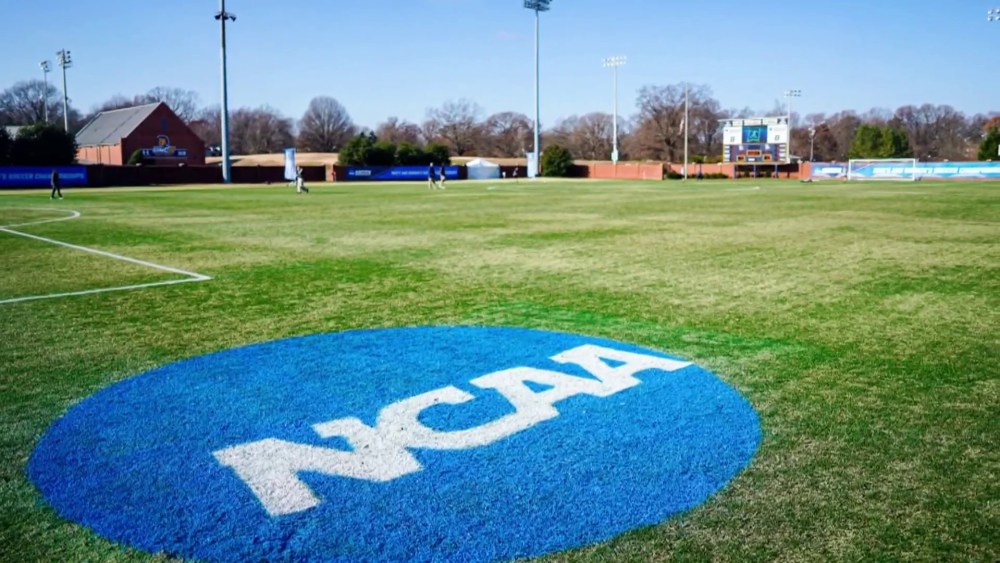
Indiana is the best proof there is of how aggressive roster construction under the NCAA’s new rules can fuel a team’s quick rise.
Mendoza won this season’s Heisman Trophy en route to an undefeated season and tonight’s College Football Playoff championship game against the University of Miami Hurricanes.
Indiana, which at the start of this season had lost more games than any Division I college football program and had a 3-9 record in 2023, is the best proof there is of how aggressive roster construction under the NCAA’s new rules can fuel a team’s quick rise.
Cignetti was hired after that woeful 3-9 season, and he immediately turned things around. In the 2024 season, the Hoosiers went 11-2 and made it to the College Football Playoff for the first time.
This year, the Hoosiers have been even better and have a flawless 15-0 record. And on its way to trying to win its first title, the program has either accomplished things it never has or hadn’t accomplished in decades. Hoosiers football hadn’t won a Big Ten Conference title since 1967, and it hadn’t beaten perennial
by Amy Goodman | Jan 14, 2026 | Donald Trump, Interview, LGBTQ Rights, Sports, sports bans, Supreme Court, Trans Rights, trans youth
When Becky Pepper-Jackson started middle school, she wanted to join her school’s track and field team. Like many girls her age, she was excited to make new friends and cultivate a passion for a sport. But unlike the other girls on her school’s track and field team, Pepper-Jackson is trans. And because she lives in West Virginia, a state which has banned transgender girls from participating in…
Source
by Ja'han Jones | Jan 8, 2026 | Opinion, Sports
A pro-Trump oil baron is teaming up with Stephen Miller’s legal group to pressure Congress to make sweeping changes to college sports that could hinder athletes from profiting from their talents.
Last July, Donald Trump issued an executive order titled “Saving College Sports,” which called on Congress to rein in so-called name, image and likeness rules that allow college athletes to make money through endorsements. In the months that followed, Trump publicly fretted over the possibility of player pay bankrupting colleges “no matter how rich they are” (a thing that’s not at risk of happening) and called for “powerful caps” on player compensation (something that already exists).
Many Americans are likely unaware of the fact that the title of Trump’s executive order matches the name of a nonprofit organization led by Cody Campbell — a Trump ally and chairman of Texas Tech University’s board of regents. Campbell was consulted during the drafting of the order and launched a lobbying campaign in September to get Congress to pass a law that would undermine players’ ability to maximize their moneymaking potential, prevent them from being classified as employees (as many of them want to be) and give schools more control over athletes.
Play
Former players seek settlement for back pay as colleges start to pay student athletes
June 30, 2025 / 04:27
Three major proposals to regulate college athletics are floating around Washington now. The one broadly seen as most player-friendly is the Democratic-backed Student Athlete Fairness and Enforcement Act, which has drawn support from several notable former college athletes and all of the major professional athlete unions in North America. Another bill, the SCORE Act, introduced by
by Jason Page | Jan 8, 2026 | Opinion, Politics, Sports
The Baltimore Ravens’ decision to fire Super Bowl-winning head Coach John Harbaugh after Sunday’s season-ending loss to the Pittsburgh Steelers kept them out of the playoffs wasn’t surprising to those of us who closely follow the NFL. Harbaugh had coached the team for 18 years, the Ravens had underperformed, and sometimes a new voice is needed in the locker room.
Sports teams have often had to choose between a coach who’s been successful in the past and a superstar player they need to be successful now. In this case, the Ravens had to choose between Harbaugh, who won Super Bowl XLVII in 2012 and quarterback Lamar Jackson, a two-time NFL MVP.
The Ravens underperformed, and sometimes a new voice is needed in the locker room.
If changes are to come, then the Ravens’ salary constraints necessitated Harbaugh that Harbaugh be the one to go. Harbaugh knows the industry as well as anyone and surely understands why the Ravens decided as they did. And because he’s still under contract for two more seasons, he’ll still be getting paid.
But Wednesday morning, a typical end-of-the-season-coach-carousel story got injected with politics when President Donald Trump made a Truth Social post directed at other NFL teams that read: “HIRE JOHN HARBAUGH, FAST. HE, AND HIS BROTHER, ARE TOTAL WINNERS!!!”It’s worth noting that Harbaugh and his brother Los Angeles Chargers Coach Jim Harbaugh met President Trump in the Oval Office in July. John Harbaugh defended his decision to meet with Trump to a reporter at Ravens training camp who asked why he’d meet with him after Trump’s disparaging remarks about Baltimore. “It was amazing. It was awesome. And
by Keith Reed | Dec 16, 2025 | Opinion, Sports
When future sports historians wax poetic about the Kansas City Chiefs’ dynasty and the remarkable championship era of the NFL team’s star quarterback Patrick Mahomes, there’s a great chance they’ll recall Dec. 14, 2025, as the end date for both. Even though we have every reason to believe the three-time Super Bowl MVP and two-time NFL MVP will be back, it’s harder to imagine him returning to a Chiefs team that will look the same as it does now: on the field or on the sideline.
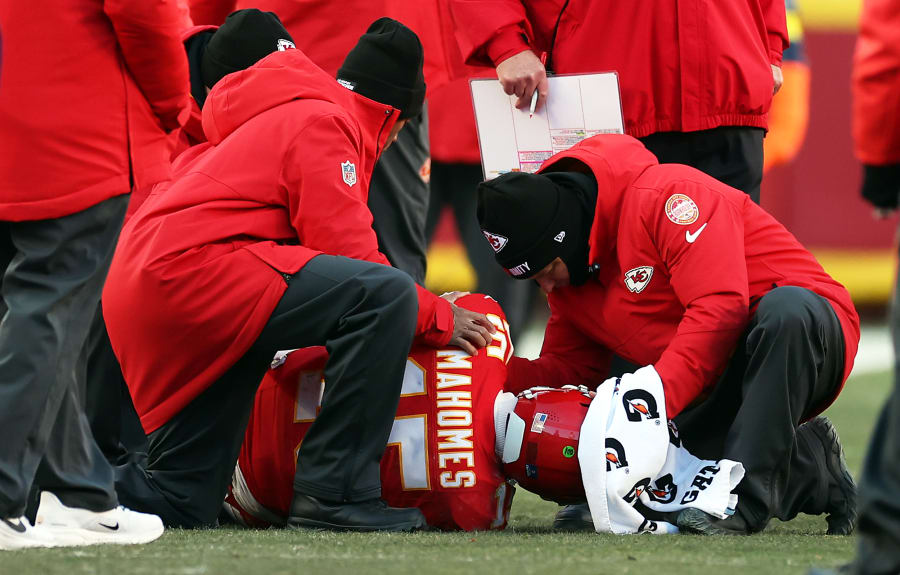
In the fourth quarter in a losing effort against the Los Angeles Chargers on Sunday, the 30-year-old Mahomes, one of the most electrifying athletes of his NFL generation, tore the anterior cruciate ligament, or ACL, in his left knee, the team announced.
ACL tears, which damage the ligament that stabilizes the knee, are catastrophic for any athlete, but especially devastating for an NFL signal caller known for creating huge, sometimes jaw-dropping, moments that start with him using his legs to extend plays.
Mahomes, one of the most electrifying athletes of his NFL generation, tore the anterior cruciate ligament, or ACL, in his left knee.
And that’s what Mahomes was doing before he was hurt Sunday: extending a play. With the Chiefs trailing by three in the fourth quarter and their playoff hopes dangling, Mahomes eluded a defensive pass rush and threw the ball away just before he was hit.
His knee buckled awkwardly. He writhed on the turf, clutching his injured leg. But because he walked off the field, he gave Chiefs fans a glimmer of hope that the injury wasn’t as bad as it looked. A postgame MRI