by Jonathan Shorman | Dec 15, 2025 | elections, Gerrymandering, News, Politics, Supreme Court, Voting Rights Act
Republicans could gain nearly 200 state legislative seats across the South if the U.S. Supreme Court guts a key provision of the federal Voting Rights Act, a new analysis finds. The bulk of the gains would be concentrated in 10 GOP-controlled state legislatures in Southern states, according to the analysis, produced by Fair Fight Action, a Georgia-based progressive voting rights group…
Source
by Steve Benen | Dec 15, 2025 | Congress, Maddowblog, Politics
With Affordable Care Act subsidies poised to expire, and tens of millions of American consumers facing painful spikes in their health care costs, Senate Republicans pitched a bill last week that made no effort to extend the existing enhanced tax credits. Rather, the plan from Sen. Bill Cassidy of Louisiana and Mike Crapo of Idaho tried to replace the subsidies with expanded health saving accounts.
It was an inadequate proposal that was easily defeated: When the plan reached the Senate floor, it needed 60 votes to advance. Facing bipartisan opposition, it received 51.
As for the GOP majority in the House, party leaders have spent months insisting that they’d present a plan of their own, and on Friday, they fulfilled this promise — sort of. As my MS NOW colleague Clarissa-Jan Lim reported:
The bill includes several measures that have broad support among Republicans, including reinstating cost-sharing reductions and allowing small businesses to buy health insurance as a group. But it notably would not extend enhanced ACA subsidies, which are set to expire in just a few weeks.
The expiration of those subsidies is expected to cause premiums to more than double on average for roughly 22 million Americans.
For those keeping score, this proposal, unveiled late Friday by House GOP leaders, is one of at least 10 different health care bills pushed by congressional Republicans in recent weeks, as the party struggles to coalesce around a unified approach.
At this point, it’s important to define some of the relevant terms here. Broadly speaking, there’s been talk in GOP circles for roughly 16 years about creating a comprehensive Republican alternative designed to replace the Affordable Care
by Steve Benen | Dec 15, 2025 | Maddowblog, Politics
With time running out before inflexible deadlines, the political fight over the Affordable Care Act has come into sharp focus: Tens of millions of American consumers are poised to face vastly more expensive health care premiums unless Republicans act. Barring a breakthrough, families nationwide will soon have to choose between paying far more or going without.
A week ago, when Donald Trump sat down with Politico’s Dasha Burns, the reporter tried to help set the stage for the president. “So right now, people are buying their holiday presents,” she noted after referencing the fight over “Obamacare” premiums. “They’re planning their budgets….”
Trump interrupted her mid-sentence. “Look, don’t be dramatic,” the Republican said, before again telling Burns, “Don’t be dramatic.”
The president’s response suggested that, as far as he’s concerned, to be concerned about American families and their health care costs is necessarily to be histrionic about a problem he prefers to overlook.
As the week neared its end, Trump reiterated his indifference.
Q: At the end of this year, those extended Obamacare subsidies expire. What’s your message to those 24m Americans who will see their premiums go up?TRUMP: Don’t make it sound so bad. Obviously you’re a sycophant for Democrats. You’re obviously a provider of bad news for Republicans.— Aaron Rupar (@atrupar.com) 2025-12-12T23:07:09.494Z
“At the end of this year, those extended Obamacare subsidies expire,” a reporter asked the president. “What’s your message to those 24 million Americans who will see their insurance premiums go up?”
The Republican replied, “Don’t make it sound so bad,” before attacking the journalist’s integrity.
In other words, as Americans continue to struggle with affordability and cost of living, and they face health care

by Jarvis DeBerry | Dec 13, 2025 | Opinion, Politics
President Donald Trump’s new pick to lead Federal Emergency Management Agency’s vital Office of Response and Recovery is a critic of the agency with no relevant credentials to take on such an important, high-ranking role in the federal government. Gregg Phillips, best-known as a conspiracy theorist who denied the results of the 2020 election (which Trump lost) and the 2016 election (which Trump won, while losing the popular vote by roughly three million), will take over as head of the office Monday, according to The New York Times.
His stated belief that FEMA is inferior to Christian-led groups that respond to disasters makes him the wrong person for the role.
His stated belief that FEMA is inferior to Christian-led groups that respond to disasters makes him the wrong person for the role. That’s not a criticism of volunteer efforts but an acknowledgment that an effective response from the government matters more.
On December 23, 2015, an EF-4 tornado with maximum winds of 170 mph plowed a 75-mile long row of destruction through North Mississippi and a corner of Southwest Tennessee and in so doing, laid waste to my childhood home. Among the photos I took later is one showing Christian volunteers from a group called “Hope Reigns” standing in the middle of the devastation, praying with my dad.
I remember the men as kind and dedicated to their ministry, bringing some small measure of comfort to a family that had lost everything on the cusp of Christmas. They didn’t have to deploy to Mississippi. Nor did they have to stop when they saw us desperately pawing through the ruins for whatever we could salvage.
by Annell López | Dec 13, 2025 | Opinion, Politics
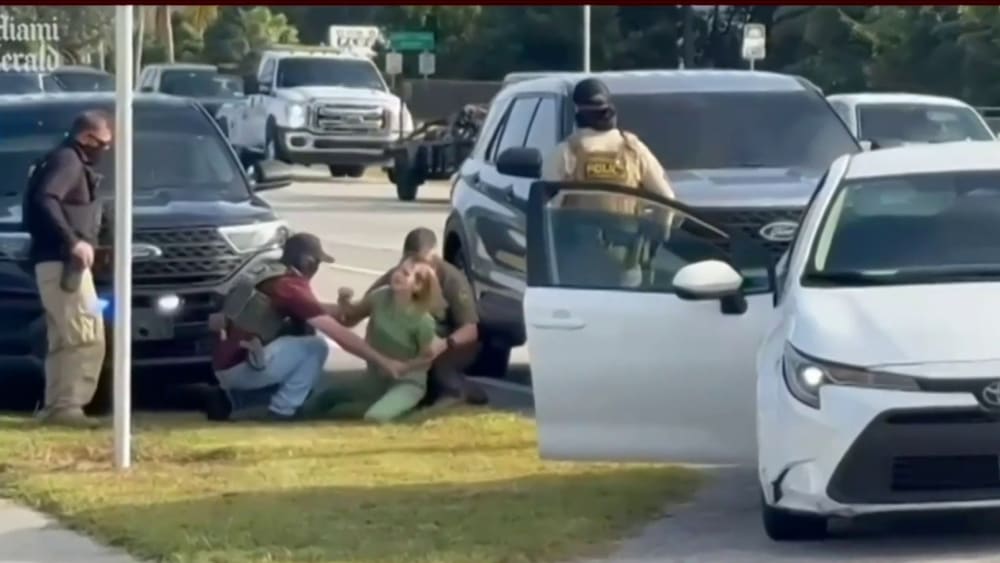
In the days since President Donald Trump’s federal immigration agents launched operations Swamp Sweep and Catahoula Crunch in the greater New Orleans area, the city has been enveloped in palpable fear. Some businesses have temporarily shuttered to protect customers and members of their community. Some families have been opting to keep their children home from school, lest they increase the likelihood of someone in their family being grabbed.
A month or so ago, I decided to stop speaking Spanish in public.
I watch video after video of agents patrolling neighborhood streets and shopping centers. I read my friends’ social media posts lamenting that they have to carry their passport in case someone forces them to prove their citizenship. As I digest it all, I feel increasingly anxious for the city I’ve made my home and the ordinary folks who just want to provide for their families and obtain a good education for their children.
And truthfully, I feel increasingly anxious for myself.
I have been wrestling with defeat. A month or so ago, I decided to stop speaking Spanish in public. I no longer answer my parents’ calls during my neighborhood walks or while grocery shopping. I don’t play music in Spanish unless I’m wearing headphones. I even avoid certain neighborhoods and restaurants. Out of a need to protect myself and, in turn, my loved ones, I keep turning away from anything that might lead to unwanted attention and scrutiny.
cdEven before writing the very piece you are now reading, I reached out to an immigration lawyer and friend for feedback. No, I’m not an undocumented immigrant. Even so, I fear getting caught up in
by Steve Benen | Dec 13, 2025 | Maddowblog, Politics
In recent weeks, Donald Trump has repeatedly complained about states creating their own regulations and safeguards on artificial intelligence, which the president has described as untenable.
“I will be doing a ONE RULE Executive Order this week,” he wrote online on Monday. “You can’t expect a company to get 50 Approvals every time they want to do something. THAT WILL NEVER WORK!”
The list of concerns related to such a move is quite long, but near the top is a basic legal truth: Presidential executive orders cannot nullify state laws. The Republican administration might like the idea of having “one rule” for AI regulations, but that’s not up to Trump to decide unilaterally.
Nevertheless, four days after publishing this vow to his social media platform, the president did, in fact, sign an executive order intended to advance his broader goal. NBC News reported:
The order directs Attorney General Pam Bondi to create an ‘AI Litigation Task Force’ within 30 days whose ‘sole responsibility shall be to challenge State AI laws’ that clash with the Trump administration’s vision for light-touch regulation.
In addition, the order instructs Commerce Secretary Howard Lutnick to identify existing state laws that ‘require AI models to alter their truthful outputs,’ echoing earlier Trump administration efforts to prevent what it calls ‘woke AI.’ States found to have these and other ‘onerous’ laws may have to enter into agreements not to enforce those statutes in order to receive discretionary federal funding.
As a substantive matter, there’s ample room for debate about the White House’s efforts to “insulate Big Tech companies … many of which are led by people who have showered him with money and