by Hayes Brown | Dec 13, 2025 | Congress, Opinion, Politics, White House
The Indiana Senate’s Republican supermajority had a choice Thursday. They could acquiesce to the White House’s demands that they approve a new congressional map and potentially turn the state’s entire House delegation red. Or they could listen to their constituents and consciences. As their sweeping 31-19 rejection of the new map showed, they chose well.
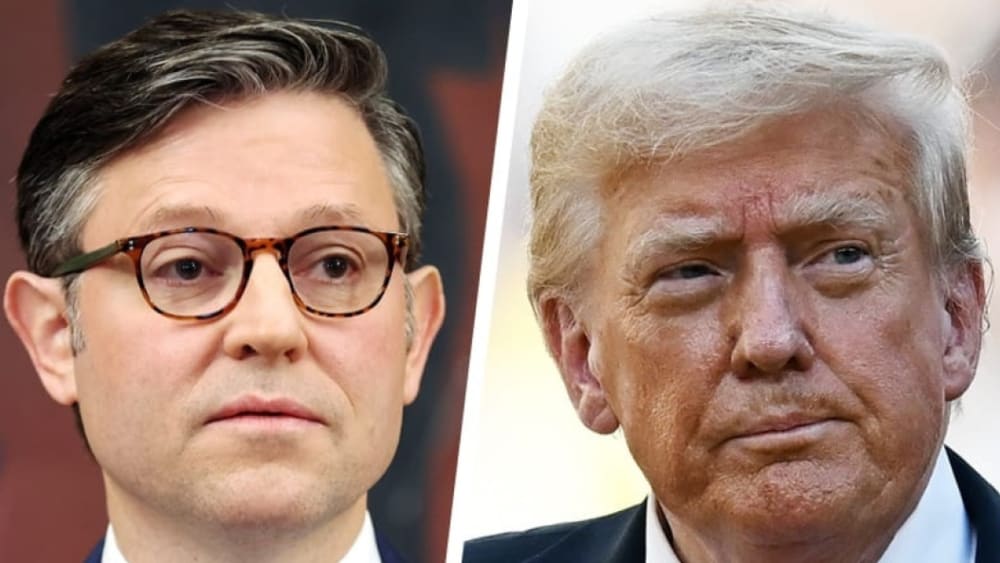
This outcome was in no way a foregone conclusion. President Donald Trump had promised to back a primary challenger against any Indiana Republican lawmaker who vote against redistricting. Vice President JD Vance, Speaker Mike Johnson, R-La., and Indiana Gov. Dan Braun were all recruited to work the phones, meet with lawmakers and threaten dire consequences for any Republican who defied Trump’s wishes. Outside groups spammed everyday Hoosiers hoping to persuade them to pressure their representatives to support a new map. And still a majority of the state senate’s Republican caucus voted no.
The proposed gerrymandered map wasn’t even produced by state lawmakers or their staff.
Trump has been lobbying GOP state lawmakers hard this year to gerrymander their congressional districts to shore up the fragile Republican majority in next year’s midterms. Republicans hold seven of Indiana’s nine seats in the U.S. House. The new map would have doomed the two Democratic-held seats by carving up Indianapolis among four districts and splitting another blue stronghold near Lake Michigan over two districts.
The Indiana House voted last week 57-41 to support that aggressive gerrymander, but Senate President Pro Tempore Rodric Bray had long made it clear to the White House that the votes weren’t there in the Indiana Senate. And Bray gave no indication he was willing to strongarm his
by Steve Benen | Dec 12, 2025 | Congress, Maddowblog, Politics
Donald Trump has suffered through plenty of awful days this year, but few could compete with the events that unfolded on Thursday.
Over the course of roughly six hours, the president learned that a federal judge had ordered Kilmar Abrego Garcia to be released from immigration custody, a grand jury had again rejected an effort to indict New York Attorney General Letitia James, Republicans in Indiana’s state Senate had rejected his radical redistricting scheme, and an Associated Press poll found that two-thirds of Americans reject his handling of the economy.
As days in the White House go, this one was pretty rough for the hapless incumbent.
At least Trump can still count on the sycophantic and obedient House Republican conference to make his days a little brighter, right? Wrong. NBC News reported:
The House approved a measure Thursday to reinstate collective bargaining rights to federal workers, a step toward restoring labor union protections for nearly 1 million federal employees.
The rare bipartisan vote, 231-195, marks the first time the House has voted to nullify an executive order from President Donald Trump this term.
The president signed an executive order months ago that sought to end collective bargaining with a variety of federal departments and agencies. A bipartisan duo — Democratic Rep. Jared Golden of Maine and Republican Rep. Brian Fitzpatrick of Pennsylvania — drafted the Protect America’s Workforce Act to undo what Trump did.
Naturally, House GOP leaders ignored the effort, but Golden and Fitzpatrick launched a discharge petition that reached 218 signatures a few weeks ago.
That set the stage for a floor vote that House Speaker Mike Johnson couldn’t derail, and the bill passed with 20
by Steve Benen | Dec 12, 2025 | Maddowblog, Politics
When Donald Trump looked at the Republican advantage in Indiana’s state legislature, the president probably felt a degree of optimism about his mid-decade redistricting scheme. After all, in the 50-member state Senate, there are only 10 Democrats. Success surely seemed inevitable.
Over the summer, as the partisan gambit faced some resistance, Trump started pulling out the stops. GOP legislators were welcomed to the White House. He deployed Vice President JD Vance to Indiana to give Republicans the hard sell, in person, twice. The president made repeated phone calls to specific legislators, hoping to persuade them to do his bidding. He published a seemingly endless stream of electoral threats and vituperative rants directed at GOP holdouts to his social media platform.
According to Micah Beckwith, Indiana’s incumbent Republican lieutenant governor, Team Trump even floated an extortion threat of sorts, suggesting the administration was prepared to curtail federal resources for the state unless GOP legislators agreed to redraw its congressional map and eliminate the two Democratic districts.
The severity of the presidential arm-twisting over the course of several months was extraordinary. It was so intense that at least 11 Indiana Republicans were targeted with threats or swatting attacks after Trump started calling out individual state lawmakers. One legislator told The Atlantic he was worried the president’s followers felt so strongly about this that his house might be “firebombed.”
And yet, despite all of this, Trump’s power grab flopped. After months of White House arm-twisting, the gerrymandering plan mustered just 19 votes — with a majority of the Republicans in the state Senate voting with the Democratic minority against it.
It was one of the most brutal and
by Susan Rinkunas | Dec 12, 2025 | Opinion, Politics
Following a disinformation campaign seeded by anti-abortion groups that want to end telemedicine access to the abortion drug mifepristone, Trump administration officials have told lawmakers for months that they would review safety data for the pills. Health and Human Services Secretary Robert F. Kennedy Jr. and Food and Drug Administration Commissioner Marty Makary confirmed in a mid-September letter that such a review was underway.
The reporting suggests the Trump administration is trying to limit GOP electoral losses by giving voters a false sense of security about abortion access.
However, Bloomberg, citing multiple people familiar with the matter, published an explosive story alleging that Makary personally intervened to slow-walk the politicized safety review until after the 2026 midterm elections. Makary reportedly told agency officials to delay the review, the outcome of which would likely make the medication much harder to get. The reporting suggests the Trump administration is trying to limit GOP electoral losses as much as possible by giving voters a false sense of security about abortion access.
MS NOW has not independently verified Bloomberg’s report.
According to a 2024 Pew Research Center survey, 63% of Americans say abortion should be legal in all or most cases and, by a margin of more than 2-to-1, respondents believed that medication abortion should be legal. Mifepristone is typically used alongside a second medication, misoprostol, to end an early pregnancy, and the two-drug combination is also used to manage miscarriages.
The administration denied Bloomberg’s report and said that scientific reviews, by their nature, are slow. “Assertions that the FDA is slow walking this review for political purposes are baseless,” HHS spokesperson Andrew Nixon told the outlet. “FDA’s comprehensive
by Steve Benen | Dec 11, 2025 | Maddowblog, Politics
As part of the agreement that ended the government shutdown last month, Republican leaders in the Senate promised a vote on a Democratic bill to protect health care consumers and extend existing Affordable Care Act subsidies.
On Thursday afternoon, GOP leaders kept their promise and brought the Democratic bill to the floor for a procedural vote. It needed 60 votes to advance, but it received 51. A rival Republican bill, which included some conservative reforms but which wouldn’t have protected ACA subsidies at all, also needed 60 votes. It also received 51.
So where does that leave us? An MS NOW report summarized:
The failed votes leave lawmakers with just over two weeks to address the rising premiums. Many enrollees are expected to see their premiums more than double if lawmakers don’t act, and both chambers are scheduled to recess for the holidays at the end of next week.
Some lawmakers are still clinging to the hope that Thursday’s collapse might jolt bipartisan talks back to life.
That’s certainly possible, though there have been some sporadic bipartisan talks in recent weeks and months, which haven’t led to anything close to a resolution.
On the Democratic side, the solution is simple: Party officials in both chambers have proposed a straightforward, three-year extension of the status quo. As the popularity of “Obamacare” reaches new heights, this approach would likely be welcome by most Americans, especially the tens of millions of Americans looking for a shield against dramatic price hikes they can’t afford.
On the Republican side, it would be unfair to say GOP officials haven’t put anything on the table. In fact, therein lies part of the problem: Republicans
by Steve Benen | Dec 11, 2025 | Maddowblog, Politics
About a decade ago, then-candidate Donald Trump appeared eager to convince voters that he’d deliver extraordinary economic results. After several decades in which the United States averaged roughly 3% annual growth, the Republican routinely promised “4% annual economic growth.”
During his first year in the White House, the president went even further, declaring, “I see no reason why we don’t go to 4%, 5% and even 6%.”
This was unwise. GDP growth in the U.S. had only reached 6% once in the previous half-century, and that was because of a dramatic one-time drop in interest rates in 1984. Trump had set the bar unrealistically high, and to the surprise of no one, he failed to reach his own stated standard: Even before the pandemic, annual economic growth did not top 3% during his first term. In fact, in 2017 and 2019, when the president tried to tell the public that the economy was the best it had ever been, GDP growth was 2.5% and 2.6%, respectively.
Having failed to meet its unrealistic goals previously, Trump and his team have learned their lesson.
No, I’m just kidding. They’ve learned nothing and are making the exact same mistakes.
Lutnick: “I think under President Trump you’re gonna see the economy grow 6%”— Aaron Rupar (@atrupar.com) 2025-12-11T13:22:44.764Z
On Thursday morning, Commerce Secretary Howard Lutnick predicted that annual GDP growth in Trump’s second term is likely to reach 6% — a line he’s pushed more than once in recent weeks.
As a rule, officials recognize the importance of under-promising and over-delivering, especially after having already failed. But Lutnick went there anyway.
A day earlier, at a White House event, his boss went considerably